







































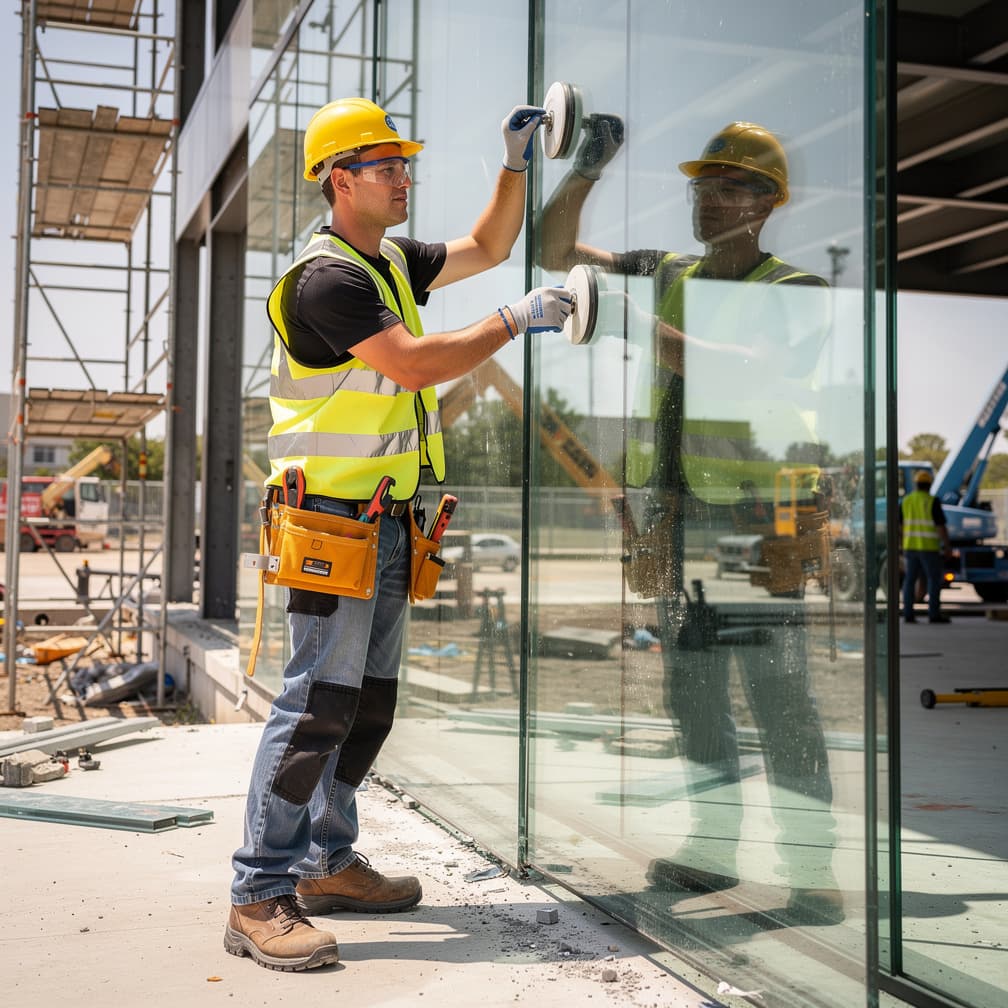

Unloading a laminated unit at the curb is where a glazier claim usually starts, before a single tool comes out of the truck. Glazier insurance in Vancouver gets priced around that handling risk: the lift, the carry through an occupied lobby, the set into a frame with no room for error. Panes get scratched by hardware, dropped on thresholds, and cracked by an opening that was never square to begin with. The customer's floor, a neighbor's parked car, and the tenant walking out with coffee all sit inside your work zone. Each of those is a different kind of claim with a different answer behind it. Read the coverage cards below against your last three jobs in Vancouver, since that is where your real exposure lives.
What Makes Vancouver Different
A storm week stalls installs in Vancouver, because nobody sets a pane into an opening in driving rain. The opening still has to be closed, so temporary boarding becomes the job instead. Board-ups are fast work done badly by tired crews at the end of long days. If the board fails overnight and water reaches a tenant's stock, the dispute is about workmanship. Weather delays also stack your schedule, and stacked schedules are when panes get rushed. A rushed set is where the frame gets gouged and the finish carpenter files a complaint. General Liability may respond to that damage, though the argument over cause takes longer than the repair. Photograph every board-up you leave standing on a Vancouver job, because photos end those arguments early.
Local Risk Factors in Vancouver
Evacuation zones move faster than a delivery schedule, and a glass shop can lose access to a job site with a rack of units already staged inside it. Material left behind is material you cannot control, and nobody is letting you back in to collect it. Crews get sent home, installs get postponed, and the calendar compresses once the zone reopens. Smoke damage is its own category, since soot on stored glass and frames is a cleaning problem before it is a replacement problem. A glazier in Clark County should ask specifically how a policy treats smoke damage to stored inventory, because that answer is rarely obvious. The word fire and the word smoke are not the same word on a claim form in Washington.
What Coverage Does a Glazier in Vancouver Need?
General Liability
General contractors and building owners are the ones who insist on this line, and the contract usually names the limit. It can help cover third-party injury and property damage arising out of your work: a passerby hurt near a work zone, a customer's floor wrecked by a dropped unit. The pane you damaged yourself is typically excluded as your own workmanship.
Example: A carried pane clips a display case in an occupied lobby and the retailer's stock goes with it; general liability is generally where that claim lands.
Commercial Property
Flood is left out of this form, and so is ordinary wear on your racks and cutting tools. What remains is the shop itself: stock, hardware, suction cups, and the equipment that would stop your work if it burned or walked out the door overnight. Coverage could respond to fire, theft, and vandalism, subject to the deductible you picked.
Example: Someone pries the shop door overnight and leaves with the suction cups, the tools, and half the staged hardware; a property claim could put the shop back to work.
Workers Compensation
A pane slips on a stairwell landing and an installer's hand is cut to the tendon. Medical bills and lost wages from that injury are what this line is meant for, and it prices against payroll rather than at a flat monthly rate. Contracts commonly demand it, and thresholds vary, so the Washington Office of the Insurance Commissioner publishes the current requirements.
Example: An installer overreaches on a lift setting an upper-floor unit and tears a shoulder; workers compensation is typically the line that handles the treatment and the missed weeks.
Commercial Auto
Your truck is the piece that moves everything else, which is why this line is written against a schedule of vehicles rather than against your business generally. It could help cover liability and damage from an accident while hauling panes, hardware, and crews between sites. The units strapped to the rack are cargo, and cargo is often a separate question.
Example: A loaded rack shifts during a hard stop on the way to a Vancouver job and the truck ends up in a guardrail; commercial auto may pick up the vehicle side of it.
How Much Does Glazier Insurance Cost in Vancouver?
Glazier Insurance is a bundle of separate policies, priced separately. The ranges below are typical figures for Vancouver for each line, except workers compensation, which is set by the state fund; a quote prices each one against your own operations.
| Coverage | Typical range | What moves your price |
|---|---|---|
| General Liability Insurance | $160 - $525 per month | Industry and risk classification, annual revenue, number of employees |
| Commercial Property Insurance | $110 - $380 per month | Building value and construction type, roof age and condition, fire protection class |
| Workers Compensation Insurance | Set by the state fund | Employee classification codes, total annual payroll, experience modification rate |
| Commercial Auto Insurance | $240 - $700 per month | Fleet size and vehicle types, driver records and experience, coverage limits and deductibles |
Prices shown are general estimates, not guaranteed rates or quotes. Your actual premium will depend on the insurer, coverage selected, business details, location, claims history, and other underwriting factors. Learn about our pricing methodology.
What Are the Insurance Requirements for a Glazier in Vancouver?
Workers' comp is generally required once you have your first employee, through the state fund. Washington runs workers' compensation through a state fund: employers buy coverage from the Washington State Department of Labor & Industries (L&I), not from private carriers. Common exemptions include sole proprietors and partners. Confirm current requirements directly with the fund before you hire.
State auto liability minimums apply to business vehicles. Washington's minimum auto liability limits are $25,000/$50,000/$10,000 (bodily injury per person / per accident / property damage). Contracts and lenders often require more than the state floor.
Flood damage is typically excluded from standard policies. Standard commercial property and builders-risk-type policies typically exclude flood damage. Flood exposure varies address by address, so check your premises in FEMA's Flood Map Service Center before deciding; if you sit in a mapped flood zone, a separate policy through the National Flood Insurance Program is the usual starting point.
Where to verify licensing and coverage rules. The Washington Office of the Insurance Commissioner publishes consumer guidance and current insurance requirements for Washington businesses. When a contract or lease demands specific wording, the Washington Office of the Insurance Commissioner's guidance is the authoritative place to check.
Get Your Glazier Quote in Vancouver
Compare rates from multiple carriers. Free quotes, no obligation.
Operating in Vancouver
- Emergency board-ups get done at night by tired people, and a board that fails before you return turns into an argument about your workmanship rather than about the original break.
- A general contractor in Clark County can withhold retainage over a scratched frame that another trade caused, because the glass sub is the one everybody remembers being there.
- Ladders and lifts set on uneven sidewalks are how glaziers get hurt, and an injury on a public walkway pulls the property owner into the claim as fast as it pulls in you.
- Staged glass leaning against a wall is one bump away from becoming a public safety event, which is why underwriters ask how you secure material before install.
How to Buy: Advice for Vancouver Owners
Two numbers govern a General Liability policy, and owners tend to read only the bigger one. The per-occurrence limit is the most the policy may pay for a single event, like one pane going through one storefront and taking the display case with it. The aggregate is the ceiling across the entire term, and a glass shop that turns in several breakage claims in one busy stretch can exhaust it while months of work still sit ahead. Contracts routinely name the per-occurrence figure and stay silent on the aggregate, so that second number is one you have to track yourself. It is worth asking whether a claim against your Commercial Auto policy after a loaded-rack accident draws down a shared limit or a separate one. Check the Washington Office of the Insurance Commissioner's guidance before deciding how much room those limits should leave you. A glazier in Vancouver who understands both numbers can compare participating carriers on the ceiling rather than on the monthly price alone.
FAQ
Glazier Insurance in Vancouver: FAQ
Anyone paying you or letting you onto their property. General contractors, building owners, property managers, tenants opening a new storefront, and sometimes a permit office. A landlord in Vancouver can hold your keys or your gate access until the certificate is on file. The certificate is evidence rather than the policy itself, so what matters is whether the coverage behind it is genuinely in force.
It extends your policy's defense to your client for claims arising out of your work. Owners want it because it moves the first line of defense onto your paper instead of theirs. Two versions exist: blanket wording that reaches whoever your contract names, and a scheduled endorsement that reaches only the names typed on it. Scheduled endorsements go stale when management changes, so ask which one you are quoting.
The vehicle and the cargo are usually two different questions. Commercial auto is generally written around liability and physical damage to the truck itself. The units strapped to the rack are your property, and property in transit is often handled under a separate form or endorsement. Ask directly what happens when a sudden stop takes out a full order, because the answer varies by policy.
Yes, and that is one of the main reasons glass crews carry liability coverage. A sidewalk work zone, an unsecured pane, a ladder in a walkway, or debris from a break all put third parties inside your exposure. General Liability is generally designed for those bodily injury claims, and it commonly funds the defense as well as any settlement. The defense is often the larger cost.
The work stops before the coverage does. Vendor portals check expiration dates automatically, and a property manager in Vancouver can freeze your work order the moment the date passes, even if your policy renewed on time. That is a paperwork failure with a real cost: idle crew, missed schedule, and an unhappy contractor. Put renewal dates on a calendar and upload the new certificate before the old one lapses.
No. Flood sits outside a standard Commercial Property form and gets bought separately where it is available. That gap catches shops storing stock and hardware at ground level, since water reaching the floor can ruin sealed units, frames, and packaging. If your shop or your storage location has any flood exposure, treat it as its own decision rather than an assumption.
Sources
- 1.Washington Office of the Insurance Commissioner(Washington Office of the Insurance Commissioner publishes consumer guidance for insurance buyers.)
- 2.FEMA / FloodSmart(Flood coverage is typically purchased separately; FEMA administers the National Flood Insurance Program.)


