Updated July 16, 2026

On-Hook Towing Insurance in Huntington
Lower household incomes in Huntington mean a larger share of drivers feel the sting of a tow bill or storage charge, and that can shape how disputes start after a damaged vehicle claim. Weigh limits and deductibles against your cash flow, not just the premium quote. A deductible that looks manageable on paper can still strain your finances when you have to resolve damage to a customer vehicle before payment arrives. Higher limits may make more sense if your trucks regularly handle newer pickups, financed daily drivers, or recovery work where damage allegations can escalate quickly.
Median household income here is $43,146, which means more customers will scrutinize charges, condition reports, and release paperwork closely after a tow. That makes documentation part of the buying decision. Ask for a quote built around your actual mix of police calls, private property removals, roadside assistance, and shop-to-shop transport. Then review whether your deductible fits what your business can absorb during a disputed claim.
On-Hook Towing Insurance Risk Factors in Huntington
Huntington's top risk factors include Severe weather, Property crime, Flooding, and Vehicle accidents.
West Virginia has a high climate risk rating. Top hazards: Flooding (Very High), Landslide (High), Severe Storm (Moderate), Winter Storm (Moderate). The state's expected annual loss from natural hazards is $420M, which influences on-hook towing insurance premiums and may affect coverage availability in high-risk areas.
What On-Hook Towing Insurance Covers
In West Virginia, the practical review starts with the moments where a standard tow turns into a disputed damage claim. Mountain roads, uneven shoulders, tight driveways, and remote pickup points can change how a vehicle loads, how it rides, and how carefully it needs to be positioned before transport.
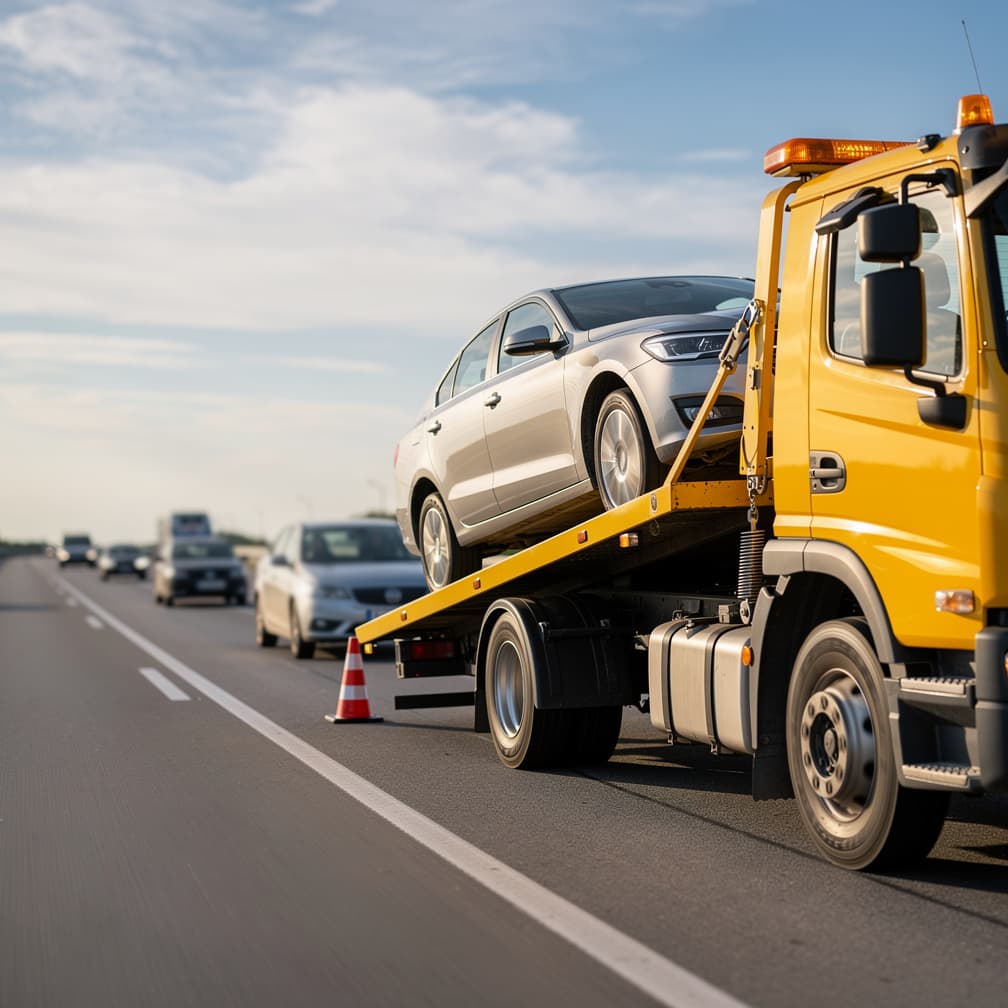
For many operators, the key issue is matching coverage terms to the way each unit is used. A flatbed handling dealer transfers and disabled vehicles from highway shoulders presents a different claim pattern than a wheel-lift unit working apartment complexes, private property impounds, and short urban relocations. If your schedule includes accident scenes, off-road winching, or recovery work after storms, ask where the on-hook exposure begins and ends during those handoffs. On-hook towing insurance can help cover damage to a customer's vehicle while it is attached to, loaded onto, carried by, or unloaded from your truck. If your policy only mentions transport and a customer claims the damage started during loading, vague wording can turn a defensible claim into a costly dispute.
You should also review whether your limit fits the priciest unit you are realistically willing to tow, not the average car on your route sheet. In a state where one truck may cover a wide territory, a single unit can end up moving everything from older sedans to newer pickups and commercial vans in the same week. If you subcontract, swap trucks, or use temporary drivers, bring that up before binding coverage.
Coverage Included
Collision on Hook
Covers damage to towed vehicles from collisions during transport.
Comprehensive on Hook
Covers theft, fire, and weather damage to vehicles being towed.
Loading & Unloading
Covers damage during the process of loading and unloading vehicles.
Winching Coverage
Covers damage to vehicles during winching and recovery operations.

Multiple Vehicle
Covers all vehicles on multi-car carriers and rollback flatbeds.
Industries & Insurance Needs in Huntington
Cabell County's business mix changes what local towing operators are asked to move and where damage allegations can arise. The county has 2,327 business establishments, so a lot of tow activity can involve commercial lots, customer parking areas, delivery zones, and service calls tied to business operations rather than only roadside breakdowns. Retail trade accounts for 16.9% of establishments, health care and social assistance 16.5%, and accommodation and food services 12.1%, so your work may include tight parking lots, time-sensitive removals, and vehicles left at hospitals, restaurants, or shopping areas. Those settings raise the importance of clear intake photos, lot condition notes, and release procedures because the dispute is often about when damage happened, not only whether it happened. If a meaningful share of your jobs comes from private property, medical campuses, or business accounts, ask for on-hook terms and deductibles that match that assignment mix.
What Makes Huntington Different
Commercial parking exposure is the main factor that changes the calculus in Huntington. In a market anchored by retail, health care, and food service locations across Cabell County, towing work often starts in lots and access lanes where multiple parties may later argue about vehicle condition, authorization, and timing. Because the claim file can turn on what was recorded at the scene, your documentation habits matter from the moment the vehicle is hooked, loaded, or moved, especially when the owner was not present at pickup.
Cabell County has 2,327 business establishments, meaning a steady share of your tows will come from commercial lots where property managers and account relationships drive the work. Review whether your policy structure fits the work you actually accept. Think through private property impounds, hospital-area calls, restaurant lot removals, dealer transfers, and standard roadside tows. Align your operating procedures with the policy before the next disputed tow lands on your desk. Photos, dispatch notes, signed authorizations, and storage records should all be part of that conversation.
Our Recommendation for Huntington
Start by separating your assignments into roadside, private property, police-related, and business-account work, since each category creates a different pattern of damage allegations and documentation needs. If local commercial lots are a meaningful source of revenue, ask how the quote treats the vehicles you tow most often, where they are picked up, and whether your deductible still works if two claims hit close together.
Review your intake process with the same care you give the policy itself. Time-stamped photos, wheel and body-condition notes, dispatch records, and release signatures can matter as much as the limit you buy when a customer challenges damage. If you subcontract overflow work or rotate drivers across trucks, bring that up before binding so the policy can be evaluated against your real operations. A specific quote conversation addresses your towing mix, pickup locations, authorization chain, and condition documentation before the vehicle leaves the lot.
Get On-Hook Towing Insurance in Huntington
Enter your ZIP code to compare on-hook towing insurance rates from carriers in Huntington, WV.
Business insurance starting at $25/mo
FAQ
Frequently Asked Questions
Private property tows often involve absent owners and disputed vehicle condition at pickup. That makes photo documentation, authorization records, and a deductible you can actually absorb especially important when you compare policy options.
Huntington sits in Cabell County, which has 2,327 business establishments. That volume means a steady share of your tow assignments will originate in commercial lots or service areas, so review limits and claim documentation procedures as a pair.
Cabell County has strong shares in retail trade, health care and social assistance, and accommodation and food services. If your mix includes hospital-area calls, shopping-center removals, restaurant lot tows, and business-account transports, bring those up so the quote reflects your real exposure.
Huntington buyers should weigh both against cash flow and the vehicles they handle most often. A customer stretched by a tow bill may delay payment while disputing damage, which means your deductible tolerance should reflect how long you can carry that gap.
Operators handling rural tows should review it closely because longer routes, narrow roads, and remote pickups can make damage disputes harder to sort out. The right question is whether your limit and documentation process fit the toughest vehicles and routes you actually accept.
Quote comparisons work best when you line up service mix, truck type, limit, and documentation requirements side by side. Do not compare premium alone if one quote assumes routine roadside towing and another is being asked to contemplate impounds, recovery work, or longer rural transports. The differences between those submissions often explain why two premiums that look similar on the surface may not offer the same protection when a claim hits.
Terrain can affect underwriting because steep grades, uneven shoulders, and remote recovery points change how a vehicle is loaded, secured, and transported. If those jobs are part of your normal dispatch pattern, describe them clearly before binding so the quote reflects real operating conditions.
Insurance policies are regulated by the West Virginia Offices of the Insurance Commissioner. That agency handles state notices, form oversight, and complaint resolution if a dispute arises over your coverage.
Sources
- 1.U.S. Census Bureau, ACS 5-Year Estimates, table B19013(Median household income here is $43,146, so customers may scrutinize charges, condition reports, and release paperwork closely after a tow.)
- 2.U.S. Census Bureau, County Business Patterns, Cabell County(The county has 2,327 business establishments, so a lot of tow activity can involve commercial lots, customer parking areas, delivery zones, and service calls tied to business operations rather than only roadside breakdowns.; Retail trade accounts for 16.9% of establishments, health care and social assistance 16.5%, and accommodation and food services 12.1%, so your work may include tight parking lots, time-sensitive removals, and vehicles left at hospitals, restaurants, or shopping areas.)
Updated July 16, 2026