







































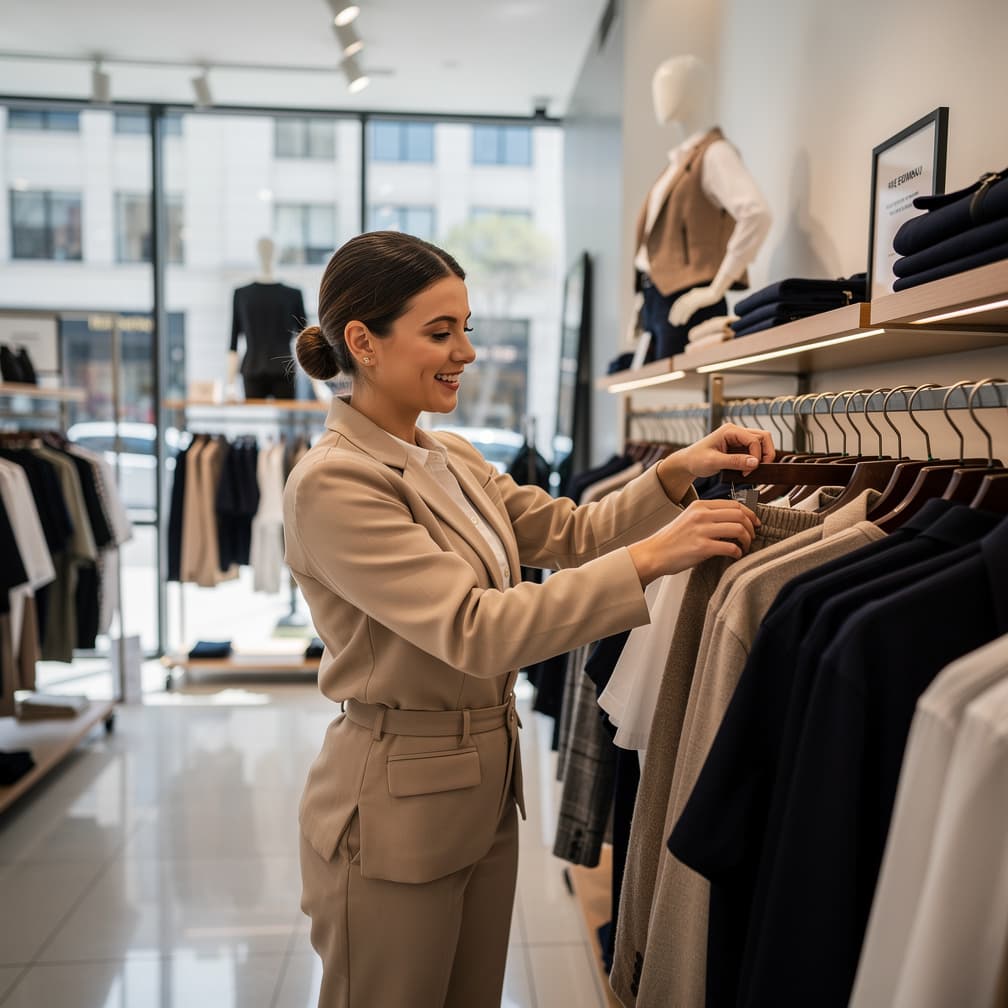

About 59 clothing stores counted in Brown County give carriers a pattern, and they price you off that pattern well before they hear anything about your instincts. Slips, theft, and water dominate the apparel claim file, and nothing about your fixtures changes that ranking. So the useful question about clothing store insurance in Green Bay is not whether to buy it but where your limits sit against those three. A limit that looks generous beside a stolen rack looks thin beside a broken hip. Deductibles work the same way in reverse: raising yours trims the bill and moves the small losses onto your side, which is fine if you can absorb one bad night. Decide which losses you can eat before you decide what to pay.
What Makes Green Bay Different
One-page leases are the real trap, because a short document leaves the insurance question open rather than settled. Silence in a lease does not mean nothing is expected of you when a pipe lets go overhead. It means the argument happens afterward, between two insurers, with your inventory sitting in the middle of it. Ask the owner in writing who insures the building, the glass, and the fixtures you inherited with the space. Ask who answers if a roof leak ruins stock you had already paid a supplier for months earlier. Get those answers in writing before you sign, since a verbal answer is worth nothing at claim time. A short lease on a shop in Green Bay still leaves you exposed to whatever it failed to allocate. Fill those gaps yourself in Wisconsin rather than assuming somebody upstream already handled them for you.
Local Risk Factors in Green Bay
Before storm season turns, walk your sales floor and photograph everything standing on it. Severe storm claims turn on proof, and a store full of merchandise is hard to reconstruct from memory once the racks are on the ground. Keep the invoices somewhere that is not the stockroom, because the stockroom is what gets wet. A Business Owners Policy can be written to include income lost during repairs, subject to conditions worth reading before you need them. Then ask what your Wisconsin deductible actually is for wind, since a percentage of building value looks very different from a flat number when a Green Bay roof comes off.
What Coverage Does a Clothing Store in Green Bay Need?
General Liability
A shopper goes down on a polished floor, and the claim that follows is somebody else's injury rather than your property. That is what General Liability is aimed at: third-party bodily injury and property damage on your premises, plus the legal defense attached to it. It typically does nothing for your own stock or for an injured employee. Landlords commonly require it by name.
Example: A customer trips over a cable running out to a window display, breaks a wrist, and hires a lawyer. The medical bills and the defense costs might land inside this line, subject to your limit.
Commercial Property
Your lender and often your landlord want this one named on paper. It stands behind everything you own inside the space: racks, mirrors, signage, checkout equipment, and the stock itself. Commercial Property can respond to fire, sudden water, theft after a forced entry, and vandalism, while flood and slow gradual leaks typically sit outside it.
Example: A pried back door, a bare rack where the new denim hung, and the register drawer on the floor at opening time. Stolen inventory and the broken frame may both be picked up here, subject to the alarm conditions.
Workers Compensation
Nothing on the liability side answers when the person hurt is on your payroll, and that is the gap Workers Compensation fills. It is generally meant for medical treatment and lost wages after a work injury, and it is rated per $100 of payroll rather than as a flat monthly charge. Requirements vary by state and by headcount.
Example: An associate hauling a carton of coats down from a stockroom shelf slips off the step stool and tears a shoulder. Treatment and time away from the floor could run through this coverage.
Business Owners Policy
One policy, two halves. A Business Owners Policy packages the property side and the liability side for a single storefront, and it often carries a business income provision as well. Employee injury, flood, and mechanical breakdown stay outside it, so read what is inside before assuming a bundle is broader than its parts.
Example: Fire in the unit next door shuts your Green Bay store for six weeks. Repairs to your fixtures and some of the income lost while the doors stay closed may both be addressed under one policy.
How Much Does Clothing Store Insurance Cost in Green Bay?
Clothing Store Insurance is a bundle of separate policies, priced separately. The ranges below are typical figures for Green Bay for each line, except workers compensation, which is rated per $100 of payroll; a quote prices each one against your own operations.
| Coverage | Typical range | What moves your price |
|---|---|---|
| General Liability Insurance | $45 - $120 per month | Industry and risk classification, annual revenue, number of employees |
| Commercial Property Insurance | $55 - $180 per month | Building value and construction type, roof age and condition, fire protection class |
| Workers Compensation Insurance | $0.75 - $2.74 per $100 of payroll | Employee classification codes, total annual payroll, experience modification rate |
| Business Owners Policy Insurance | $55 - $170 per month | Annual revenue and industry class, building and contents values, square footage and building age |
Prices shown are general estimates, not guaranteed rates or quotes. Your actual premium will depend on the insurer, coverage selected, business details, location, claims history, and other underwriting factors. Learn about our pricing methodology.
What Are the Insurance Requirements for a Clothing Store in Green Bay?
Workers' comp is generally required once you have 3 or more employees. Wisconsin generally requires employers to carry workers' compensation at that point. Common exemptions include sole proprietors, partners, and some farm workers. Confirm current thresholds with your state's workers' compensation agency before you hire.
Flood damage is typically excluded from standard policies. Standard commercial property and builders-risk-type policies typically exclude flood damage. Flood exposure varies address by address, so check your premises in FEMA's Flood Map Service Center before deciding; if you sit in a mapped flood zone, a separate policy through the National Flood Insurance Program is the usual starting point.
Where to verify licensing and coverage rules. The Wisconsin Office of the Commissioner of Insurance publishes consumer guidance and current insurance requirements for Wisconsin businesses. When a contract or lease demands specific wording, the Wisconsin Office of the Commissioner of Insurance's guidance is the authoritative place to check.
Get Your Clothing Store Quote in Green Bay
Compare rates from multiple carriers. Free quotes, no obligation.
Operating in Green Bay
- Steamers, tag guns, and portable heaters get plugged into whichever outlet is free, and a stockroom packed with cardboard is where an underwriter's questions tend to start.
- A card reader that quits mid-afternoon costs you a day of sales and damages nothing, which is precisely why standard property wording usually has nothing to say about it.
- Consignment stock on your rack belongs to somebody else, and a supplier can require you to name them on your policy before the next delivery reaches Green Bay.
- Window displays face the street all night, and glass, mannequins, and the hardware holding both are the items owners forget to list when they declare property values.
How to Buy: Advice for Green Bay Owners
Hiring your first part-timer changes the shopping list. Workers Compensation becomes the live question, and it is priced per $100 of payroll, so the class code assigned to a retail sales role matters as much as headcount does. Ask which code you are being quoted under and whether it fits what people actually do, since staff who drag pallets and staff who fold sweaters are not the same exposure. Rules on who must carry it vary by state, and the Wisconsin Office of the Commissioner of Insurance publishes the current requirements for employers. General Liability stays separate and keeps answering for the customer rather than the employee, a distinction worth understanding before an injury forces it on you. Compare quotes from participating carriers once the classification is settled, because a wrong code makes every Green Bay number meaningless.
FAQ
Clothing Store Insurance in Green Bay: FAQ
Most commercial leases make it a condition, and a property manager can hold the keys until a certificate naming the right entity is on file. The demand usually specifies a limit and often additional insured wording, so read the insurance exhibit before you sign rather than afterward. A landlord in Green Bay can also ask for a fresh certificate at every renewal, which is why a reissue list earns its keep. Sort the wording while you still have negotiating room.
Cost tracks a handful of inputs rather than the sign over your door: payroll, annual revenue, peak inventory value, square footage, the construction and alarm setup of the building, and your claims history. Two apparel shops on the same street can price far apart for those reasons alone. The cost table on this page shows the published ranges for Wisconsin. What moves you inside them is how much stock sits in the room and how many people cross the floor.
That is General Liability territory. A shopper who catches a foot on a threshold and goes down brings a bodily injury claim, and the line is generally intended to answer for medical bills, legal defense, and any settlement, subject to your limit and deductible. It says nothing about your own damaged stock or an injured employee. Keep a dated cleaning log, because the first thing anyone asks is what that floor looked like at the hour it happened.
It depends on what caused the water and what your form says about it. Commercial Property can respond when a sudden event, like a pipe letting go or a storm opening the roof, damages stock. Steady seepage that went unnoticed for months is usually treated as maintenance and left out. If the lease makes the roof your landlord's responsibility, their insurer can end up in the conversation as well. Ask where the wording draws that line before you buy.
Generally not. A standard property form typically excludes flood, and flood coverage is arranged separately through its own program. That matters more than owners expect when the stockroom sits at street level or below it, since rising water and a backed-up drain are exactly the events that reach folded stock first. Ask what your form says about surface water and about sewer backup, because those are two different exclusions with two different fixes.
It is an endorsement that extends your policy to another party for claims arising out of your operations. Your landlord wants it because a shopper who falls in your doorway may sue the building owner too, and the endorsement can put your limit to work on their defense. That is also the catch: one limit shared between you and them is a smaller limit than it looks on the certificate. Price a higher one before agreeing.
Sources
- 1.U.S. Census Bureau, County Business Patterns (2023), Brown County(Brown County has about 59 businesses in this trade's category (NAICS group 4481).)
- 2.Wisconsin Office of the Commissioner of Insurance(Wisconsin Office of the Commissioner of Insurance publishes consumer guidance for insurance buyers.)
- 3.FEMA / FloodSmart(Flood coverage is typically purchased separately; FEMA administers the National Flood Insurance Program.)


