







































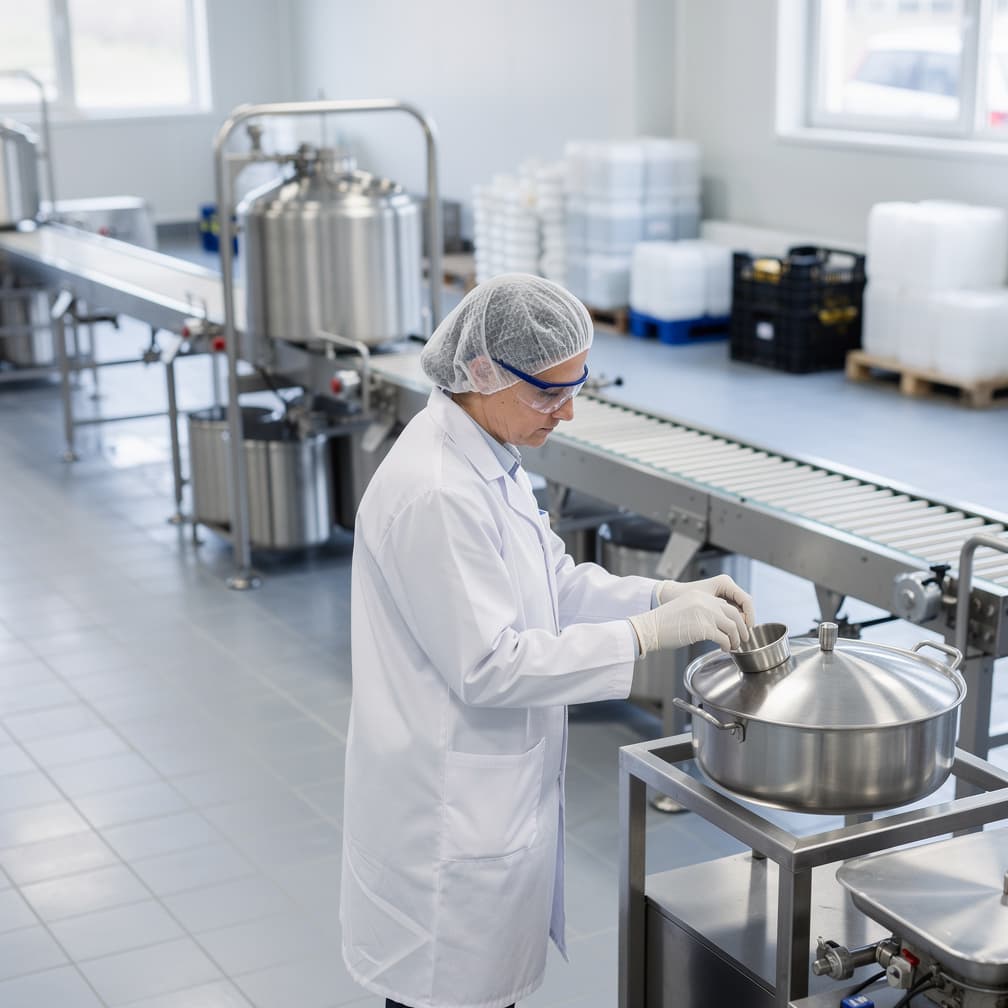

Fire starts where the heat is: fryers, ovens, dryers, and the dust that hangs in a dry-blend room. One fire can take the building, the ingredient stock, the finished pallets staged on the dock, and the only mixer you own. In a thin market the millwright who can rebuild that line may sit well outside Brown County, so the back-in-a-week assumption behind your numbers rarely holds. Replacement cost versus actual cash value on that equipment decides whether food manufacturer insurance in Green Bay actually restarts you. Extra expense wording carries the same weight, because renting time on a co-packer's line is often the only way to keep an account alive while you rebuild. Ask each quote what it assumes about how long you stay down.
What Makes Green Bay Different
Handshake terms still exist in food, and they are the most expensive kind of contract going. A buyer who took product on a verbal arrangement can still sue over the label and the invoice. Thin markets run on repeat relationships, and repeat relationships tempt both sides to skip the written spec. Then a complaint arrives, and the question becomes what exactly you promised the product would be. Written specifications limit exposure by defining what conforming product is, in a sentence anyone can read. Insurance follows that boundary, because a dispute over off-spec goods turns entirely on the spec itself. If a buyer near Green Bay will not put the spec in writing, price that risk into the deal. Carriers in Wisconsin read undocumented arrangements as an open question, and open questions get loaded.
Local Risk Factors in Green Bay
Debris in the yard stops your trucks before anything inside the plant matters. Receiving cannot receive, the dock is blocked, and a scheduled shift stands around while ingredients sit on a road somewhere. None of that is a property claim, since nothing of yours is damaged, and it surprises owners the first time through. Business interruption usually keys off physical damage at your own address, which a blocked road never touches. Civil authority and ingress-egress wording is where those situations get addressed, and both commonly carry short time limits. Ask what those limits are in Wisconsin rather than discovering them mid-week. A plant in Green Bay without that wording absorbs the stall directly.
What Coverage Does a Food Manufacturer in Green Bay Need?
General Liability
Buyers, landlords, and distributors ask for this one by name, and the certificate they want usually references it. It is meant for third-party claims: a visitor hurt on your floor, damage to someone else's property, and the legal defense that follows a complaint about product you shipped. Employee injuries sit elsewhere, and damage to your own equipment is no part of it.
Example: A delivery driver waiting at your dock slips on rinse water tracked out of the wash bay and breaks a wrist. The medical claim and the defense behind it may fall to this coverage.
Commercial Property
Tanks, fillers, sealers, cold rooms, and the finished pallets waiting on your dock are what this line is built around. Fire, storm, theft, and similar sudden causes are generally what trigger it. Flood typically sits outside it, and damage that starts inside a machine usually needs equipment breakdown wording added on purpose.
Example: A fire in the dry-blend room takes the mixer, a pallet of ingredient sacks, and two weeks of the schedule. Repair and replacement of the damaged property could be picked up here, subject to your limit and deductible.
Workers Compensation
Where liability wording looks after other people, this one looks after your crew. Medical care and a share of lost wages after a work injury are the core of it, whether that is a slip on a wash-down floor, a hand caught at a slicer, or a back strain moving a drum. Thresholds vary by state, and the Wisconsin Office of the Commissioner of Insurance publishes the current requirements.
Example: A sanitation tech loses footing on a wet floor at the end of a shift and tears a shoulder. Treatment and part of the missed pay may be handled through this line.
Tools & Equipment (Inland Marine)
What a building policy leaves out is usually whatever moves. Portable scales, calibration kits, hand tools, pallet jacks, and gear you carry to a co-packer generally live here instead, insured on a schedule rather than by address. Wear, rust, and mechanical failure are typically excluded, because this line is about sudden loss rather than about age.
Example: A locked job box on the loading dock is cut open over a weekend, and the calibration kit and two scales are gone. Replacing scheduled items like those is what this coverage is intended to do.
Commercial Umbrella
When a buyer's contract demands a limit higher than your primary policy carries, this is often the less expensive way to reach it. It adds room above the liability sitting underneath, which matters when one bad lot produces several claimants at once. It follows the policy beneath it, so a gap down there stays a gap up here.
Example: One contaminated run reaches four accounts, and defense costs alone chew through the primary limit before any settlement gets discussed. The claims still open at that point are what this layer might take up.
How Much Does Food Manufacturer Insurance Cost in Green Bay?
Food Manufacturer Insurance is a bundle of separate policies, priced separately. The ranges below are typical figures for Green Bay for each line, except workers compensation, which is rated per $100 of payroll; a quote prices each one against your own operations.
| Coverage | Typical range | What moves your price |
|---|---|---|
| General Liability Insurance | $180 - $675 per month | Industry and risk classification, annual revenue, number of employees |
| Commercial Property Insurance | $180 - $675 per month | Building value and construction type, roof age and condition, fire protection class |
| Workers Compensation Insurance | $0.75 - $2.74 per $100 of payroll | Employee classification codes, total annual payroll, experience modification rate |
| Inland Marine Insurance | $35 - $150 per month | Total insured value of the scheduled property, type and age of the equipment, where it is stored and how far it travels |
| Commercial Umbrella Insurance | $95 - $380 per month | Umbrella limit requested, limits carried on the underlying policies, loss history on those underlying policies |
Prices shown are general estimates, not guaranteed rates or quotes. Your actual premium will depend on the insurer, coverage selected, business details, location, claims history, and other underwriting factors. Learn about our pricing methodology.
What Are the Insurance Requirements for a Food Manufacturer in Green Bay?
Workers' comp is generally required once you have 3 or more employees. Wisconsin generally requires employers to carry workers' compensation at that point. Common exemptions include sole proprietors, partners, and some farm workers. Confirm current thresholds with your state's workers' compensation agency before you hire.
Flood damage is typically excluded from standard policies. Standard commercial property and builders-risk-type policies typically exclude flood damage. Flood exposure varies address by address, so check your premises in FEMA's Flood Map Service Center before deciding; if you sit in a mapped flood zone, a separate policy through the National Flood Insurance Program is the usual starting point.
Where to verify licensing and coverage rules. The Wisconsin Office of the Commissioner of Insurance publishes consumer guidance and current insurance requirements for Wisconsin businesses. When a contract or lease demands specific wording, the Wisconsin Office of the Commissioner of Insurance's guidance is the authoritative place to check.
Get Your Food Manufacturer Quote in Green Bay
Compare rates from multiple carriers. Free quotes, no obligation.
Operating in Green Bay
- Finished goods leave your control at the dock and keep your name on them for months. A complaint can surface in Wisconsin long after the lot shipped, from a store you never sold to directly.
- Temporary labor from an agency carries your peak weeks, and the agency's coverage may or may not extend to work on your line. Get their certificate in hand before the first shift, not after an injury.
- Utility outages hit food harder than they hit most tenants in the same building, because the cold does the damage while the power is out and nothing looks broken once it comes back.
- Equipment gets bought used and almost never reappraised, so an insured value set three years ago buys a fraction of what a replacement filler costs in Wisconsin today.
How to Buy: Advice for Green Bay Owners
Decide how a claim will start before you have one. Who calls, what gets photographed, where the temperature logs live, and how fast you can pull a lot's production records: those four answers decide the size of the loss. A spoiled cold room documented within an hour is a different claim from the same room documented from memory a week later. Commercial Property answers for the physical loss, and your paperwork answers the argument about what was in the room. Keep the manifest, the logs, and the maintenance file somewhere a manager can reach them without calling you. General Liability claims begin the same way, with a phone call nobody scheduled. Check the Wisconsin Office of the Commissioner of Insurance's guidance before deciding what records to retain. Ask participating carriers how first notice works for a Green Bay plant, because that answer never shows up on a price comparison.
FAQ
Food Manufacturer Insurance in Green Bay: FAQ
That claim generally lands on liability wording, which is intended to answer for bodily injury a third party suffers from your product, including legal defense. Defense can begin long before anyone proves anything, and it may erode your limit depending on the form. Check whether defense costs sit inside or outside the limit, since participating carriers in Wisconsin split on that point.
Often not under a standard property form. Damage starting inside a machine, like a failed compressor, a fried control board, or a boiler that quits, is commonly excluded, because the form is built around fire, storm, and similar outside causes. Equipment breakdown wording is what addresses it, and it may also pick up product spoiled while the room warmed. Ask for it specifically.
Expect revenue, product categories, payroll split by job class, an equipment schedule with replacement values, your sanitation and allergen controls, audit results, and the farthest point your product ships. Many underwriters also want a site visit before binding. Assembling that once turns a three-week email thread into an afternoon, and it keeps every quote describing the same plant in Green Bay.
Yes, and industrial leases routinely do. The exhibit usually names a limit, additional-insured status, and often a waiver of subrogation, and those terms get negotiated before signing or not at all. If the landlord behind a Green Bay shell asks for a limit above what you planned, that number becomes your floor. Read the exhibit before ordering equipment.
The per-occurrence number is the most a policy might pay for one event; the aggregate is the ceiling for an entire policy year. Food makes that gap matter, because a single production run can turn into many separate claims that all pull on the same annual number. A busy year can exhaust an aggregate a quiet year never tested. Ask what happens once it is gone.
Usually yes, by endorsement, and most food distribution agreements ask for it. Understand what you are agreeing to: their defense can run through your limit after a bad lot, and every additional insured you schedule shares the same aggregate. Some carriers cap how many they will add. Count the agreements you have signed and size the limit against all of them together.
Sources
- 1.Wisconsin Office of the Commissioner of Insurance(Wisconsin Office of the Commissioner of Insurance publishes consumer guidance for insurance buyers.)
- 2.FEMA / FloodSmart(Flood coverage is typically purchased separately; FEMA administers the National Flood Insurance Program.)


