







































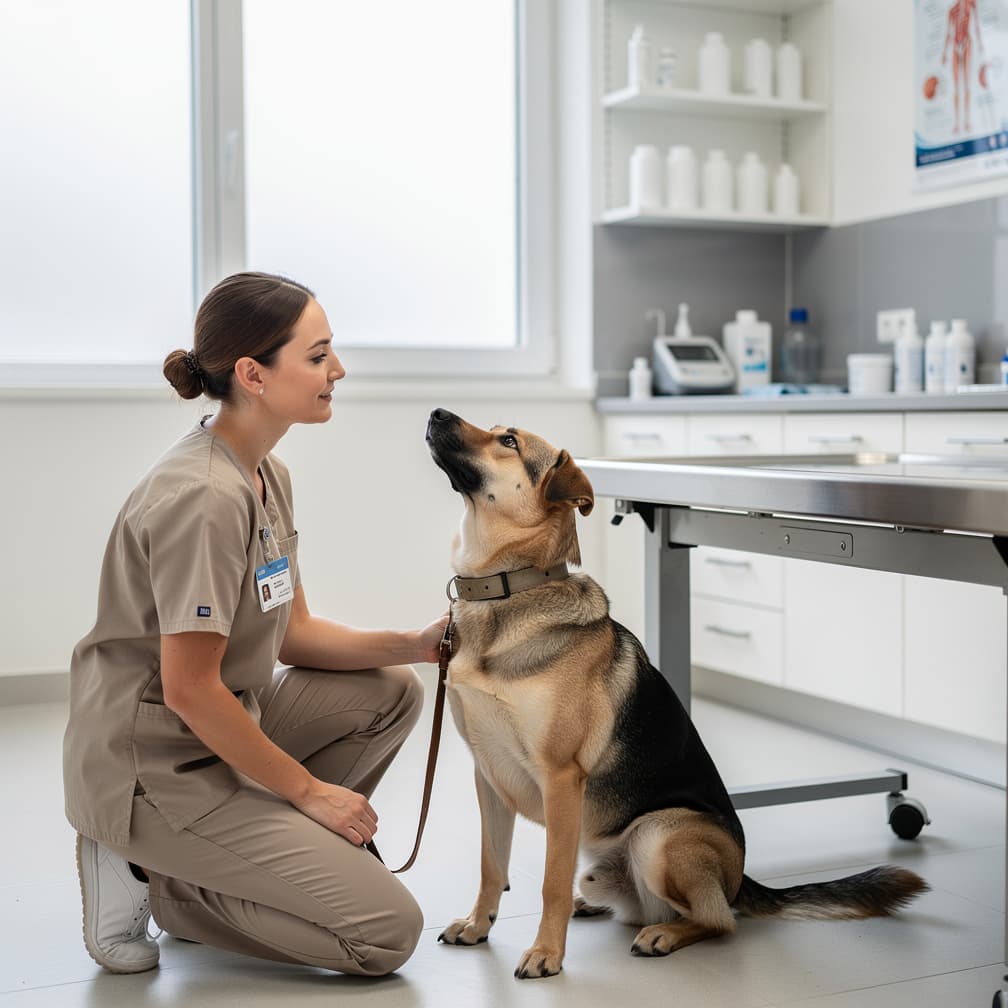

Scratched hardwood in a client's hallway costs far less than a bite claim, and it is the loss that shows up more often. In-home sessions across Dane County put you and an excited dog inches from door frames, gates, screens, and furniture that belong to someone else. Dog trainer insurance in Madison exists mostly for two categories: people hurt around a dog you were handling, and property you did not own but did break. A homeowner can simply send you the repair invoice, and who ultimately pays it depends on a policy you either bought or did not. The invoice does not wait for you to shop. What follows sorts the coverage a working trainer needs from the coverage a facility owner needs, and shows what a quote will ask you to disclose first.
What Makes Madison Different
Market size decides who your counterparties are, and counterparties decide what your policy has to look like. In a county with about 14,500 businesses, the room you rent could belong to a chain or a family. A chain hands you a template written by a risk department that has never met a dog trainer. A family owner hands you a handshake and a set of expectations that nobody wrote down anywhere. The first one over-specifies your limits; the second one leaves you exposed to whatever gets quietly assumed. Both problems get solved the same way, by putting terms in writing before the first Madison session. A written scope also settles what happens when a dog damages the floor during a class. Settle who pays for that repair before you are finding out during the cleanup afterward.
Local Risk Factors in Madison
A field littered with debris cancels a term of outdoor work, and the cleanup outlasts the storm by a wide margin. Clients spread across Dane County lose the drive as well as the hour, and rescheduling a group of twelve is far harder than rescheduling one. What insurance can reach here is physical loss, so the real question is where your gear sat when the wind arrived. Commercial Property may respond to equipment at a scheduled location and can fall silent about a vehicle or a storage unit. A trainer working out of a car in Madison should ask that question specifically rather than assume. The answer is rarely what people expect.
What Coverage Does a Dog Trainer in Madison Need?
General Liability
Landlords, pet retail floors, and parks departments ask for this one by name before they let you set up. It is the line that can respond when a dog you were handling bites a client or a passer-by, or when that dog wrecks property you do not own. Injury to you sits outside it, and so do intentional acts.
Example: A leash goes slack during a group class in Madison and a passer-by is bitten on the forearm. The medical bills and the defense of the resulting claim could fall to this line.
Professional Liability
A liability form is built for what happened while you were standing there, and it generally stops short of what your advice caused after you left. This is the line for that gap: allegations that a behavior plan, a handling instruction, or a training method fell below a reasonable standard. It matters most if you sell written plans.
Example: Six weeks after you write a desensitization plan, the dog bites a houseguest and the owner's attorney calls your instructions negligent. Defending that allegation is what this coverage is meant to fund.
Commercial Property
Crates, long lines, agility jumps, a decoy suit, and the mats in a rented room are the pile this line is built around. It can help cover them after fire, theft, vandalism, or storm damage, subject to the schedule and the deductible you chose. Standard forms typically exclude flood, and gradual wear is generally treated as your own cost.
Example: A vehicle window goes in overnight and a bag of long lines, clickers, and a training collar set disappears from the back seat. Replacing that kit may sit within this coverage, subject to your deductible.
How Much Does Dog Trainer Insurance Cost in Madison?
Dog Trainer Insurance is a bundle of separate policies, priced separately. The ranges below are typical figures for Madison for each line; a quote prices each one against your own operations.
| Coverage | Typical range | What moves your price |
|---|---|---|
| General Liability Insurance | $50 - $170 per month | Industry and risk classification, annual revenue, number of employees |
| Professional Liability Insurance | $35 - $120 per month | The services you actually perform, annual revenue or billed fees, limit and retention selected |
| Commercial Property Insurance | $35 - $100 per month | Building value and construction type, roof age and condition, fire protection class |
Prices shown are general estimates, not guaranteed rates or quotes. Your actual premium will depend on the insurer, coverage selected, business details, location, claims history, and other underwriting factors. Learn about our pricing methodology.
What Are the Insurance Requirements for a Dog Trainer in Madison?
Workers' comp is generally required once you have 3 or more employees. Wisconsin generally requires employers to carry workers' compensation at that point. Common exemptions include sole proprietors, partners, and some farm workers. Confirm current thresholds with your state's workers' compensation agency before you hire.
Flood damage is typically excluded from standard policies. Standard commercial property and builders-risk-type policies typically exclude flood damage. Flood exposure varies address by address, so check your premises in FEMA's Flood Map Service Center before deciding; if you sit in a mapped flood zone, a separate policy through the National Flood Insurance Program is the usual starting point.
Where to verify licensing and coverage rules. The Wisconsin Office of the Commissioner of Insurance publishes consumer guidance and current insurance requirements for Wisconsin businesses. When a contract or lease demands specific wording, the Wisconsin Office of the Commissioner of Insurance's guidance is the authoritative place to check.
Get Your Dog Trainer Quote in Madison
Compare rates from multiple carriers. Free quotes, no obligation.
Operating in Madison
- Behavior plans you put in writing get quoted back at you months later, when the dog does something nobody predicted and the client remembers exactly which page said what.
- Deductibles eat the small stuff in this trade: a scratched floor, a chewed doorframe, a torn screen. Plenty of those repairs never reach the policy at all, so price them into the session rather than expecting reimbursement.
- Board-and-train dogs are a different exposure from a dog on a client's leash for an hour. Care, custody, and control is exactly where trainers assume coverage that may not actually be there.
- Your own injuries are the blind spot. A liability form is built for other people, so the bite that lands on your forearm is not what a policy in Madison was bought to answer.
How to Buy: Advice for Madison Owners
A certificate of insurance is a one-page proof, and you will send it more often than you expect. Set it up so it takes a minute: a current copy on your phone, the carrier's portal bookmarked, and a list of who already holds one. Every venue, landlord, or referral partner on that list needs a fresh copy at renewal, and none of them will remind you. Naming a party as additional insured is a different request and needs a real endorsement rather than a checkbox. General Liability is the policy those certificates describe, so make sure its limits match the strictest agreement you signed in Madison. Professional Liability rarely appears on those requests, though a facility routing behavior referrals to you may ask. The Wisconsin Office of the Commissioner of Insurance publishes consumer guidance on what proof of coverage documents do and do not promise. When you are ready, compare quotes from participating carriers and confirm each one can issue certificates quickly.
FAQ
Dog Trainer Insurance in Madison: FAQ
Binding the policy is the slow part; the paperwork afterward usually is not. Once coverage is in force, carriers commonly issue proof through a portal within a day. What drags is an additional insured endorsement, because that is a real change to the policy and an underwriter has to approve wording a facility's attorney wrote. If a venue in Madison wants both, ask for the clause early and allow a couple of weeks.
Probably not, and this is the gap that catches people. Standard property forms typically exclude flood, so water that rises into a training room and ruins mats and crates generally sits outside the coverage. Flood is priced and bought separately. Storm damage arriving through a roof is a different question and may fall inside the form. Check what your specific policy says about water before the season that tests it.
Cost follows exposure. Underwriters look at annual revenue, how many dogs sit in a class, whether you handle aggression or bite-history cases, whether you own a facility, and what your claims record shows. A solo trainer doing private in-home lessons prices very differently from someone filling a rented hall twice a week. Where you live in Wisconsin matters less than what you do, though contracts you sign locally can force higher limits and lift the bill.
Third-party bodily injury from a dog you were handling is the core reason General Liability exists for this trade. If a client, a bystander, or a houseguest is bitten during a lesson, that line can respond to medical costs and to the defense of a claim, subject to the policy's terms and limits. Intentional acts sit outside it. So does injury to you, since a liability form is built for other people rather than for the named insured.
Yes, and the request is routine. Additional insured status is an endorsement, and a certificate does not create it on its own. The endorsement extends some protection under your policy to the venue for claims arising out of your operations there. If a hall in Madison sends you a clause, forward the exact wording to the carrier rather than paraphrasing it, because endorsement forms differ and a facility's attorney can reject a generic one.
Two different numbers govern that. One caps what a single bite incident can draw. The other caps what the entire policy term can draw across every claim added together. A group class incident might land well under the first number and still matter, because a second dog and a second injured client months later draw down whatever remains of the second. By a third incident, a limit that looked generous on the binder can be very thin.
Sources
- 1.U.S. Census Bureau, County Business Patterns (2022), Dane County(Dane County has about 14,500 business establishments.)
- 2.Wisconsin Office of the Commissioner of Insurance(Wisconsin Office of the Commissioner of Insurance publishes consumer guidance for insurance buyers.)
- 3.FEMA / FloodSmart(Flood coverage is typically purchased separately; FEMA administers the National Flood Insurance Program.)


