







































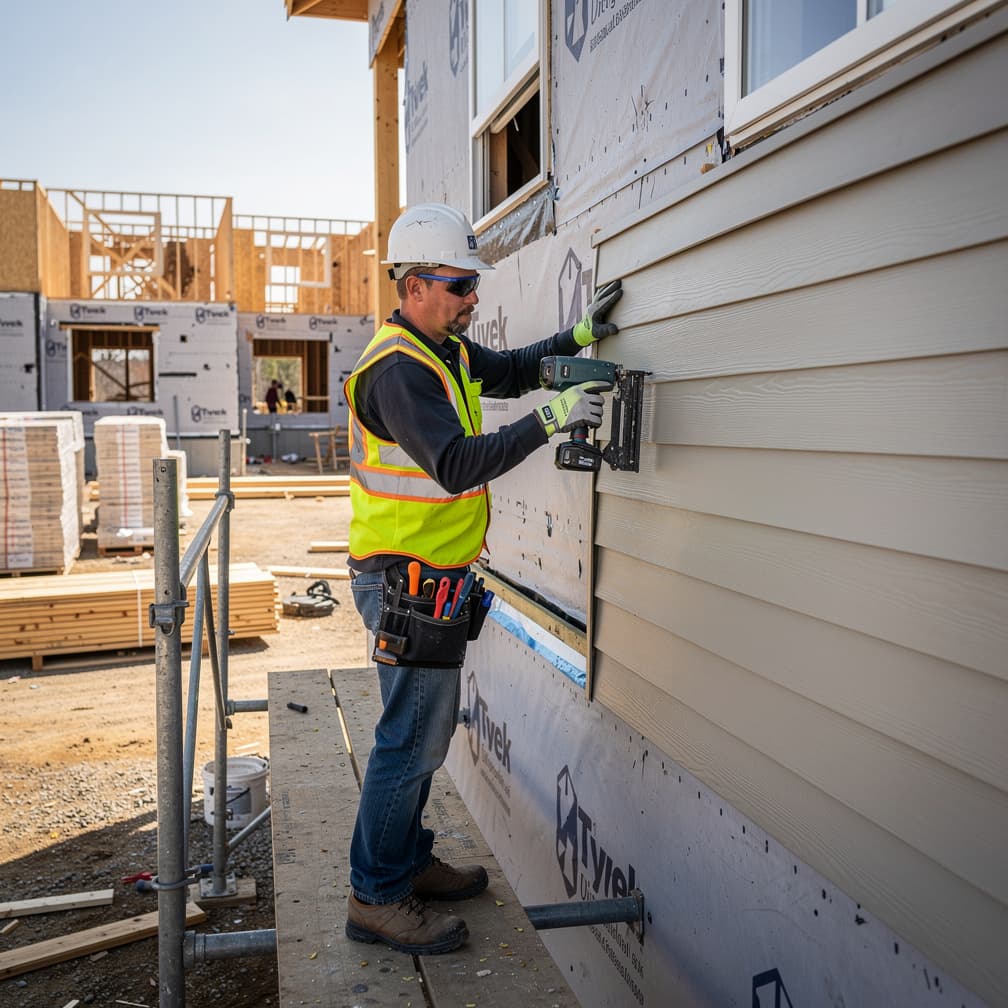

General Liability for a siding crew commonly starts around $35 a month, and the number moves the moment payroll, working height, and claims history reach the application. Price is an output of your operation, so siding contractor insurance in Madison costs what your last three years of work say it should. A clean loss run buys more than shopping ever will. Underwriters ask how much of your revenue goes to hired crews, how high your people work, and whether tear-off is in scope. Answer those the same way twice and the quotes stop swinging. Vinyl on single-story ranch homes and fiber cement four stories up are not the same risk, and the application is where that difference gets made or lost. Participating carriers in Wisconsin weigh the answers their own way, so read below for the drivers behind that first number.
What Makes Madison Different
The property owner who hires you decides when your paperwork is good enough, and that decision precedes the work. A homeowner in Madison can ask for a certificate naming the trust that actually holds title to the house. Getting the entity name wrong on that certificate is a rejection, and rejections cost you the start date. Property managers hand the request to a compliance desk that reads limits, dates, and endorsements before anything else. Nobody at that desk will call you to explain what is missing, because that is not their job. So the fastest fix is asking for the exact wording before you sign rather than after you invoice. Forms in Wisconsin vary by carrier, so keep a copy of every endorsement; a certificate alone confers no rights. The obligation belongs to the counterparty, and meeting it cleanly is the difference between a start date and a delay.
Local Risk Factors in Madison
Tornado and severe-storm weather can flatten a staging area in minutes, and whatever it does not flatten it scatters. Panels, wrap, ladders, and cut-offs travel, and where they land is a liability conversation with somebody you have never met. Secure and photograph the site whenever a warning posts for Madison or anywhere in Dane County, because a file built in twenty minutes is the one that answers the question later. General Liability may respond to injury or property damage your debris causes, subject to the facts and the form. What no policy repairs is a schedule shredded mid-season, or the surge afterward that tempts a crew into work it cannot do well. Slow the rebuild down, since a rushed install becomes a workmanship complaint that lands long after the storm is forgotten.
What Coverage Does a Siding Contractor in Madison Need?
General Liability
The owner or general contractor who hires you asks for this one by name, and the certificate they want is proof it exists. General Liability can respond to a stranger hurt near your scaffold and to property damage your crew causes to gutters, windows, or landscaping. Your own defective work is typically carved out, while the damage it causes to the rest of the house may be treated differently.
Example: A ladder shifts, a downspout tears loose from the fascia, and the homeowner sends you the repair invoice along with a bill from the landscaper whose beds it landed in. This line may take it from there.
Workers Compensation
A fall from staging ends a career and starts a claim on the same afternoon. Workers Compensation can pay medical bills and a share of lost wages for an injured employee, and it typically bars that employee from suing you over the same injury. Who counts as an employee varies by state, and uninsured subs usually get charged back onto your payroll at audit.
Example: A helper on the second course misses a rung with a bundle of trim in one hand and lands wrong on frozen ground. The medical bills and part of his lost wages could fall here.
Commercial Auto
Trucks, vans, and the trailer hauling ladders and panels drop outside a personal auto policy the moment they earn money. Commercial Auto rates on your vehicle list, your driving radius, and who is allowed to drive. It might answer for injury and property damage after an accident on the way to a job in Madison, subject to the drivers you disclosed.
Example: Reversing out of a tight driveway with panels past the tailgate, the trailer clips a parked car and the neighbor calls a lawyer rather than you. Claims like that one may sit here.
Tools & Equipment (Inland Marine)
Property that leaves your shop is where a building policy stops, and that gap is why this line exists. Inland Marine can help cover ladders, staging, compressors, nailers, and brakes against theft or damage between job sites, subject to the schedule you filed. Gear left off the schedule is usually yours to replace, and wear on old equipment is not a claim.
Example: The trailer sits locked at a job in Madison on a quiet night, and by morning the compressor and two nailers are gone. Scheduled equipment is generally where this coverage does its work.
How Much Does Siding Contractor Insurance Cost in Madison?
Siding Contractor Insurance is a bundle of separate policies, priced separately. The ranges below are typical figures for Madison for each line, except workers compensation, which is rated per $100 of payroll; a quote prices each one against your own operations.
| Coverage | Typical range | What moves your price |
|---|---|---|
| General Liability Insurance | $170 - $500 per month | Industry and risk classification, annual revenue, number of employees |
| Workers Compensation Insurance | $0.75 - $2.74 per $100 of payroll | Employee classification codes, total annual payroll, experience modification rate |
| Commercial Auto Insurance | $210 - $550 per month | Fleet size and vehicle types, driver records and experience, coverage limits and deductibles |
| Inland Marine Insurance | $35 - $150 per month | Total insured value of the scheduled property, type and age of the equipment, where it is stored and how far it travels |
Prices shown are general estimates, not guaranteed rates or quotes. Your actual premium will depend on the insurer, coverage selected, business details, location, claims history, and other underwriting factors. Learn about our pricing methodology.
What Are the Insurance Requirements for a Siding Contractor in Madison?
Workers' comp is generally required once you have 3 or more employees. Wisconsin generally requires employers to carry workers' compensation at that point. Common exemptions include sole proprietors, partners, and some farm workers. Confirm current thresholds with your state's workers' compensation agency before you hire.
State auto liability minimums apply to business vehicles. Wisconsin's minimum auto liability limits are $25,000/$50,000/$10,000 (bodily injury per person / per accident / property damage). Contracts and lenders often require more than the state floor.
Where to verify licensing and coverage rules. The Wisconsin Office of the Commissioner of Insurance publishes consumer guidance and current insurance requirements for Wisconsin businesses. When a contract or lease demands specific wording, the Wisconsin Office of the Commissioner of Insurance's guidance is the authoritative place to check.
Get Your Siding Contractor Quote in Madison
Compare rates from multiple carriers. Free quotes, no obligation.
Operating in Madison
- Renewal dates matter more than the monthly figure, because a lapse is visible to every customer in Madison who asks to see a certificate before letting a crew open a wall.
- About 39 siding contractors work in Dane County, which means a homeowner comparing bids can verify exactly one thing about you in thirty seconds: whether your coverage is current.
- Rescue jobs arrive when another crew walks off, and you inherit whatever sits behind the wrap. Document the condition before you touch it or you have quietly bought the previous installer's mistakes.
- Fiber cement cuts throw silica dust, and the respirator rule you follow on site is a safety file an underwriter can ask to see at renewal.
How to Buy: Advice for Madison Owners
Quotes for a small siding operation often open around $35 a month for General Liability, and the figure moves the moment payroll, working height, and losses reach the application. Treat the opening number as a starting point rather than a price. Two things move it further than anything else: three clean years, and an accurate description of the work you actually do. Calling yourself a general remodeler when most of your revenue is tear-off and reinstall is how a claim gets questioned later. Workers Compensation is quoted per hundred dollars of payroll, so the split between duties changes your total more than any discount will. The Wisconsin Office of the Commissioner of Insurance publishes consumer guidance on how contractor premiums get calculated. Compare quotes from participating carriers on one honest description of your operation in Madison, and the spread will tell you something real.
FAQ
Siding Contractor Insurance in Madison: FAQ
Inland Marine is the line built for property that moves, and it can respond to theft away from your shop, subject to the schedule you filed and the deductible you chose. Gear left off that schedule is usually gear you replace yourself. List ladders, staging, compressors, and nailers at real replacement value, and keep serial numbers somewhere you can reach them quickly.
Assume not. Personal auto forms typically exclude business use, and hauling crews, ladders, and panels is business use whoever holds the title. Commercial Auto rates on the vehicle list, the driving radius, and who is permitted behind the wheel. If employees ever run for material in their own cars, ask about hired and non-owned coverage, because that gap catches owners in Wisconsin and everywhere else.
Payroll split by duty, three years of revenue, subcontractor spend, a vehicle list with named drivers, and an equipment schedule with replacement values. Loss runs too, if you have had claims. The clearer that file is, the tighter the quotes come back, because vagueness gets priced as risk. Carriers in Wisconsin read the same submission differently, so send one clean version to several of them.
Usually not. Your own faulty work is typically excluded, and that exclusion is the one owners in this trade meet most often. What may be treated differently is the damage the faulty work caused elsewhere: the stained ceiling, the ruined floor, the insulation that has to come out. So the redo can be yours while the consequences may fall to General Liability. Have a carrier walk both clauses before you sign.
Additional insured status can extend some of your policy's rights to another party, usually the owner or the general contractor who hired you. A waiver of subrogation gives up your insurer's right to chase whoever actually caused a loss it paid. Contracts ask for both, carriers charge for both, and some decline the waiver on workers coverage depending on the state. Price the clause when you price the job.
Because siding claims arrive late. A wall that leaks shows up as a stain months after the last panel went on, and ongoing operations wording has stopped applying by then. Completed operations keeps that general contractor named for work already finished. It is a separate grant on the endorsement, and it is the one that matters on an exterior job.
Sources
- 1.U.S. Census Bureau, County Business Patterns (2023), Dane County(Dane County has about 39 businesses in this trade's category (NAICS group 238170).)
- 2.Wisconsin Office of the Commissioner of Insurance(Wisconsin Office of the Commissioner of Insurance publishes consumer guidance for insurance buyers.)


