







































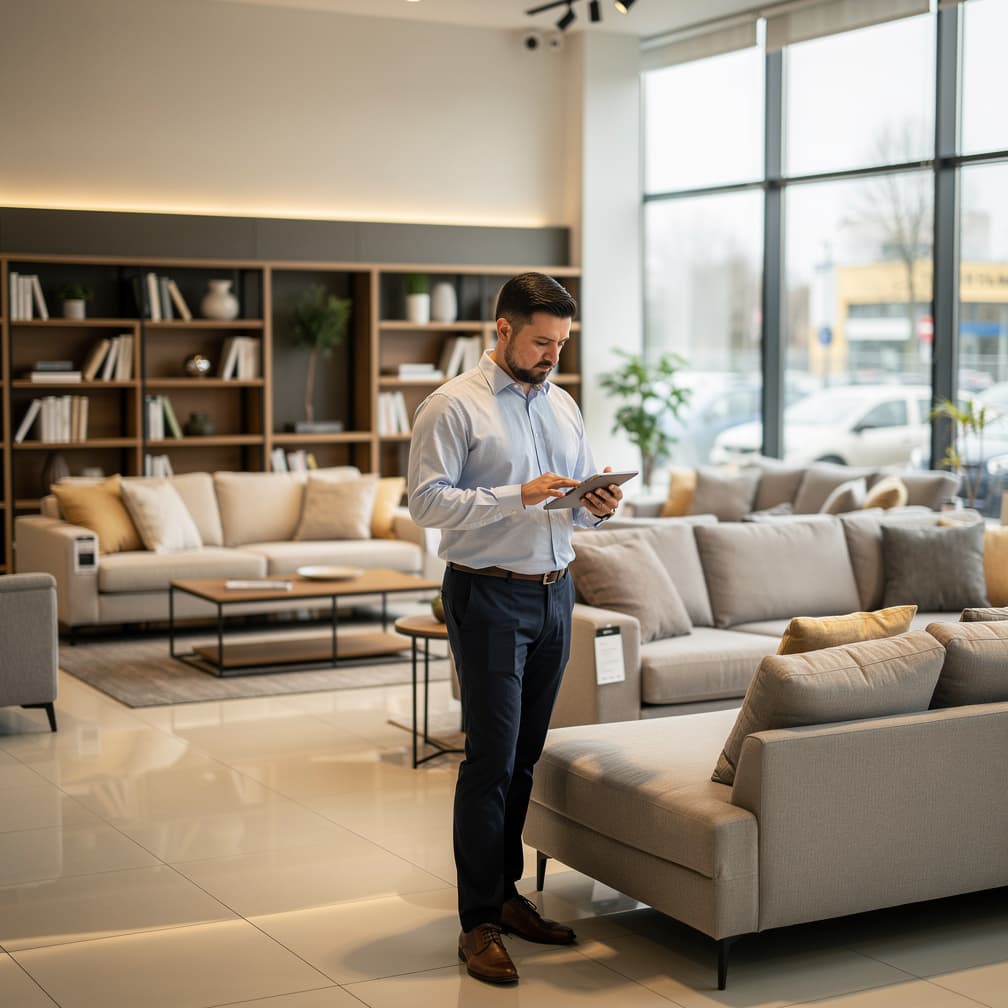

About 64 furniture stores share Milwaukee County, which tells you how many other buyers a carrier has already priced and almost nothing about what your own store should carry. That is the honest use of a market count: context, not limits. Furniture store insurance in Milwaukee turns on your selling space, your stock value, your payroll, and whether your crew or a hired one carries the couch up the stairs. Those four answers move a premium; the tally of stores nearby does not. Write them down before you request anything, and write down the claims you have had, because you will be asked for them. Then compare quotes that were all built from the same set of facts, which is the only comparison worth making.
What Makes Milwaukee Different
A storm week does not have to touch your roof to cost you a month of delivery schedule. Trucks stay parked, customers stay home, and stock you already paid for sits in a dark building. Owners think about building damage and skip straight past the interruption sitting underneath it. The interruption is what turns a repairable loss into a bad quarter for a retailer. Ask any carrier in Wisconsin what triggers income coverage and whether physical damage has to come first. That single condition decides whether a week of closed doors is a claim or an expense. Wind, water, and power loss all read differently to a policy, so specifics beat the forecast. Bring your own numbers on a normal week of sales in Milwaukee, because that is what a claim gets measured against.
Local Risk Factors in Milwaukee
Glass is what a furniture store notices first once a cell has passed. A blown storefront puts weather onto the sales floor and puts your inventory in public view overnight, which turns one loss into two. Boarding up buys time and costs selling days, because customers walk past a plywood front rather than into it. Commercial Property may respond to the glass, the water behind it, and the stock ruined underneath, though how a partial closure gets treated varies between forms. Ask whether a store that is open but half usable counts as damaged for income purposes in Milwaukee. That single answer is worth more to a Milwaukee County retailer than another increment of limit.
What Coverage Does a Furniture Store in Milwaukee Need?
General Liability
A customer who catches a heel on an entry mat or pulls a bookcase over is the exposure this line exists for. Landlords and commercial buyers commonly want it in place before a lease starts or an order ships. It can help cover defense and settlement of third-party injury and property damage claims, though it generally does nothing about your own stock or your own employees.
Example: A delivery crew swings a headboard into a client's stairwell wall on the way up, and the repair plus the argument that follows is the kind of claim general liability is meant to answer.
Commercial Property
Stock is the point of this one. Sofas, dining sets, floor samples, racking, and the point-of-sale system all sit under a limit you supplied the number for. Fire, storm, theft, and vandalism are the usual perils; flood and gradual leaking usually are not. A lender or a landlord may insist on it where the building or the improvements are financed.
Example: A receiving door left propped during a busy afternoon lets a floor sample walk out overnight, and the theft claim behind it is what a commercial property limit typically stands behind.
Commercial Auto
Every delivery puts a loaded truck between your warehouse and somebody's driveway, which is where this line earns its keep. Personal auto policies commonly exclude business use, so a store delivering in an employee's pickup can be uninsured without anybody noticing. Liability, damage to the vehicle itself, and hired or non-owned exposure are separate decisions inside it. Cargo in the back is usually its own question.
Example: A box truck clips a bollard at a Milwaukee loading dock with tomorrow's orders aboard; commercial auto can respond to the vehicle damage and to the liability that comes with it.
Workers Compensation
Lifting is how people get hurt in this trade: a sectional on a stair turn, a marble top on a hand truck, a warehouse pull done alone. Rating runs on payroll rather than headcount, so classifying a driver who also loads changes the number. Medical bills and lost wages for an injured employee are what it is meant to take on. Requirements vary by state, and the Wisconsin Office of the Commissioner of Insurance publishes the current requirements.
Example: A loader tears a shoulder easing a dresser around a tight landing, and the medical bills plus the weeks off are the sort of loss workers' compensation is generally there to absorb.
How Much Does Furniture Store Insurance Cost in Milwaukee?
Furniture Store Insurance is a bundle of separate policies, priced separately. The ranges below are typical figures for Milwaukee for each line, except workers compensation, which is rated per $100 of payroll; a quote prices each one against your own operations.
| Coverage | Typical range | What moves your price |
|---|---|---|
| General Liability Insurance | $85 - $240 per month | Industry and risk classification, annual revenue, number of employees |
| Commercial Property Insurance | $130 - $450 per month | Building value and construction type, roof age and condition, fire protection class |
| Commercial Auto Insurance | $200 - $575 per month | Fleet size and vehicle types, driver records and experience, coverage limits and deductibles |
| Workers Compensation Insurance | $0.75 - $2.74 per $100 of payroll | Employee classification codes, total annual payroll, experience modification rate |
Prices shown are general estimates, not guaranteed rates or quotes. Your actual premium will depend on the insurer, coverage selected, business details, location, claims history, and other underwriting factors. Learn about our pricing methodology.
What Are the Insurance Requirements for a Furniture Store in Milwaukee?
Workers' comp is generally required once you have 3 or more employees. Wisconsin generally requires employers to carry workers' compensation at that point. Common exemptions include sole proprietors, partners, and some farm workers. Confirm current thresholds with your state's workers' compensation agency before you hire.
State auto liability minimums apply to business vehicles. Wisconsin's minimum auto liability limits are $25,000/$50,000/$10,000 (bodily injury per person / per accident / property damage). Contracts and lenders often require more than the state floor.
Flood damage is typically excluded from standard policies. Standard commercial property and builders-risk-type policies typically exclude flood damage. Flood exposure varies address by address, so check your premises in FEMA's Flood Map Service Center before deciding; if you sit in a mapped flood zone, a separate policy through the National Flood Insurance Program is the usual starting point.
Where to verify licensing and coverage rules. The Wisconsin Office of the Commissioner of Insurance publishes consumer guidance and current insurance requirements for Wisconsin businesses. When a contract or lease demands specific wording, the Wisconsin Office of the Commissioner of Insurance's guidance is the authoritative place to check.
Get Your Furniture Store Quote in Milwaukee
Compare rates from multiple carriers. Free quotes, no obligation.
Operating in Milwaukee
- Your Milwaukee landlord can require notice before you change or cancel a policy, which quietly turns a simple carrier switch into a negotiation with two counterparties instead of one.
- Deliveries into apartments mean shared hallways, shared elevators, and a building manager who was never part of your sale but becomes part of any claim that follows it.
- Freight elevators get booked, and a building that wants your certificate before it releases one can push a delivery out by a week. The sale is already paid for; the sectional just sits.
- Entry mats are the least glamorous liability control in retail and the first thing to vanish when a floor gets rearranged. Wet tile at a Milwaukee doorway is where injury claims start.
How to Buy: Advice for Milwaukee Owners
Photographs are the least expensive claims tool a furniture store has, and almost nobody uses them. Shoot the piece before it leaves the dock, shoot the entry to the customer's home, shoot the finished placement. A delivery claim usually turns on when the scratch happened, and that argument is unwinnable from memory. The same habit works on your own property: photograph racked stock, the alarm panel, and the sprinkler tag. Those images do more for a Commercial Property claim than a sworn recollection ever could. General Liability disputes about what a customer tripped over behave the same way. They also make an underwriter's questions easy to answer, which tends to help the price. Build the habit before you shop, then let a Milwaukee store's documented condition be what participating carriers in Wisconsin price through CPK.
FAQ
Furniture Store Insurance in Milwaukee: FAQ
No. Requirements, forms, and rating rules vary by state and sometimes by city, so a rule you read about somewhere else can be wrong where you operate. The Wisconsin Office of the Commissioner of Insurance publishes the current requirements for businesses shopping for commercial coverage in Wisconsin. Confirm the details there first, then compare quotes built against that answer rather than against a generic checklist.
Most commercial leases make proof of coverage a condition of possession, so a landlord can hold the keys until a certificate naming them lands in the file. Ask for the lease's insurance exhibit early. It usually names limits, wording, and who has to be listed as an additional insured, and matching it after the fact can require an endorsement. Sort it before your build-out schedule depends on the date.
Cost follows a handful of inputs rather than a location alone: selling square footage, the value of stock on hand, payroll split by job, delivery radius, and your claims history. A store that delivers with its own truck and crew prices differently from one that hands every sale to a third party. Participating carriers in Wisconsin weigh the same submission differently, which is why one accurate set of numbers sent to several of them beats a single quote.
Damage your crew does inside a Milwaukee customer's home is third-party property damage, and General Liability is usually the line asked about first. Whether it responds can turn on who was carrying the piece, since an employee, a hired driver, and an independent delivery company each change the analysis. Some forms also treat property in your care differently from property damaged in passing. Get that wording confirmed before a truck leaves the dock.
Stolen stock is typically a Commercial Property question, but where the stock was standing matters. Merchandise on the sales floor, merchandise in a rented warehouse bay, and merchandise riding in a truck are three separate situations, and a form that speaks to one can be silent on another. Ask specifically about property away from the premises. Ask too what documentation a theft claim requires, because serial numbers and order records decide those claims.
Thresholds vary by state and by how workers are classified, so nothing written about another state settles yours. The exposure does not vary: lifting is how people get hurt in this trade, and a shoulder injury generates medical bills and lost wages whether or not the store is small. The Wisconsin Office of the Commissioner of Insurance publishes the current requirements for workers coverage. Start there, then price the exposure honestly against what a single lifting claim can run to.
Sources
- 1.U.S. Census Bureau, County Business Patterns (2023), Milwaukee County(Milwaukee County has about 64 businesses in this trade's category (NAICS group 442110).)
- 2.Wisconsin Office of the Commissioner of Insurance(Wisconsin Office of the Commissioner of Insurance publishes consumer guidance for insurance buyers.)
- 3.FEMA / FloodSmart(Flood coverage is typically purchased separately; FEMA administers the National Flood Insurance Program.)


