







































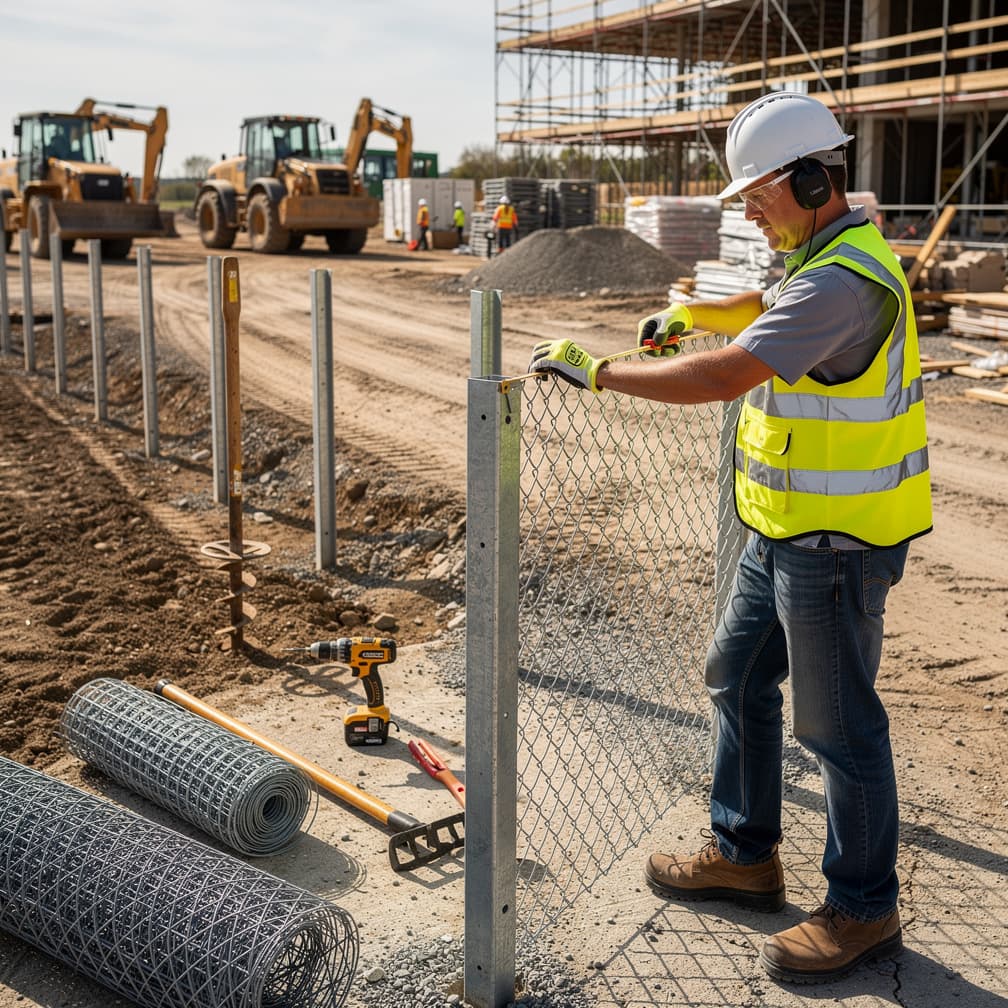

Panels riding on an open trailer are only as secure as the last strap, and a sheet of privacy fence in traffic is somebody's windshield. Tools disappear from an unattended site while the crew runs for more concrete. Both losses land on the same desk, which is why fencing contractor insurance in Laramie is really a bundle of small decisions rather than one purchase. Each line answers a different question: who pays for the injured driver, who replaces the auger, who defends you when a property owner says the gate never latched right. The gaps between those answers are where the money leaks out of a good year. Read the coverage breakdown below with your own equipment list next to it, because the pool of assets you carry between Laramie jobs drives more of the premium than the number of fences you build.
What Makes Laramie Different
Handshake jobs still come with obligations, and the obligation usually appears after something breaks. A customer who never asked for a certificate will ask for one the day their driveway cracks. Your contract is the only place the scope of the fence line was ever written down. Without it, the argument becomes your memory against theirs, and memory loses to paper every time. Coverage responds to the facts a claim file can prove, which is why documentation is part of the buying decision. Photograph the boundary stakes, the existing damage, and the finished run before you leave a Laramie site. Keep the customer's written approval of the line, even when the line seems obvious to both of you. The one risk control that costs a Laramie crew nothing but minutes is writing things down.
Local Risk Factors in Laramie
A trailer parked in the open is a wind target with your entire toolkit inside it. Augers, drivers, compressors, and saws are worth more together than most owners ever write down, and severe storms do not care about your schedule. Inland Marine forms are built around property that moves, and they generally respond to named perils or open perils depending on which version you bought, subject to their conditions. Read which one you have before the storm season in Wyoming, since the cheaper version usually carries the shorter list. Photograph serials now. A claim on a Laramie job stalls fast when nobody can prove what was in the trailer.
What Coverage Does a Fencing Contractor in Laramie Need?
General Liability
The neighbor, the visitor, and the property you were never hired to touch: that is who this line is about. General Liability may respond when a fence lands over a boundary, an auger opens a sprinkler line, or somebody trips near an open hole. Redoing your own defective run is commonly excluded, and that gap surprises people.
Example: A crew sets forty feet of cedar three feet inside the neighbor's yard, and the neighbor demands removal plus damages. Defense and the third-party claim are what a liability form is generally meant to take on.
Workers Compensation
Backs, hands, and knees do the work in this trade, and an employer carries the cost when one gives out. Workers Compensation is built for employee injury, and it typically handles medical care and lost wages while generally limiting an employee's ability to sue you. Rules vary by state, and the Wyoming Department of Insurance publishes the current requirements for employers.
Example: A helper lifting a wet post on uneven ground tears something in his back and misses six weeks. The medical bills and part of the wages he does not earn may fall to this policy rather than to you.
Commercial Auto
Nothing reaches the job without the truck, and personal auto forms commonly exclude business use. Commercial Auto is written for the vehicles, trailers, and hired equipment that haul posts and panels, and it typically addresses injury to others plus damage to the vehicle itself depending on what you buy. Tools inside generally sit on another form.
Example: A gust catches a privacy panel off the trailer on the way to a Laramie job and it goes through the windshield behind you. The other driver's injuries and repairs are the kind of loss this policy may take up.
Tools & Equipment (Inland Marine)
Augers, post drivers, compressors, levels, and the saw all live on a trailer rather than in a shop. Inland Marine is meant for property that moves, and it may respond to theft or damage between sites, subject to conditions about locks, attendance, and what you can prove you owned. Wear and tear is not a covered peril.
Example: A trailer gets broken into overnight at a stalled Laramie site, and the post driver and compressor are gone by morning. Replacing them quickly is what this coverage is intended to make possible, subject to the deductible.
How Much Does Fencing Contractor Insurance Cost in Laramie?
Fencing Contractor Insurance is a bundle of separate policies, priced separately. The ranges below are typical figures for Laramie for each line, except workers compensation, which is set by the state fund; a quote prices each one against your own operations.
| Coverage | Typical range | What moves your price |
|---|---|---|
| General Liability Insurance | $110 - $340 per month | Industry and risk classification, annual revenue, number of employees |
| Workers Compensation Insurance | Set by the state fund | Employee classification codes, total annual payroll, experience modification rate |
| Commercial Auto Insurance | $190 - $525 per month | Fleet size and vehicle types, driver records and experience, coverage limits and deductibles |
| Inland Marine Insurance | $30 - $130 per month | Total insured value of the scheduled property, type and age of the equipment, where it is stored and how far it travels |
Prices shown are general estimates, not guaranteed rates or quotes. Your actual premium will depend on the insurer, coverage selected, business details, location, claims history, and other underwriting factors. Learn about our pricing methodology.
What Are the Insurance Requirements for a Fencing Contractor in Laramie?
Workers' comp is generally required once you have your first employee, through the state fund. Wyoming runs workers' compensation through a state fund: employers buy coverage from the Wyoming Department of Workforce Services, not from private carriers. Common exemptions include sole proprietors and partners. Confirm current requirements directly with the fund before you hire.
State auto liability minimums apply to business vehicles. Wyoming's minimum auto liability limits are $25,000/$50,000/$20,000 (bodily injury per person / per accident / property damage). Contracts and lenders often require more than the state floor.
Where to verify licensing and coverage rules. The Wyoming Department of Insurance publishes consumer guidance and current insurance requirements for Wyoming businesses. When a contract or lease demands specific wording, the Wyoming Department of Insurance's guidance is the authoritative place to check.
Get Your Fencing Contractor Quote in Laramie
Compare rates from multiple carriers. Free quotes, no obligation.
Operating in Laramie
- A dog behind the old fence is a bite waiting to happen, and whose policy answers depends on facts nobody bothers to record at the time.
- Concrete, post drivers, and augers get borrowed between crews, and gear that lives on a trailer between Albany County jobs sleeps somewhere different every night.
- Subcontractors take your overflow and your name at the same time, and their helper's injury can land on your file when nobody collected the paper.
- A retaining wall or a stone cap turns a fence job into earth retention, which is a severity exposure a carrier prices differently than pickets.
How to Buy: Advice for Laramie Owners
The two mistakes that generate real claims in this trade are the property line and the buried line. One is solved with a survey and a signature, the other with a locate request and some patience. Neither is an insurance product, and both decide what your coverage costs three years from now. Damage to a sprinkler system, a service line, or a driveway during installation is the everyday claim, and General Liability is the line most likely to be tested by it. Inland Marine will not help with somebody else's driveway, so never let a tool policy stand in for liability. Keep photographs of existing cracks and settling before you dig, because a homeowner's memory improves after a claim. Check the Wyoming Department of Insurance's guidance before deciding what coverage your jobs require. Then compare quotes from participating carriers with an honest description of how deep your Laramie work goes.
FAQ
Fencing Contractor Insurance in Laramie: FAQ
Property you are working on sits in a grey zone, and the answer turns on the form. Damage to a driveway or a lawn during installation may fall inside a liability policy, while damage to the actual thing you were hired to build usually does not. Care, custody, and control language is where these claims live. Photograph existing cracks before you dig, because a homeowner's memory improves after a claim.
Meeting a contract's limit is usually cheaper than losing the contract, and the jump costs less than the first quote suggests because severe claims are rare. The real question is whether a carrier will issue that limit at your payroll and history. Ask before you sign, since a Laramie contract binds you whether or not any carrier agrees to the wording it demands.
Requirements vary by state and by city, and plenty of small jobs start without anyone asking for proof. The exposure does not care. One misplaced line, one cracked driveway, or one visitor tripping over an open post hole can cost more than a year of premium. Permit desks and property managers commonly ask for a certificate anyway, so the practical answer usually arrives before the formal one does.
Price follows your payroll, your driving, your claims history, and how deep the work goes, rather than your address alone. A one-truck crew setting residential picket lines prices differently from an outfit augering near foundations and hanging automated gates. Participating carriers in Wyoming read the same submission differently, which is why identical crews get different numbers. Every current range by coverage sits in the cost table further down this page.
That is a third-party property dispute, and General Liability is the line most likely to be tested. What it takes on depends on the form: damage to the neighbor's land and the argument over it usually sit inside the policy, while pulling and resetting your own defective run is commonly excluded. Read the your-work exclusion before you assume the whole fix falls to a carrier.
Usually not. Standard liability forms tend to exclude the cost of repairing or replacing your own defective work, because that is a quality problem rather than an accident. Damage that your bad work causes to something else can be a different story and may fall inside the policy. The distinction is narrow and it decides claims, so ask a carrier to explain it against a real scenario before you buy.
Sources
- 1.Wyoming Department of Insurance(Wyoming Department of Insurance publishes consumer guidance for insurance buyers.)


