







































Updated July 16, 2026

Builders Risk Insurance in Anchorage
Anchorage projects move in a market with 8,777 business establishments in the municipality. That density means owners and lenders here see enough volume to expect clean documentation before funds release or site access opens. Whether the job is a custom home in Hillside, a tenant improvement in Midtown, or an infill build near South Addition, your policy needs to reflect who holds the financial interest at each phase, how materials are staged, and when values peak during construction. Local buyers also face a property market where the median home value sits at $375,900. Replacing even a modest residential structure halfway through construction can cost more than many owners assume, so getting the limit right at the start matters. If you are comparing options here, ask for a quote that accounts for your project budget, renovation versus ground-up scope, delay-related expenses, and any off-site or temporary storage exposure before the policy goes into effect.
Builders Risk Insurance Risk Factors in Anchorage
Anchorage's top risk factors include Earthquake damage, Liquefaction risk, Landslide, and Infrastructure failure.
Alaska has a moderate climate risk rating. Top hazards: Earthquake (Very High), Wildfire (High), Avalanche (High), Tsunami (Moderate). The state's expected annual loss from natural hazards is $280M, which influences builders risk insurance premiums and may affect coverage availability in high-risk areas.
What Builders Risk Insurance Covers
In Alaska, the most important coverage review usually sits in the gray areas around the project rather than in the basic description of the building itself. That means whether materials arrive by barge or truck, whether they sit offloaded before installation, whether a remodel leaves part of an occupied structure exposed, and whether temporary protection is in place during pauses between trades. Those details often decide whether a loss stays manageable or becomes a schedule problem.
For a new build, review how the policy treats materials before they are installed, temporary structures used to support the work, and equipment or supplies that may be staged away from the main footprint. For an addition or major renovation, ask how the policy coordinates with the existing property coverage so there is no confusion if damage affects both old and new construction. If the project depends on custom components or long lead-time items, make sure the insurer understands that replacement may not follow a normal timeline.
The right conversation is less about broad assumptions and more about named causes of loss, exclusions, waiting periods, and any conditions tied to site protection. If your project is in a harder-to-access area, ask how debris removal, soft cost options, and delay-related exposures are handled. Those are the places where a builders risk policy can either support the project after a loss or leave you negotiating around gaps.
Coverage Included

Structure Coverage
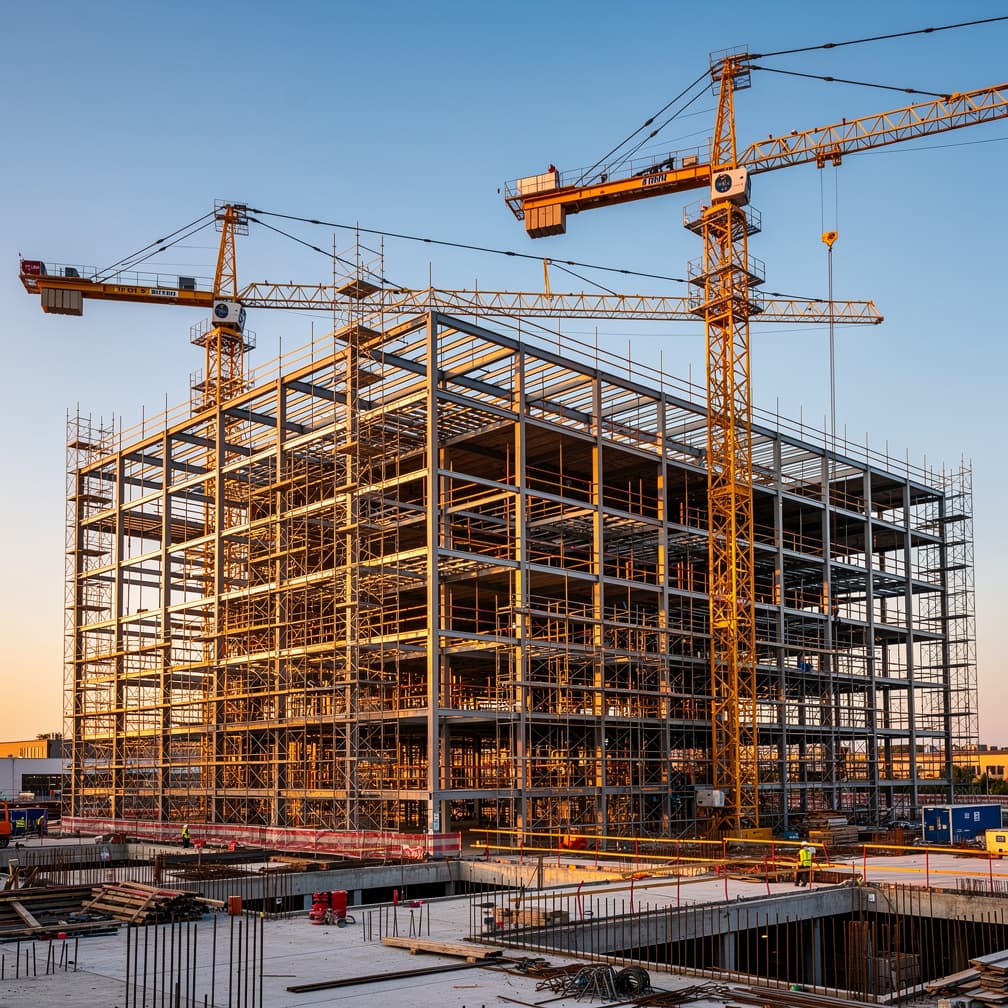
Covers the building or structure under construction.
Materials on Site
Covers building materials stored at the construction site.

Materials in Transit
Covers materials being transported to the job site.
Temporary Structures
Covers scaffolding, fencing, and temporary buildings.

Soft Costs
Covers additional expenses from construction delays due to covered losses.
Equipment Coverage
Covers permanently installed fixtures and equipment.
Industries & Insurance Needs in Anchorage
Construction concentration is the local signal that matters most. In Anchorage Municipality, construction accounts for 10.3% of establishments, alongside professional, scientific, and technical services at 12.6% and health care and social assistance at 15.9%. That mix means many projects involve layered contracts, lender oversight, architects or engineers, and occupied properties that stay in service while work proceeds. For a builders risk buyer, the consequence is practical: the form should be reviewed for renovation terms, responsibility for existing structures, change-order handling, and how covered property values are updated as the job advances. If your project touches a clinic, office suite, mixed-use space, or a higher-finish residence, send the carrier the full scope of work, contract requirements, and draw schedule so the quote reflects the real exposure instead of a stripped-down application.
What Makes Anchorage Different
Projects here often involve an owner, lender, general contractor, and sometimes design professionals or tenant stakeholders, all with money at risk at the same time. The real question becomes who holds insurable interest at each phase and whose name needs to appear on certificates or policy documents. Anchorage median household income at $98,152 suggests many clients have the budget for larger remodels, additions, and custom finishes. Higher-end material selections can raise the value of work in place faster than a basic form anticipates, meaning your limit needs to reflect those costs before the first order is placed. If your build includes owner-supplied items, phased occupancy, or a renovation inside an existing structure, ask for those details to be addressed up front so a claim does not turn into an argument over what property was actually intended to be covered.
Our Recommendation for Anchorage
Start with the contract set, not the application shortcut. Ask your agent to review the construction agreement, lender insurance requirements, project budget, and draw schedule together so the policy limit follows the real completed value and not an early estimate. If this is a renovation, separate the value of new work from the existing building and confirm how the form treats partial occupancy, tenant improvements, and owner-furnished materials. If materials will sit off site or in temporary storage before installation, have those locations and values scheduled clearly. Confirm when coverage starts, what event ends it, and whether testing or delay-related expenses need to be considered. Before the policy takes effect, request specimen wording or a coverage summary in plain language and compare exclusions, deductible structure, and reporting requirements side by side.
Get Builders Risk Insurance in Anchorage
Enter your ZIP code to compare builders risk insurance rates from carriers in Anchorage, AK.
Business insurance starting at $25/mo
FAQ
Frequently Asked Questions
Anchorage projects often involve an owner, lender, and contractor at the same time. Each one may require proof of their interest before a draw request moves forward. Work with your agent to ensure named insureds and additional interests match the contract and funding structure before construction begins, since misaligned documents are a common source of claim friction.
Local property values run high, so limit adequacy deserves real attention. When a mid-range remodel can involve substantial materials and labor costs, setting the limit too low may leave a gap between what you have spent and what the policy can help pay. Review the completed value, owner-supplied materials, and finish level so the policy reflects the true exposure on site.
Anchorage commercial work often sits in a county economy led by health care and social assistance at 15.9% and professional services at 12.6%. Build-outs in those fields can involve multiple stakeholders and tighter documentation demands, which means your lease, lender, and construction agreements may each impose specific insurance obligations. When your coverage terms align with those documents, you reduce the chance of a dispute over whether a particular loss was intended to be covered.
Anchorage custom builds should disclose owner-furnished materials early, especially where higher household purchasing power can push finish selections upward. Premium upgrades may accumulate quickly and exceed a standard policy limit, so documenting those items and values before the policy takes effect helps ensure the coverage reflects what is actually on site.
Builders risk in the state is regulated by the Alaska Division of Insurance. You can verify a carrier or producer license through their office and review the forms and endorsements being offered against Alaska-specific requirements.
Remote projects often deserve a closer builders risk review because access, storage, and replacement timing can magnify a covered loss. If materials or labor are hard to replace quickly, ask for those logistics to be reflected in the quote.
Material storage should be disclosed before binding, especially if items are staged off site or held before installation. The key step is to identify every storage location and ask how the policy treats property at each point.
Renovation projects can be insured under builders risk, but the important issue is how the policy coordinates with the existing property coverage. Review that interaction before demolition or opening any part of the structure.
Sources
- 1.U.S. Census Bureau, County Business Patterns, Anchorage Municipality(Anchorage projects move in a market with 8,777 business establishments in Anchorage Municipality.; In Anchorage Municipality, construction accounts for 10.3% of establishments, alongside professional, scientific, and technical services at 12.6% and health care and social assistance at 15.9%.)
- 2.U.S. Census Bureau, ACS 5-Year Estimates, table B25077(The median home value is $375,900.)
- 3.U.S. Census Bureau, ACS 5-Year Estimates, table B19013(Anchorage median household income is $98,152.)
Updated July 16, 2026





