







































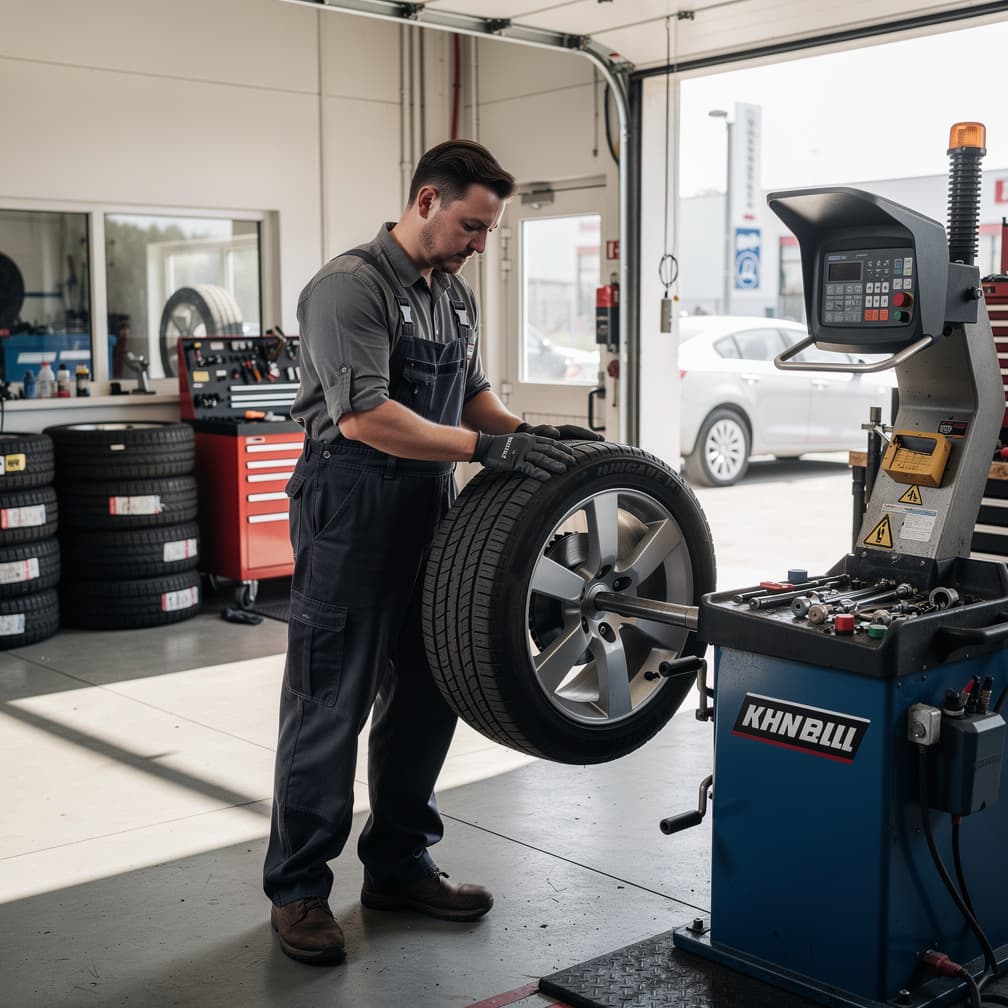

Maricopa County has about 108,000 businesses, which is the practical reason a tire shop there gets asked for paperwork it never expected to produce. Fleet accounts, property managers, and dealer overflow work each arrive with their own certificate wording, and each one wants naming and limits done its way. Auto tire shop insurance in Mesa ends up shaped by those requests as much as by the risks in your bay. A liability limit that felt fine for walk-in retail looks thin the moment a commercial account hands you fifteen vehicles a month. The paperwork has its own rhythm too: no certificate, no work, no invoice. Ask what your policy can be endorsed to do before you sign anything that assumes it already does it.
What Makes Mesa Different
Deductibles are the lever owners forget, and they move a premium more than most negotiation does. A low deductible feels safe until you file the small claims it quietly invites you to file. Small claims are what price a Maricopa County shop out of a class, one renewal at a time. A higher deductible keeps the loss run clean, but only if you can genuinely fund it. That is a cash question rather than an insurance question, and only you can answer it honestly. Limits work the opposite way: buying more costs less per dollar than the first dollar did. So a shop in Mesa can get more useful protection by raising both figures at once. Ask participating carriers to quote two or three combinations, then read them against your bank balance.
Local Risk Factors in Mesa
Extreme heat in Mesa pushes work into a bay where the doors stay open and the fans never keep up. Techs handling truck tires in that air make mistakes and get hurt, and heat illness is a workers claim in every state that recognizes it. Workers Compensation is generally the line asked to respond when an employee goes down on a hot floor, and the loss experience it builds follows your rate for years. Water, rotation, and shade cost nothing next to that. Ask what a carrier in Arizona looks for in a heat plan, since documented practice tends to matter more at renewal than any promise made on an application.
What Coverage Does an Auto Tire Shop in Mesa Need?
General Liability
Landlords, fleet accounts, and dealers all ask to see this line before they let you touch anything, and it is the limit a certificate advertises. It is generally meant for third-party injury and property damage: the customer who goes down in your entryway, or the wheel that comes off a mile after an install. It typically does not reach your own building, your own tools, or your own employees.
Example: A customer crosses the waiting room floor, slips on water tracked in from the bay, and leaves with a fractured wrist and a lawyer. The medical bill and the defense costs are what this line is generally asked to answer.
Garage Keepers
A customer's car sits in your bay, on your lift, or out on the lot overnight, and none of it belongs to you. This line is written for vehicles in your care, and the forms vary: some respond only to enclosed storage, some carry a deductible for each vehicle, and some stop at the lot line. Your own property coverage will not stand in for it.
Example: A hail burst dents nine cars waiting on the lot for tires arriving tomorrow, and every owner phones you rather than their own insurer. Depending on the form you bought, this coverage might pick that up.
Commercial Property
The lifts, the balancer, the mounting machine, the compressor, and the rubber stacked to the ceiling are what this line is built around, alongside the building or your improvements to it if you lease. Named causes like fire, theft, and storm are the usual triggers. A machine that fails on its own is normally a separate purchase, and rising water sits outside the standard form.
Example: A fire starting in the compressor room of a Mesa shop takes the tire room with it and leaves the bays dark for a season. The building and the machines inside are what this line may respond to.
Workers Compensation
Liability lines stop at your own staff, and this is the one that starts there. It is generally intended for medical costs and lost wages when an employee gets hurt on the job, which in a tire shop usually means backs, shoulders, and hands. It is rated against payroll and class code rather than revenue, and rules on who must carry it vary by state.
Example: A tech wrestling a truck tire onto a rim tears a shoulder and is off the floor for two months. Wage replacement and treatment are typically where this line does its work.
Product Liability
A customer blames the part rather than the install, and this is the line that argument lands on. It is meant for claims that a tire, a valve stem, or a wheel you supplied was itself defective, and a demand letter naming you alongside the manufacturer is the ordinary shape of it. A manufacturer's warranty is no substitute, since it does not defend you.
Example: A casing sold across your counter fails at highway speed, and the driver's attorney names your shop, the distributor, and the maker in one filing. Defense costs are what this coverage could be asked to carry.
How Much Does Auto Tire Shop Insurance Cost in Mesa?
Auto Tire Shop Insurance is a bundle of separate policies, priced separately. The ranges below are typical figures for Mesa for each line, except workers compensation, which is rated per $100 of payroll; a quote prices each one against your own operations.
| Coverage | Typical range | What moves your price |
|---|---|---|
| General Liability Insurance | $110 - $340 per month | Industry and risk classification, annual revenue, number of employees |
| Garage Keepers Insurance | Varies | Quoted individually based on your operations and limits |
| Commercial Property Insurance | $150 - $430 per month | Building value and construction type, roof age and condition, fire protection class |
| Workers Compensation Insurance | $0.75 - $2.74 per $100 of payroll | Employee classification codes, total annual payroll, experience modification rate |
| Product Liability Insurance | Varies | Quoted individually based on your operations and limits |
Prices shown are general estimates, not guaranteed rates or quotes. Your actual premium will depend on the insurer, coverage selected, business details, location, claims history, and other underwriting factors. Learn about our pricing methodology.
What Are the Insurance Requirements for an Auto Tire Shop in Mesa?
Workers' comp is generally required once you have your first employee. Arizona generally requires employers to carry workers' compensation at that point. Common exemptions include sole proprietors, partners, and working members of LLCs. Confirm current thresholds with your state's workers' compensation agency before you hire.
Flood damage is typically excluded from standard policies. Standard commercial property and builders-risk-type policies typically exclude flood damage. Flood exposure varies address by address, so check your premises in FEMA's Flood Map Service Center before deciding; if you sit in a mapped flood zone, a separate policy through the National Flood Insurance Program is the usual starting point.
Where to verify licensing and coverage rules. The Arizona Department of Insurance and Financial Institutions publishes consumer guidance and current insurance requirements for Arizona businesses. When a contract or lease demands specific wording, the Arizona Department of Insurance and Financial Institutions's guidance is the authoritative place to check.
Get Your Auto Tire Shop Quote in Mesa
Compare rates from multiple carriers. Free quotes, no obligation.
Operating in Mesa
- Techs move customer cars around the lot dozens of times a day, and the shortest trips are where mirrors meet door frames and bumpers meet concrete posts.
- Payroll records get sloppy when a counter person also mounts tires, and an audit at term end will reclassify those hours and bill you for them in Arizona.
- A storm week empties the bays and the week after overloads them, so one month can hold both a cash problem and the rushed install that starts a claim.
- Anyone in Mesa can ask a shop for proof of coverage before handing over a truck, and the request never arrives with enough notice to fix a gap in the policy.
How to Buy: Advice for Mesa Owners
Limits are the part of the decision you cannot revisit after a claim, so settle them first and let the premium follow. A per-occurrence limit stands behind one event; the aggregate stands behind the whole policy year and does not refill on request. A shop with a run of small General Liability claims can reach its busiest stretch with the aggregate half gone and no warning from anyone. Check what your contracts require, check what your aggregate is, and buy the gap rather than discovering it. The same arithmetic does not apply to Commercial Property, which is rated against values instead of events. Higher limits cost less per dollar than the first dollar did, which surprises owners pricing a policy in Mesa. Check the Arizona Department of Insurance and Financial Institutions's guidance before deciding where your own comfort line sits. Then compare what participating carriers charge for identical terms through CPK.
FAQ
Auto Tire Shop Insurance in Mesa: FAQ
Standard commercial property forms typically exclude flood, and that exclusion is neither unusual nor hidden. Rising water gets written separately and has to be bought on purpose. The distinction that catches shops is between water arriving from outside and water arriving from a burst pipe inside, which are treated as different causes entirely. Soaked tire stock and a flooded lift pit both sit on the wrong side of that line.
Yes, and it happens routinely. A demand letter usually names everyone in the chain, including the shop that sold and installed the part, because a plaintiff does not have to decide who was at fault first. Product Liability is the line meant for that argument, and a manufacturer warranty is no substitute for it. Your defense generally lives in invoices, batch records, and a work order somebody can read.
Annual payroll split by what people actually do, annual revenue, an equipment list with replacement values, the building details or lease terms, an honest count of vehicles kept overnight, and five years of loss runs. Requested limits and deductibles come after that. Guessing at any of it produces a price that moves at audit. Bring real numbers and the quotes participating carriers in Arizona return become comparable.
Usually not under a plain property form, which responds to named causes like fire, theft, or storm rather than a machine failing on its own. Mechanical breakdown is normally addressed by separate coverage or an endorsement, and it is the gap tire shops meet the hard way when a compressor or balancer dies mid-shift. Ask a carrier in Arizona whether breakdown sits on your quote, since assuming it does is common and wrong.
More than the medical bill, generally. A fall claim brings an adjuster, sometimes an attorney, lost hours, and a mark on your loss run that follows you through three renewals. General Liability is the line that would be asked to respond, subject to your deductible and your limit. The premium effect over time often outruns the claim itself, which is the argument for funding the small ones yourself.
You need it before you take keys, and the lease usually says so in writing. Landlords commonly require a named minimum liability limit, additional-insured status, and a current certificate on file as a condition of possession. Additional-insured status is an endorsement, and endorsements take days to issue. Reading the insurance clause first and then shopping to meet it beats buying a policy and endorsing it under pressure.
Sources
- 1.U.S. Census Bureau, County Business Patterns (2022), Maricopa County(Maricopa County has about 108,000 business establishments.)
- 2.Arizona Department of Insurance and Financial Institutions(Arizona Department of Insurance and Financial Institutions publishes consumer guidance for insurance buyers.)
- 3.FEMA / FloodSmart(Flood coverage is typically purchased separately; FEMA administers the National Flood Insurance Program.)


