Updated July 16, 2026

On-Hook Towing Insurance in Tucson
Health care and social assistance is the largest establishment sector in Pima County at 13.8%, with professional services at 12.5% and retail at 12.2%, meaning roughly one in eight local jobs sits in a sector that generates steady tow volume through employee breakdowns, customer visits, and vendor access. That changes how you should approach on-hook towing insurance in Tucson. When you move a disabled vehicle, you are taking custody of someone else's property in busy commercial settings where delays, key control, storage transitions, and condition disputes can turn into claims. In a county with 21,083 business establishments, vendor access, property rules, and proof-of-insurance requests can show up before a tow starts, especially when you work for apartments, medical offices, retail centers, or fleet clients. A strong quote request shows where your calls originate, which jobs involve recoveries versus routine relocations, and how drivers document pre-tow condition at pickup and release. If your book mixes private property work with roadside calls, ask for limits and endorsements that match that split instead of assuming one setup fits every dispatch.
On-Hook Towing Insurance Risk Factors in Tucson
Tucson's top risk factors include Severe weather, Property crime, Flooding, and Vehicle accidents.
Arizona has a moderate climate risk rating. Top hazards: Extreme Heat (Very High), Wildfire (High), Dust Storm (High), Flash Flooding (Moderate). The state's expected annual loss from natural hazards is $680M, which influences on-hook towing insurance premiums and may affect coverage availability in high-risk areas.
What On-Hook Towing Insurance Covers
The Arizona difference is less about changing the basic purpose of your policy and more about making sure it matches the way your trucks actually operate across desert heat, mountain grades, monsoon conditions, and mixed urban and rural dispatch patterns. A buyer in this state should review how it responds to the exact handoff points where disputes start. Those points include the condition of the vehicle before hookup, the method used to secure it, the route chosen, the unloading surface, and who signs off at delivery. When your operation handles a mix of roadside calls, impounds, recovery work, and scheduled transport, those details matter because the same truck can present very different claim severity depending on the assignment.
Arizona operators should also look closely at whether their procedures line up with policy language around care, custody, and control during the tow. That is especially important if you move vehicles with pre-existing body damage, low ground clearance, modified suspensions, specialty wheels, or mechanical issues that make loading more delicate. A practical review should include your photo process before hookup, your securement checklist, your use of dollies or skates, and how drivers document exceptions when a vehicle cannot be moved in the usual way.
You should also ask how the coverage is intended to work alongside garagekeepers, auto liability, physical damage, and any storage-related protection you carry. A vehicle may be damaged during a tow, while waiting in your lot, or during a transfer between one stage of service and the next. If your forms are not coordinated, you can end up arguing over which policy should respond instead of focusing on the claim itself. Review those boundaries before you bind, and ask for examples tied to your actual range of services.
Coverage Included
Collision on Hook
Covers damage to towed vehicles from collisions during transport.
Comprehensive on Hook
Covers theft, fire, and weather damage to vehicles being towed.
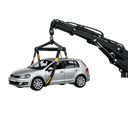
Loading & Unloading
Covers damage during the process of loading and unloading vehicles.
Winching Coverage
Covers damage to vehicles during winching and recovery operations.

Multiple Vehicle
Covers all vehicles on multi-car carriers and rollback flatbeds.
What Makes Tucson Different
Commercial property tows are the main local difference. In a market shaped by medical offices, professional firms, and retail locations, your on-hook exposure is often less about long-haul movement and more about short-distance custody with frequent transitions. Most jobs follow a predictable rhythm: you hook up in a tight lot, transport across town, release to a shop or property representative, and document condition in case the owner disputes it later. Many claims start at those ordinary handling points, not with dramatic wrecks on the highway. In Pima County, the business mix leans toward sectors that depend on accessible parking, predictable vendor response, and clear records, so your file should show how you verify authorization, photograph vehicles, note existing damage, and track keys and personal property. If a large share of your work comes from apartments, clinics, shopping areas, or office properties, review whether your on-hook limit matches the kinds of vehicles you actually pick up and whether your procedures reduce handoff disputes before they become expensive.
Our Recommendation for Tucson
Start with your dispatch map and sort jobs into three buckets: roadside assistance, private property impounds, and commercial account work. That breakdown tells an underwriter exactly where your custody risk concentrates. If you serve business clients regularly, ask your agent to review how you document vehicle condition before loading, after unloading, and at storage intake, because those routine steps often matter as much as the limit itself. If your drivers rotate between wheel-lift and flatbed assignments, note which vehicle types go on each unit and where higher-value pickups are most likely. Tucson buyers should also review contract language from property managers and commercial clients before renewal, since proof-of-coverage requests can expand faster than your policy setup changes. A practical quote file includes sample invoices, dispatch logs, yard procedures, release forms, and a current equipment schedule. From there, weigh each option on claim handling fit, exclusions, and whether the policy structure matches how your trucks actually take custody of vehicles here.
Get On-Hook Towing Insurance in Tucson
Enter your ZIP code to compare on-hook towing insurance rates from carriers in Tucson, AZ.
Business insurance starting at $25/mo
FAQ
Frequently Asked Questions
Tucson-area towing often intersects with commercial properties because Pima County has 21,083 business establishments. That means more vendor-driven tows, parking enforcement work, and documented handoffs, so your policy should reflect the custody, release, and condition-photo steps that come with that work.
Tucson buyers should separate roadside calls, private impounds, and commercial account work. Those job types create different custody patterns, and a cleaner breakdown helps the quote reflect how vehicles are actually loaded, moved, stored, and released.
Pima County business density can affect documentation expectations because commercial clients often want clear proof of coverage and clean vehicle-condition records. If you tow for offices, retail centers, or apartments, bring sample dispatch and release paperwork to your quote review.
Tucson commercial-property clients can create more handoff questions because parking lots, apartment communities, and customer-facing businesses involve multiple parties. You should review who authorizes the tow, how keys are tracked, and when condition photos are taken and stored.
Focus first on custody exposure, documentation habits, and the kinds of vehicles your trucks handle each week. Your vehicle mix and client contracts tell you more about appropriate limits than any local economic average, so bring those details to your quote review.
If your work includes impounds, the risk turns on custody of the vehicle during the tow, not just the job label. Make sure the quote reflects that service rather than a generic towing description.
Arizona buyers should compare quotes by limit, deductible, covered vehicle types, service restrictions, and claim documentation expectations. A lower premium is not enough if the form narrows recovery work, impounds, specialty vehicles, or the way your trucks are actually dispatched.
Arizona conditions can affect underwriting because uneven terrain and sudden storms change how vehicles are loaded, secured, and unloaded. That is why underwriters often respond better when your submission includes photos, procedures, and a clear description of difficult-call conditions.
Sources
- 1.U.S. Census Bureau, County Business Patterns, Pima County(Health care and social assistance is the largest establishment sector in Pima County at 13.8%, with professional services at 12.5% and retail at 12.2%.; Pima County has 21,083 business establishments.)
- 2.U.S. Census Bureau, ACS 5-Year Estimates, table B19013(Tucson's median household income is $54,546.)
Updated July 16, 2026