







































Updated July 10, 2026

Why Drywall Contractor Businesses Need Insurance
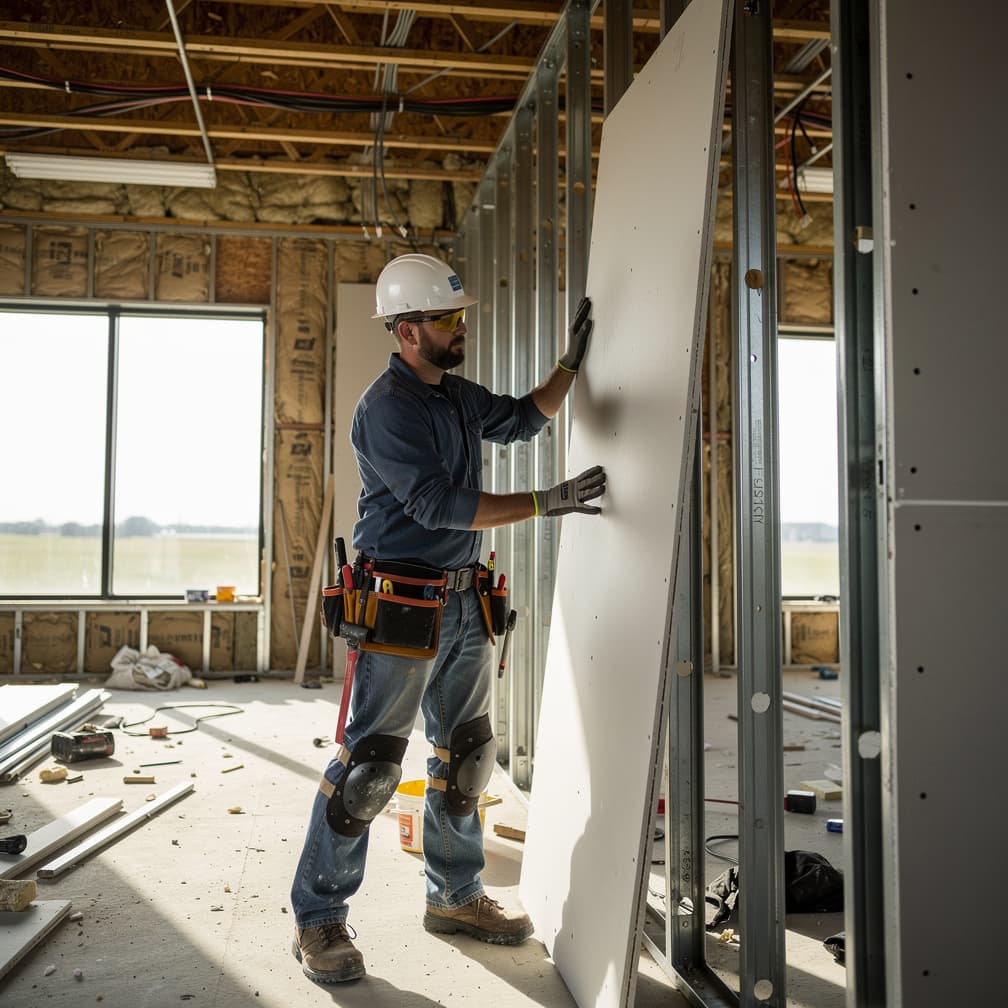
Drywall work creates a different insurance profile than many exterior trades because your crews often operate inside partially finished or occupied spaces where damage spreads quickly and cleanup costs can climb fast. You may be carrying sheets through narrow corridors, cutting around electrical boxes, protecting floors before staging material, or returning for punch work after painters, flooring installers, and cabinet crews have already finished their part. That means a drywall and plastering contractor insurance package should be built around close-quarter work, material handling, and the handoff points between your scope and everyone else on the project.
General liability insurance usually does the heaviest lifting in the package. It is the coverage many owners and general contractors expect to see before work starts, and it is often the first place to look when your operations could damage someone else’s property or allegedly cause bodily injury. For drywall contractors, that can mean a visitor trips over stacked board, a worker damages a finished window frame while moving material, overspray or sanding dust affects adjacent areas, or a repair attempt leads to a dispute over who pays to restore surrounding finishes. The right review is less about buying the broadest sounding option and more about checking whether your limits fit the size of the projects you bid and the indemnity language you sign.
Workers compensation insurance deserves equal attention if you have employees. Drywall crews handle repetitive lifting, overhead fastening, ladders, scaffolding, stilts, and dust-producing tasks. Even a small shop can see claims tied to strains, falls, or tool injuries. Payroll, crew roles, and subcontractor use all affect how this part of the policy should be reviewed. If you rely on subs for hanging, taping, or texture work, sort out certificate collection and classification details before a claim forces the issue.
Commercial auto insurance matters because many drywall businesses are mobile by design. Your vehicles may carry crews to multiple jobs in a day, haul tools and compounds, or tow equipment needed for larger interiors. A personal auto policy is not the place to discover a business-use gap after a crash on the way to a site. Review who drives, whether vehicles are titled to the business, how often employees use their own vehicles for errands, and whether your routes include dense urban traffic, parking garages, or active construction access points.
Inland marine insurance is often where a drywall contractor closes a major gap. Tools and mobile equipment do not stay in one insured building. They move from shop to truck to temporary job site, and they may sit overnight in a locked vehicle, gang box, or unfinished unit. If your operation depends on taping tools, texture sprayers, lasers, scaffolding components, or other contractors equipment, ask how property in transit and equipment at temporary locations are handled.
Cost is usually driven by the shape of your operation rather than a simple trade label. Insurers look at payroll, vehicle use, claims history, project size, subcontractor relationships, equipment values, and the kinds of spaces where you work. A company doing small residential patch jobs presents a different profile than one handling apartment turnovers, medical office buildouts, or multi-tenant commercial interiors. Bring current contracts, driver information, payroll estimates, and equipment schedules to the quote review so the policy can be matched to the way your business actually runs.
Recommended Coverage for Drywall Contractor Businesses
Based on the risks drywall contractor businesses face, these coverage types are essential:

General Liability
Essential coverage for every business, protect against third-party bodily injury, property damage, and advertising claims.

Workers Compensation
Help cover your employees' medical expenses and lost wages for work-related injuries and illnesses.

Commercial Auto
Protect your business vehicles and drivers with comprehensive commercial auto coverage.

Inland Marine
Protect tools, equipment, and goods in transit or stored at locations away from your primary premises.
Common Risks for Drywall Contractor Businesses
- Moisture damage claims tied to drywall installed in bathrooms, basements, or other areas where water exposure becomes an issue
- Finish defect disputes after patching, taping, or finishing work that a customer says does not meet the contract standard
- Property damage to flooring, trim, windows, cabinets, or fixtures while moving sheets and setting up on tight interior job sites
- Slip and fall incidents involving clients, tenants, inspectors, or visitors walking through active work areas
- Tool and contractors equipment loss when items are left in trucks, moved between jobs, or stored at a staging location
- Vehicle and cargo damage during transport of drywall, joint compounds, lifts, ladders, and other mobile property
Get Your Drywall Contractor Insurance Quote
Compare rates from multiple carriers. Free quotes, no obligation.
What Happens Without Proper Coverage?
Drywall contractors often need insurance for two reasons at the same time: jobsite risk and contract access. The risk side is straightforward. Your crews work around other trades, finished surfaces, and occupied or nearly occupied interiors where a minor mistake can damage property that is expensive to replace. A sheet can gouge flooring or dent an elevator interior during delivery. Joint compound or texture can affect nearby finishes. Dust control can become a dispute if a tenant claims business interruption or cleanup costs after work in an active space. Even if the facts are contested, you may still need a defense.
The contract side matters just as much. General contractors, property managers, landlords, and commercial clients commonly ask for proof of coverage before they let you start. If you bid tenant improvements, apartment turns, office remodels, or larger commercial interiors, insurance is often part of the prequalification process, not an afterthought. Limits, additional insured requests, waiver language, and vehicle requirements can all show up in the paperwork. If your policy is not reviewed against those documents before the job begins, you can end up renegotiating under deadline or taking on obligations your insurance was not built to support.
Workers compensation insurance becomes especially important once you have employees performing hanging, taping, sanding, and cleanup tasks. Drywall work is physical, repetitive, and often elevated. A strain from lifting board, a fall from a ladder, or a hand injury from cutting tools can take a worker off the job and disrupt your schedule. Without the right policy in place, one injury can affect payroll, staffing, and your ability to keep commitments to builders and owners.
Commercial auto insurance and inland marine insurance fill two common gaps for this trade. First, your business depends on vehicles to move people, tools, and materials between suppliers and job sites. Second, many of the tools and equipment you rely on are mobile, not sitting at one permanent insured location. If a vehicle crash, theft, or jobsite loss interrupts your workflow, the cost is not only the damaged property. It is also missed production, delayed punch lists, and pressure on customer relationships. Before your next renewal or bid, line up your contracts, vehicle list, payroll estimate, and equipment schedule, then ask for a quote review built around those exposures.
Insurance Tips for Drywall Contractor Owners
Review general liability insurance against the kinds of interiors you touch, especially occupied spaces, finished common areas, and projects where one mistake can damage multiple surrounding surfaces.
Separate employee payroll, owner duties, and subcontracted labor clearly before quoting workers compensation insurance, because vague role descriptions can create classification problems and claim disputes later.
List every business vehicle and every regular driver on your commercial auto review, including pickups, vans, and any employee driving patterns between suppliers and active job sites.
Build an inland marine schedule around the tools and contractors equipment that actually travel, not just what sits at your shop, so temporary site and transit exposures are addressed.
Compare your policy limits to the insurance requirements in your subcontract before signing, especially if the job involves tenant improvements, apartment turnovers, or larger commercial buildouts.
Ask how claims involving dust, overspray, and damage to adjacent finished surfaces are handled, because drywall losses often involve cleanup and restoration beyond your immediate work area.
Update your insurer when your operation shifts from small patch and repair work into larger buildouts or multi-crew projects, since project size and workflow change your exposure profile.
How Much Does Drywall Contractor Insurance Cost?
Drywall Contractor Insurance is a bundle of separate policies, priced separately. The ranges below are typical figures nationally for each line, except workers compensation, which is rated per $100 of payroll; a quote prices each one against your own operations.
| Coverage | Typical range | What moves your price |
|---|---|---|
| General Liability Insurance | $130 - $420 per month | Industry and risk classification, annual revenue, number of employees |
| Workers Compensation Insurance | $0.75 - $2.74 per $100 of payroll | Employee classification codes, total annual payroll, experience modification rate |
| Commercial Auto Insurance | $200 - $550 per month | Fleet size and vehicle types, driver records and experience, coverage limits and deductibles |
| Inland Marine Insurance | $30 - $130 per month | Total insured value of the scheduled property, type and age of the equipment, where it is stored and how far it travels |
Prices shown are general estimates, not guaranteed rates or quotes. Your actual premium will depend on the insurer, coverage selected, business details, location, claims history, and other underwriting factors. Learn about our pricing methodology.
FAQ
Frequently Asked Questions About Drywall Contractor Insurance
Drywall contractors usually start with general liability insurance, then review workers compensation insurance, commercial auto insurance, and inland marine insurance based on employees, vehicles, and mobile tools. The right mix depends on your contracts, job types, and how your crews move between sites.
Drywall contractor insurance can help with third party property damage claims when your work allegedly damages surrounding surfaces or fixtures, depending on policy terms. Because drywall crews work close to finished interiors, you should review how claims involving adjacent property are handled before binding coverage.
Often, yes. The work involves lifting board, overhead fastening, ladders, sanding, and repetitive motion, so if you use employees or rely heavily on field labor, look carefully at payroll, roles, and subcontractor arrangements.
Usually, because vehicles move crews, tools, compounds, and materials between suppliers and job sites. If a pickup, van, or box truck is used for business operations, check the business-use exposure before assuming a personal policy is enough.
Inland marine picks up tools, mobile property, and contractors equipment that travel or stay at temporary job sites. It matters most when your operation depends on equipment that does not remain at one permanent location.
General contractors often ask drywall subcontractors for proof of insurance before work starts, especially on tenant improvements, remodels, and commercial interiors. Review certificate requests and subcontract insurance language early so your policy terms and limits can be checked against the job requirements.
Pricing follows operational factors: payroll, claims history, vehicle use, project size, subcontractor relationships, and equipment values. A shop doing small residential repairs presents a different profile than one handling larger apartment or office buildouts.
You can often insure both residential drywall repairs and commercial buildouts under one overall program, but the policy should be reviewed for the full scope of your operations. Different job types change contract requirements, vehicle use, and the severity of potential property damage claims.
Updated March 31, 2026