







































Updated July 10, 2026

Why Garbage Collection Service Businesses Need Insurance
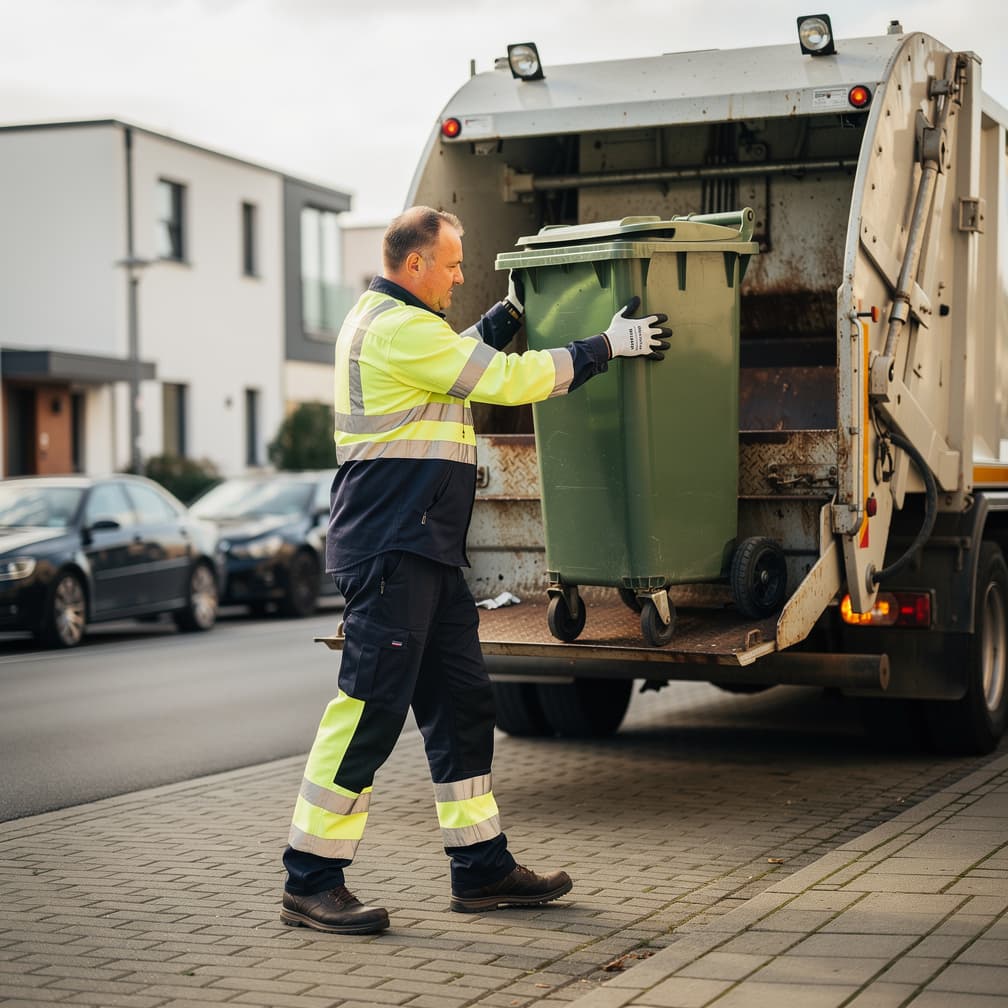
A waste hauling operation creates claims in clusters, not one at a time. A driver may leave the yard before daylight, run a dense residential route with constant stops, back into alleys or service lanes, and finish at a transfer point with a truck that has seen repeated loading cycles all day. That rhythm is why garbage collection service insurance needs to be built around the way your trucks, crews, and customers interact, not around a generic service business template.
Commercial auto insurance usually carries the most immediate exposure because the truck itself is central to the job. Garbage trucks operate in narrow streets, apartment complexes, loading areas, and commercial back lots where visibility can be limited and pedestrians, parked vehicles, fences, and overhead obstacles are close. A useful review looks at each unit by body type, use, radius, garaging, and who drives it. If one truck handles residential cart service and another services commercial dumpsters, those differences should be reflected in the quote. The same goes for spare units, seasonal route changes, and any newly acquired truck that goes into service before paperwork catches up.
General liability insurance addresses the third party side of the operation away from the driving exposure itself. Claims can start with a cart left in a walkway, a container that damages pavement or a wall, or an allegation that your crew caused property damage while servicing an account. If your employees enter private property, move containers by hand, or work around customer vehicles, you want the liability review to follow those routines closely. The goal is not broad language for its own sake. The goal is to match the policy to the places your crews actually work and the kinds of complaints customers are most likely to raise.
Workers compensation insurance is equally operational. Waste haulers deal with repetitive lifting, stepping on and off trucks, slick surfaces, sharp materials, and the physical strain of route work. Office payroll and field payroll should be separated correctly, and any split between drivers, helpers, mechanics, and administrative staff should be reviewed before renewal. If your business grows quickly, payroll estimates that looked reasonable at the start of the term can drift away from reality, which can create audit issues later.
Commercial umbrella insurance often becomes important once you add trucks, larger accounts, or contract requirements. A single severe vehicle accident or major bodily injury claim can push against primary liability limits faster than many owners expect. Umbrella coverage is often reviewed when you bid larger commercial work, add municipal accounts, or want more room above your underlying auto and liability policies.
Cost is usually driven by practical underwriting details: fleet size, vehicle type, driver records, route density, territory, payroll, claims history, requested limits, and the mix of residential versus commercial service. The most useful quote process is detailed. Bring vehicle schedules, driver information, payroll by role, loss runs if available, and copies of customer contracts that set insurance requirements. Then review how each coverage responds across the full route, from pickup to transfer point, before you bind anything.
Recommended Coverage for Garbage Collection Service Businesses
Based on the risks garbage collection service businesses face, these coverage types are essential:

General Liability
Essential coverage for every business, protect against third-party bodily injury, property damage, and advertising claims.

Commercial Auto
Protect your business vehicles and drivers with comprehensive commercial auto coverage.

Workers Compensation
Help cover your employees' medical expenses and lost wages for work-related injuries and illnesses.

Commercial Umbrella
Extend your liability limits beyond your primary policies for extra protection against catastrophic claims.
Common Risks for Garbage Collection Service Businesses
- A garbage truck backs into a parked vehicle or gate while servicing a tight pickup route.
- A crew member is injured while lifting containers or moving bins between stops.
- A customer slips and falls near a collection point while the crew is on site.
- Loose debris or container handling causes property damage at a commercial account.
- A route delay, truck breakdown, or collision interrupts scheduled pickups and service commitments.
- A claim grows into a lawsuit that requires legal defense and higher coverage limits.
Get Your Garbage Collection Service Insurance Quote
Compare rates from multiple carriers. Free quotes, no obligation.
What Happens Without Proper Coverage?
Your losses do not stay neatly inside one policy bucket. A garbage truck can damage a parked car while turning into a service lane, and the same account can later produce a complaint that a container scraped a wall or blocked access to a storefront. A helper can slip while pulling a cart across wet pavement, or a customer can allege bodily injury after tripping near a can your crew set down during pickup. Garbage collection service insurance matters because your operation combines vehicle exposure, manual labor, and customer property contact on nearly every route.
Commercial auto insurance is usually the first place owners focus, and for good reason. Your trucks stop often, reverse often, and work in confined areas where one mistake can lead to expensive property damage or bodily injury claims. Yet auto coverage alone does not solve the whole problem. General liability can become just as important when the claim centers on customer premises, container handling, or alleged damage that is not simply a road accident.
Workers compensation deserves the same attention because route work is physically demanding. Drivers and helpers climb in and out of cabs, handle carts and containers, and work around moving equipment throughout the day. If an employee is hurt lifting, slipping, or being struck during service, you want payroll classifications and estimated remuneration reviewed carefully before the policy starts, not after a claim or audit.
You may also need insurance to win and keep work. Commercial customers, property managers, and public entities often ask for certificates of insurance before they let a hauler on site or sign a service agreement. Some contracts require higher liability limits, and that is often where commercial umbrella coverage enters the discussion. If you add larger accounts without revisiting your limits, you can end up contractually exposed even before a loss occurs.
The practical reason to review coverage now is simple: route changes, truck additions, and new contracts can outpace your current policy setup. Before renewing or bidding new work, compare your vehicle schedule to the units actually in service, verify who drives each truck, review payroll by job role, and check whether your liability limits still fit the accounts you are pursuing.
Insurance Tips for Garbage Collection Service Owners
Schedule each garbage truck by its actual use, body type, garaging, and route pattern so your commercial auto quote reflects how that unit is really deployed.
Separate payroll for drivers, helpers, mechanics, and office staff before binding workers compensation, because blended estimates can create avoidable audit problems later.
Review customer contracts before you quote larger commercial or municipal work, since liability limits and certificate wording often drive whether your current program is adequate.
Match general liability discussions to real service tasks such as cart movement, container placement, and work on customer premises, not just broad descriptions of hauling.
Ask how newly acquired or spare trucks are handled under the policy, especially if you rotate units into service quickly during breakdowns or route expansion.
Consider commercial umbrella coverage when one severe auto loss or premises injury claim could exceed your primary limits and threaten contract compliance.
Bring loss runs, driver lists, and vehicle schedules to the quote process so underwriters can evaluate your operation based on actual route and fleet details.
How Much Does Garbage Collection Service Insurance Cost?
Garbage Collection Service Insurance is a bundle of separate policies, priced separately. The ranges below are typical figures nationally for each line, except workers compensation, which is rated per $100 of payroll; a quote prices each one against your own operations.
| Coverage | Typical range | What moves your price |
|---|---|---|
| General Liability Insurance | $210 - $700 per month | Industry and risk classification, annual revenue, number of employees |
| Commercial Auto Insurance | $1,225 - $4,100 per month | Fleet size and vehicle types, driver records and experience, coverage limits and deductibles |
| Workers Compensation Insurance | $0.75 - $2.74 per $100 of payroll | Employee classification codes, total annual payroll, experience modification rate |
| Commercial Umbrella Insurance | $210 - $900 per month | Umbrella limit requested, limits carried on the underlying policies, loss history on those underlying policies |
Prices shown are general estimates, not guaranteed rates or quotes. Your actual premium will depend on the insurer, coverage selected, business details, location, claims history, and other underwriting factors. Learn about our pricing methodology.
FAQ
Frequently Asked Questions About Garbage Collection Service Insurance
The core program pairs commercial auto, general liability, workers compensation, and often a commercial umbrella. Your final mix depends on the trucks, route type, crew duties, customer contracts, and how often employees work on customer premises.
Garbage trucks make frequent stops, back into tight areas, and operate near pedestrians, parked vehicles, and structures, which concentrates the claim potential of the fleet. Schedule each unit by driver, route pattern, and how the truck is actually used.
It can, for third party bodily injury or property damage tied to service activities, subject to policy terms. Container handling, cart placement, and work performed on customer property are the typical scenarios to walk through with the insurer.
Yes. Drivers and helpers face lifting strain, slip hazards, and struck-by exposure at nearly every stop, so organize payroll by job role and make sure the policy matches the actual workforce.
Add it to the conversation when you buy more trucks, pursue larger accounts, or sign contracts requiring higher liability limits. An umbrella can give you room above underlying policies when a severe claim pushes past primary limits.
Better operational detail gets better terms. Bring your vehicle schedule, driver information, payroll by role, claims history, and customer contract requirements so the quote reflects real routes and exposures.
One program can usually address both, but the quote should distinguish how each route operates. Residential cart service and commercial dumpster pickups create different driving, handling, and customer property exposures.
Fleet details, driver records, route density, payroll, claims history, requested limits, and the residential versus commercial mix set the price. Current, clearly documented information makes the quote more accurate.
Updated March 31, 2026