







































Updated July 10, 2026

Why Paving & Asphalt Contractor Businesses Need Insurance
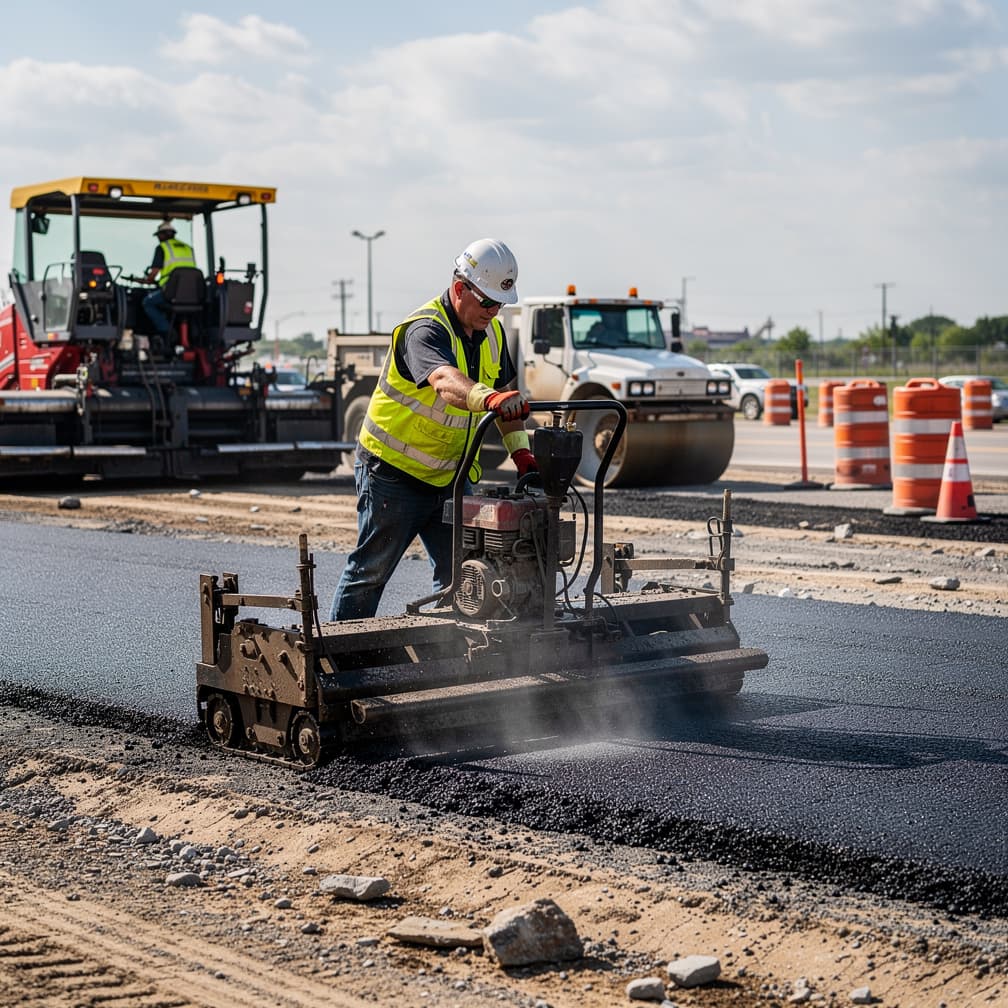
Paving work combines premises exposure, vehicle exposure, and equipment exposure in the same job cycle, which is why insurance for this trade usually needs a tighter review than many other contractor classes. A single project can involve trucks entering and leaving the site, a paver operating near curbs and structures, laborers working around hot material, and a property owner expecting the lot to reopen on a fixed schedule. If something goes wrong, the dispute often turns on who caused the damage, when it happened, and whether the contractor had the right liability limits in place before work started.
General liability insurance is the foundation because paving claims frequently involve third-party property damage. Fresh asphalt can mark nearby surfaces, heavy equipment can damage curbs, islands, utility covers, and decorative concrete, and site traffic can create slip or trip allegations if access routes are not controlled well. For a paving contractor, the key is not just carrying liability coverage, but reviewing how your operations are described so the policy matches the work you actually perform. If you handle patching, resurfacing, sealcoating, striping coordination, or parking lot rehabilitation, those details should be discussed during quoting.
Workers compensation insurance deserves close attention because paving crews work in a physically demanding environment. Employees lift tools, rake material, edge around obstacles, and work near rollers, skid steers, dump bodies, and live traffic. A minor injury can still become an expensive claim if it leads to lost time, medical treatment, or a dispute about return-to-work duties. If your staffing changes by season, if you use labor-intensive handwork on smaller jobs, or if foremen split time between supervision and production, your payroll and job duties should be reviewed carefully.
Commercial auto insurance sits near the center of the package. Many paving businesses rely on dump trucks, pickups, flatbeds, trailers, and service vehicles every day. Exposure does not stop at the yard gate. It follows your drivers to asphalt plants, supply houses, fuel stops, and customer sites, often with backing, loading, and tight-access conditions. If employees use company vehicles across multiple jobs in the same day, or if you tow rollers, plate compactors, or other equipment, your vehicle schedule and driver list should be current before renewal and before bidding larger work.
Commercial umbrella insurance becomes more relevant as job size and contract demands increase. Property managers, general contractors, and public-facing clients may ask for higher liability limits than a base policy provides. Umbrella coverage can help extend protection above underlying liability policies, depending on policy terms, and it earns review if you pave shopping centers, apartment complexes, industrial sites, or other locations where a single accident could involve significant damage or injury allegations.
Cost is usually driven by how your business operates. Insurers commonly look at payroll, vehicle count and use, driver history, the type of paving work performed, where equipment travels, claims history, and the liability limits your contracts require. A contractor doing small residential driveways may present a different profile than one handling commercial lots with frequent truck movement and larger crews. The most useful quote process starts with accurate operational details: what you pave, who you employ, what you drive, and how your jobs are supervised.
Before you buy or renew, line up your contracts, vehicle list, payroll estimates, and a plain-language description of your operations. That makes it easier to review whether your general liability insurance, workers compensation insurance, commercial auto insurance, and commercial umbrella insurance fit the way your paving business actually works.
Recommended Coverage for Paving & Asphalt Contractor Businesses
Based on the risks paving & asphalt contractor businesses face, these coverage types are essential:

General Liability
Essential coverage for every business, protect against third-party bodily injury, property damage, and advertising claims.

Workers Compensation
Help cover your employees' medical expenses and lost wages for work-related injuries and illnesses.

Commercial Auto
Protect your business vehicles and drivers with comprehensive commercial auto coverage.

Commercial Umbrella
Extend your liability limits beyond your primary policies for extra protection against catastrophic claims.
Common Risks for Paving & Asphalt Contractor Businesses
- Surface damage to newly paved areas during compaction, finishing, or equipment movement
- Third-party claims for bodily injury or property damage at active paving jobsites
- Vehicle accident exposure involving trucks, trailers, or crews traveling between jobs
- Equipment downtime or loss involving rollers, pavers, compactors, or other job-critical tools
- Contract disputes over liability limits, additional insured wording, or jobsite-specific requirements
- Runoff-related claims tied to site conditions, drainage, or material handling during paving work
Get Your Paving & Asphalt Contractor Insurance Quote
Compare rates from multiple carriers. Free quotes, no obligation.
What Happens Without Proper Coverage?
Paving contractors tend to find out what their insurance is worth at the worst moment: a property owner pointing at cracked decorative concrete, a driver at fault on the way to the plant, a laborer burned by hot mix. One event can simultaneously produce repair costs, medical claims, schedule delays, and a contract fight over who pays, which is why thin coverage hurts more in this trade than the premium savings ever justified.
Severity concentrates around vehicles and property. For part of every day a paving company is a transportation company, and a loaded dump truck in traffic carries more claim potential than most of what happens behind the cones. On site, your equipment operates inches from curb lines, utility covers, islands, and landscaping that are expensive to repair and easy to blame on the last contractor who touched the lot.
Access is the other half. Property managers, general contractors, and municipal buyers want certificates before granting site access or releasing work, and they increasingly specify limits, additional insured wording, and umbrella layers. Reviewing insurance at bid time rather than after award means you never have to renegotiate coverage under deadline pressure. Before the season peaks, put your contracts, vehicle list, payroll estimates, and loss history in one folder and check that the program still matches the size of jobs you are chasing.
Insurance Tips for Paving & Asphalt Contractor Owners
Review your general liability insurance with a clear description of whether you handle driveways, parking lots, patching, resurfacing, or larger commercial paving, because vague operations can lead to a quote that does not fit your actual job mix.
Match your workers compensation insurance to real payroll and job duties, especially if foremen work with tools, seasonal labor joins the crew, or employees split time between supervision, driving, and production work.
Check your commercial auto insurance against every truck, pickup, trailer, and service vehicle you use, then confirm who drives them and how often they travel between the yard, asphalt plant, and active jobsites.
Consider commercial umbrella insurance when contracts call for higher liability limits or when your work involves busy properties where a single vehicle or jobsite accident could create a larger claim.
Bring sample contracts to the quote review so you can compare required limits, additional insured requests, and other insurance language before you commit to work that stretches beyond your current policy setup.
Update your insurance before adding new services or equipment, because moving from small patch jobs into larger paving schedules can change your exposure faster than a standard renewal review catches.
Keep your vehicle list, driver information, and payroll estimates current throughout the policy term, since outdated operating details can create problems when a claim or certificate request arrives mid-project.
How Much Does Paving & Asphalt Contractor Insurance Cost?
Paving & Asphalt Contractor Insurance is a bundle of separate policies, priced separately. The ranges below are typical figures nationally for each line, except workers compensation, which is rated per $100 of payroll; a quote prices each one against your own operations.
| Coverage | Typical range | What moves your price |
|---|---|---|
| General Liability Insurance | $240 - $825 per month | Industry and risk classification, annual revenue, number of employees |
| Workers Compensation Insurance | $0.75 - $2.74 per $100 of payroll | Employee classification codes, total annual payroll, experience modification rate |
| Commercial Auto Insurance | $550 - $1,550 per month | Fleet size and vehicle types, driver records and experience, coverage limits and deductibles |
| Commercial Umbrella Insurance | $120 - $450 per month | Umbrella limit requested, limits carried on the underlying policies, loss history on those underlying policies |
Prices shown are general estimates, not guaranteed rates or quotes. Your actual premium will depend on the insurer, coverage selected, business details, location, claims history, and other underwriting factors. Learn about our pricing methodology.
FAQ
Frequently Asked Questions About Paving & Asphalt Contractor Insurance
Four policies do most of the work: general liability, workers compensation, commercial auto, and, when contracts or job size demand it, a commercial umbrella. Crew size, vehicle count, and the properties you service decide the weight of each.
Because the exposure follows your trucks all day, from yard to plant to jobsite and back. Hauling, towing, backing into tight sites, and multiple daily stops put more claim potential on the road than behind the cones for many operations.
It can respond to covered third-party property damage claims, though the outcome rests on the facts of the loss and the policy terms. Describe your operations precisely at quoting so the coverage review matches the work performed.
Crew size does not remove the exposure: hot mix, hand tools, lifting, and moving equipment injure small crews as readily as large ones, and most states require coverage once you have employees. Review it against your actual staffing, payroll, and duties.
Two triggers matter most: contracts that ask for higher liability limits, and jobs where a single severe claim could pierce your primary policy. Busy commercial properties and public-facing sites tend to raise both.
Pricing is built from operational details: payroll, vehicle use, driver history, claims history, job type, and requested limits. The more complete the picture of your crews, trucks, and jobs, the more accurate the number.
You can, but only if the setup was quoted with both exposures in view. The mix of work, vehicle movement, crew size, and contract demands differs enough between the two that an unexamined single setup fits one and not the other.
A payroll estimate, vehicle list, driver details, loss history, and a plain-language description of the work you perform. Add sample contracts whenever customers specify limits or certificate wording.
Updated March 31, 2026