







































Updated July 10, 2026

Paving & Asphalt Contractor Insurance in Indiana
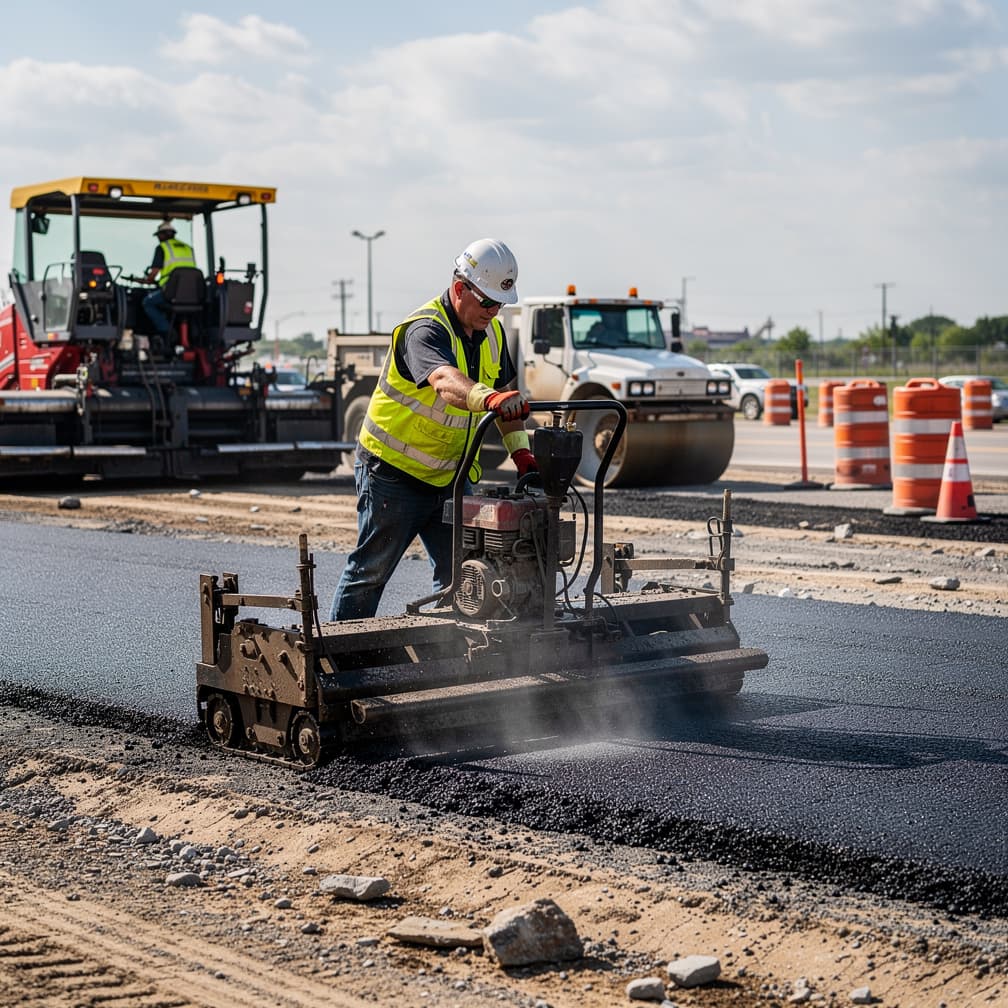
Running a paving business in Indiana means balancing fast-moving jobs, weather swings, and contract requirements that can change from one municipality to the next. If you work on commercial paving jobs, residential paving jobs, or mixed-site projects, your insurance needs usually center on bodily injury, property damage, legal defense, and equipment protection. Tornadoes and severe storms can disrupt schedules and expose open jobsites, while winter conditions can create slip and fall issues around staging areas and freshly paved surfaces. Indiana also has commercial auto minimums, workers' compensation rules for businesses with employees, and proof-of-coverage expectations on many leases. That is why a paving & asphalt contractor insurance quote in Indiana should be built around how you actually operate: the trucks you drive, the rollers and pavers you use, the traffic control you set up, and the limits your clients ask for. The goal is to compare coverage that fits your jobs, not just a generic contractor policy.
Climate Risk Profile
Natural Disaster Risk in Indiana
Understanding climate-related risks helps determine appropriate insurance coverage levels.
Tornado
High
Severe Storm
High
Flooding
Moderate
Winter Storm
Moderate
Expected Annual Loss from Natural Hazards
$1.1B
estimated economic loss per year across Indiana
Source: FEMA National Risk Index
Risk Factors for Paving & Asphalt Contractor Businesses in Indiana
- Indiana tornado exposure can create sudden property damage, equipment loss, and coverage limit pressure for paving crews working on open jobsites.
- Severe storm events in Indiana can interrupt commercial paving schedules and increase third-party claims when traffic control, cones, or barricades are displaced.
- Flooding in parts of Indiana can affect surface damage, equipment coverage, and jobsite access for asphalt paving projects.
- Winter storm conditions in Indiana can increase slip and fall exposure around active paving zones and staging areas.
- Hot asphalt spills near traffic in Indiana can lead to bodily injury, property damage, and legal defense costs for paving contractors.
- Heavy equipment work on Indiana jobsites can increase third-party claims involving customer injury and catastrophic claims.
How Indiana compares with the national baseline
Uninsured drivers
15.8% vs 11.6% baseline
About 15.8% of Indiana drivers are estimated to be uninsured, above the 11.6% average across states.
Fatal crashes per 100 million miles
1.42 vs 1.33 baseline
Indiana sees about 1.42 fatal crashes per 100 million miles driven, above the national average of 1.33.
Property crime per 100,000 residents
2,180 vs 2,200 baseline
Property crime in Indiana runs below the national average, at 2,180 vs 2,200 incidents per 100,000 residents.
Blue bar: Indiana. Gray line: national baseline.
How Much Does Paving & Asphalt Contractor Insurance Cost in Indiana?
Paving & Asphalt Contractor Insurance is a bundle of separate policies, priced separately. The ranges below are typical figures for Indiana for each line, except workers compensation, which is rated per $100 of payroll; a quote prices each one against your own operations.
| Coverage | Typical range | What moves your price |
|---|---|---|
| General Liability Insurance | $210 - $725 per month | Industry and risk classification, annual revenue, number of employees |
| Workers Compensation Insurance | $0.75 - $2.74 per $100 of payroll | Employee classification codes, total annual payroll, experience modification rate |
| Commercial Auto Insurance | $460 - $1,325 per month | Fleet size and vehicle types, driver records and experience, coverage limits and deductibles |
| Commercial Umbrella Insurance | $110 - $420 per month | Umbrella limit requested, limits carried on the underlying policies, loss history on those underlying policies |
Prices shown are general estimates, not guaranteed rates or quotes. Your actual premium will depend on the insurer, coverage selected, business details, location, claims history, and other underwriting factors. Learn about our pricing methodology.
What Indiana Requires for Paving & Asphalt Contractor Insurance
Non-compliance can result in fines, loss of contracts, and personal liability:
- Workers' compensation is required in Indiana for businesses with 1 or more employees, with exemptions for sole proprietors, partners, farmworkers, and household employees.
- Indiana commercial auto minimum liability is $25,000/$50,000/$25,000, so contractors should verify that vehicle accident and hired auto or non-owned auto exposures are addressed above the minimum where needed.
- Indiana businesses may need proof of general liability coverage for most commercial leases, so contractors should keep current certificates ready for jobsite and landlord requests.
- Indiana paving and asphalt contractors should confirm underlying policies before adding umbrella coverage, since excess liability depends on the base limits being in place.
- Quote review should include whether equipment coverage for asphalt contractors is written for rollers, pavers, and other tools used on Indiana commercial paving jobs.
- Jobsite-specific requirements may call for additional liability limits, so contractors should check municipal project requirements and contract language before binding coverage.
| Requirement | What Indiana law says |
|---|---|
| Auto liability minimums | $25,000/$50,000/$25,000 (bodily injury per person / per accident / property damage). These floors apply to personal and business vehicles alike; lenders and contracts often require more. |
| Workers compensation | Generally required once you have your first employee. Some roles are exempt, so confirm current thresholds before you hire. |
| Where to verify | Indiana Department of Insurance publishes current requirements, consumer guides, and license lookups. |
Get Your Paving & Asphalt Contractor Insurance Quote in Indiana
Compare rates from multiple carriers. Free quotes, no obligation.
Common Claims for Paving & Asphalt Contractor Businesses in Indiana
A hot asphalt spill on an Indiana commercial paving job causes customer injury and a third-party claim, leading to legal defense and possible settlement costs.
A severe storm in Indiana displaces cones and barricades, and a vehicle or pedestrian incident creates a liability claim tied to the active work zone.
A roller or paver is damaged during a storm or jobsite move, and the contractor needs equipment coverage for asphalt contractors to respond to the loss.
Preparing for Your Paving & Asphalt Contractor Insurance Quote in Indiana
A list of vehicles, trailers, rollers, pavers, and other equipment used on Indiana jobsites.
Your payroll, crew count, and whether you have 1 or more employees for workers' compensation review.
Typical job types, such as commercial paving jobs, residential paving jobs, and municipal project requirements.
Any contract language, lease requirements, or requested coverage limits that affect liability insurance for paving contractors in Indiana.
Coverage Considerations in Indiana
- General liability insurance to address bodily injury, property damage, and advertising injury exposures tied to paving and asphalt work in Indiana.
- Workers' compensation insurance for employee safety, medical costs, lost wages, and rehabilitation when the business has 1 or more employees.
- Commercial auto insurance that meets Indiana minimums and reflects vehicle accident exposure for trucks, trailers, and jobsite travel.
- Commercial umbrella insurance to extend coverage limits for catastrophic claims when project requirements or contract terms call for higher protection.
What Happens Without Proper Coverage?
Paving contractors tend to find out what their insurance is worth at the worst moment: a property owner pointing at cracked decorative concrete, a driver at fault on the way to the plant, a laborer burned by hot mix. One event can simultaneously produce repair costs, medical claims, schedule delays, and a contract fight over who pays, which is why thin coverage hurts more in this trade than the premium savings ever justified.
Severity concentrates around vehicles and property. For part of every day a paving company is a transportation company, and a loaded dump truck in traffic carries more claim potential than most of what happens behind the cones. On site, your equipment operates inches from curb lines, utility covers, islands, and landscaping that are expensive to repair and easy to blame on the last contractor who touched the lot.
Access is the other half. Property managers, general contractors, and municipal buyers want certificates before granting site access or releasing work, and they increasingly specify limits, additional insured wording, and umbrella layers. Reviewing insurance at bid time rather than after award means you never have to renegotiate coverage under deadline pressure. Before the season peaks, put your contracts, vehicle list, payroll estimates, and loss history in one folder and check that the program still matches the size of jobs you are chasing.
Recommended Coverage for Paving & Asphalt Contractor Businesses
Based on the risks and requirements above, paving & asphalt contractor businesses need these coverage types in Indiana:

General Liability
Essential coverage for every business, protect against third-party bodily injury, property damage, and advertising claims.

Workers Compensation
Help cover your employees' medical expenses and lost wages for work-related injuries and illnesses.

Commercial Auto
Protect your business vehicles and drivers with comprehensive commercial auto coverage.

Commercial Umbrella
Extend your liability limits beyond your primary policies for extra protection against catastrophic claims.
Paving & Asphalt Contractor Insurance by City in Indiana
Insurance needs and pricing for paving & asphalt contractor businesses can vary across Indiana. Find coverage information for your city:
Insurance Tips for Paving & Asphalt Contractor Owners
Review your general liability insurance with a clear description of whether you handle driveways, parking lots, patching, resurfacing, or larger commercial paving, because vague operations can lead to a quote that does not fit your actual job mix.
Match your workers compensation insurance to real payroll and job duties, especially if foremen work with tools, seasonal labor joins the crew, or employees split time between supervision, driving, and production work.
Check your commercial auto insurance against every truck, pickup, trailer, and service vehicle you use, then confirm who drives them and how often they travel between the yard, asphalt plant, and active jobsites.
Consider commercial umbrella insurance when contracts call for higher liability limits or when your work involves busy properties where a single vehicle or jobsite accident could create a larger claim.
Bring sample contracts to the quote review so you can compare required limits, additional insured requests, and other insurance language before you commit to work that stretches beyond your current policy setup.
Update your insurance before adding new services or equipment, because moving from small patch jobs into larger paving schedules can change your exposure faster than a standard renewal review catches.
Keep your vehicle list, driver information, and payroll estimates current throughout the policy term, since outdated operating details can create problems when a claim or certificate request arrives mid-project.
FAQ
Frequently Asked Questions About Paving & Asphalt Contractor Insurance in Indiana
Most Indiana paving contractors compare general liability, workers' compensation if they have 1 or more employees, commercial auto, and often commercial umbrella coverage. Equipment coverage can also matter for rollers, pavers, and other tools used on active jobsites.
Paving contractor insurance cost in Indiana varies by payroll, vehicle use, equipment values, job type, limits, claims history, and whether you need endorsements for jobsite-specific requirements. The average premium data provided for the state is $132 to $528 per month, but your quote may vary.
Many Indiana leases and project documents ask for proof of general liability coverage, and municipal project requirements may ask for specific limits or additional insured wording. Commercial auto minimums and workers' compensation rules can also come into play depending on how you operate.
Surface damage coverage may be discussed as part of your liability review, but terms vary by policy and endorsement. It is important to confirm how your quote treats damage from paving operations, equipment movement, and hot asphalt work.
Share your business name, job types, crew size, vehicles, equipment list, and requested limits. If you work on commercial paving jobs, residential paving jobs, or municipal project requirements, include that too so the quote matches your operations.
Four policies do most of the work: general liability, workers compensation, commercial auto, and, when contracts or job size demand it, a commercial umbrella. Crew size, vehicle count, and the properties you service decide the weight of each.
Because the exposure follows your trucks all day, from yard to plant to jobsite and back. Hauling, towing, backing into tight sites, and multiple daily stops put more claim potential on the road than behind the cones for many operations.
It can respond to covered third-party property damage claims, though the outcome rests on the facts of the loss and the policy terms. Describe your operations precisely at quoting so the coverage review matches the work performed.
Updated March 31, 2026