







































Updated July 10, 2026

Why Siding Contractor Businesses Need Insurance
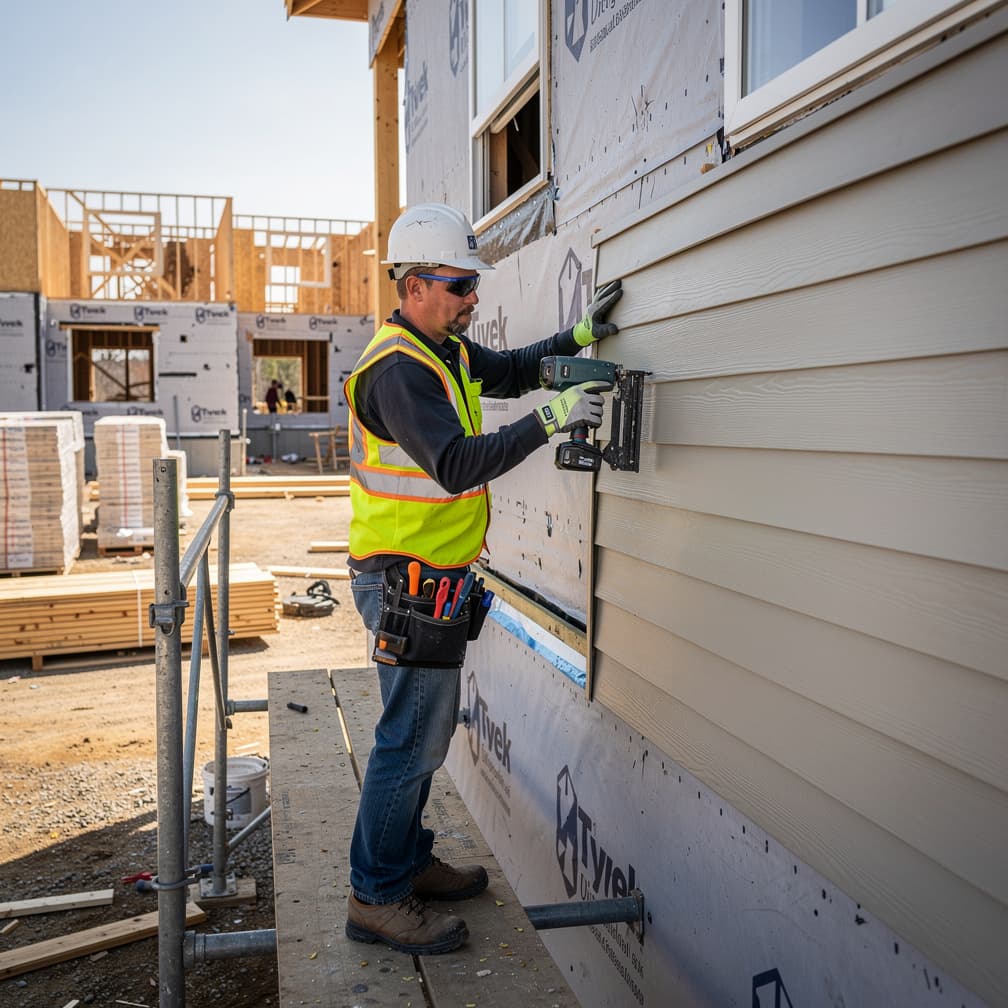
Exterior cladding work creates a chain of exposures that starts before the first panel comes off the wall. You may inspect an occupied home, deliver materials to a tight driveway, remove old siding that reveals rot or moisture damage, and then coordinate trim, house wrap, flashing, and cleanup while other trades or the owner move around the property. Insurance for a siding contractor works best when it is built around that sequence instead of treated like a generic artisan contractor package.
General liability insurance usually anchors the review because your work can affect both people and property in visible and expensive ways. Siding crews work from ladders and scaffolding, carry long material lengths around windows and doors, and use cutting tools near finished surfaces, vehicles, and landscaping. If a passerby is injured by falling debris, if a customer alleges your crew damaged a window or exterior fixture, or if installation work is later blamed for water intrusion, general liability is often the first policy reviewed. It can also matter when a property owner or general contractor asks for proof of coverage before work starts.
Workers compensation insurance becomes more important as soon as your operation includes employees doing physical exterior work. Tear-offs, repetitive lifting, ladder use, and tool handling create injury exposure that is not theoretical in this trade. A quote should reflect who is on payroll, what duties they perform, and whether supervisors also work with tools in the field. If you rely on subcontractors, your insurance review should also look closely at how those relationships are documented, because certificate collection and contract language can affect how claims and responsibilities are argued after an accident.
Commercial auto insurance deserves a careful look because siding businesses rarely stay in one place. Your vehicles may haul crews, ladders, brake equipment, compressors, and material from one address to another in the same day. A personal auto policy may not be designed for that business use. The quote should match the vehicles you own, lease, or use in the business, along with who drives them and how they are used between supplier pickups, job sites, and storage locations.
Inland marine insurance fills a common gap for mobile property. Siding contractors often own tools and equipment that travel constantly, and materials may sit at a job site before installation. If those items are stolen from a truck, damaged in transit, or lost while temporarily stored away from your main premises, inland marine coverage may be the policy that responds, depending on the terms selected.
Cost and structure depend on operational details, not a one-size-fits-all template. Payroll affects workers compensation. Vehicle type and driving activity affect commercial auto. Tool values, material handling, claim history, and the size of contracts can all influence limits and pricing. Before you buy or renew, review your largest current jobs, your subcontractor setup, your vehicle schedule, and the value of tools and materials that move with your crews. That gives you a better chance of getting a quote built for the way your siding company actually works.
Recommended Coverage for Siding Contractor Businesses
Based on the risks siding contractor businesses face, these coverage types are essential:

General Liability
Essential coverage for every business, protect against third-party bodily injury, property damage, and advertising claims.

Workers Compensation
Help cover your employees' medical expenses and lost wages for work-related injuries and illnesses.

Commercial Auto
Protect your business vehicles and drivers with comprehensive commercial auto coverage.

Inland Marine
Protect tools, equipment, and goods in transit or stored at locations away from your primary premises.
Common Risks for Siding Contractor Businesses
- Water intrusion after a siding installation that leads to interior damage and a claim from the property owner
- A customer or visitor slipping near a work area, scaffold, or debris zone and filing a bodily injury claim
- Damage to trim, windows, gutters, or landscaping during tear-off, fastening, or material staging
- Tools, ladders, or mobile property being stolen, damaged, or lost between multiple job sites
- A truck, van, or trailer used for siding work being involved in a vehicle accident while hauling crews or materials
- A subcontractor’s work or a multi-crew project creating liability disputes, contract issues, or delays that affect the finished exterior
Get Your Siding Contractor Insurance Quote
Compare rates from multiple carriers. Free quotes, no obligation.
What Happens Without Proper Coverage?
Siding contractors face a mix of job site, workmanship allegation, and transportation risk that can create losses from several directions at once. One claim may start with a simple exterior repair and expand because the owner says water entered around a window after the work was completed. Another may involve a ladder accident, a tool falling near a walkway, or a truck backing into a parked vehicle while materials are being unloaded. These are not abstract exposures. They come directly from how siding work is performed.
General liability insurance matters because your crews work on the outside of occupied properties where third parties, neighboring structures, and finished surfaces are close to the work area. If a customer alleges property damage or bodily injury tied to your operations, the cost is not limited to the repair itself. Legal defense and settlement pressure can follow even when responsibility is disputed. That is why limits should track the size of the properties you work on and the contract requirements you sign.
Workers compensation insurance is just as practical. Siding installation involves climbing, lifting, cutting, carrying, and repetitive motion. An injured employee can mean medical costs, lost time, and disruption to active jobs. If your business is growing, adding crews without updating payroll and class details can leave your policy review out of step with your actual exposure.
Commercial auto insurance is often essential because your business depends on vehicles to move people, tools, and materials. A collision on the way to a job, damage caused while unloading, or an incident involving a driver running between sites can interrupt work and create liability beyond the vehicle itself. Inland marine insurance supports that same mobile operation by addressing tools and other property that do not stay at one fixed location.
You may also need this policy mix because contracts often push the issue before a claim ever happens. Homeowners, property managers, and general contractors commonly want certificates of insurance before they let exterior work begin. If your coverage does not line up with your operations, vehicle use, payroll, or subcontractor relationships, the problem usually shows up at the worst time, during a bid, before mobilization, or after a loss. Review your current jobs, who is working them, and what property moves between sites before you request a quote.
Insurance Tips for Siding Contractor Owners
Separate your residential, multifamily, and commercial job types during the quote process so the liability review reflects the properties, access conditions, and contract expectations you actually handle.
Ask for inland marine to be reviewed around the tools and mobile equipment your crews carry every day, especially items that stay in trucks, trailers, or temporary job site storage.
Match your commercial auto schedule to real business use, including supplier pickups, crew transport, and any trailers used to move ladders, brake tools, or material between addresses.
Review workers compensation with current payroll and field duties, because installers, laborers, and working supervisors create different injury exposure than office-only staff.
If you use subcontractors, keep written agreements and current certificates organized before a claim happens, because unclear responsibility can complicate both liability and injury disputes.
Check that your general liability limits fit the size of the homes or buildings you side, especially if one water intrusion allegation could involve multiple elevations, windows, or occupied units.
How Much Does Siding Contractor Insurance Cost?
Siding Contractor Insurance is a bundle of separate policies, priced separately. The ranges below are typical figures nationally for each line, except workers compensation, which is rated per $100 of payroll; a quote prices each one against your own operations.
| Coverage | Typical range | What moves your price |
|---|---|---|
| General Liability Insurance | $160 - $480 per month | Industry and risk classification, annual revenue, number of employees |
| Workers Compensation Insurance | $0.75 - $2.74 per $100 of payroll | Employee classification codes, total annual payroll, experience modification rate |
| Commercial Auto Insurance | $230 - $600 per month | Fleet size and vehicle types, driver records and experience, coverage limits and deductibles |
| Inland Marine Insurance | $35 - $140 per month | Total insured value of the scheduled property, type and age of the equipment, where it is stored and how far it travels |
Prices shown are general estimates, not guaranteed rates or quotes. Your actual premium will depend on the insurer, coverage selected, business details, location, claims history, and other underwriting factors. Learn about our pricing methodology.
FAQ
Frequently Asked Questions About Siding Contractor Insurance
Siding contractors usually start with general liability insurance, then review workers compensation, commercial auto, and inland marine based on how crews work. The right mix depends on whether you install on homes, commercial buildings, or both, and how much property moves between job sites.
General liability for siding contractors may help with certain third-party property damage claims, but water intrusion allegations are often fact-specific and depend on policy terms. Because siding, trim, flashing, and weather barrier work interact closely, you should review how your jobs are performed before relying on broad assumptions.
Workers compensation is important for siding businesses with employees doing tear-offs, ladder work, lifting, and tool use. Because this trade involves physical exterior labor, your quote should reflect actual payroll, field duties, and whether supervisors also work on site.
A personal auto policy may not be designed for a siding contractor's business use. If your truck or van carries tools, materials, or employees between supplier yards and job sites, commercial auto should be reviewed so vehicle use matches the way the business actually operates.
Siding contractors often need inland marine because tools, equipment, and some materials travel constantly instead of staying at one premises. If property is stolen from a vehicle, damaged in transit, or lost while temporarily stored at a job site, that mobile exposure should be reviewed directly.
Subcontractors can change how a siding contractor quote is evaluated because responsibility for injuries, property damage, and completed work can become disputed after a loss. Keep written agreements and current certificates ready so the insurance review reflects how labor is actually being sourced.
Cost usually follows operational details more than the trade name alone. Payroll, crew size, vehicle use, tool values, claims history, subcontractor involvement, job type, and the limits required by your contracts all shape how a siding contractor policy is priced and structured.
You can often insure both residential and commercial siding operations within one overall program, but the quote should clearly describe each type of work. Different property sizes, access conditions, and contract requirements can change how liability, auto, and payroll exposures are reviewed.
Updated March 31, 2026