







































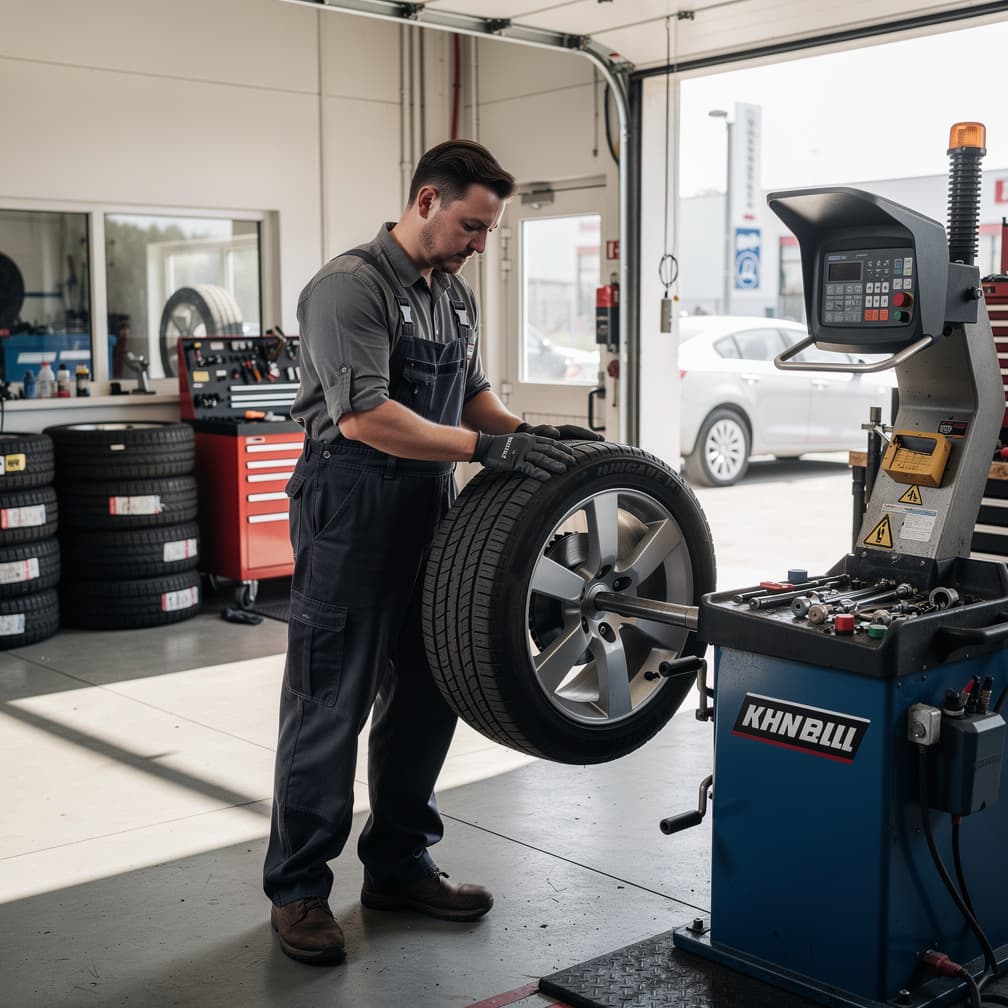

General liability for a tire shop commonly starts around $35 a month, which is less than one mounted tire and buys you the argument you will have after a customer trips in the entryway. Auto tire shop insurance in Anaheim stacks other decisions on top of that floor, and they move the number far more than the base rate does. Payroll drives one line. The replacement value of your lifts, balancers, and stock drives another. Whether cars sleep on the lot drives a third. Two shops on the same block can land far apart on nothing but claims history and chosen limits. Price the whole package before you shop one line at a time, then decide what your Orange County shop can honestly absorb on its own.
What Makes Anaheim Different
Competition in a dense county shows up on your renewal in a way owners rarely connect. Orange County holds about 106,000 businesses, so adjusters, glass vendors, and body shops all share one crowded queue. After a wide loss event that queue is measured in weeks, and your customer's car is in it. A shop with a vehicle it cannot hand back has a customer problem and a cash problem. Carriers differ enormously on how fast they assign, inspect, and authorize a repair in busy markets. That difference does not appear on a quote sheet, so you have to ask for it. Ask about assignment times and local adjuster capacity before you compare two prices side by side. The slow policy turns out expensive in ways the quoted price will never show you.
Local Risk Factors in Anaheim
Wildfire reaches a tire shop through smoke long before flame gets near Anaheim. Soot settles into a waiting room, into ventilation, and onto stock, and smoke claims get argued over what can be cleaned rather than what burned. Rubber holds odor, and customers notice it immediately. Commercial Property can help cover fire and smoke damage under most forms, subject to your deductible and the valuation basis, though carriers in California have grown selective about buildings in exposed areas and some now attach their own conditions. Read what the policy asks of you around brush clearance and outdoor storage. Then ask what your renewal looks like if the area's rating shifts, since appetite moves faster than premiums do.
What Coverage Does an Auto Tire Shop in Anaheim Need?
General Liability
Landlords, fleet accounts, and dealers all ask to see this line before they let you touch anything, and it is the limit a certificate advertises. It is generally meant for third-party injury and property damage: the customer who goes down in your entryway, or the wheel that comes off a mile after an install. It typically does not reach your own building, your own tools, or your own employees.
Example: A customer crosses the waiting room floor, slips on water tracked in from the bay, and leaves with a fractured wrist and a lawyer. The medical bill and the defense costs are what this line is generally asked to answer.
Garage Keepers
A customer's car sits in your bay, on your lift, or out on the lot overnight, and none of it belongs to you. This line is written for vehicles in your care, and the forms vary: some respond only to enclosed storage, some carry a deductible for each vehicle, and some stop at the lot line. Your own property coverage will not stand in for it.
Example: A hail burst dents nine cars waiting on the lot for tires arriving tomorrow, and every owner phones you rather than their own insurer. Depending on the form you bought, this coverage might pick that up.
Commercial Property
The lifts, the balancer, the mounting machine, the compressor, and the rubber stacked to the ceiling are what this line is built around, alongside the building or your improvements to it if you lease. Named causes like fire, theft, and storm are the usual triggers. A machine that fails on its own is normally a separate purchase, and rising water sits outside the standard form.
Example: A fire starting in the compressor room of an Anaheim shop takes the tire room with it and leaves the bays dark for a season. The building and the machines inside are what this line may respond to.
Workers Compensation
Liability lines stop at your own staff, and this is the one that starts there. It is generally intended for medical costs and lost wages when an employee gets hurt on the job, which in a tire shop usually means backs, shoulders, and hands. It is rated against payroll and class code rather than revenue, and rules on who must carry it vary by state.
Example: A tech wrestling a truck tire onto a rim tears a shoulder and is off the floor for two months. Wage replacement and treatment are typically where this line does its work.
Product Liability
A customer blames the part rather than the install, and this is the line that argument lands on. It is meant for claims that a tire, a valve stem, or a wheel you supplied was itself defective, and a demand letter naming you alongside the manufacturer is the ordinary shape of it. A manufacturer's warranty is no substitute, since it does not defend you.
Example: A casing sold across your counter fails at highway speed, and the driver's attorney names your shop, the distributor, and the maker in one filing. Defense costs are what this coverage could be asked to carry.
How Much Does Auto Tire Shop Insurance Cost in Anaheim?
Auto Tire Shop Insurance is a bundle of separate policies, priced separately. The ranges below are typical figures for Anaheim for each line, except workers compensation, which is rated per $100 of payroll; a quote prices each one against your own operations.
| Coverage | Typical range | What moves your price |
|---|---|---|
| General Liability Insurance | $140 - $430 per month | Industry and risk classification, annual revenue, number of employees |
| Garage Keepers Insurance | Varies | Quoted individually based on your operations and limits |
| Commercial Property Insurance | $260 - $775 per month | Building value and construction type, roof age and condition, fire protection class |
| Workers Compensation Insurance | $0.75 - $2.74 per $100 of payroll | Employee classification codes, total annual payroll, experience modification rate |
| Product Liability Insurance | Varies | Quoted individually based on your operations and limits |
Prices shown are general estimates, not guaranteed rates or quotes. Your actual premium will depend on the insurer, coverage selected, business details, location, claims history, and other underwriting factors. Learn about our pricing methodology.
What Are the Insurance Requirements for an Auto Tire Shop in Anaheim?
Workers' comp is generally required once you have your first employee. California generally requires employers to carry workers' compensation at that point. Common exemptions include sole proprietors and some partners. Confirm current thresholds with your state's workers' compensation agency before you hire.
Flood damage is typically excluded from standard policies. Standard commercial property and builders-risk-type policies typically exclude flood damage. Flood exposure varies address by address, so check your premises in FEMA's Flood Map Service Center before deciding; if you sit in a mapped flood zone, a separate policy through the National Flood Insurance Program is the usual starting point.
Where to verify licensing and coverage rules. The California Department of Insurance publishes consumer guidance and current insurance requirements for California businesses. When a contract or lease demands specific wording, the California Department of Insurance's guidance is the authoritative place to check.
Get Your Auto Tire Shop Quote in Anaheim
Compare rates from multiple carriers. Free quotes, no obligation.
Operating in Anaheim
- Anyone in Anaheim can ask a shop for proof of coverage before handing over a truck, and the request never arrives with enough notice to fix a gap in the policy.
- Your equipment list ages the moment you buy a machine, and a balancer added mid-term is uninsured property until somebody tells the carrier it exists.
- Scrap tires pile up faster than a hauler collects them, and a mountain of rubber behind an Anaheim building is a fire loss and a code complaint sitting in the same place.
- A property manager in Anaheim can hold your access badge until a current certificate is on file, so a lapsed renewal stops work that has nothing to do with insurance.
How to Buy: Advice for Anaheim Owners
Start with the lease, because it has already made decisions for you. Commercial leases routinely name a minimum general liability limit, require the landlord as an additional insured, and demand a certificate on file before you get keys. Read that clause, write the exact wording down, and treat it as the specification your policy has to meet. Then add what the lease ignores: your own lifts and stock under Commercial Property, and the customer cars you take custody of. A landlord in Anaheim cares about the building, not about the sedan you cannot hand back. Check the California Department of Insurance's guidance before deciding what limits make sense beyond the contract minimum. Once the spec is written down, CPK puts it to participating carriers so you compare policies that all meet it rather than prices that do not.
FAQ
Auto Tire Shop Insurance in Anaheim: FAQ
Revenue is only one input. Claims history usually explains the gap, and a pattern of small liability losses reads worse to an underwriter than one large loss does. Payroll and class codes move the workers side on their own. The building, its age, and its protection move the property side. Two shops in Orange County with identical sales can look completely different on paper, and the paper is what gets priced.
Vehicles you take custody of sit outside a standard property policy, which is built around your own building and equipment. Garage Keepers is the line written for cars in your care, whether they are on the lift, in the bay, or waiting on your Anaheim lot overnight. Terms vary: some forms respond only to vehicles kept indoors, and some carry a separate deductible for each vehicle. Ask for the wording before you assume the exposure is handled.
It proves a policy existed on the day the certificate was issued, carrying the limits shown. It is not the policy itself, and it does not add anyone as an additional insured; that takes an endorsement. A landlord who wants to stand behind your limit needs that endorsement named on the form. Certificates also expire, so an account holding a stale copy has, in practice, no proof of anything.
That claim usually turns on whether the fault sat in the work or in the part. Liability arising from work you already finished is what a General Liability form's completed operations section is meant to address, while a defective casing points toward Product Liability. Both get argued at once more often than not, and one demand letter can name your shop and the manufacturer together. Torque records and legible work orders are what settle it.
Same trade does not mean same submission. Payroll, class codes, revenue, equipment values, the count of vehicles left overnight, chosen limits, deductibles, and five years of claims history all move the price, and carriers weigh each one differently. Appetite matters too: a carrier comfortable with vehicle custody prices it calmly, and one that is not adds margin instead. Participating carriers in California can read identical paperwork and land far apart.
Per-occurrence is what stands behind one event: one fall in the waiting room, one damaged vehicle. Aggregate is the ceiling on everything the policy can be asked to answer across the term, and it does not refill because you had a bad run. A few modest claims early can leave the aggregate thin when the serious one arrives, and no warning gets sent. Contract exhibits usually name both numbers, so check yours against them.
Sources
- 1.U.S. Census Bureau, County Business Patterns (2022), Orange County(Orange County has about 106,000 business establishments.)
- 2.California Department of Insurance(California Department of Insurance publishes consumer guidance for insurance buyers.)
- 3.FEMA / FloodSmart(Flood coverage is typically purchased separately; FEMA administers the National Flood Insurance Program.)


