

































Updated July 10, 2026

In California, a manufacturer insures its output twice: the plant that makes it and the liability that ships with it. California adds a legal floor here, because workers compensation is required from the first employee [1]. Wildfire exposure in California affects the availability of property coverage as much as its price, which makes comparing several carriers worth the time. The cost drivers below map what actually moves manufacturing quotes in California.
Recommended Coverage for Manufacturing in California
Manufacturing businesses face unique risks that require specific coverage types. Here are the policies most manufacturing operations need:

General Liability
Essential coverage for every business, protect against third-party bodily injury, property damage, and advertising claims.

Commercial Property
Safeguard your business property, equipment, and inventory against damage and loss.

Workers Compensation
Help cover your employees' medical expenses and lost wages for work-related injuries and illnesses.

Commercial Umbrella
Extend your liability limits beyond your primary policies for extra protection against catastrophic claims.

Inland Marine
Protect tools, equipment, and goods in transit or stored at locations away from your primary premises.

Commercial Auto
Protect your business vehicles and drivers with comprehensive commercial auto coverage.
Manufacturing Insurance Overview in California
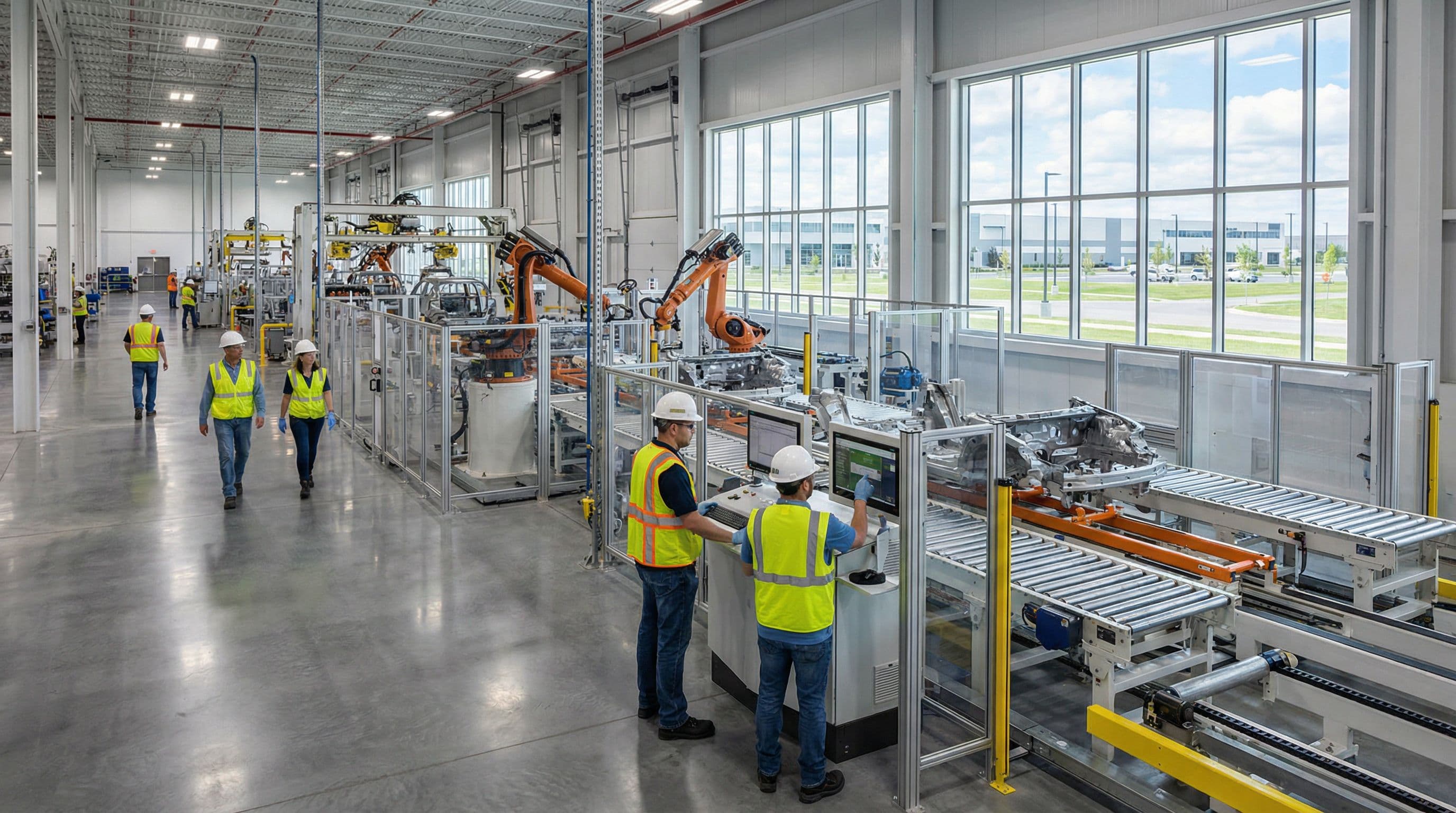
A production line in California has to handle more than machine uptime. Between wildfire smoke, seismic exposure, and a dense industrial footprint across major metro areas, one incident can interrupt output fast. The right policy may help cover building damage, equipment breakdown, third-party claims, and business interruption, all while staying aligned with California Department of Insurance expectations and workers' compensation rules. When you compare options, the key is matching limits and endorsements to the way your facility actually runs.
Why Manufacturing Businesses Need Insurance in California
California manufacturers operate in a state where wildfire and earthquake risk are both rated Very High. Flooding and drought also present meaningful operational pressure. Those hazards can damage buildings, spoil stored materials, disrupt power, and derail production schedules.
For a plant anywhere in the state's major manufacturing corridors, a single event can create building damage, equipment downtime, or business interruption that reaches beyond the initial repair bill. Manufacturing losses tend to cascade across multiple layers of exposure. A malfunctioning press, damaged conveyor, or failed compressor can stop production even when the structure is intact. If a product causes bodily injury or property damage to someone outside the business, legal defense and settlements may become part of the claim.
If your operation relies on specialized tools, mobile property, or materials in transit, those items may need separate attention under inland marine or related coverage. California also requires workers' compensation for employers with at least one employee, with limited exemptions noted for sole proprietors and some partners. How you staff the floor shapes both classification and premium. The California Department of Insurance oversees the market, and local buyers often need a policy structure that reflects the facility, the product line, and the hazard level of the operation rather than a generic package.
California requires workers' comp for businesses with employees (exemptions may apply: Sole proprietors; Some partners). Non-compliance can result in fines and personal liability for owners. Commercial auto minimums are $30,000/$60,000/$15,000.
Key Risks for Manufacturing Businesses
Each of these risks can lead to claims that cost thousands, or more. Make sure your policy addresses every one:
- Product liability and recall costs
- Workplace injuries and safety violations
- Equipment breakdown
- Supply chain disruption
- Environmental contamination
- Property damage from fire or explosion
Cost Factors for Manufacturing Businesses in California
Your premium depends on what you make, the machinery you run, payroll, revenue, building value, claims history, and the hazard level of the operation. The state's 2024 premium index of 128 signals a higher-than-baseline market context, which means you may see tighter underwriting and higher base rates than in many other states. That does not mean every policy is expensive, but it does mean underwriting can be sensitive to your facility's layout, fire protection, machine safeguards, environmental controls, and shipping practices.
Insurers see a large and varied industrial base. A metal fabricator in San Jose may be priced differently than a light assembler in Fresno or a larger plant in Los Angeles, because each operation carries a distinct risk profile. The average manufacturing wage of about $69,000 can influence payroll-based lines, so your workers' compensation and liability premiums may run higher than they would for a lower-wage operation. The state's very high wildfire and earthquake exposure can affect commercial property and equipment breakdown coverage. If your operation includes fleet coverage, hired auto, or non-owned auto exposure, those details can change the quote as well.
Manufacturing businesses typically carry several separately priced policies. The ranges below are typical figures for California for each line, except workers compensation, which is rated per $100 of payroll; a quote prices each one against your own operations.
| Coverage | Typical range | What moves your price |
|---|---|---|
| General Liability Insurance | $190 - $825 per month | Industry and risk classification, annual revenue, number of employees |
| Commercial Property Insurance | $450 - $1,975 per month | Building value and construction type, roof age and condition, fire protection class |
| Workers Compensation Insurance | $0.75 - $2.74 per $100 of payroll | Employee classification codes, total annual payroll, experience modification rate |
| Commercial Umbrella Insurance | $110 - $500 per month | Umbrella limit requested, limits carried on the underlying policies, loss history on those underlying policies |
| Inland Marine Insurance | $65 - $340 per month | Total insured value of the scheduled property, type and age of the equipment, where it is stored and how far it travels |
| Commercial Auto Insurance | $280 - $1,075 per month | Fleet size and vehicle types, driver records and experience, coverage limits and deductibles |
Prices shown are general estimates, not guaranteed rates or quotes. Your actual premium will depend on the insurer, coverage selected, business details, location, claims history, and other underwriting factors. Learn about our pricing methodology.
State Requirements
Insurance Regulations in California
Key regulatory requirements for businesses operating in CA.
Regulatory Authority
Workers' Compensation InsuranceRequired
Required for employers with 1+ employee.
Exempt categories
- Sole proprietors
- Some partners
Commercial Auto Minimum Liability
$30,000/$60,000/$15,000 (bodily injury per person / per accident / property damage)
Source: California Department of Insurance, U.S. Department of Labor
What Drives Manufacturing Insurance Costs in California
Product liability and recalls
Product claims scale with distribution, not headcount. Carriers price product liability insurance against sales volume, product type, and quality controls.
The production floor
Machinery injuries and equipment failures are the plant's daily exposures. Workers compensation insurance and equipment breakdown coverage typically carry that side of the program.
Wildfire
Wildfire exposure can limit which carriers quote a property and on what terms, especially outside city cores. FEMA counts 395 federal disaster declarations for California [2].
Payroll and workers compensation
Average pay in this sector runs $69,000 a year in California [3], which matters because workers compensation premiums are computed on payroll. Loss history sets a modifier on top of that base, so a clean claims record works in your favor at renewal.
Climate Risk Profile
Natural Disaster Risk in California
Understanding climate-related risks helps determine appropriate insurance coverage levels.
Wildfire
Very High
Earthquake
Very High
Drought
High
Flooding
High
Expected Annual Loss from Natural Hazards
$9.8B
estimated economic loss per year across California
Source: FEMA National Risk Index
Insurance Tips for Manufacturing Business Owners in California
List every major machine, press, conveyor, and production line so your policy reflects replacement cost rather than book value.
Ask how equipment breakdown coverage applies to critical systems like motors, boilers, and CNC machines that can stop production without visible building damage.
Review product liability by SKU, component, and end use, especially if your parts end up in another company's finished product.
Match workers' compensation classifications to each job duty, from machine operators and welders to forklift drivers and office staff.
Check whether your quote should include business interruption for natural-disaster and storm-related shutdowns that affect output in California.
If your operation uses tools, mobile property, or contractors equipment offsite, confirm inland marine terms for equipment in transit and jobsite losses.
Evaluate commercial property for fire risk, theft, vandalism, and storm damage, especially in facilities with high-value inventory or specialized fixtures.
If your business uses vehicles for deliveries or pickups, verify liability and fleet coverage details, including hired auto and non-owned auto exposure, before you bind a policy.
Get Manufacturing Insurance in California
Enter your ZIP code to compare manufacturing insurance rates from top carriers.
Business insurance starting at $25/mo
Manufacturing Business Types in California
Find insurance tailored to your specific manufacturing business. Select your business type for coverage recommendations, pricing, and quotes:

Machine Shop Insurance
A machine shop insurance quote helps you compare coverage for CNC work, fabrication, equipment breakdown, and completed-product claims. It’s built for shops that need a fast, tailored path to coverage.

Food Manufacturer Insurance
Get a food manufacturer insurance quote built around contamination events, product recall costs, and production interruptions. Compare coverage for your facility, products, and contracts.

Woodworking Shop Insurance
Get a woodworking shop insurance quote built around fire hazards, heavy equipment, client projects, and shop equipment. Compare coverage for your shop, tools, and customer work.

Printing Company Insurance
Get printing business insurance built for presses, finishing equipment, and client-facing operations. Request a quote to review coverage for equipment failures, premises liability, and job errors.

Textile Manufacturer Insurance
Get a textile manufacturer insurance quote built around looms, dyeing lines, finishing equipment, and the day-to-day risks of fabric and garment production. Coverage can be shaped to your operation, location, and contract needs.

Electronics Manufacturer Insurance
Compare electronics manufacturer insurance options for defect claims, facility risks, and cyber exposures across production and distribution. Request a quote built around how your operation actually runs.

Plastics Manufacturer Insurance
Get a plastics manufacturer insurance quote built around polymer production, chemical exposure, and downstream product claims. Compare coverage options that fit your operation.
Manufacturing Insurance by City in California
Insurance rates and requirements can vary by city. Find manufacturing insurance information for your area in California:
FAQ
Manufacturing Insurance FAQ in California
Start with the pairing that carries most plants: commercial property for the building, machinery, and stock, and general liability for everything that touches the outside world. Workers compensation applies once you have employees, and auto, inland marine, and umbrella coverage enter the program as vehicles, mobile equipment, and larger contracts do.
Premiums are set from payroll and class codes, so the rate for a machinist differs from the rate for a shipping clerk or an estimator. Underwriters look at who operates machinery, who handles material, and who drives, which is why accurate role descriptions matter before you bind coverage.
Only when property leaves the premises, but for many operations that is more common than it sounds. Dies loaned to a vendor, samples in transit, and equipment moving between plants all sit outside the reach of a standard fixed-location property policy, so schedule them deliberately.
Usually because a customer contract, landlord, or lender demands higher limits than the base liability policy carries. It also earns its keep where one loss could run past primary limits, such as a component defect that shuts down another company’s production line.
It can, subject to the policy terms and how each item is scheduled. The practical work is in the values: when bottleneck machines, raw stock, and finished goods are described accurately, a claim settles against reality instead of against an old estimate.
On what you make, how you make it, and what the loss history says. Payroll, property values, vehicle use, and requested limits set the frame, and a detailed submission with a clear process description gets sharper pricing than a generic application.
Yes, a short delivery radius does not remove the exposure. Vehicle type, cargo, driver records, and trip frequency still shape the risk, and a box truck making daily runs near the plant sees plenty of traffic even if it never crosses a county line.
Payroll by role, current loss runs, vehicle details, equipment and inventory values, lease or contract insurance requirements, and a plain description of your production flow. That package lets the quote reflect how the plant actually runs.
Sources
- 1.California Department of Insurance(California requires workers compensation coverage from the first employee.)
- 2.FEMA Disaster Declarations(California has 395 federal disaster declarations on record.)
- 3.BLS Quarterly Census of Employment and Wages (2024)(Manufacturing workers in California earn an average of $69,000 a year.)