








































Deductibles do more to your real cost than the monthly premium does, and towing is a trade where you learn that fast. Every scrape in a tight lot, every windshield cracked by a rock on a highway call, every bit of deck rash on a customer's fender: those losses fall inside the deductible and come out of your pocket. Towing company insurance in Boulder rewards owners who price the whole picture instead of the headline number. Raising a physical damage deductible lowers the bill and moves risk back onto you, which works if you hold cash and hurts if you do not. Limits run the opposite way, and raising them costs less than most owners expect. Weigh both together across your Boulder County quotes before deciding which number you are actually buying.
What Makes Boulder Different
Truck values drive the biggest line on your bill, and owners underestimate what a wrecker costs. A rollback with a decade on it still costs real money to replace at current prices. Insuring it for what you paid, rather than what it replaces for, saves money badly. Stated value, actual cash value, and replacement cost are three different answers to one question. Ask which one your quote uses before you compare it against another Boulder quote. Two prices on two different valuation methods are not a comparison; they are a coin flip. Specialty equipment, wheel lifts, and body upgrades sometimes need to be scheduled separately on the policy. Nobody notices that omission until a Boulder truck burns and the payout stops at the chassis.
Local Risk Factors in Boulder
A yard with no cover collects hail damage on every car in it. Covered parking is expensive and it is also the first thing an underwriter asks about, so if you have any, say so when you quote in Boulder. Where you have none, the honest answer costs less than a surprise later. Hail rarely stops this trade's work: it creates work, since the storm that dents your lot also puts vehicles into ditches across Boulder County. That mix of exposure and revenue is what makes hail worth a conversation before renewal rather than after a claim. Ask what a carrier expects you to do with stored vehicles once a warning is issued.
What Coverage Does a Towing Company in Boulder Need?
Commercial Auto
Lenders holding a note on a wrecker generally require this line before the truck turns a wheel, and it is the largest piece of most towing bills. It can respond to injury and property damage your driver causes on the road, and to the truck itself where you add physical damage. The customer's vehicle riding behind it is not included here.
Example: A rollback merges onto a busy highway, clips a sedan, and both end up against the barrier; commercial auto may answer for the other driver's injuries and repairs, subject to your limits.
Garage Keepers
Every car left in your yard overnight belongs to someone who expects it back in the same condition. This line is built for damage to those vehicles while they sit in your custody, from theft and vandalism to fire and storm. Some forms respond only where you are legally liable, and others respond regardless of fault. It does nothing for your own trucks.
Example: A storm drops a limb across two customer cars parked in a Boulder storage lot; garage keepers can help cover the damage, depending on whether the form turns on fault.
On-Hook Towing
Damage you cause to a vehicle while it rides on your hook is not part of your own auto physical damage, and it is not part of a yard policy either. This line sits in that gap: loading, transport, unloading. Limits are usually set per vehicle, so the number should match the most expensive car you would accept. Workmanship errors are commonly excluded.
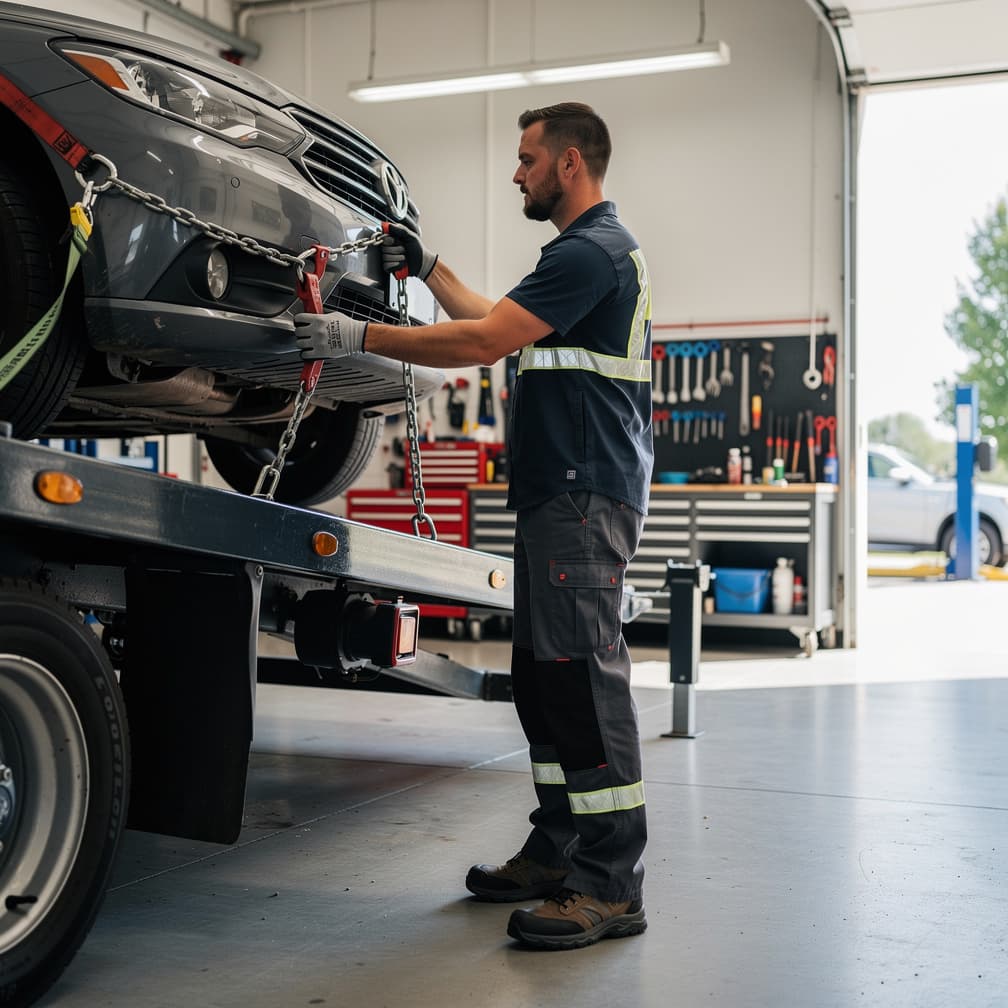
Example: A pickup's front bumper tears loose when a chain shifts during transport and the owner sends over a repair estimate; on-hook towing could respond to damage that happened in transit.
General Liability
Where the auto lines follow your trucks and the yard lines follow your customers' cars, this one follows people. Landlords and commercial accounts commonly require it before you get a key or an account. It can help cover a visitor injured at the release window, or property you damage away from a vehicle. Injuries to your own crew belong somewhere else.
Example: Someone slips on spilled fluid while collecting a car at your office and breaks a wrist; general liability is typically where that medical bill and any lawsuit get handled.
Workers Compensation
A driver hurt on a shoulder at night is the claim this line exists for, and health plans generally exclude injuries that happen at work. It is rated per hundred dollars of payroll by classification, so how you report an owner who also drives matters at audit. Requirements and part-time thresholds vary by state.
Example: A winch cable snaps during a recovery and catches an operator's hand in Boulder; workers compensation is generally the line that picks up the treatment and the lost wages.
How Much Does Towing Company Insurance Cost in Boulder?
Towing Company Insurance is a bundle of separate policies, priced separately. The ranges below are typical figures for Boulder for each line, except workers compensation, which is rated per $100 of payroll; a quote prices each one against your own operations.
| Coverage | Typical range | What moves your price |
|---|---|---|
| Commercial Auto Insurance | $1,125 - $3,900 per month | Fleet size and vehicle types, driver records and experience, coverage limits and deductibles |
| Garage Keepers Insurance | Varies | Quoted individually based on your operations and limits |
| On-Hook Towing Insurance | Varies | Quoted individually based on your operations and limits |
| General Liability Insurance | $150 - $500 per month | Industry and risk classification, annual revenue, number of employees |
| Workers Compensation Insurance | $0.75 - $2.74 per $100 of payroll | Employee classification codes, total annual payroll, experience modification rate |
Prices shown are general estimates, not guaranteed rates or quotes. Your actual premium will depend on the insurer, coverage selected, business details, location, claims history, and other underwriting factors. Learn about our pricing methodology.
What Are the Insurance Requirements for a Towing Company in Boulder?
Workers' comp is generally required once you have your first employee. Colorado generally requires employers to carry workers' compensation at that point. Common exemptions include sole proprietors, partners in partnerships, and members of LLCs. Confirm current thresholds with your state's workers' compensation agency before you hire.
State auto liability minimums apply to business vehicles. Colorado's minimum auto liability limits are $25,000/$50,000/$15,000 (bodily injury per person / per accident / property damage). Contracts and lenders often require more than the state floor.
Where to verify licensing and coverage rules. The Colorado Division of Insurance publishes consumer guidance and current insurance requirements for Colorado businesses. When a contract or lease demands specific wording, the Colorado Division of Insurance's guidance is the authoritative place to check.
Get Your Towing Company Quote in Boulder
Compare rates from multiple carriers. Free quotes, no obligation.
Operating in Boulder
- Trucks get financed and lenders get named on the policy, so letting coverage lapse mid-term can trigger a call from the bank before it triggers one from a customer.
- A property manager in Boulder can pull your certificate before approving an invoice, so a policy that lapses on the first of the month can freeze payment for work you already finished.
- Motor club contracts often set response times in minutes, and the driver who beats the clock is the driver who eventually rear-ends someone at a light.
- Cars pile up in a storage yard faster than owners retrieve them, and the value parked behind your Boulder fence on a busy weekend is rarely the number written on your application.
How to Buy: Advice for Boulder Owners
Nobody shops insurance twice a year, so make this round count. Build a one-page summary of your operation: trucks, drivers, radius, what you tow, how many vehicles you store, payroll, revenue, and three years of losses. That page is what gets you comparable quotes instead of a spread of guesses. Update it every renewal and the work takes twenty minutes instead of two days. Commercial Auto and Garage Keepers both rest on facts from that page, and both get mispriced without it. The Colorado Division of Insurance publishes consumer guidance on shopping for commercial coverage. When the page is ready, compare quotes from participating carriers who all see the same Boulder operation described the same way.
FAQ
Towing Company Insurance in Boulder: FAQ
It can extend coverage to another party for claims arising out of your work, which is why fleets and dealerships ask for it. That is a real change rather than a formality: your limits now stand behind someone else's exposure too. Some endorsements are broad and some are narrow, and the wording a contract demands may not match what a carrier offers. Send the contract to whoever quotes you before you sign it.
Often not, or not without disclosure. Repossession brings confrontation, disputed ownership, and personal property left in the vehicle, and many carriers treat it as a separate class to rate. A policy written for roadside assistance may exclude it outright. If a lender in Boulder offers you volume, get the answer in writing before the first assignment rather than after the first argument.
Usually one occurrence, and that is the number that matters. Your per-occurrence limit stands behind a single event no matter how many cars and people it involves, while the aggregate is the ceiling across the whole policy term. A recovery gone wrong on a busy Boulder road can put several vehicles and several injured people inside one event. Towing tests the per-occurrence figure hardest; the aggregate starts to matter after your second bad month in a year.
It depends on how the damage happened. Dragging a vehicle in gear or hooking it wrong is workmanship, and policies commonly exclude damage caused by the way work was performed. Accidental damage during transport is a different question, and On-Hook Towing might respond there. Training and a written hookup procedure are the least expensive fix, since this is one of the most argued claims in the trade.
Usually less than the auto line. General Liability is priced mainly on revenue and on the exposure at your office and yard, so a one-truck operation with a small lot tends to land near the bottom of the published range. The cost table on this page shows where that range currently sits. What moves it: revenue, claims history, and the limits your contracts demand.
A list of trucks with values, a driver list with license numbers, three years of loss runs, your annual payroll, your revenue, and the radius you truly run. Add a count of vehicles stored on a peak night if you keep a lot. Quotes built on guesses get corrected later, usually upward. Sending the same package to every carrier is what makes Boulder quotes comparable at all.
Sources
- 1.Colorado Division of Insurance(Colorado Division of Insurance publishes consumer guidance for insurance buyers.)


