

































Updated July 10, 2026

Manufacturing risk in Colorado splits between the floor and the field: worker injuries and machine failures inside, product claims outside. Colorado adds a legal floor here, because workers compensation is required from the first employee [1]. Colorado weather adds a second layer, with hail exposure showing up in property deductibles and terms before it shows up in premium. Below, the factors that move manufacturing pricing in Colorado are broken out one by one.
Recommended Coverage for Manufacturing in Colorado
Manufacturing businesses face unique risks that require specific coverage types. Here are the policies most manufacturing operations need:

General Liability
Essential coverage for every business, protect against third-party bodily injury, property damage, and advertising claims.

Commercial Property
Safeguard your business property, equipment, and inventory against damage and loss.

Workers Compensation
Help cover your employees' medical expenses and lost wages for work-related injuries and illnesses.

Commercial Umbrella
Extend your liability limits beyond your primary policies for extra protection against catastrophic claims.

Inland Marine
Protect tools, equipment, and goods in transit or stored at locations away from your primary premises.

Commercial Auto
Protect your business vehicles and drivers with comprehensive commercial auto coverage.
Manufacturing Insurance Overview in Colorado
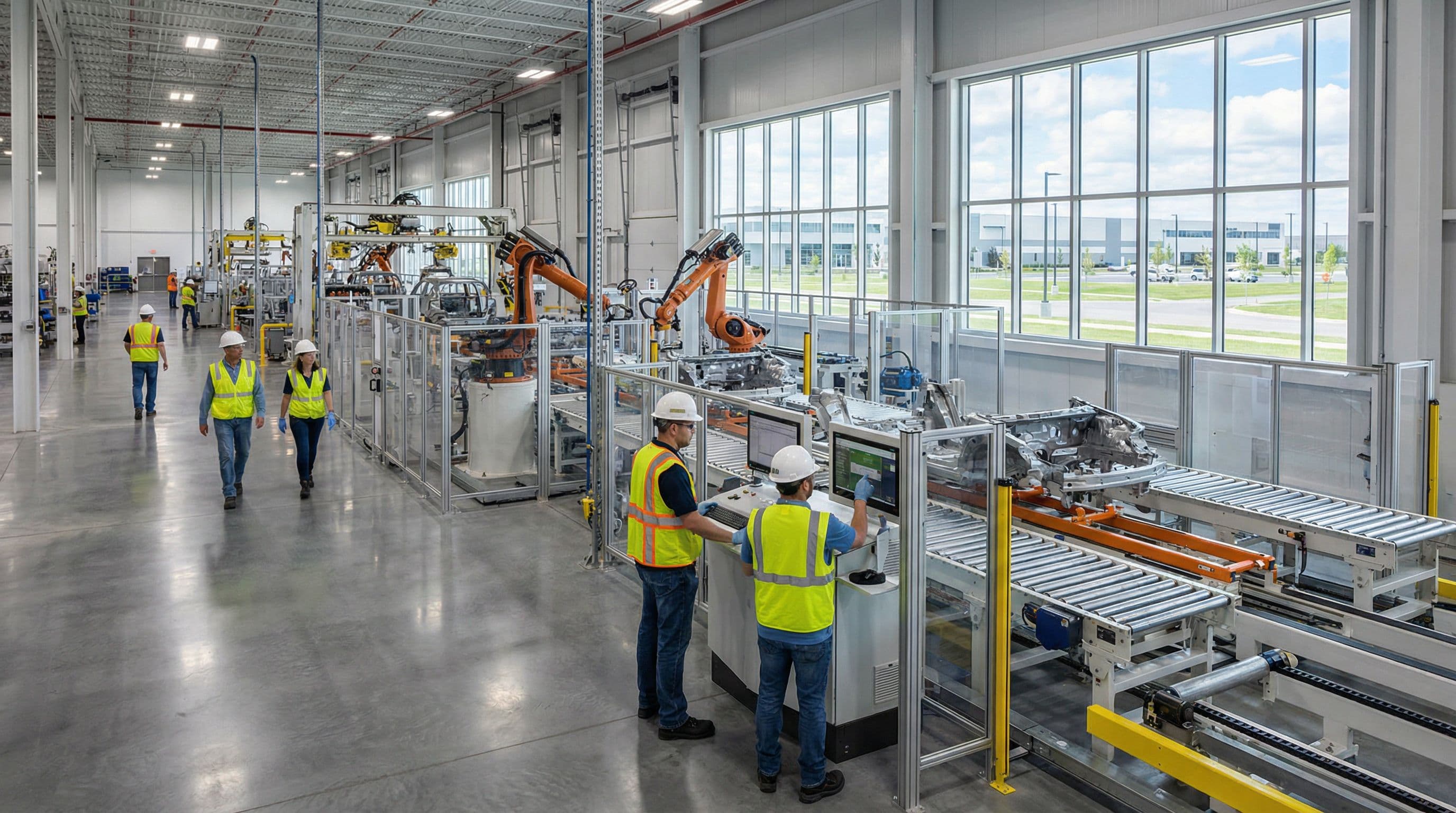
Your operation runs on people before it runs on anything else. A typical Colorado plant might have machine operators, maintenance technicians, warehouse staff, drivers, supervisors, and temp labor working side by side, and each role changes how injuries, training gaps, and shift handoffs show up in your risk profile. Your policy should reflect the actual path work takes through your plant, from receiving raw materials and staging inventory to fabrication, assembly, packaging, and delivery.
If one crew handles forklifts, another runs cutting or forming equipment, and a third loads outbound trucks, your policies need to match those handoffs. You also need to account for weather-driven interruptions that can affect facilities, stock, and vehicles moving between sites. Before you renew, sit down and map your headcount by job duty, noting who drives, listing mobile tools and equipment, and separating owned property from customer property in your care. From there you can review workers compensation, commercial property, inland marine, commercial auto, liability, and umbrella limits with a clearer picture of where your exposure actually sits.
Why Manufacturing Businesses Need Insurance in Colorado
Colorado manufacturing losses often start in the ordinary flow of work. A new hire might still be learning lockout procedures when a maintenance employee moves between production lines. A forklift could cross shared space with pedestrians while a delivery vehicle backs into a loading area during a weather event. These are concrete risks that affect how you set payroll by class code, how you document driver use, and how you decide whether your umbrella limit is high enough for a serious injury or multi-party claim.
Workers compensation deserves early attention because Colorado requires it for businesses with 1 or more employees, with limited exemptions for sole proprietors, partners in partnerships, and members of LLCs. A shop that adds even one employee should verify status before work starts. That matters on a manufacturing floor where job duties can change quickly between setup, production, cleanup, and shipping. If your policy classifications or payroll estimates lag behind reality, the problem often shows up at audit or after a claim.
Property and transit exposures also look different when your operation stores raw materials, work in process, finished goods, spare parts, and mobile equipment in more than one place. Commercial property insurance should be reviewed against building improvements, stock values, and bottlenecks in production. Inland marine becomes important when tools, dies, or equipment move between buildings or job locations. Commercial auto needs to reflect who drives, what is hauled, and whether pickups, vans, or heavier units are part of daily operations. If your contracts with customers or landlords require higher limits, review general liability and commercial umbrella together instead of treating them as separate purchases.
Colorado requires workers' comp for businesses with employees (exemptions may apply: Sole proprietors; Partners in partnerships). Non-compliance can result in fines and personal liability for owners. Commercial auto minimums are $25,000/$50,000/$15,000.
Key Risks for Manufacturing Businesses
Each of these risks can lead to claims that cost thousands, or more. Make sure your policy addresses every one:
- Product liability and recall costs
- Workplace injuries and safety violations
- Equipment breakdown
- Supply chain disruption
- Environmental contamination
- Property damage from fire or explosion
Cost Factors for Manufacturing Businesses in Colorado
What you pay for manufacturing coverage in Colorado has less to do with a generic industry label than with the specifics of how your operation is built. Insurers weigh payroll, employee job duties, machinery and fire load, building construction, protection systems, vehicle use, claims history, and the value of raw materials, work in process, and finished stock. A metal fabricator with welding, delivery vehicles, and multiple shifts presents a different profile than a light assembly operation in a sprinklered space with limited public access.
Payroll and class assignments drive workers compensation pricing, so accurate job descriptions matter. If supervisors sometimes work on the floor, drivers also load materials, or maintenance staff handle several functions, clean records help support a more accurate quote. From there, commercial property pricing usually turns on the facility itself, the concentration of stock, and how hard it would be to replace specialized equipment or resume production after a loss. Inland marine costs tend to rise when tools, dies, or equipment travel between locations or stay in transit. Commercial auto pricing is shaped by vehicle type, radius of travel, driver records, and hauling patterns.
When comparing quotes, ask each carrier or broker to show the same limits, deductibles, covered property assumptions, and vehicle schedules side by side so you can see whether a lower premium reflects a real fit or simply narrower terms. As a baseline, general liability, the coverage nearly every manufacturing business carries, averages about $160 to $700 per month in Colorado, a bit above the national average, which means a shop with moderate payroll and clean loss history should expect to land in the middle of that band. Your final premium depends on payroll, annual revenue, claims history, and the specific risk class of your work.
Manufacturing businesses typically carry several separately priced policies. The ranges below are typical figures for Colorado for each line, except workers compensation, which is rated per $100 of payroll; a quote prices each one against your own operations.
| Coverage | Typical range | What moves your price |
|---|---|---|
| General Liability Insurance | $160 - $700 per month | Industry and risk classification, annual revenue, number of employees |
| Commercial Property Insurance | $280 - $1,225 per month | Building value and construction type, roof age and condition, fire protection class |
| Workers Compensation Insurance | $0.75 - $2.74 per $100 of payroll | Employee classification codes, total annual payroll, experience modification rate |
| Commercial Umbrella Insurance | $95 - $430 per month | Umbrella limit requested, limits carried on the underlying policies, loss history on those underlying policies |
| Inland Marine Insurance | $50 - $260 per month | Total insured value of the scheduled property, type and age of the equipment, where it is stored and how far it travels |
| Commercial Auto Insurance | $250 - $950 per month | Fleet size and vehicle types, driver records and experience, coverage limits and deductibles |
Prices shown are general estimates, not guaranteed rates or quotes. Your actual premium will depend on the insurer, coverage selected, business details, location, claims history, and other underwriting factors. Learn about our pricing methodology.
State Requirements
Insurance Regulations in Colorado
Key regulatory requirements for businesses operating in CO.
Regulatory Authority
Workers' Compensation InsuranceRequired
Required for employers with 1+ employee.
Exempt categories
- Sole proprietors
- Partners in partnerships
- Members of LLCs
Commercial Auto Minimum Liability
$25,000/$50,000/$15,000 (bodily injury per person / per accident / property damage)
Source: Colorado Department of Insurance, U.S. Department of Labor
What Drives Manufacturing Insurance Costs in Colorado
Product liability and recalls
Product claims scale with distribution, not headcount. Carriers price product liability insurance against sales volume, product type, and quality controls.
The production floor
Machinery injuries and equipment failures are the plant's daily exposures. Workers compensation insurance and equipment breakdown coverage typically carry that side of the program.
Hail
Storm claims drive commercial property pricing in this market, and wind or hail damage may carry a separate deductible. FEMA counts 111 federal disaster declarations for Colorado [2].
Payroll and workers compensation
Manufacturing wages in Colorado average $65,800 a year [3], and workers compensation pricing keys directly to payroll. Loss history sets a modifier on top of that base, so a clean claims record works in your favor at renewal.
Climate Risk Profile
Natural Disaster Risk in Colorado
Understanding climate-related risks helps determine appropriate insurance coverage levels.
Hailstorm
Very High
Wildfire
Very High
Tornado
High
Winter Storm
High
Expected Annual Loss from Natural Hazards
$2.1B
estimated economic loss per year across Colorado
Source: FEMA National Risk Index
Insurance Tips for Manufacturing Business Owners in Colorado
Break out payroll and job duties by role so your workers compensation quote matches how labor is actually deployed, since operators, maintenance staff, warehouse employees, drivers, and supervisors each carry different exposure levels that a blended estimate would obscure.
Review commercial property limits against raw materials, work in process, finished goods, tenant improvements, and critical machinery, especially if one bottleneck machine would slow the entire production schedule.
Schedule inland marine carefully if tools, dies, molds, testing equipment, or mobile machinery move between buildings, customer sites, storage yards, or temporary project locations.
Check commercial auto details beyond vehicle count, including who drives, what gets loaded, how often employees cross county lines, and whether personal vehicles are used for business errands.
Compare general liability and commercial umbrella limits against customer contract requirements, landlord insurance clauses, and the injury severity that can come from loading docks, forklifts, and visiting vendors.
Get Manufacturing Insurance in Colorado
Enter your ZIP code to compare manufacturing insurance rates from top carriers.
Business insurance starting at $25/mo
Manufacturing Business Types in Colorado
Find insurance tailored to your specific manufacturing business. Select your business type for coverage recommendations, pricing, and quotes:

Machine Shop Insurance
A machine shop insurance quote helps you compare coverage for CNC work, fabrication, equipment breakdown, and completed-product claims. It’s built for shops that need a fast, tailored path to coverage.

Food Manufacturer Insurance
Get a food manufacturer insurance quote built around contamination events, product recall costs, and production interruptions. Compare coverage for your facility, products, and contracts.

Woodworking Shop Insurance
Get a woodworking shop insurance quote built around fire hazards, heavy equipment, client projects, and shop equipment. Compare coverage for your shop, tools, and customer work.

Printing Company Insurance
Get printing business insurance built for presses, finishing equipment, and client-facing operations. Request a quote to review coverage for equipment failures, premises liability, and job errors.

Textile Manufacturer Insurance
Get a textile manufacturer insurance quote built around looms, dyeing lines, finishing equipment, and the day-to-day risks of fabric and garment production. Coverage can be shaped to your operation, location, and contract needs.

Electronics Manufacturer Insurance
Compare electronics manufacturer insurance options for defect claims, facility risks, and cyber exposures across production and distribution. Request a quote built around how your operation actually runs.

Plastics Manufacturer Insurance
Get a plastics manufacturer insurance quote built around polymer production, chemical exposure, and downstream product claims. Compare coverage options that fit your operation.
Manufacturing Insurance by City in Colorado
Insurance rates and requirements can vary by city. Find manufacturing insurance information for your area in Colorado:
FAQ
Manufacturing Insurance FAQ in Colorado
Yes. The state mandate kicks in once you have one employee, though sole proprietors, partners, and LLC members can generally opt out. If your plant adds staff, confirm classifications and payroll before the first shift begins.
When tools, dies, molds, or mobile equipment move between buildings or offsite, it usually makes sense to review inland marine alongside your property coverage so fixed plant assets stay separate from items that travel, sit in transit, or stay temporarily at another location.
Quotes go faster when you bring payroll by job duty, current loss runs, vehicle schedules, driver lists, building details, protection systems, and values for raw materials, work in process, and finished goods, all of which let you compare terms on consistent footing.
Customer and landlord contracts often drive liability and auto limit decisions as much as operations do, so review indemnity language, additional insured requests, waiver requirements, and umbrella expectations before you sign, not after a certificate is requested.
Even for local routes, commercial auto deserves careful review because backing losses, loading incidents, employee driver records, and mixed use of pickups, vans, or box trucks can change both pricing and coverage structure.
Set property limits around replacement cost, stock swings, tenant improvements, and production bottlenecks. If one machine, panel, or line controls output, document that dependency before you choose deductibles and business interruption assumptions.
The Colorado Division of Insurance regulates business insurance in the state. If quote terms look inconsistent, compare deductibles, exclusions, classifications, and scheduled property details line by line before you bind coverage.
Start with the pairing that carries most plants: commercial property for the building, machinery, and stock, and general liability for everything that touches the outside world. Workers compensation applies once you have employees, and auto, inland marine, and umbrella coverage enter the program as vehicles, mobile equipment, and larger contracts do.
Sources
- 1.Colorado Division of Insurance(Colorado requires workers compensation coverage from the first employee.; Colorado requires workers compensation for businesses with 1 or more employees, with limited exemptions for sole proprietors, partners in partnerships, and members of LLCs.; Colorado business insurance is regulated by the Colorado Division of Insurance.)
- 2.FEMA Disaster Declarations(Colorado has 111 federal disaster declarations on record.)
- 3.BLS Quarterly Census of Employment and Wages (2024)(Manufacturing workers in Colorado earn an average of $65,800 a year.)