







































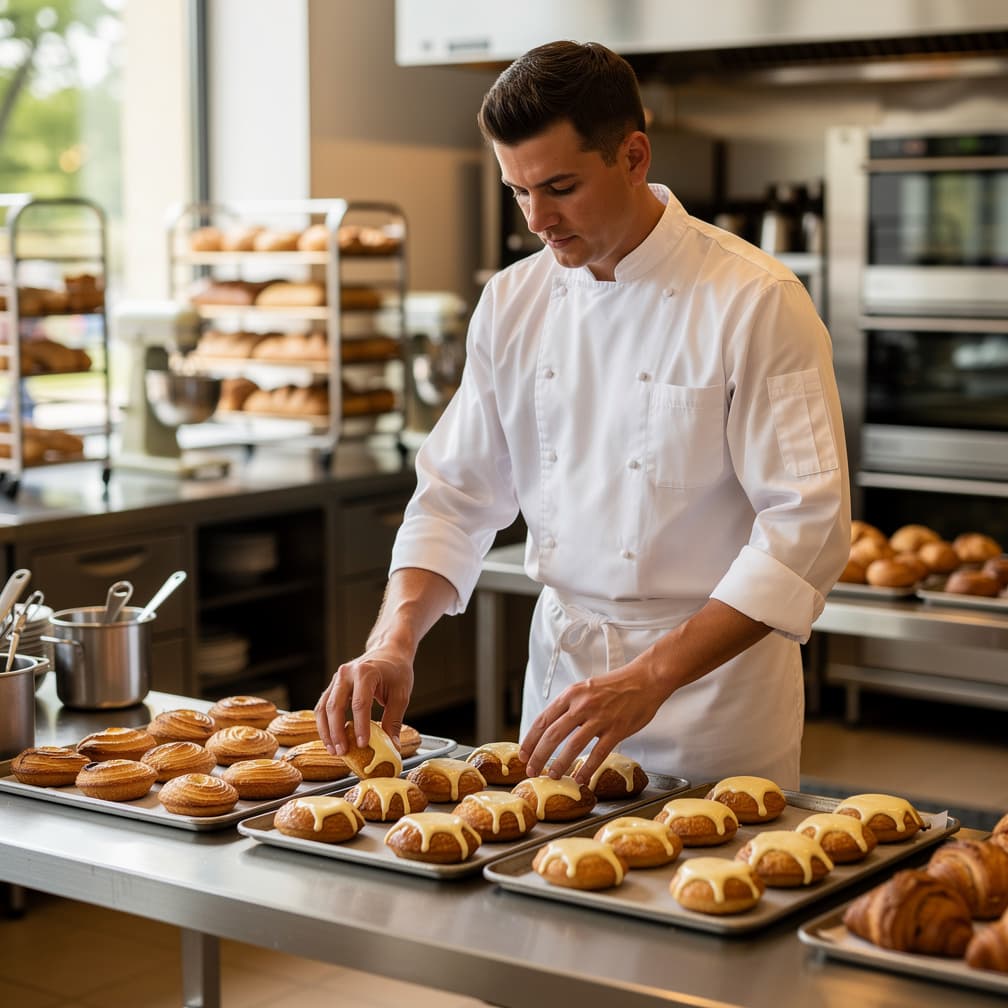

As a bakery in Lakewood, the health of your walk-in cooler is a financial position, not a maintenance chore. A compressor that fails on a warm night can spoil butter, cream, and a weekend of finished product before anyone opens the door. Spoilage after an equipment breakdown gets handled differently than spoilage after a storm knocks the power out, and the difference lives in endorsements most owners never read. Ask which one you hold. Ask whether utility interruption is included or excluded, because a power cut that starts a block away is the common version of this loss. Bakery insurance in Lakewood is worth an hour of those two questions, then take them into a quote comparison across Colorado and see which participating carriers answer cleanly.
What Makes Lakewood Different
Additional insured wording is where good quotes fall apart, and it runs about three lines long. A buyer who wants that status is asking your policy to stand behind it if your product or your floor hurts somebody. Carriers grant it by endorsement, and endorsements are not automatic, not uniform, and not always free. A hotel in Lakewood that asks for it will not accept a certificate that merely lists it as a certificate holder. Those two things look identical on paper and are nothing alike in a claim. Learn the difference before your first commercial account, because the correction takes days you will not have. Forms vary by carrier and by state, so what worked somewhere else may not read the same in Colorado. Ask during the quote, while it is still a question.
Local Risk Factors in Lakewood
Hail hits a bakery from the top down: the roof membrane, the rooftop condensing units that keep your walk-in cold, and the signage out front. The units are the expensive part, because a bruised coil can keep running for weeks and then quit during the one week you cannot spare it. That delayed failure is why hail claims get argued over. Commercial Property may respond to the physical damage, though many forms in hail-prone parts of Colorado carry a separate roof deductible or settle the roof on a depreciated basis. Read which of those applies to your building in Lakewood. Have the roof and the rooftop equipment inspected after a storm even when nothing looks wrong, because the report is what dates the damage.
What Coverage Does a Bakery in Lakewood Need?
General Liability
Landlords, venues, and market organizers ask for this one by name before they let you open or set up a table. It is the line that generally answers when a customer slips near your display case or when a delivery of yours damages somebody else's property. Damage to your own ovens and stock sits elsewhere, and an injured baker is a different policy entirely.
Example: A customer steps off a rain-slick entry mat, lands badly, and hires a lawyer three months later in Lakewood; General Liability can help cover the medical claim and the defense costs behind it.
Commercial Property
Fire, storm damage, vandalism, and theft are the events this line is built around, along with the ovens, mixers, display cases, walk-in, and the stock inside them. Flood and ordinary wear are typically excluded, and equipment that simply fails on its own often needs a breakdown endorsement. Read the stock limit closely, since finished product and ingredients are where bakeries usually come up short.
Example: A hood fire scorches the kitchen and takes the mixer down with it; Commercial Property is generally the line that steps toward the repairs, the replacement, and the ruined stock.
Product Liability
Somebody eats what you baked and gets hurt: an undeclared nut, a foreign object, a batch that makes a family ill. The claim can arrive from a walk-in customer or from the grocer who resold your bread, and wholesale buyers commonly want proof of this coverage before a first delivery. Destroying or recalling the product itself is usually a separate add-on.
Example: A wedding cake goes out with an unlabeled nut filling and a guest ends up in an emergency room; Product Liability might respond to the injury claim and the legal bills after it.
Business Owners Policy
Rather than buying liability and property as two contracts, a Business Owners Policy wraps them into one and usually folds in income protection. For a single-location bakery in Lakewood it is a common starting point and the least paperwork. Package limits are preset, though, so the stock figure and the shutdown period deserve a hard look before you accept the convenience.
Example: Smoke closes the shop for three weeks and two ovens need replacing; a Business Owners Policy might handle the equipment, the ruined stock, and part of the income lost while the doors stayed shut.
Workers Compensation
Burns, cuts, strained backs from fifty-pound flour sacks, and falls on a wet kitchen floor are what this coverage exists for, and it typically pays medical costs and part of lost wages without anyone suing anyone. Whether you must carry it depends on your headcount and your state, and the Colorado Division of Insurance publishes the current requirements for employers.
Example: A baker reaches into a deck oven before dawn and burns a forearm badly enough for stitches; Workers Compensation typically takes on the treatment and the shifts missed afterward.
How Much Does Bakery Insurance Cost in Lakewood?
Bakery Insurance is a bundle of separate policies, priced separately. The ranges below are typical figures for Lakewood for each line, except workers compensation, which is rated per $100 of payroll; a quote prices each one against your own operations.
| Coverage | Typical range | What moves your price |
|---|---|---|
| General Liability Insurance | $50 - $170 per month | Industry and risk classification, annual revenue, number of employees |
| Commercial Property Insurance | $95 - $340 per month | Building value and construction type, roof age and condition, fire protection class |
| Product Liability Insurance | Varies | Quoted individually based on your operations and limits |
| Business Owners Policy Insurance | $100 - $300 per month | Annual revenue and industry class, building and contents values, square footage and building age |
| Workers Compensation Insurance | $0.75 - $2.74 per $100 of payroll | Employee classification codes, total annual payroll, experience modification rate |
Prices shown are general estimates, not guaranteed rates or quotes. Your actual premium will depend on the insurer, coverage selected, business details, location, claims history, and other underwriting factors. Learn about our pricing methodology.
What Are the Insurance Requirements for a Bakery in Lakewood?
Workers' comp is generally required once you have your first employee. Colorado generally requires employers to carry workers' compensation at that point. Common exemptions include sole proprietors, partners in partnerships, and members of LLCs. Confirm current thresholds with your state's workers' compensation agency before you hire.
Where to verify licensing and coverage rules. The Colorado Division of Insurance publishes consumer guidance and current insurance requirements for Colorado businesses. When a contract or lease demands specific wording, the Colorado Division of Insurance's guidance is the authoritative place to check.
Get Your Bakery Quote in Lakewood
Compare rates from multiple carriers. Free quotes, no obligation.
Operating in Lakewood
- Ingredient theft rarely gets reported because it looks like shrinkage, yet a case of vanilla and a missing mixer are the same claim conversation with different receipts.
- Freezers and proofers fail on the night nobody is watching, so the first sign of the loss is usually the smell that meets whoever unlocks the door.
- A property manager in Lakewood can keep your certificate in a lease file and refuse to renew until the endorsement wording matches, which turns a paperwork detail into a closed storefront.
- Flour dust and melted ice meet at the entryway, and that patch of floor is where customer injury claims tend to start rather than at any hot surface.
How to Buy: Advice for Lakewood Owners
The biggest uncovered loss in this trade is not the fire, it is the six weeks after it. Ovens have lead times, hoods need inspection, and a landlord's repairs in Lakewood run on the landlord's schedule. Income terms decide whether you survive that stretch, and they hide inside a Business Owners Policy or sit as an endorsement on Commercial Property. Ask what triggers them, how long they run, and whether payroll for your bakers counts while the doors are shut. Those three answers vary more between carriers than the premium does. The Colorado Division of Insurance publishes consumer guidance on how business policies handle income loss, which is a useful frame before you compare. Bring the questions to a quote comparison on CPK and let participating carriers answer them in writing.
FAQ
Bakery Insurance in Lakewood: FAQ
Standard property forms typically exclude flood, and that gap does not change because your bakery sits nowhere near a river. Flood cover is priced separately, often through the National Flood Insurance Program or a private equivalent. A ground-floor kitchen in Lakewood with ovens sitting on a slab is exactly the layout that suffers. Look at the flood maps for your address before deciding.
It is the line that can respond when what you sold hurts somebody: an undeclared nut, a foreign object in a pastry, a batch that makes people ill. The claim may arrive from a walk-in customer or from a wholesale buyer who resold your product. Product Liability typically does not answer for the cost of the recalled goods themselves unless a recall endorsement is added.
Yes, and the request is called additional insured status, which a carrier grants by endorsement rather than by printing a certificate. Naming a buyer as a certificate holder is a different thing and will usually be rejected. A grocery or caterer in Lakewood can hold a first delivery until the endorsement exists, so raise it during the quote rather than after.
Payroll is the rating basis for Workers Compensation, so more hours generally means a larger bill, and the rate applies per unit of payroll rather than per head. Job type matters too, since an oven operator and a counter clerk are not rated alike. Report the split honestly, because audits reconcile the estimate later and the correction arrives as a bill.
Mechanical failure of refrigeration is usually an equipment breakdown question rather than a storm or fire question, and different parts of a policy handle each. The spoiled stock inside may fall under a spoilage endorsement, if you carry one. Keep temperature logs and service records, because those are what turn an argument into a claim.
A Business Owners Policy bundles liability and property into one contract and is often the practical starting point for a single-location shop. It is not automatically sufficient. The packaged stock limit and the income terms are where bakeries most often come up short, so read what the bundle assumes about your equipment values before you accept the convenience.
Sources
- 1.Colorado Division of Insurance(Colorado Division of Insurance publishes consumer guidance for insurance buyers.)


