Updated July 16, 2026

On-Hook Towing Insurance in Stamford
Higher household income and property values in Stamford change the margin for error when you are towing late-model sedans, luxury SUVs, and leased fleet vehicles around downtown garages, office campuses, and tight residential streets. On-hook towing insurance here is less about carrying a generic limit and more about matching your per-vehicle exposure to the cars you actually hook, winch, and transport. The city's higher-income profile means a small limit that might feel workable elsewhere can leave you absorbing more of a damage claim out of pocket. Start by reviewing your maximum value on the hook at any one time, then test deductibles against your cash flow. A deductible that looks manageable on paper can still hurt if a wheel-lift incident or loading scrape ties up revenue for the week. If your mix includes dealer transfers, apartment-complex tows, or office-parking enforcement, ask for quote options that show how different limits and deductibles change the premium, then buy around the highest-value vehicles you expect to move, not the average one.
On-Hook Towing Insurance Risk Factors in Stamford
Stamford's top risk factors include Flooding, Hurricane damage, Coastal storm surge, and Wind damage.
Connecticut has a moderate climate risk rating. Top hazards: Hurricane (High), Nor'easter (High), Flooding (Moderate), Winter Storm (Moderate). The state's expected annual loss from natural hazards is $620M, which influences on-hook towing insurance premiums and may affect coverage availability in high-risk areas.
What On-Hook Towing Insurance Covers
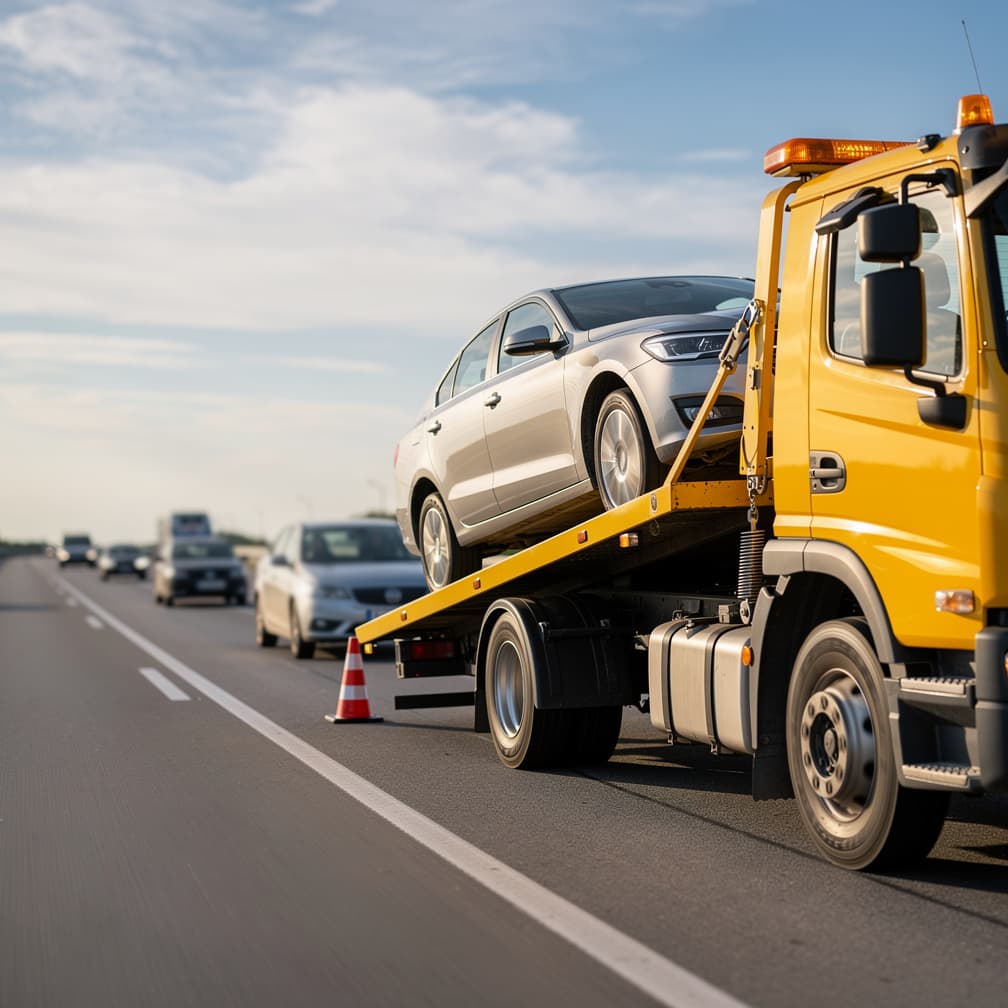
In Connecticut, the practical question is not whether a customer vehicle is in your care during the tow. The real question is how your policy language responds to the way your jobs unfold in this state. A roadside disablement on a narrow local road, a post-collision pickup headed to a body shop, and an impound moving into a fenced lot can all create different damage allegations, even when the same truck handles each job.
That is why you should review the points where claims usually turn. Start with loading and securement procedures. If your crews switch between wheel-lift and flatbed work, ask whether the policy is being quoted around the actual mix of service calls, not a simplified description on an application. Then look at unloading exposures. A claim can arise at the destination just as easily as at pickup, especially if the vehicle has suspension, steering, or body damage before transport begins.
Rain, snow, ice, and storm cleanup can complicate the question of what damage happened before hookup and what happened during transport. You want a process that supports the policy: timestamped photos, dispatch notes, signed condition acknowledgments when available, and clear records of where the vehicle was picked up and delivered.
Before binding coverage, ask your agent to walk through a recent real job from dispatch to drop-off and confirm how the policy is intended to respond at each step.
Coverage Included

Collision on Hook
Covers damage to towed vehicles from collisions during transport.

Comprehensive on Hook
Covers theft, fire, and weather damage to vehicles being towed.
Loading & Unloading
Covers damage during the process of loading and unloading vehicles.

Winching Coverage
Covers damage to vehicles during winching and recovery operations.
Multiple Vehicle
Covers all vehicles on multi-car carriers and rollback flatbeds.
What Makes Stamford Different
Vehicle value is the main difference here. In a market with higher household income, the practical question is not just how often you tow, but what sits on your hook when something goes wrong. Stamford's median household income is $107,474, which means a meaningful share of calls likely involve newer vehicles, premium trims, and financed units where even moderate damage can become an expensive claim. That changes how you review per-vehicle limits, deductibles, and any gap between your on-hook coverage and the kinds of cars your dispatch board sends you to recover. Tighter intake habits matter here too. Before hookup, photograph the vehicle's condition and log any existing wheel, bumper, or undercarriage damage. Train drivers to stop and call dispatch before moving a low-clearance or all-wheel-drive unit, because those are the tows where a routine pickup turns into a damage dispute. If your current policy was built around older private-passenger tows, the limit may no longer match the vehicles you actually recover.
Our Recommendation for Stamford
Start with your dispatch reality, not a template. If you regularly work office properties, multifamily lots, or dealer-related moves, build your quote around the highest-value vehicle you are likely to tow on a normal week. The county containing Stamford has 19,826 business establishments, and the leading sectors include professional, scientific, and technical services at 13.2%, retail trade at 11.9%, and health care and social assistance at 11%. In practical terms, that means your calls likely come from employee parking enforcement, customer-lot removals, and service sites where newer personal and fleet vehicles are common. Before renewing, pull a sample month of tow tickets and identify the highest-value units you actually moved. Use that data to pressure-test whether your on-hook limit, claims deductible, and documentation procedures still fit the work you perform.
Get On-Hook Towing Insurance in Stamford
Enter your ZIP code to compare on-hook towing insurance rates from carriers in Stamford, CT.
Business insurance starting at $25/mo
FAQ
Frequently Asked Questions
Build your limit around the most expensive vehicle you expect to move in a typical week, not a generic passenger-car average. Because the local vehicle mix skews newer and more expensive, a low limit can leave you absorbing a larger share of any damage claim out of pocket.
Stamford parking-enforcement work can change the decision because the vehicle mix may skew newer, leased, or premium. That makes it worth comparing higher on-hook limits and workable deductibles before you renew, especially if your routes center on garages, campuses, or managed lots.
A high concentration of office, retail, and medical properties in the region can translate into steady demand from commercial lots, employee parking areas, and customer removals. Those job sites tend to put late-model personal vehicles on your bed, which is exactly where a thin on-hook limit catches up with you.
The region's professional-services, retail, and health-care sectors tend to generate towing calls at offices, shopping centers, and medical buildings where newer personal vehicles are common. If those sites are part of your route, your per-vehicle limit and documentation steps should reflect the actual value sitting on your bed.
Police rotation work in this state often comes with stricter proof-of-coverage expectations and closer scrutiny after a damage claim. Review your policy wording, limits, and certificate requirements before joining or renewing any rotation, especially if your trucks also handle impounds and recovery calls.
Snow, ice, and storm cleanup can make it harder to separate pre-existing damage from damage alleged during loading, transport, or unloading. Use photos, dispatch timestamps, and delivery records on every tow so your claim file shows what condition the vehicle was in at each handoff.
The Connecticut Insurance Department oversees insurance regulation in the state. Keep your review focused on policy wording and state-regulated filings rather than assumptions carried over from another state.
Repair shops that use a tow truck for customer pickups or roadside moves should review on-hook exposure carefully. If a customer vehicle is damaged while attached, loaded, carried, or unloaded, the fact that towing is secondary to repair work may not eliminate the claim risk.
Sources
- 1.U.S. Census Bureau, ACS 5-Year Estimates, table B19013(Stamford’s median household income is $107,474, so you should assume a meaningful share of calls involve newer vehicles, premium trims, and financed units where even moderate damage can become an expensive claim.)
- 2.U.S. Census Bureau, County Business Patterns, Western Connecticut Planning Region(In the county containing Stamford, there are 19,826 business establishments, and the leading sectors include professional, scientific, and technical services at 13.2%, retail trade at 11.9%, and health care and social assistance at 11%, so local towing demand can include employee parking enforcement, customer-lot removals, and service calls tied to commercial properties where newer personal and fleet vehicles are common.)
Updated July 16, 2026