

































Updated July 10, 2026

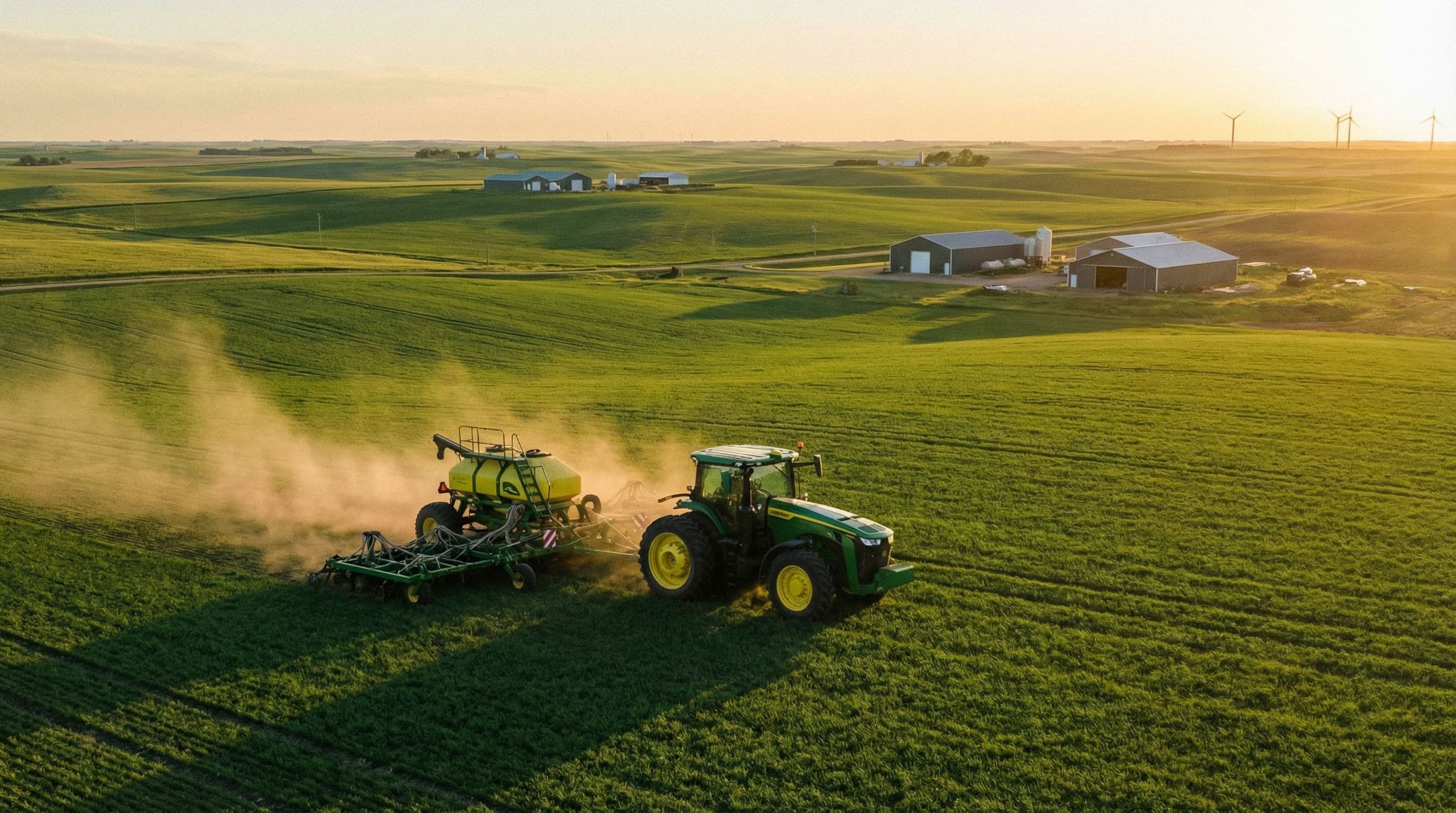
Farming operations in Delaware insure biology and machinery together, from crops and livestock to the equipment both depend on. Delaware requires workers compensation from the first employee for most businesses, though farm labor is generally exempt, so coverage for field crews is a choice rather than a mandate [1]. On top of that, hurricane risk across Delaware shapes the property side of a quote, from deductibles to how carriers treat roofs and stock. Below, the factors that move agribusiness pricing in Delaware are broken out one by one.
Recommended Coverage for Agribusiness in Delaware
Agribusiness businesses face unique risks that require specific coverage types. Here are the policies most agribusiness operations need:

General Liability
Essential coverage for every business, protect against third-party bodily injury, property damage, and advertising claims.

Commercial Property
Safeguard your business property, equipment, and inventory against damage and loss.

Commercial Auto
Protect your business vehicles and drivers with comprehensive commercial auto coverage.

Workers Compensation
Help cover your employees' medical expenses and lost wages for work-related injuries and illnesses.

Inland Marine
Protect tools, equipment, and goods in transit or stored at locations away from your primary premises.

Commercial Umbrella
Extend your liability limits beyond your primary policies for extra protection against catastrophic claims.
Agribusiness Insurance Overview in Delaware
Delaware agribusiness operators work in a small state with surprisingly different exposures depending on location. A field operation near Dover faces different terrain and weather than a processor working near Wilmington's business base. Hurricane and flooding risk are rated high statewide, coastal erosion affects some areas, and seasonal labor shapes day-to-day operations. Insurance decisions here have to reflect how and where your business actually runs.
Your operation is not just about one barn or one truck. You may have crops and livestock at one site, mobile equipment moving between leased acreage and markets, and vehicles on public roads connecting to processors. The market also reflects a large small-business base, Delaware Department of Insurance oversight, and commercial auto minimums of $25,000/$50,000/$10,000. A quote review should start with your operation's actual layout, not a generic farm profile.
Why Agribusiness Businesses Need Insurance in Delaware
Weather, property, and liability exposures shift with the seasons and differ across the state. Hurricane and flooding risk are both rated high statewide, and severe storms can damage agricultural structures and disrupt access to your operation. When a loss hits buildings, mobile machinery, or inventory, it can stall planting, harvesting, hauling, or processing at exactly the wrong moment.
Delaware's regulatory environment also shapes planning. Workers compensation is required for employers with at least one employee, with exemptions for sole proprietors, partners, and LLC members. Payroll structure and seasonal labor therefore play a central role in determining what your operation must carry. Commercial auto minimums of $25,000/$50,000/$10,000 apply to vehicles used for business travel, hauling, and deliveries, so farm trucks, trailers, and other vehicles need to be checked carefully against actual use.
For farms, ranches, and agricultural processors, the biggest insurance question is often not whether coverage exists, but whether it matches the operation. A row-crop farm, a livestock operation, and a processing facility each face different liability, property, and business interruption risks. Your policy should reflect what you actually do, where you do it, and what a disruption would cost you.
Delaware requires workers' comp for businesses with employees (exemptions may apply: Sole proprietors; Partners). Non-compliance can result in fines and personal liability for owners. Commercial auto minimums are $25,000/$50,000/$10,000.
Key Risks for Agribusiness Businesses
Each of these risks can lead to claims that cost thousands, or more. Make sure your policy addresses every one:
- Crop loss from weather events
- Livestock injury or disease
- Farm equipment breakdown
- Worker injuries during harvest
- Environmental contamination
- Product liability for processed goods
Cost Factors for Agribusiness Businesses in Delaware
Agribusiness insurance cost in Delaware reflects acreage, buildings, livestock, payroll, vehicle use, and the value of tractors, combines, sprayers, trailers, and other mobile property. A farm with a few field machines will usually look different from a ranch operation or an agricultural processor with storage, handling, and delivery activity. Seasonal labor can also affect pricing, especially when workers compensation for farm operations is part of the package.
Delaware's premium index is 115 for 2024, which suggests the local market may run higher than national averages. In practical terms, that means your quotes may come in above what a similar operation pays in other states. Actual pricing always depends on your operation's risk profile, not a state average. The state has numerous insurers in the market, and that competition can create a range of quote structures, though no specific savings can be promised. A small share of them focus on small businesses, so many carriers are accustomed to smaller commercial accounts with specialized needs.
Quote results can differ depending on building type, vehicle exposure, and whether the business needs commercial property coverage for farms, inland marine for farm equipment, or commercial auto for agribusiness. As a baseline, general liability, the coverage nearly every agribusiness carries, averages about $80 to $320 per month in Delaware. That range gives you a starting point, though your final premium depends on payroll, annual revenue, claims history, and the specific risk class of your work.
Agribusiness businesses typically carry several separately priced policies. The ranges below are typical figures for Delaware for each line, except workers compensation, which is rated per $100 of payroll; a quote prices each one against your own operations.
| Coverage | Typical range | What moves your price |
|---|---|---|
| General Liability Insurance | $80 - $320 per month | Industry and risk classification, annual revenue, number of employees |
| Commercial Property Insurance | $170 - $800 per month | Building value and construction type, roof age and condition, fire protection class |
| Commercial Auto Insurance | $170 - $650 per month | Fleet size and vehicle types, driver records and experience, coverage limits and deductibles |
| Workers Compensation Insurance | $0.75 - $2.74 per $100 of payroll | Employee classification codes, total annual payroll, experience modification rate |
| Inland Marine Insurance | $65 - $290 per month | Total insured value of the scheduled property, type and age of the equipment, where it is stored and how far it travels |
| Commercial Umbrella Insurance | $75 - $290 per month | Umbrella limit requested, limits carried on the underlying policies, loss history on those underlying policies |
Prices shown are general estimates, not guaranteed rates or quotes. Your actual premium will depend on the insurer, coverage selected, business details, location, claims history, and other underwriting factors. Learn about our pricing methodology.
State Requirements
Insurance Regulations in Delaware
Key regulatory requirements for businesses operating in DE.
Regulatory Authority
Workers' Compensation InsuranceRequired
Required for employers with 1+ employee.
Exempt categories
- Sole proprietors
- Partners
- LLC members
Commercial Auto Minimum Liability
$25,000/$50,000/$10,000 (bodily injury per person / per accident / property damage)
Source: Delaware Department of Insurance, U.S. Department of Labor
What Drives Agribusiness Insurance Costs in Delaware
Crops, livestock, and weather
The living inventory needs its own coverage: crop insurance for the fields, mortality and disease terms for livestock. Neither typically sits in a standard commercial property insurance policy.
Equipment and harvest labor
A combine failure at harvest is a timing loss as much as a repair bill. Equipment coverage and workers compensation insurance for seasonal crews both peak in the same weeks.
Hurricane and wind
Wind and hail losses set property deductibles here, and carriers may quote storm damage under its own separate deductible. FEMA counts 26 federal disaster declarations for Delaware [2].
What payroll does to a quote
Agribusiness wages in Delaware average $40,400 a year [3], and workers compensation pricing keys directly to payroll. Overtime and seasonal swings flow into that base too, so quotes tend to follow the staffing calendar.
Climate Risk Profile
Natural Disaster Risk in Delaware
Understanding climate-related risks helps determine appropriate insurance coverage levels.
Hurricane
High
Flooding
High
Coastal Erosion
Moderate
Severe Storm
Moderate
Expected Annual Loss from Natural Hazards
$180M
estimated economic loss per year across Delaware
Source: FEMA National Risk Index
Insurance Tips for Agribusiness Business Owners in Delaware
Schedule mobile machinery under inland marine so equipment used across fields, leased acreage, and roads is tracked properly.
Review commercial property coverage to confirm agricultural structures are valued at replacement cost where available.
Match workers compensation to seasonal harvest labor, livestock handling, and processing-line duties, since Delaware requires coverage for employers with at least one employee unless an exemption applies.
Check commercial auto against Delaware's $25,000/$50,000/$10,000 minimums and confirm trucks, trailers, and delivery vehicles used between fields, markets, and processors are included.
Ask for farm liability that addresses third-party claims tied to visitors, vendors, delivery drivers, and customer injury risks at farm stands, loading areas, and processing sites.
Consider coverage for equipment breakdown and business interruption when a mechanical failure or storm damage slows harvesting, cooling, or storage operations.
If your operation handles processed goods, review liability and coverage limits carefully so the policy reflects the business's actual exposure, not just raw agricultural production.
For businesses operating near coastal or low-lying areas, talk through storm damage, flooding, and coastal erosion exposures so buildings, inventory, and mobile property are described accurately on the quote.
Get Agribusiness Insurance in Delaware
Enter your ZIP code to compare agribusiness insurance rates from top carriers.
Business insurance starting at $25/mo
Agribusiness Business Types in Delaware
Find insurance tailored to your specific agribusiness business. Select your business type for coverage recommendations, pricing, and quotes:

Farm Insurance
Get a farm insurance quote built around your crops, livestock, equipment, and farm property. Coverage can be tailored for family farms, mixed operations, and equipment-heavy farms.

Ranch Insurance
Get a ranch insurance quote built for working ranches, livestock operations, and rural properties. Compare coverage options that can help with visitor injuries, weather damage, and other ranch-specific exposures.

Nursery & Greenhouse Insurance
Get a nursery and greenhouse insurance quote built for plant inventory, visitor exposure, and equipment-heavy operations. Coverage can be tailored for liability, property, and business interruption needs.

Vineyard Insurance
Get a vineyard insurance quote built around estate property, visitor liability, and mobile equipment. Compare policy options for tasting rooms, estates, and grape-growing operations.

Timber & Logging Insurance
Get coverage built for timber harvesters, logging crews, and forest operations. Review core protections, then request a timber and logging insurance quote.

Agricultural Equipment Dealer Insurance
Request an agricultural equipment dealer insurance quote built for dealerships, suppliers, and service shops that handle inventory, customers, and on-site work. Coverage can be tailored for sales and service operations, lot damage, and property exposures.
Agribusiness Insurance by City in Delaware
Insurance rates and requirements can vary by city. Find agribusiness insurance information for your area in Delaware:
FAQ
Agribusiness Insurance FAQ in Delaware
Coverage can vary, but it often includes liability, commercial property, inland marine for mobile equipment, commercial auto, workers compensation, and umbrella coverage for larger claims. Your policy may include some or all of these depending on your operation.
Share your acreage, locations, buildings, equipment list, payroll, vehicle use, and whether you farm, ranch, or process goods. That helps shape a quote or coverage review.
Crop loss and livestock exposures are often reviewed alongside property, inland marine, workers compensation, and liability. A broker can help you identify which pieces matter most for your operation.
Workers compensation is required for employers with at least one employee, with exemptions for sole proprietors, partners, and LLC members. Commercial auto minimums also apply to business vehicles.
Cost in Delaware reflects acreage, payroll, buildings, livestock, vehicle use, and equipment values. **Request a quote** to compare options for your operation.
Coverage for processors often focuses on property, liability, equipment breakdown, business interruption, and coverage limits that reflect storage, handling, and delivery activity.
Inland marine handles mobile property like tractors and sprayers, commercial auto covers trucks on public roads, and commercial property protects buildings and fixed structures. Placing each asset in the right category helps avoid gaps when a claim occurs.
Property and liability form the base, workers compensation follows the labor, and commercial auto follows the trucks. The mix shifts with the operation: a grain farm weights equipment and buildings, a ranch adds livestock handling and visitor exposure, and a processor concentrates value in one building where downtime hurts most.
Sources
- 1.Delaware Department of Insurance(Delaware requires workers compensation from the first employee for most businesses, with farm labor generally exempt.)
- 2.FEMA Disaster Declarations(Delaware has 26 federal disaster declarations on record.)
- 3.BLS Quarterly Census of Employment and Wages (2024)(Agribusiness workers in Delaware earn an average of $40,400 a year.)