Updated July 16, 2026

Car Insurance in Wilmington
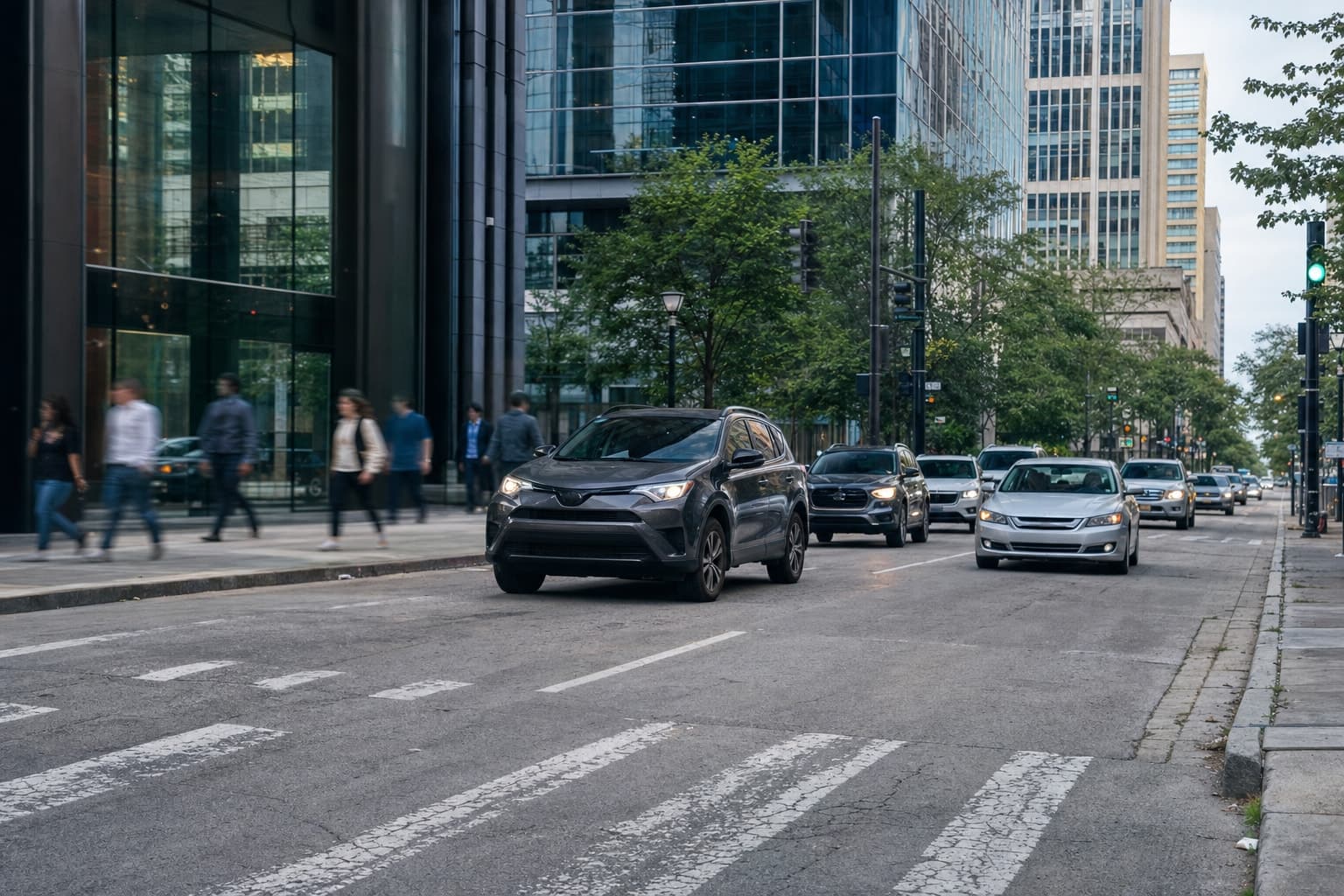
Your daily driving in Wilmington involves more stop-and-go traffic, more curbside parking, and more short urban trips than a statewide average suggests. Drivers who commute across neighborhoods, park curbside, or run frequent errands through dense commercial blocks see more exposure to parking damage, glass claims, and theft than rural motorists do. Wilmington households work within real budget limits, so it makes sense to quote deductibles, rental reimbursement, and collision limits together instead of shopping on premium alone. A policy that saves you fifteen dollars a month can cost you hundreds extra at claim time if the deductible is set beyond what you can actually pay.
Delaware has a moderate climate risk rating. Top hazards: Hurricane (High), Flooding (High), Coastal Erosion (Moderate), Severe Storm (Moderate). The state's expected annual loss from natural hazards is $180M, which influences car insurance premiums and may affect coverage availability in high-risk areas.
What Car Insurance Covers
Your policy typically starts with liability, which helps pay for injuries you cause to others in an auto accident. Delaware's commercial auto minimums are listed for businesses, but if you are insuring a personal vehicle, you should still review your limits against your own driving needs. Collision coverage helps repair or replace your own vehicle after a crash. That is especially relevant on Delaware roads, where running red lights or stop signs is the top crash cause and following too closely is also a leading factor. Comprehensive coverage is worth attention because the state faces high hurricane and flooding exposure, and recent years have brought major winter storms, flash flooding, and coastal storm surge declarations. Uninsured motorist coverage can help if the other driver lacks insurance, and medical payments coverage can help with injury-related costs after a collision. Rental reimbursement can also be useful if your car is being repaired after a covered claim.
Coverage Included

Liability
Can help pay for injuries and property damage you cause to others in an accident, coverage most states require drivers to carry.
Collision
Can help pay to repair or replace your car after a crash with another vehicle or object, regardless of fault.

Comprehensive
Typically covers damage to your car from events other than collisions, such as theft, hail, fire, flooding, or hitting an animal.

Uninsured Motorist
May pay for your injuries and, in some states, car damage when an at-fault driver has no insurance or too little.

Medical Payments
Can help cover medical bills for you and your passengers after an accident, no matter who was at fault.
Rental Reimbursement
May pay for a rental car while your vehicle is in the shop for repairs after a covered claim.
Car Insurance Cost in Wilmington
Average Cost in Delaware
$100 - $250
per month
In Delaware, car insurance premiums typically run $100 - $250 per month, which tends to run 3% above the national range of $110 - $230 per month.
- Driving record and age
- Vehicle make, model, and year
- Location and commute distance
- Credit-based insurance score
- Coverage limits and deductibles
Contact CPK Insurance for a personalized quote.
Prices shown are general estimates, not guaranteed rates or quotes. Your actual premium will depend on the insurer, coverage selected, personal details, location, claims history, and other underwriting factors. Learn about our pricing methodology.
Delaware car insurance cost is shaped by the state's premium index of 115, which means prices trend about 15% higher than the typical state, and the state-specific average premium range is $100 to $250 per month. That range can move up or down based on coverage limits, deductibles, claims history, location, vehicle type, annual mileage, and policy endorsements. Local conditions matter: Delaware has 28,900 businesses, 99.1% of them small businesses, which means a large share of residents commute to or operate small enterprises, often through higher-traffic corridors, which can influence risk. Severe weather also plays a role because hurricane, flooding, and storm exposure can affect comprehensive coverage pricing. The state's 1,600 active insurers create competition, which can work in your favor when comparing quotes, but not every carrier prices the same way for the same driver profile. Delaware's average claim cost is $14,984, which means a single accident can quickly exhaust minimum liability limits and leave you paying the difference out of pocket. A driver with a clean record and higher deductible may see a lower premium than someone with recent claims, lower deductibles, or more added protections like rental reimbursement coverage.
What Affects Car Insurance Rates in Wilmington
Budget pressure is part of the buying decision here, and it should shape how you compare policies. Wilmington's median household income is $55,269, so even a manageable premium can become expensive if the deductible is too high for a real-world claim. That is why a local quote review should test the full tradeoff, not just the monthly number.
Ask for side-by-side options that change one lever at a time: deductible, collision and comprehensive elections, rental reimbursement, and roadside assistance. If you finance or lease, confirm what your lender requires before you trim physical damage coverage. If you own an older vehicle outright, review whether collision still makes sense relative to the car's value and your ability to replace it after a loss. The useful question is not simply whether a policy is cheaper. It is whether you can comfortably absorb the out-of-pocket cost the day after a crash, theft, or vandalism claim.
What Makes Wilmington Different
In a smaller city with concentrated business corridors, many trips are short, repetitive, and packed into the same streets, parking lanes, and intersections week after week. A scraped bumper or broken side glass can sideline your car for days, and a hit while parked can leave you needing a rental immediately.
New Castle County has 17,672 business establishments, with professional, scientific, and technical services at 15.3%, retail trade at 11.4%, and health care and social assistance at 11.2%. In practical terms, your typical drive is more likely to involve a five-minute trip to a client meeting or a pharmacy run than a forty-minute highway commute. For you, comprehensive, collision, and rental reimbursement deserve closer attention than a purely rural driver might give them. The right quote should reflect where your car sits during the day, how often you move it, and how disruptive even a minor claim would be to your work and family schedule.
Our Recommendation for Wilmington
Start with the coverages city drivers most often underbuy. When you park on the street or in shared lots, ask how your policy would respond to theft, vandalism, and a hit-and-run while parked. When one car supports your commute, school drop-offs, or appointments, review rental reimbursement before you decide it is optional.
Next, set your deductible around cash flow, not optimism. A higher deductible can reduce your premium, but it only helps if you could actually pay it without putting repairs on a credit card. For a financed or leased vehicle, confirm required coverages first. For a paid-off car, weigh keeping collision against dropping it based on the vehicle's current value and your replacement plan. Use one consistent driver profile across quotes so you can see real differences in limits, exclusions, and claims-related features. If a policy looks meaningfully cheaper, ask what was reduced to get there before you bind coverage.
Get Car Insurance in Wilmington
Enter your ZIP code to compare car insurance rates from carriers in Wilmington, DE.
Car insurance starting at $59/mo
FAQ
Frequently Asked Questions
Yes. Wilmington's dense local streets, curbside parking, and frequent short trips mean parked-car damage, glass claims, and rental reimbursement can matter more than many buyers expect. Review those coverages with your garaging address and parking setup in mind.
Wilmington households should compare both together. The better choice is often the deductible you could realistically pay after a claim, not simply the policy with the lowest monthly bill.
New Castle County has 17,672 business establishments, so your typical errand or appointment loop is more likely to involve tight parking and short urban blocks than open highway. That makes frequent parking, short errand driving, and claim disruption worth considering when you review your policy.
New Castle County's leading sectors include professional, scientific, and technical services at 15.3%, retail trade at 11.4%, and health care and social assistance at 11.2%. In practical terms, your daily schedule probably depends on having a running car for client visits, shifts, or appointments. Pricing out a rental benefit before you need it can save you from scrambling after a claim.
In Delaware, liability helps with injuries you cause to others, collision helps repair your car after a crash, comprehensive helps with non-collision losses like storm-related damage, uninsured motorist coverage helps if the other driver lacks insurance, and medical payments coverage can help with injury-related costs.
Delaware insurance is regulated by the Delaware Department of Insurance, and the state lists commercial auto minimums at $25,000/$50,000/$10,000. For personal auto, Delaware requires minimum liability of $25,000 per person, $50,000 per accident, and $10,000 for property damage, plus personal injury protection of $15,000 per person. Personal auto shoppers should compare their own limits, because the right liability amount depends on their vehicle use and risk.
The typical range for the state is $100 to $250 per month, and the final price depends on your limits, deductible, claims history, location, vehicle, mileage, and endorsements.
Liability is the starting point for many drivers, while collision is more useful if you want help with crash repairs and comprehensive is especially relevant in Delaware because hurricane, flooding, and storm risk are high in parts of the state.
Sources
- 1.U.S. Census Bureau, ACS 5-Year Estimates, table B19013(Wilmington's median household income is $55,269, so even a manageable premium can become expensive if the deductible is too high for a real-world claim.)
- 2.U.S. Census Bureau, County Business Patterns, New Castle County(New Castle County has 17,672 business establishments, with professional, scientific, and technical services at 15.3%, retail trade at 11.4%, and health care and social assistance at 11.2%, so a lot of local driving is tied to offices, stores, clinics, and service appointments rather than long uninterrupted highway miles.)
Updated July 16, 2026