







































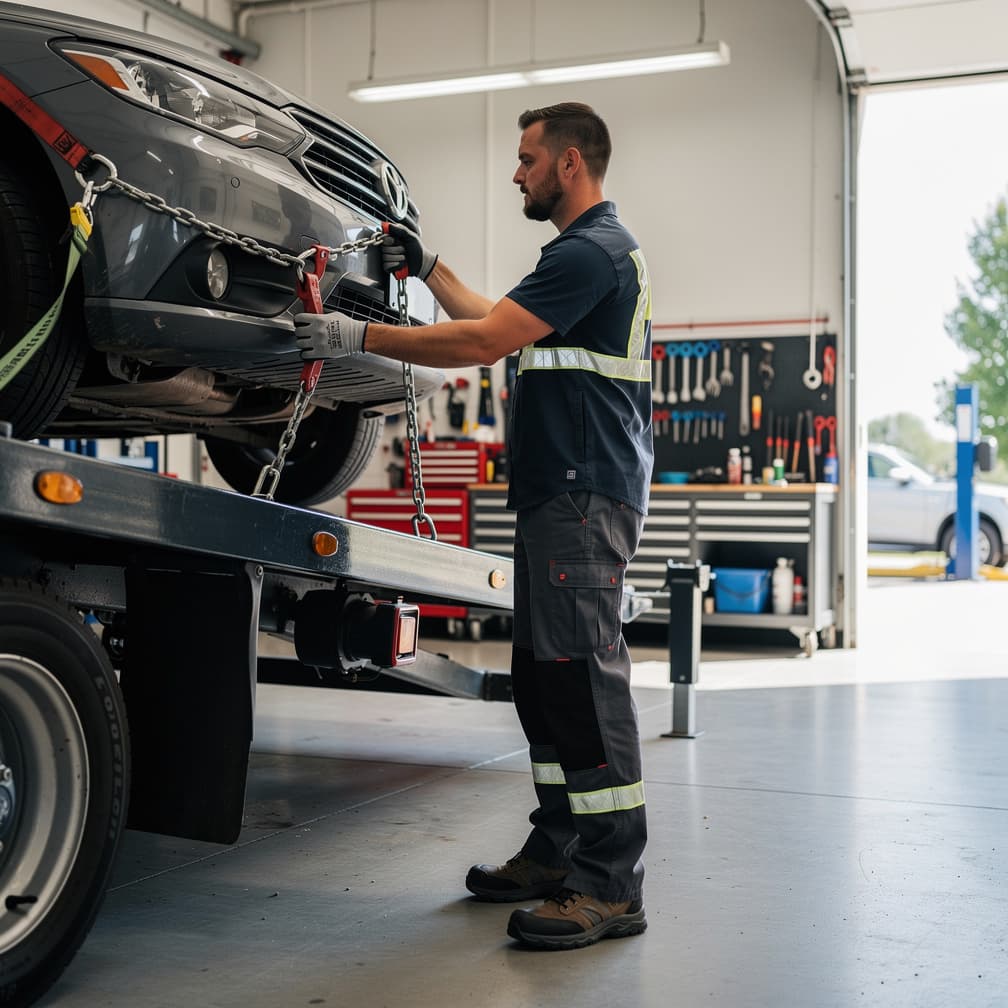

About 14 towing companies operate in District of Columbia, which sounds like competition and mostly functions as a shared claims history. Carriers price this trade off what the class does, then adjust for what you do, so the owner who runs clean pays for less and subsidizes nothing. Towing company insurance in Washington rewards the boring habits: cameras on the deck, intake photos, signed releases, drivers who stay employed for years. None of that shows up on a quick online quote form. It shows up at renewal, when your loss runs are the only argument you have. Start building that argument now, well before you need it. When you shop, compare quotes from participating carriers with three years of loss history attached rather than a blank slate.
What Makes Washington Different
A property manager can hold your invoice until a current certificate of insurance is on file. That is the whole obligation in this trade: paper first, tow second, payment somewhere after that. Fleet accounts and repossession clients tend to ask for proof before they ever hand over a key. If a body shop in Washington adds you to its vendor list, expect the same request. The request is rarely negotiable, and a lapse in coverage reads to them as a lapse in reliability. Keep a live copy with your dispatcher so nobody stalls a call hunting for a file. Renewal dates matter here, because an expired certificate can pull you off a rotation list quietly. Nobody calls to warn you; the phone just stops ringing from that Washington account.
Local Risk Factors in Washington
A yard full of customer vehicles is the part of this business that cannot be moved indoors, and floodwater finds it first. Recovery work spikes during and after a flood in Washington, which means your trucks are out in the same water that is filling your lot. Winches, wheel lifts, and control boxes do not survive submersion well, and a truck pulled from standing water can be a total loss rather than a repair. Commercial Auto physical damage may respond to flood damage to your own trucks, which surprises owners who assume water is excluded everywhere. The vehicles in storage are a different question, on a different form, with a different answer in District of Columbia. Get both answers before the water does the asking.
What Coverage Does a Towing Company in Washington Need?
Commercial Auto
Lenders holding a note on a wrecker generally require this line before the truck turns a wheel, and it is the largest piece of most towing bills. It could respond to injury and property damage your driver causes on the road, and to the truck itself where you add physical damage. The customer's vehicle riding behind it is not included here.
Example: A rollback merges onto a busy highway, clips a sedan, and both end up against the barrier; commercial auto may answer for the other driver's injuries and repairs, subject to your limits.
Garage Keepers
Every car left in your yard overnight belongs to someone who expects it back in the same condition. This line is built for damage to those vehicles while they sit in your custody, from theft and vandalism to fire and storm. Some forms respond only where you are legally liable, and others respond regardless of fault. It does nothing for your own trucks.
Example: A storm drops a limb across two customer cars parked in a Washington storage lot; garage keepers can help cover the damage, depending on whether the form turns on fault.
On-Hook Towing
Damage you cause to a vehicle while it rides on your hook is not part of your own auto physical damage, and it is not part of a yard policy either. This line sits in that gap: loading, transport, unloading. Limits are usually set per vehicle, so the number should match the most expensive car you would accept. Workmanship errors are commonly excluded.
Example: A pickup's front bumper tears loose when a chain shifts during transport and the owner sends over a repair estimate; on-hook towing can respond to damage that happened in transit.
General Liability
Where the auto lines follow your trucks and the yard lines follow your customers' cars, this one follows people. Landlords and commercial accounts commonly require it before you get a key or an account. It could help cover a visitor injured at the release window, or property you damage away from a vehicle. Injuries to your own crew belong somewhere else.
Example: Someone slips on spilled fluid while collecting a car at your office and breaks a wrist; general liability is typically where that medical bill and any lawsuit get handled.
Workers Compensation
A driver hurt on a shoulder at night is the claim this line exists for, and health plans generally exclude injuries that happen at work. It is rated per hundred dollars of payroll by classification, so how you report an owner who also drives matters at audit. Requirements and part-time thresholds vary by state.
Example: A winch cable snaps during a recovery and catches an operator's hand in Washington; workers compensation is generally the line that picks up the treatment and the lost wages.
How Much Does Towing Company Insurance Cost in Washington?
Towing Company Insurance is a bundle of separate policies, priced separately. The ranges below are typical figures for Washington for each line, except workers compensation, which is rated per $100 of payroll; a quote prices each one against your own operations.
| Coverage | Typical range | What moves your price |
|---|---|---|
| Commercial Auto Insurance | $1,225 - $4,200 per month | Fleet size and vehicle types, driver records and experience, coverage limits and deductibles |
| Garage Keepers Insurance | Varies | Quoted individually based on your operations and limits |
| On-Hook Towing Insurance | Varies | Quoted individually based on your operations and limits |
| General Liability Insurance | $150 - $550 per month | Industry and risk classification, annual revenue, number of employees |
| Workers Compensation Insurance | $0.75 - $2.74 per $100 of payroll | Employee classification codes, total annual payroll, experience modification rate |
Prices shown are general estimates, not guaranteed rates or quotes. Your actual premium will depend on the insurer, coverage selected, business details, location, claims history, and other underwriting factors. Learn about our pricing methodology.
What Are the Insurance Requirements for a Towing Company in Washington?
Workers' comp is generally required once you have your first employee. District of Columbia generally requires employers to carry workers' compensation at that point. Common exemptions include sole proprietors. Confirm current thresholds with your state's workers' compensation agency before you hire.
State auto liability minimums apply to business vehicles. District of Columbia's minimum auto liability limits are $25,000/$50,000/$10,000 (bodily injury per person / per accident / property damage). Contracts and lenders often require more than the state floor.
Where to verify licensing and coverage rules. The DC Department of Insurance, Securities and Banking publishes consumer guidance and current insurance requirements for District of Columbia businesses. When a contract or lease demands specific wording, the DC Department of Insurance, Securities and Banking's guidance is the authoritative place to check.
Get Your Towing Company Quote in Washington
Compare rates from multiple carriers. Free quotes, no obligation.
Operating in Washington
- A driver working a Washington shoulder at night stands beside cars passing at full speed, and that single fact does more to your workers compensation rate than anything at your office.
- Winch-outs, recoveries, and repossessions each carry a different exposure, so a policy priced around light-duty roadside calls may not follow you down into the ditch.
- Storage fees create disputes and disputes create claims, so the release paperwork you use in Washington is quietly part of your risk management rather than your bookkeeping.
- Lienholders and adjusters can request your file months after a vehicle leaves a Washington lot, and a missing condition report turns a routine question into your problem.
How to Buy: Advice for Washington Owners
Your lease on the yard probably tells you what to buy. Landlords commonly require General Liability at set limits, name themselves as additional insured, and ask for a waiver of subrogation, all before you get a key. Read those three clauses and quote to them exactly, because a policy that misses one puts you in breach of the lease and not simply short on coverage. If you store vehicles on that lot, Garage Keepers is the line the landlord never asks about and the one you actually need. The DC Department of Insurance, Securities and Banking publishes consumer guidance on common commercial policy endorsements. Send the lease to whoever quotes you, then compare quotes from participating carriers who have read the same clauses you did in District of Columbia.
FAQ
Towing Company Insurance in Washington: FAQ
Your trucks and your drivers, in that order. The number of vehicles, their values, how far they run, and what they haul set the base. Driving records, years behind the wheel, and turnover adjust it, sometimes sharply. Claims history matters more than owners expect, and a string of small claims can hurt more than one big loss. Rates are filed state by state, so District of Columbia is its own market.
It depends on the form you bought. Garage Keepers written on a broader basis may respond to theft of a customer's vehicle regardless of fault, while a legal-liability version typically responds only where your negligence contributed. Fencing, lighting, and cameras can affect both the price and whether the broader version is offered at all. Ask what a carrier expects for security before assuming a quote includes it.
Your note, your payroll, and your phone all keep running. Physical damage coverage on the truck might respond to the repair, but the income lost while it sits is a separate question. Some policies offer rental reimbursement or loss of use for commercial vehicles, and some exclude wreckers from that entirely. A truck stuck in a Washington body shop for six weeks is a cash problem, so ask before you buy.
It can extend coverage to another party for claims arising out of your work, which is why fleets and dealerships ask for it. That is a real change rather than a formality: your limits now stand behind someone else's exposure too. Some endorsements are broad and some are narrow, and the wording a contract demands may not match what a carrier offers. Send the contract to whoever quotes you before you sign it.
Often not, or not without disclosure. Repossession brings confrontation, disputed ownership, and personal property left in the vehicle, and many carriers treat it as a separate class to rate. A policy written for roadside assistance may exclude it outright. If a lender in Washington offers you volume, get the answer in writing before the first assignment rather than after the first argument.
Usually one occurrence, and that is the number that matters. Your per-occurrence limit stands behind a single event no matter how many cars and people it involves, while the aggregate is the ceiling across the whole policy term. A recovery gone wrong on a busy Washington road can put several vehicles and several injured people inside one event. Towing tests the per-occurrence figure hardest; the aggregate starts to matter after your second bad month in a year.
Sources
- 1.U.S. Census Bureau, County Business Patterns (2023), District of Columbia(District of Columbia has about 14 businesses in this trade's category (NAICS group 488410).)
- 2.DC Department of Insurance, Securities and Banking(DC Department of Insurance, Securities and Banking publishes consumer guidance for insurance buyers.)


