







































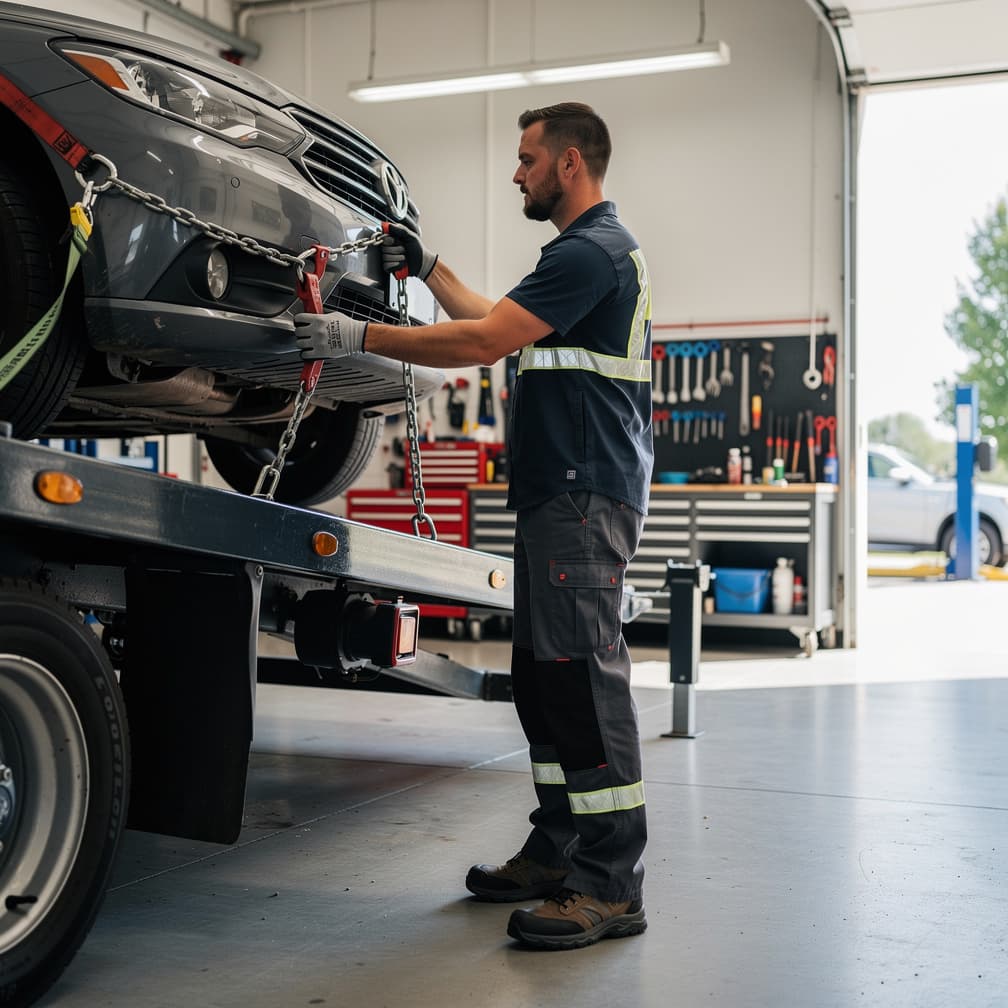

In Miami-Dade County, about 96,000 businesses share the same congested roads your trucks work every day. Dense markets hand towing companies their best accounts and their worst driving conditions in one package: apartment complexes, retail lots, and fleets that call constantly, on streets where nothing has room. Towing company insurance in Miami gets underwritten against that reality, which is why a metro operator rarely sees the rates a rural operator brags about online. Your fix is not a cheaper carrier. It is a tighter operation: assigned trucks, documented training, and a hard rule about who touches the controls. Underwriters ask about all three. Have real answers ready before you start comparing quotes, because the answers move the price further than the shopping does.
What Makes Miami Different
Competition in a dense market pushes rates down and pushes response times to the edge. Speed is what wins the call, and speed is what an underwriter worries about. A driver racing across Miami traffic to beat another wrecker is a claim waiting to file itself. Dispatch policy is underwriting information, whether or not anyone ever asks you the question. Paying drivers per call rewards exactly the behavior that raises your loss ratio over time. Volume in a crowded market is deep enough that you can afford to lose a race. You cannot afford the wreck that comes from winning one on a crowded Miami arterial. Underwriters read loss runs, and loss runs remember every race your drivers ever won.
Local Risk Factors in Miami
Hurricanes generate the busiest and most dangerous work a towing company ever sees. Roads close, debris hides under standing water, and the calls do not stop for days after the wind does. Your own yard in Miami takes the same wind that put those cars there, and stored vehicles get hit by everything that comes loose. Damage to a customer's vehicle sitting on your lot is a liability question rather than a property one, because the metal is not yours. Garage Keepers written on a broader basis may respond to storm damage regardless of fault, while a legal-liability version generally will not unless your negligence played a part. Find out which one you bought long before a storm enters the Florida forecast.
What Coverage Does a Towing Company in Miami Need?
Commercial Auto
Lenders holding a note on a wrecker generally require this line before the truck turns a wheel, and it is the largest piece of most towing bills. It can respond to injury and property damage your driver causes on the road, and to the truck itself where you add physical damage. The customer's vehicle riding behind it is not included here.
Example: A rollback merges onto a busy highway, clips a sedan, and both end up against the barrier; commercial auto may answer for the other driver's injuries and repairs, subject to your limits.
Garage Keepers
Every car left in your yard overnight belongs to someone who expects it back in the same condition. This line is built for damage to those vehicles while they sit in your custody, from theft and vandalism to fire and storm. Some forms respond only where you are legally liable, and others respond regardless of fault. It does nothing for your own trucks.
Example: A storm drops a limb across two customer cars parked in a Miami storage lot; garage keepers can help cover the damage, depending on whether the form turns on fault.
On-Hook Towing
Damage you cause to a vehicle while it rides on your hook is not part of your own auto physical damage, and it is not part of a yard policy either. This line sits in that gap: loading, transport, unloading. Limits are usually set per vehicle, so the number should match the most expensive car you would accept. Workmanship errors are commonly excluded.
Example: A pickup's front bumper tears loose when a chain shifts during transport and the owner sends over a repair estimate; on-hook towing might respond to damage that happened in transit.
General Liability
Where the auto lines follow your trucks and the yard lines follow your customers' cars, this one follows people. Landlords and commercial accounts commonly require it before you get a key or an account. It might help cover a visitor injured at the release window, or property you damage away from a vehicle. Injuries to your own crew belong somewhere else.
Example: Someone slips on spilled fluid while collecting a car at your office and breaks a wrist; general liability is typically where that medical bill and any lawsuit get handled.
Workers Compensation
A driver hurt on a shoulder at night is the claim this line exists for, and health plans generally exclude injuries that happen at work. It is rated per hundred dollars of payroll by classification, so how you report an owner who also drives matters at audit. Requirements and part-time thresholds vary by state.
Example: A winch cable snaps during a recovery and catches an operator's hand in Miami; workers compensation is generally the line that picks up the treatment and the lost wages.
How Much Does Towing Company Insurance Cost in Miami?
Towing Company Insurance is a bundle of separate policies, priced separately. The ranges below are typical figures for Miami for each line, except workers compensation, which is rated per $100 of payroll; a quote prices each one against your own operations.
| Coverage | Typical range | What moves your price |
|---|---|---|
| Commercial Auto Insurance | $1,500 - $5,200 per month | Fleet size and vehicle types, driver records and experience, coverage limits and deductibles |
| Garage Keepers Insurance | Varies | Quoted individually based on your operations and limits |
| On-Hook Towing Insurance | Varies | Quoted individually based on your operations and limits |
| General Liability Insurance | $200 - $700 per month | Industry and risk classification, annual revenue, number of employees |
| Workers Compensation Insurance | $0.75 - $2.74 per $100 of payroll | Employee classification codes, total annual payroll, experience modification rate |
Prices shown are general estimates, not guaranteed rates or quotes. Your actual premium will depend on the insurer, coverage selected, business details, location, claims history, and other underwriting factors. Learn about our pricing methodology.
What Are the Insurance Requirements for a Towing Company in Miami?
Workers' comp is generally required once you have 4 or more employees. Florida generally requires employers to carry workers' compensation at that point. Common exemptions include sole proprietors, partners, and corporate officers (up to 4). Confirm current thresholds with your state's workers' compensation agency before you hire.
State auto liability minimums apply to business vehicles. Florida's minimum auto liability limits are $0/$0/$10,000 (bodily injury per person / per accident / property damage). Contracts and lenders often require more than the state floor.
Where to verify licensing and coverage rules. The Florida Office of Insurance Regulation publishes consumer guidance and current insurance requirements for Florida businesses. When a contract or lease demands specific wording, the Florida Office of Insurance Regulation's guidance is the authoritative place to check.
Get Your Towing Company Quote in Miami
Compare rates from multiple carriers. Free quotes, no obligation.
Operating in Miami
- Hiring a driver takes an afternoon and can raise your renewal for three years, because motor vehicle records follow the roster rather than the person who quit.
- A landlord can require general liability at a set limit before you sign a yard lease in Miami, and quoting below that number puts you in breach on the first day.
- Fuel, tires, and tolls are the costs you watch, while the deductible on a cracked windshield or a scraped fender is the one that quietly repeats all year.
- Storm weeks fill the board and fill the yard at the same time, so your peak count of stored vehicles rarely matches the average you gave a carrier at renewal.
How to Buy: Advice for Miami Owners
Count the vehicles in your yard for a full week before you buy anything. Peak nights, not averages, decide the Garage Keepers limit you need, and owners routinely insure the quiet weeknight instead. While you are counting, note what the cars are worth, because ten commuter sedans are a different problem than one luxury crossover waiting on a lienholder. General Liability handles a different piece of that yard: the person who slips coming to collect one of them. Ask whether the quote contemplates vehicles left after hours behind a locked gate and what security a carrier expects. Cameras and fencing sometimes move the number. The Florida Office of Insurance Regulation publishes consumer guidance on comparing commercial coverage terms. Bring the count and the photos, then compare quotes from participating carriers serving Miami using the same peak figure every time.
FAQ
Towing Company Insurance in Miami: FAQ
Usually less than the auto line. General Liability is priced mainly on revenue and on the exposure at your office and yard, so a one-truck operation with a small lot tends to land near the bottom of the published range. The cost table on this page shows where that range currently sits. What moves it: revenue, claims history, and the limits your contracts demand.
A list of trucks with values, a driver list with license numbers, three years of loss runs, your annual payroll, your revenue, and the radius you truly run. Add a count of vehicles stored on a peak night if you keep a lot. Quotes built on guesses get corrected later, usually upward. Sending the same package to every carrier is what makes Miami quotes comparable at all.
Usually not on a standard form. Flood is commonly excluded and priced as its own coverage, whether the water reaches your building or the vehicles parked around it. That gap matters more in towing than in most trades, because your yard sits outside by design and it is full of other people's property. Ask what a quote says about rising water before a storm week answers the question for you.
Yes, and it happens more than owners expect. A dispute over damage or missing property can surface weeks after a car leaves a Miami yard, and your defense is the intake photos and the signed condition report you took at the time. Liability coverage may respond to the claim and to defense costs, subject to your limits and deductible. Memory is not evidence; the file is.
A tow truck is a business vehicle, so a personal auto policy generally will not respond when it is working. Commercial Auto is the line built for that use, and lenders holding a note on a wrecker usually require it. It can answer for liability when your driver causes a wreck, and for damage to the truck itself if you add that part. It does not reach the car on your hook, which is a separate decision.
On-Hook Towing is meant for damage to a customer's vehicle while it is in your care during loading, transport, or unloading. Picture a bumper torn off during a winch pull, or a car dropped coming off the deck. It generally stops applying once that vehicle is parked in your storage yard, which is where Garage Keepers picks up. The split between the two catches owners off guard constantly.
Sources
- 1.U.S. Census Bureau, County Business Patterns (2022), Miami-Dade County(Miami-Dade County has about 96,000 business establishments.)
- 2.Florida Office of Insurance Regulation(Florida Office of Insurance Regulation publishes consumer guidance for insurance buyers.)


