

































Updated July 10, 2026

Manufacturing risk in Georgia splits between the floor and the field: worker injuries and machine failures inside, product claims outside. Georgia adds a legal floor here, because workers compensation is required once a business reaches 3 employees [1]. On top of that, hurricane risk across Georgia shapes the property side of a quote, from deductibles to how carriers treat roofs and stock. Below, the factors that move manufacturing pricing in Georgia are broken out one by one.
Recommended Coverage for Manufacturing in Georgia
Manufacturing businesses face unique risks that require specific coverage types. Here are the policies most manufacturing operations need:

General Liability
Essential coverage for every business, protect against third-party bodily injury, property damage, and advertising claims.

Commercial Property
Safeguard your business property, equipment, and inventory against damage and loss.

Workers Compensation
Help cover your employees' medical expenses and lost wages for work-related injuries and illnesses.

Commercial Umbrella
Extend your liability limits beyond your primary policies for extra protection against catastrophic claims.

Inland Marine
Protect tools, equipment, and goods in transit or stored at locations away from your primary premises.

Commercial Auto
Protect your business vehicles and drivers with comprehensive commercial auto coverage.
Manufacturing Insurance Overview in Georgia
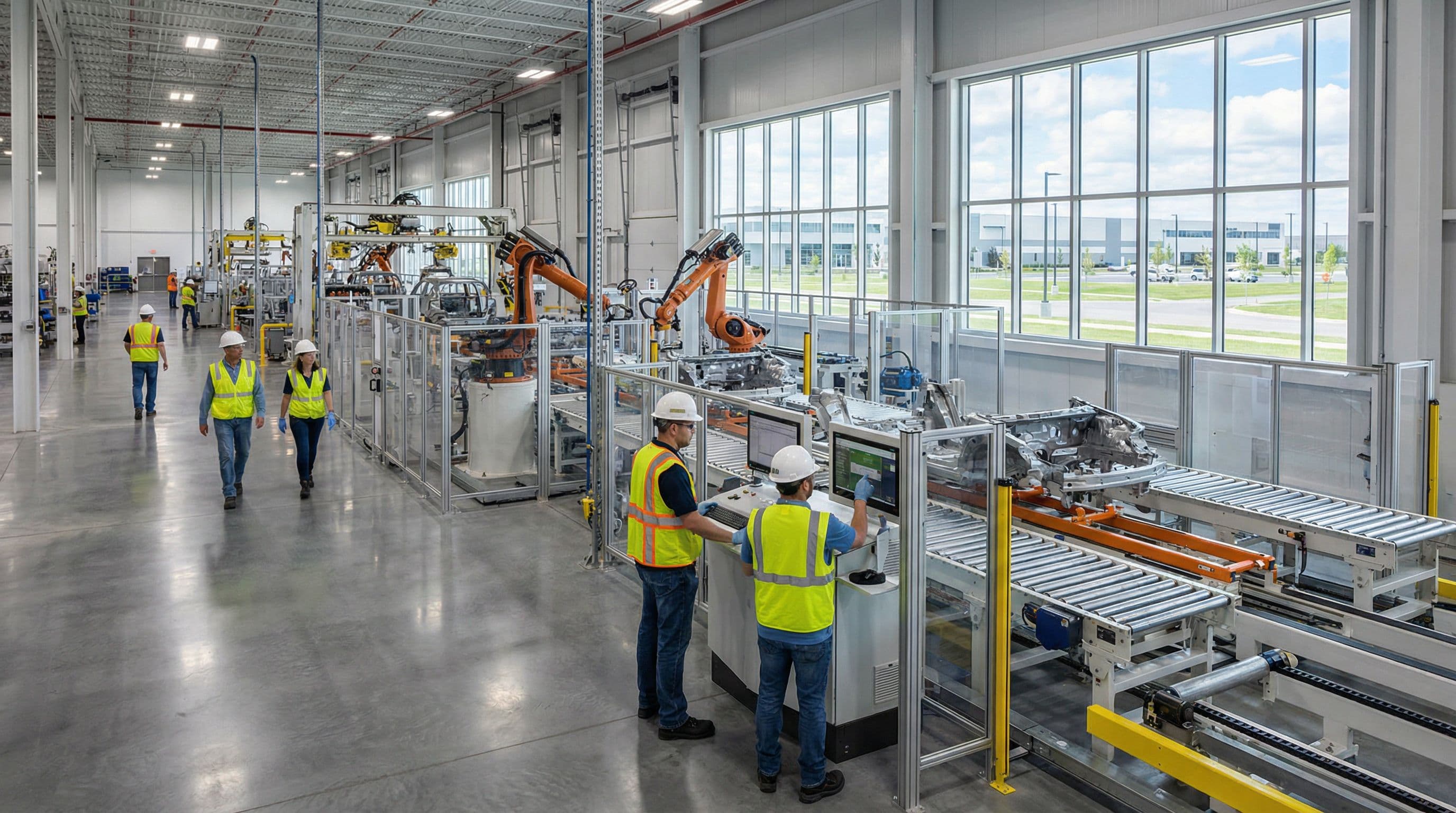
Your insurance review starts with understanding how work moves through your plant. Georgia manufacturers often hire across production, maintenance, warehouse, and delivery functions, so one account can combine machine operators, forklift traffic, loading activity, and supervisors moving between office and plant areas in the same day. That workforce mix shapes how you should approach manufacturing insurance in Georgia, especially if you are balancing shift changes, temporary labor, driver duties, and hands-on fabrication under one roof. Raw materials arrive at one dock and finished goods leave another, while employees work around heat, cutting, lifting, and powered equipment throughout the shift. Workers compensation rules are an early checkpoint in Georgia, but they are only one part of the conversation. You also need to review property values, vehicle use, offsite equipment, and liability limits with the same level of detail you use to schedule production. Before you request quotes, map your headcount, job duties, locations, and delivery patterns so the policy structure follows your real operation.
Why Manufacturing Businesses Need Insurance in Georgia
Your plant may include production lines, storage areas, maintenance space, shipping docks, and company vehicles, with employees crossing between them during a normal shift. A claim rarely stays isolated to one corner of the business, which is why a single event can sideline staffing and cut output at the same time. When damage hits a storage or production area, you may face missed orders and overtime costs to catch up. A vehicle loss on the road can delay deliveries enough to strain customer relationships. The strongest reviews start by separating how each part of the operation creates risk, then matching the right coverage to each exposure. General liability can help cover visitors, vendors, and third party property damage, while commercial property should be checked against your building, business personal property, stock, and any concentration of materials or finished goods in one location. Workers compensation deserves close attention if employees rotate between production, warehouse, and driving tasks, because classification and payroll details need to match the work being done. Inland marine can help cover tools, dies, mobile equipment, or materials when they move offsite or between locations. Commercial auto should reflect who drives, what is hauled, and whether pickups, vans, or heavier units are part of the operation. Commercial umbrella can help you add liability capacity above underlying policies when contract demands or loss severity justify it. Georgia also has weather related property concerns, so ask your agent to review how your building, roof, stock storage, and business interruption exposures line up with your actual site conditions before renewal.
Georgia requires workers' comp for businesses with 3+ employees (exemptions may apply: Sole proprietors; Partners). Non-compliance can result in fines and personal liability for owners. Commercial auto minimums are $25,000/$50,000/$25,000.
Key Risks for Manufacturing Businesses
Each of these risks can lead to claims that cost thousands, or more. Make sure your policy addresses every one:
- Product liability and recall costs
- Workplace injuries and safety violations
- Equipment breakdown
- Supply chain disruption
- Environmental contamination
- Property damage from fire or explosion
Cost Factors for Manufacturing Businesses in Georgia
What you pay for coverage depends on the specifics of your operation, not a generic industry label. A small light assembly shop with limited public access, modest payroll, and no delivery fleet is rated differently from a fabricator with welding, spray operations, multiple shifts, and regular road exposure. Carriers usually look closely at payroll by job duty, sales, building construction, protection features, loss history, vehicle schedules, and replacement values for machinery and stock. Workers compensation is often one of the first items to sort out because Georgia generally requires it once you have 3 employees, while sole proprietors, partners, and corporate officers may be exempt. If your ownership group works in the business alongside employees, your quote needs a clean breakdown of who is included and who is excluded before pricing will make sense. That rule is overseen by the Georgia Office of Insurance and Safety Fire Commissioner, and it is worth confirming your status before binding coverage. Property pricing can move quickly if your operation depends on specialized equipment, concentrated inventory, or a single facility that would be hard to replace after a major loss. Liability costs can rise if customers require higher limits, if you install products, or if your drivers make regular deliveries. Inland marine pricing usually turns on what property travels, how often it moves, and where it is stored between jobs. To get a usable quote, prepare current payroll, revenue, vehicle details, building information, and a clear equipment and stock schedule rather than relying on estimates. As a baseline, general liability, the coverage nearly every manufacturing business carries, averages about $160 to $675 per month in Georgia, meaning a small shop with limited public access may sit near the bottom while fabricators with welding and delivery fleets tend to land higher. Your final premium depends on payroll, annual revenue, claims history, and the specific risk class of your work.
Manufacturing businesses typically carry several separately priced policies. The ranges below are typical figures for Georgia for each line, except workers compensation, which is rated per $100 of payroll; a quote prices each one against your own operations.
| Coverage | Typical range | What moves your price |
|---|---|---|
| General Liability Insurance | $160 - $675 per month | Industry and risk classification, annual revenue, number of employees |
| Commercial Property Insurance | $270 - $1,175 per month | Building value and construction type, roof age and condition, fire protection class |
| Workers Compensation Insurance | $0.75 - $2.74 per $100 of payroll | Employee classification codes, total annual payroll, experience modification rate |
| Commercial Umbrella Insurance | $95 - $430 per month | Umbrella limit requested, limits carried on the underlying policies, loss history on those underlying policies |
| Inland Marine Insurance | $55 - $280 per month | Total insured value of the scheduled property, type and age of the equipment, where it is stored and how far it travels |
| Commercial Auto Insurance | $230 - $875 per month | Fleet size and vehicle types, driver records and experience, coverage limits and deductibles |
Prices shown are general estimates, not guaranteed rates or quotes. Your actual premium will depend on the insurer, coverage selected, business details, location, claims history, and other underwriting factors. Learn about our pricing methodology.
State Requirements
Insurance Regulations in Georgia
Key regulatory requirements for businesses operating in GA.
Regulatory Authority
Workers' Compensation InsuranceRequired
Required for employers with 3+ employees.
Exempt categories
- Sole proprietors
- Partners
- Corporate officers
Commercial Auto Minimum Liability
$25,000/$50,000/$25,000 (bodily injury per person / per accident / property damage)
Source: Georgia Department of Insurance, U.S. Department of Labor
What Drives Manufacturing Insurance Costs in Georgia
Product liability and recalls
A defect allegation follows the product wherever it sold. Product liability insurance can help cover injury claims, and recall costs typically need their own endorsement.
The production floor
A single machine failure can idle a line for weeks. Equipment breakdown coverage can help with repair and lost production, and underwriters ask about maintenance programs.
Hurricane and wind
Wind and hail losses set property deductibles here, and carriers may quote storm damage under its own separate deductible. Georgia has 81 federal disaster declarations on record with FEMA [2].
What payroll does to a quote
Manufacturing wages in Georgia average $53,600 a year [3], and workers compensation pricing keys directly to payroll. Policies start from an estimate, and the year-end audit settles the difference against actual staffing.
Climate Risk Profile
Natural Disaster Risk in Georgia
Understanding climate-related risks helps determine appropriate insurance coverage levels.
Hurricane
High
Tornado
High
Severe Storm
High
Flooding
Moderate
Expected Annual Loss from Natural Hazards
$2.4B
estimated economic loss per year across Georgia
Source: FEMA National Risk Index
Insurance Tips for Manufacturing Business Owners in Georgia
Before quoting, break out payroll by production, warehouse, maintenance, clerical, and driver duties. Blended job descriptions can distort workers compensation classification and make comparisons between policy options less reliable, so the cleaner your breakdown, the more accurate your quotes will be.
Review commercial property limits against current machinery, raw material, finished goods, and tenant improvement values, especially if a large share of your production depends on one building or one concentrated stock area.
Schedule inland marine insurance for tools, dies, mobile equipment, and materials that leave the premises, since property that moves between plants, warehouses, or customer sites may not fit neatly under one location limit.
Match commercial auto coverage to actual vehicle use, including employee deliveries, parts pickup, service calls, and supervisor travel between facilities, because occasional driving still creates a liability and physical damage exposure.
Use commercial umbrella insurance as a limit review exercise, not an automatic add on, and compare it against customer contract requirements, delivery exposure, visitor traffic, and the severity potential of a serious injury claim.
Get Manufacturing Insurance in Georgia
Enter your ZIP code to compare manufacturing insurance rates from top carriers.
Business insurance starting at $25/mo
Manufacturing Business Types in Georgia
Find insurance tailored to your specific manufacturing business. Select your business type for coverage recommendations, pricing, and quotes:

Machine Shop Insurance
A machine shop insurance quote helps you compare coverage for CNC work, fabrication, equipment breakdown, and completed-product claims. It’s built for shops that need a fast, tailored path to coverage.

Food Manufacturer Insurance
Get a food manufacturer insurance quote built around contamination events, product recall costs, and production interruptions. Compare coverage for your facility, products, and contracts.

Woodworking Shop Insurance
Get a woodworking shop insurance quote built around fire hazards, heavy equipment, client projects, and shop equipment. Compare coverage for your shop, tools, and customer work.

Printing Company Insurance
Get printing business insurance built for presses, finishing equipment, and client-facing operations. Request a quote to review coverage for equipment failures, premises liability, and job errors.

Textile Manufacturer Insurance
Get a textile manufacturer insurance quote built around looms, dyeing lines, finishing equipment, and the day-to-day risks of fabric and garment production. Coverage can be shaped to your operation, location, and contract needs.

Electronics Manufacturer Insurance
Compare electronics manufacturer insurance options for defect claims, facility risks, and cyber exposures across production and distribution. Request a quote built around how your operation actually runs.

Plastics Manufacturer Insurance
Get a plastics manufacturer insurance quote built around polymer production, chemical exposure, and downstream product claims. Compare coverage options that fit your operation.
Manufacturing Insurance by City in Georgia
Insurance rates and requirements can vary by city. Find manufacturing insurance information for your area in Georgia:
FAQ
Manufacturing Insurance FAQ in Georgia
Georgia generally requires workers compensation once your manufacturing business has 3 employees. Sole proprietors, partners, and corporate officers may be exempt, so you should confirm who is included before you quote or renew coverage.
If you move tools, dies, mobile equipment, or materials between plants, warehouses, or customer sites, inland marine insurance is often the cleaner way to schedule property that does not stay at one insured location.
You often need commercial auto if you use owned vehicles for deliveries, parts runs, or travel between facilities. Even short local routes can create liability, driver, and vehicle damage exposures that should be rated correctly.
Review your property insurance around building condition, roof age, drainage, stock storage, and utility dependence. Weather related losses can damage structures, inventory, and production schedules at the same time, so valuation and downtime planning matter.
Quotes usually move faster when you provide payroll by job duty, revenue, building details, vehicle schedules, loss history, and current values for equipment, stock, and tenant improvements. That gives underwriters a clearer picture of your actual operation.
Choose liability limits by looking at customer contracts, visitor traffic, delivery activity, and the severity potential of a product or premises claim. Many owners review general liability together with commercial umbrella instead of treating them separately.
You can often place production, warehouse, and delivery exposures within one coordinated insurance program, but the details still need to be separated by location, payroll, vehicles, and moving property so each exposure is rated correctly.
Start with the pairing that carries most plants: commercial property for the building, machinery, and stock, and general liability for everything that touches the outside world. Workers compensation applies once you have employees, and auto, inland marine, and umbrella coverage enter the program as vehicles, mobile equipment, and larger contracts do.
Sources
- 1.Georgia Office of Insurance and Safety Fire Commissioner(Georgia requires workers compensation coverage once a business reaches 3 employees.; Georgia generally requires workers compensation once you have 3 employees, while sole proprietors, partners, and corporate officers may be exempt.; That rule is overseen by the Georgia Office of Insurance and Safety Fire Commissioner.)
- 2.FEMA Disaster Declarations(Georgia has 81 federal disaster declarations on record.)
- 3.BLS Quarterly Census of Employment and Wages (2024)(Manufacturing workers in Georgia earn an average of $53,600 a year.)