

































Updated July 10, 2026

In Idaho, wholesale risk is concentration: one roof over the inventory, one fleet moving it, and margins a single loss can erase. Idaho adds a legal floor here, because workers compensation is required from the first employee [1]. In parts of Idaho, wildfire risk decides which carriers quote a property at all. The sections below break down those cost drivers and the coverage that answers each.
Recommended Coverage for Wholesalers & Distributors in Idaho
Wholesalers & Distributors businesses face unique risks that require specific coverage types. Here are the policies most wholesalers & distributors operations need:

General Liability
Essential coverage for every business, protect against third-party bodily injury, property damage, and advertising claims.

Commercial Property
Safeguard your business property, equipment, and inventory against damage and loss.

Commercial Auto
Protect your business vehicles and drivers with comprehensive commercial auto coverage.

Commercial Truck
Comprehensive coverage for trucking operations, from long-haul rigs to local delivery vehicles.

Inland Marine
Protect tools, equipment, and goods in transit or stored at locations away from your primary premises.

Workers Compensation
Help cover your employees' medical expenses and lost wages for work-related injuries and illnesses.
Wholesalers & Distributors Insurance Overview in Idaho
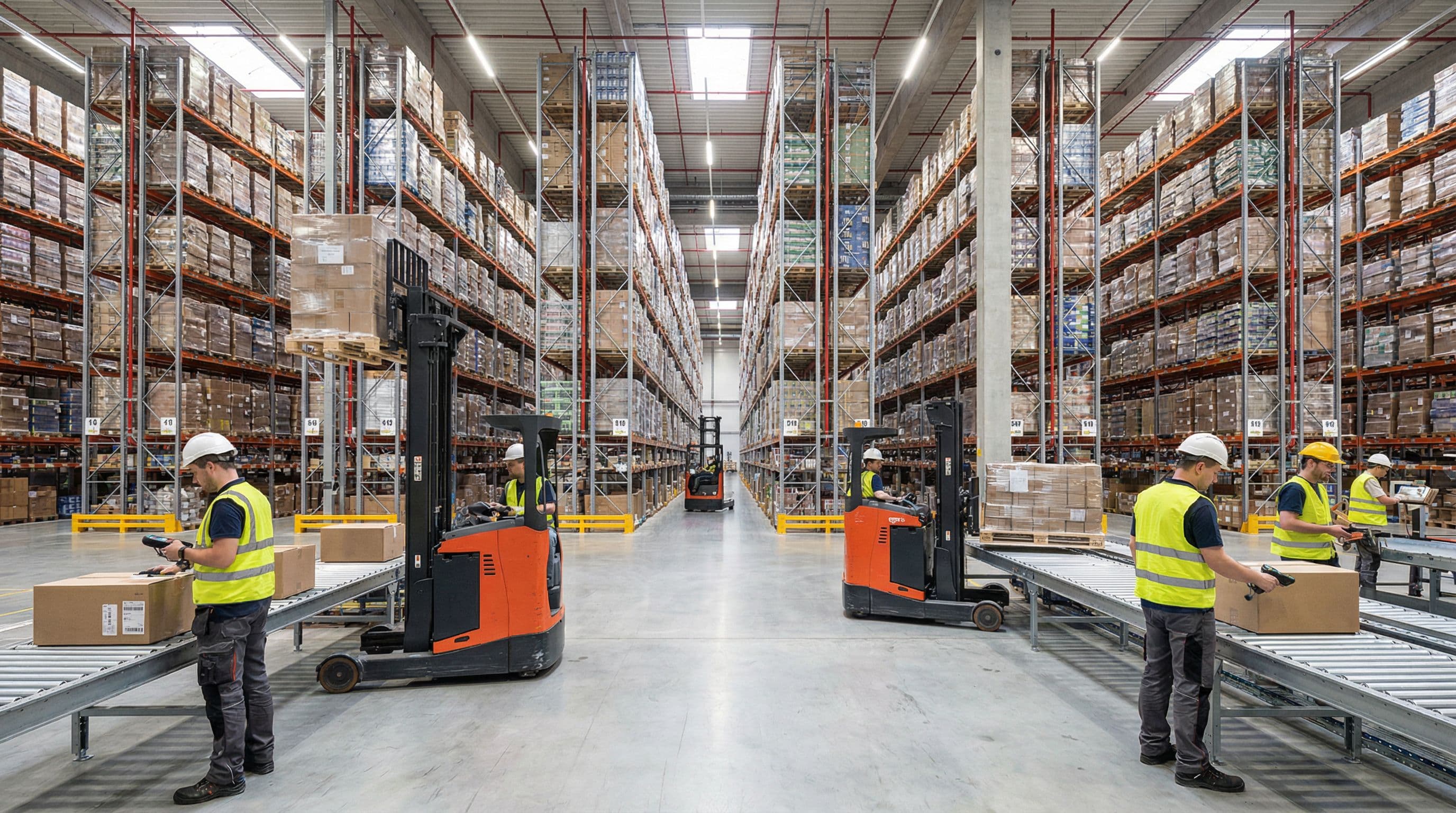
Idaho wholesalers and distributors move fast across warehouse aisles, loading docks, and delivery routes that often connect Boise, Meridian, and Nampa. You are juggling inventory, fleet vehicles, and goods in transit, which creates a risk profile that an office-based policy simply cannot address. Wholesalers and distributors insurance in Idaho can help you weigh the real cost of a stolen shipment, a damaged pallet, or a loading-dock injury before one lands on your books. Wildfire is a very high climate hazard here, and winter storms, flooding, and earthquakes add further pressure on your property and inventory. Add Idaho Department of Insurance oversight, workers compensation rules that apply to most employers with one or more employees, and the state's commercial auto minimums, and a tailored quote becomes more than a formality. It is a practical way to line up coverage with how your warehouse, distribution center, and fleet actually operate.
Why Wholesalers & Distributors Businesses Need Insurance in Idaho
A single pallet collapse, a shipment stolen between warehouses, or a forklift injury on the dock can trigger replacement costs, missed deliveries, and legal defense expenses that add up fast. When your operation repackages, relabels, or assembles goods before resale, your liability coverage may be especially important because claims can arise from the products and services tied to your distribution process.
The state's risk profile adds another layer. Idaho's wildfire hazard is rated very high, and winter storm, flooding, and earthquake risks are also present. That matters for your property policy because a warehouse, shelving, equipment, and peak inventory levels can all be affected by a major event. Underinsurance can leave businesses with major out-of-pocket losses if limits do not reflect peak stock levels, which means a policy calibrated to average daily stock could fall short precisely when you need it most.
State rules also shape what you carry. The Idaho Department of Insurance oversees the market, workers compensation insurance is required for most employers with one or more employees, and commercial auto minimums are set at $25,000/$50,000/$15,000. For businesses with delivery trucks, hired auto, or non-owned auto exposure, coverage should reflect how vehicles are actually used. A tailored package can help you match each layer of protection to the specific risks your warehouse and distribution work generates day to day.
Idaho requires workers' comp for businesses with employees (exemptions may apply: Sole proprietors; Working partners). Non-compliance can result in fines and personal liability for owners. Commercial auto minimums are $25,000/$50,000/$15,000.
Key Risks for Wholesalers & Distributors Businesses
Each of these risks can lead to claims that cost thousands, or more. Make sure your policy addresses every one:
- Inventory damage or spoilage
- Cargo theft during transit
- Warehouse fire or natural disaster
- Fleet vehicle accidents
- Product liability claims
Cost Factors for Wholesalers & Distributors Businesses in Idaho
Pricing for your policy reflects inventory value, warehouse size and construction, product mix, fleet size, delivery radius, and claims history. Idaho's 2024 premium index of 87 sits below the national baseline of 100, which generally means a somewhat more favorable pricing environment for Idaho businesses. A Boise distribution center handling high-value stock may have different needs than a smaller Meridian wholesaler with limited delivery routes.
Local business conditions also matter. Idaho has a 4% small-business share, so many coverage decisions are made by owners balancing growth, staffing, and storage capacity. Manufacturing, retail trade, agriculture, and healthcare drive much of the state's economy, and the goods you move for those sectors can shape the loss exposure your policy needs to address. Fragile, temperature-sensitive, or high-theft products carry higher loss potential, and premiums typically reflect that. Your property, transit, and vehicle coverages may be priced separately or bundled depending on the carrier.
Workers compensation insurance for warehouse staff is also a major factor where loading docks, forklifts, and frequent employee traffic are part of the workflow. Quotes tend to be more accurate when you provide details on actual warehouse operations, fleet vehicles, and seasonal inventory peaks. General liability for small businesses in Idaho runs about $75 to $330 per month, giving you a starting point for budgeting. Most wholesalers and distributors layer other coverages on top, so the total moves with employees, revenue, equipment values, and prior claims.
Wholesalers & Distributors businesses typically carry several separately priced policies. The ranges below are typical figures for Idaho for each line, except workers compensation, which is rated per $100 of payroll; a quote prices each one against your own operations.
| Coverage | Typical range | What moves your price |
|---|---|---|
| General Liability Insurance | $75 - $330 per month | Industry and risk classification, annual revenue, number of employees |
| Commercial Property Insurance | $150 - $750 per month | Building value and construction type, roof age and condition, fire protection class |
| Commercial Auto Insurance | $170 - $550 per month | Fleet size and vehicle types, driver records and experience, coverage limits and deductibles |
| Commercial Truck Insurance | $260 - $850 per month | Radius of operation, commodities hauled and cargo value, number and value of power units |
| Inland Marine Insurance | $45 - $260 per month | Total insured value of the scheduled property, type and age of the equipment, where it is stored and how far it travels |
| Workers Compensation Insurance | $0.75 - $2.74 per $100 of payroll | Employee classification codes, total annual payroll, experience modification rate |
Prices shown are general estimates, not guaranteed rates or quotes. Your actual premium will depend on the insurer, coverage selected, business details, location, claims history, and other underwriting factors. Learn about our pricing methodology.
State Requirements
Insurance Regulations in Idaho
Key regulatory requirements for businesses operating in ID.
Regulatory Authority
Workers' Compensation InsuranceRequired
Required for employers with 1+ employee.
Exempt categories
- Sole proprietors
- Working partners
- Household domestic workers
Commercial Auto Minimum Liability
$25,000/$50,000/$15,000 (bodily injury per person / per accident / property damage)
Source: Idaho Department of Insurance, U.S. Department of Labor
What Drives Wholesalers & Distributors Insurance Costs in Idaho
Goods in the warehouse
A warehouse fire or roof failure reaches everything at once. Commercial property insurance can help cover stock, and spoilage-exposed goods need their own terms.
Goods and fleets on the road
Cargo theft and vehicle accidents travel together. Commercial auto insurance typically covers the fleet, and inland marine insurance can help cover freight in transit.
Wildfire
Wildfire exposure can limit which carriers quote a property and on what terms, especially outside city cores. The context is Idaho's record of 140 federal disaster declarations [2].
Climate Risk Profile
Natural Disaster Risk in Idaho
Understanding climate-related risks helps determine appropriate insurance coverage levels.
Wildfire
Very High
Earthquake
Moderate
Winter Storm
Moderate
Flooding
Moderate
Expected Annual Loss from Natural Hazards
$320M
estimated economic loss per year across Idaho
Source: FEMA National Risk Index
Insurance Tips for Wholesalers & Distributors Business Owners in Idaho
Match commercial property insurance limits to peak inventory levels, not just average stock, so seasonal surges in your Idaho warehouse are not left underinsured.
Use inland marine insurance for inventory in transit when goods move between Boise, Meridian, Nampa, customer sites, or temporary storage locations.
Review commercial auto insurance for distribution companies separately from commercial truck insurance for wholesalers if you use both delivery vans and heavier trucks.
Ask how general liability insurance for distributors responds if you repackage, relabel, or assemble products before resale.
Build your quote around wildfire, winter storm, flooding, and earthquake exposures if your warehouse, dock, or storage yard could be affected.
Confirm workers compensation insurance for warehouse staff aligns with loading-dock work, forklift activity, and frequent material handling in Idaho operations.
Check whether your policy can address cargo theft, theft from storage, and equipment breakdown that can interrupt picking, packing, or shipping.
Verify Idaho commercial auto minimums and make sure hired auto and non-owned auto exposure are considered if employees use vehicles for deliveries.
Get Wholesalers & Distributors Insurance in Idaho
Enter your ZIP code to compare wholesalers & distributors insurance rates from top carriers.
Business insurance starting at $25/mo
Wholesalers & Distributors Business Types in Idaho
Find insurance tailored to your specific wholesalers & distributors business. Select your business type for coverage recommendations, pricing, and quotes:

Freight Broker Insurance
Get a freight broker insurance quote built for brokerage and logistics operations that need protection when carrier policies do not fully pay a claim. Coverage can be tailored around contingent cargo, E&O, cyber, and crime needs.

Trucking Company Insurance
Get a trucking company insurance quote built around your routes, vehicles, and cargo. Compare coverage for fleets and owner-operators, including commercial auto, cargo, and liability.

Courier & Delivery Service Insurance
Get coverage built for courier operations that face vehicle accidents, package loss, and commercial auto requirements. Compare options for single vehicles, fleets, and local delivery routes.

Warehouse Insurance
Get a warehouse insurance quote built around inventory value, equipment exposure, and premises risks. Coverage can be tailored for warehouses and fulfillment centers.

Import & Export Business Insurance
Import and export business insurance can help wholesalers and distributors with cargo loss, goods in transit, and liability gaps across the supply chain. Get a quote tailored to your routes, shipment types, and trade operations.
Wholesalers & Distributors Insurance by City in Idaho
Insurance rates and requirements can vary by city. Find wholesalers & distributors insurance information for your area in Idaho:
FAQ
Wholesalers & Distributors Insurance FAQ in Idaho
Most operations carry general liability, property, auto, and workers compensation, with limits shaped by warehouse, fleet, and transit exposures.
Share your warehouse locations, inventory values, delivery radius, vehicle count, truck use, and whether you repackage or assemble goods so the quote matches your operation.
Inventory value, warehouse size and construction, product type, fleet size, claims history, and how often goods move between locations or out for delivery all influence pricing.
Workers compensation is required for most employers with one or more employees, and commercial auto minimums are $25,000/$50,000/$15,000. Other needs vary by operation.
Inland marine insurance is commonly used for goods moving between warehouses, customer sites, and temporary storage locations, especially when shipments are high-value or frequently transferred.
Commercial property insurance may help with physical damage to the building, stock, shelving, and equipment, but limits should reflect peak inventory and local hazard exposure.
If your business uses heavier box trucks or tractor-trailers, commercial truck insurance may be reviewed separately from commercial auto insurance for vans or smaller delivery vehicles.
Coverage options vary, but many wholesalers and distributors look at inland marine, property, liability, and business interruption-related protection to help manage those risks.
Sources
- 1.Idaho Department of Insurance(Idaho requires workers compensation coverage from the first employee.)
- 2.FEMA Disaster Declarations(Idaho has 140 federal disaster declarations on record.)
- 3.BLS Quarterly Census of Employment and Wages (2024)(Distribution workers in Idaho earn an average of $48,300 a year.)