







































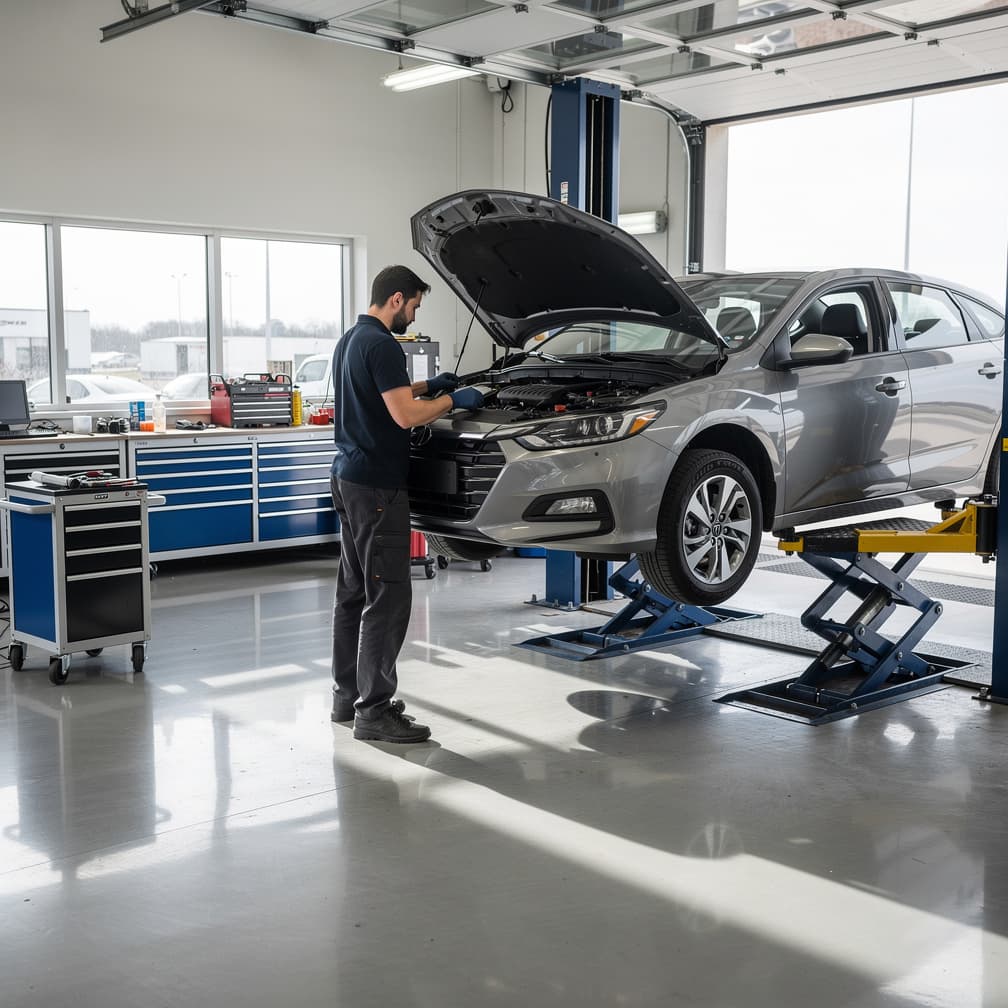

Allen County has about 9,600 businesses, and the workers compensation rate you get quoted is built from how employers across that pool have actually been hurt, not from your own quiet year. A single store cannot argue its way to a better rate; it can only classify honestly and manage the payroll behind the classes. Auto dealership insurance in Fort Wayne gets priced against that payroll, and a dealership's payroll is stranger than most: commissioned sales staff, porters, a title clerk, technicians on a lift. Classification carries as much weight as the total, since a porter and a lift technician are not rated alike. Quote against the payroll you will actually run next year rather than the one on last year's return. Get the job list right up front, because correcting it after a claim costs more than the honesty would have.
What Makes Fort Wayne Different
Premium moves on four things: payroll, inventory value, building value, and the claims already in your file. None of those is a negotiation, and every one is measurable at your Fort Wayne store this week. Payroll is not headcount; it is what you pay, so a raise moves a workers compensation number. Inventory value is not what you paid; it is what replacing the whole row would cost today. A dealership in Fort Wayne that guesses at both figures is guessing at its own settlement later. Claims history is the only driver you cannot fix quickly, which is why small ones matter. A minor loss paid this year can shape three renewals, so decide deliberately what you report. Bring real numbers, ask what each one moves, and a quote stops being a mystery.
Local Risk Factors in Fort Wayne
A row of dented roofs and shattered glass is a sales problem before it is a repair problem, because nobody buys what looks damaged. Units sit unsellable while estimates are written, and the lot stays full of inventory you are still paying to finance. Open lot coverage is generally the line meant for that stock, and its deductible structure decides the size of the bill: per unit, or per event. Multiply the per-unit figure by a full row of cars in Fort Wayne and the wording stops being a detail. Ask which structure applies, in writing, at the quote stage. Indiana weather does not schedule itself around renewal dates.
What Coverage Does an Auto Dealership in Fort Wayne Need?
General Liability
Landlords and floorplan lenders usually ask about this line first, because it concerns the people who walk your property: a customer crossing the lot, a prospect on the showroom floor, a visitor at the finance desk. It can help cover bodily injury and property damage claims arising from those visits, subject to the limits you bought. Damage to vehicles in your care generally sits elsewhere.
Example: A shopper catches a heel on a cracked curb between two rows and breaks a wrist in Fort Wayne; general liability may respond to the medical claim and the lawsuit behind it.
Garage Keepers
Your own inventory is not the subject here; somebody else's vehicle is. A car dropped for service, a trade-in on appraisal, a unit waiting for paperwork to clear: this line is generally designed to respond when property in your custody is damaged, stolen, or burned. Where those vehicles park overnight and who holds the keys tend to shape both the price and a carrier's appetite.
Example: A customer's car is left overnight for a brake job and a thief takes it from the side lot; garage keepers might answer for the vehicle you were only holding.
Commercial Property
A fire in a service bay or a storm through the roof stops sales, financing, delivery, and title work at once. This line concerns the building, the office systems inside it, and the equipment you work with, and it might help cover repairs and, where the wording allows, income lost while the doors stay shut. Flood typically sits outside it.
Example: A frozen pipe lets go above the finance office and soaks the desks and the servers below; commercial property could pick up the repairs and the selling days you lose.
Dealer Open Lot
Inventory parked outdoors is the largest thing a dealership owns and the hardest to protect, because it cannot be locked in a room at night. This line is meant for those units against hail, fire, theft, and vandalism. The deductible structure matters as much as the limit, since per vehicle and per event produce very different bills after one storm.
Example: Hail crosses a lot at midnight and dents every roof on the front row; dealer open lot is intended to respond, with the deductible structure deciding what share stays with you.
Workers Compensation
Where the liability lines look outward at customers, this one looks at your own staff: porters, detailers, technicians on a lift, the title clerk at a desk. It might help cover medical costs and lost wages after a work injury, and it is quoted against payroll and job classification. Rules on who must be covered vary by state.
Example: A technician slips on spilled fluid in the service lane at a Fort Wayne store and misses six weeks; workers compensation is meant to take the medical bills and part of the wages.
How Much Does Auto Dealership Insurance Cost in Fort Wayne?
Auto Dealership Insurance is a bundle of separate policies, priced separately. The ranges below are typical figures for Fort Wayne for each line, except workers compensation, which is rated per $100 of payroll; a quote prices each one against your own operations.
| Coverage | Typical range | What moves your price |
|---|---|---|
| General Liability Insurance | $160 - $600 per month | Industry and risk classification, annual revenue, number of employees |
| Garage Keepers Insurance | Varies | Quoted individually based on your operations and limits |
| Commercial Property Insurance | $190 - $725 per month | Building value and construction type, roof age and condition, fire protection class |
| Dealer Open Lot Insurance | Varies | Quoted individually based on your operations and limits |
| Workers Compensation Insurance | $0.75 - $2.74 per $100 of payroll | Employee classification codes, total annual payroll, experience modification rate |
Prices shown are general estimates, not guaranteed rates or quotes. Your actual premium will depend on the insurer, coverage selected, business details, location, claims history, and other underwriting factors. Learn about our pricing methodology.
What Are the Insurance Requirements for an Auto Dealership in Fort Wayne?
Workers' comp is generally required once you have your first employee. Indiana generally requires employers to carry workers' compensation at that point. Common exemptions include sole proprietors, partners, and farmworkers. Confirm current thresholds with your state's workers' compensation agency before you hire.
Flood damage is typically excluded from standard policies. Standard commercial property and builders-risk-type policies typically exclude flood damage. Flood exposure varies address by address, so check your premises in FEMA's Flood Map Service Center before deciding; if you sit in a mapped flood zone, a separate policy through the National Flood Insurance Program is the usual starting point.
Where to verify licensing and coverage rules. The Indiana Department of Insurance publishes consumer guidance and current insurance requirements for Indiana businesses. When a contract or lease demands specific wording, the Indiana Department of Insurance's guidance is the authoritative place to check.
Get Your Auto Dealership Quote in Fort Wayne
Compare rates from multiple carriers. Free quotes, no obligation.
Operating in Fort Wayne
- A dealership in Fort Wayne that photographs its lot at night once a year has an underwriting file that argues for itself, since lighting and fencing are visible facts.
- An auction agreement can name insurance limits that differ from the ones in your lease, and the strictest clause in the pile is the one setting your real floor.
- Inventory value reported at renewal is the number a total loss settles against, so a count done from memory is really a decision about your own settlement.
- Staff turn over fastest in the jobs that hold keys and cash, and access granted on somebody's first day is rarely revoked on their last one.
How to Buy: Advice for Fort Wayne Owners
Decide what you actually need before anyone shows you a package. A dealership buys several separate promises at once: the people on the lot, the building, the units outside, the vehicles you are only holding, the staff on payroll. General liability for auto dealerships typically runs between $35 and $130 a month, which makes it the easy part of the decision and rarely the important one. The lines with no published range, Garage Keepers among them, are where the real questions live, because they get priced off your own counts and controls. Price each piece separately, then look at the total, and you will know which part moved. A dealership in Fort Wayne deserves a quote built on its own numbers. The Indiana Department of Insurance publishes consumer guidance on comparing business insurance policies. CPK exists to put quotes from participating carriers in one place so that comparison is actually possible.
FAQ
Auto Dealership Insurance in Fort Wayne: FAQ
Annual payroll broken out by job type, a current unit count with values, how many customer vehicles you hold, building details and rebuild cost, security measures, and any losses from recent years. A dealership in Fort Wayne that brings all six gets numbers that mean something back. Estimates get re-rated later, and re-rating rarely moves in your favor. The file takes an afternoon and it changes every quote you receive.
Yes, and by more than most owners expect. Lifts, tools, and technicians add payroll in a higher-rated classification, and they add a second way for a customer's vehicle to be damaged while you are holding it. Adding a lane is a sales decision that quietly edits an insurance file at the next renewal. Describe the store you will run next year, not the one on last year's application.
It depends on why the doors were closed. Support for lost income generally follows physical damage to the property, so a week of ugly weather with an intact building often falls outside it. That distinction catches owners who assume any lost week qualifies. Ask what triggers the income support, how long it runs, and whether a power outage counts. Forms vary, so read the wording written for Indiana before assuming.
At least at every renewal, and sooner if the floorplan has grown. The figure you reported is the figure a total loss gets settled against, so an optimistic count costs you at exactly the wrong moment. An inflated one simply costs you premium every month. Recount, write the date on the sheet, and send it in before somebody else has to reconstruct it.
It concerns vehicles that belong to somebody else while they sit in your care: a car left for service, a trade-in on appraisal, a unit waiting on paperwork to clear. Garage keepers is generally designed to respond when that property is damaged, stolen, or burned while you hold it. Your own stock is a separate question with a separate form behind it. Ask which vehicles a quote counts and where it assumes they park overnight.
Rarely the way owners expect. A commercial property policy tends to concern the building and what is inside it, while vehicles parked outside are typically handled by a separate open lot form. The distinction bites hardest on the deductible, since a per-vehicle deductible after one hailstorm can multiply across a full row. Ask which structure applies to your Fort Wayne lot and get that answer in writing before a forecast makes it urgent.
Sources
- 1.U.S. Census Bureau, County Business Patterns (2022), Allen County(Allen County has about 9,600 business establishments.)
- 2.Indiana Department of Insurance(Indiana Department of Insurance publishes consumer guidance for insurance buyers.)
- 3.FEMA / FloodSmart(Flood coverage is typically purchased separately; FEMA administers the National Flood Insurance Program.)


