Updated July 16, 2026

Key Takeaways
- List every towing and transport service you perform before requesting quotes, so loading, unloading, winching, and recovery exposures are reviewed correctly.
- Compare the on-hook limit, deductible, valuation method, and exclusions side by side instead of choosing a policy on premium alone.
- Ask in writing whether your policy addresses the specific vehicles you tow most often, especially specialty, modified, low-clearance, or higher-value units.
- Use pre-tow photos, condition notes, and signed release procedures on every job to reduce disputes and support claims handling.
- Review on-hook coverage together with auto liability and any garagekeepers coverage before renewal to catch gaps between transport and storage.
On-Hook Towing Insurance in Indiana
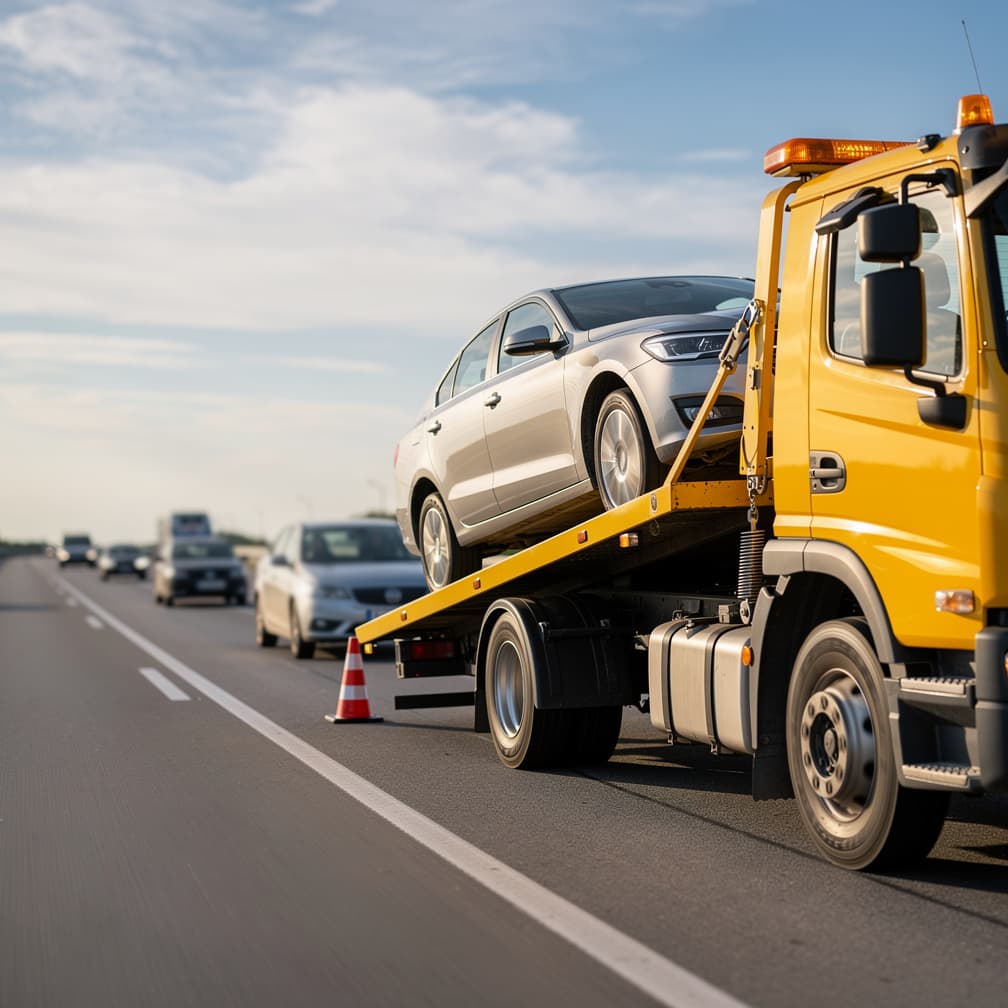
The decision usually comes up when your towing operation changes shape. You add a truck, take on police rotation work, start moving dealer inventory, or sign a storage yard contract that puts more customer vehicles in your custody. If you are shopping for this coverage in Indiana, the useful question is not just whether you have a policy, but whether it matches your mix of wheel-lift calls, flatbed transports, recovery jobs, after-hours releases, and destination types.
Indiana weather and road conditions directly affect how a tow unfolds, especially when loading on a shoulder, pulling from a ditch, or unloading on wet pavement. A quote should account for where your drivers operate, what kinds of vehicles you accept, how units are secured, and who documents condition before hookup. Before you request pricing, tighten your service list, driver procedures, and photo process so the quote reflects your actual exposure instead of a vague towing description.
What On-Hook Towing Insurance Covers
The practical review starts with your handoff points. You want the policy language checked against the exact moments where claims tend to turn into disputes. Those include the walkaround before hookup, the winching decision, the securement method, the route choice, and the unloading location. If your drivers handle roadside calls on narrow shoulders, apartment complex removals, dealer transfers, or recovery work after storms, those operating details matter because each one changes how damage allegations are argued.
A useful quote review should separate the kinds of vehicles you move. Standard passenger cars, low-clearance vehicles, pickups with aftermarket equipment, commercial vans, and disabled vehicles with pre-existing damage do not present the same claim profile. If you occasionally tow vehicles with body damage, broken steering components, or missing wheels, ask how those conditions should be documented before the tow begins. That step can matter as much as the limit itself when a customer later disputes what happened during loading or transport.
Buyers should also look closely at territory and dispatch patterns. A truck that stays in one county for routine roadside work is underwritten differently from a unit that runs longer transfers between auctions, repair facilities, and dealer lots. If you subcontract overflow work or use owner-operators, ask where responsibility begins and ends for each move. The Indiana Department of Insurance regulates carriers and agents in the state, and it offers operators a place to file complaints or ask questions about policy language and claims handling. If policy wording or claims handling is unclear, keep your forms and endorsements organized before binding and review them line by line.

Collision on Hook
Covers damage to towed vehicles from collisions during transport.
Comprehensive on Hook
Covers theft, fire, and weather damage to vehicles being towed.
Loading & Unloading
Covers damage during the process of loading and unloading vehicles.
Winching Coverage
Covers damage to vehicles during winching and recovery operations.

Multiple Vehicle
Covers all vehicles on multi-car carriers and rollback flatbeds.
On-Hook Towing Insurance Requirements in Indiana
- Indiana weather can change a routine hookup into a disputed damage claim, so loading and unloading procedures should be reviewed with wet pavement, shoulder work, and reduced visibility in mind.
- If your operation mixes dealer transfers, private property impounds, and roadside towing, ask for policy review based on that exact dispatch pattern rather than a single broad class description.
- Police rotation, storage, and property management contracts often shift expectations around proof of coverage and claim handling, so compare contract language to your policy terms before signing.
- Rural pickups and longer intercity transports create different exposure than short urban tows, especially when route conditions and destination types vary during the same week.
How Much Does On-Hook Towing Insurance Cost in Indiana?
For towing operators, cost is usually driven by claim severity potential, not by a simple one-line description of your business. Underwriters want to know what your trucks actually do during a normal week. A flatbed focused on scheduled dealer moves is viewed differently from a wheel-lift unit taking late-night roadside calls, private property impounds, and recovery assignments in changing weather.
Start with the vehicles you tow. Heavier units, specialty vehicles, low-clearance cars, and vehicles with existing damage all affect how a quote is built. Then look at where your drivers load and unload. Shoulder work, parking garages, apartment complexes, rural roads, and storage lots each create different handling risks. If your service area includes both dense urban dispatches and longer highway transports, note that clearly so the quote reflects real exposure instead of a broad statewide assumption.
Your documentation standards also affect pricing conversations. Carriers often look more favorably on operations that use consistent pre-tow photos, signed condition reports when available, securement checklists, and driver training records. Claims history matters too, especially if prior losses involved loading damage, improper securement, or disputes over pre-existing condition.
The most useful way to shop is to use the identical submission details you prepared for every carrier. That lets you compare deductibles, limits, exclusions, and endorsements on equal footing instead of chasing a lower number that leaves a gap in how your operation actually works.
Request a Quote Comparison
Enter your ZIP code to compare on-hook towing insurance rates from top carriers.
Business insurance starting at $25/mo
Who Needs On-Hook Towing Insurance?
This coverage deserves a closer look any time your business takes control of someone else's vehicle and moves it as part of a paid service. That can include traditional towing companies, but it also reaches operators whose work comes through repair shops, dealerships, auctions, finance companies, municipalities, apartment communities, and private property owners. If your invoice says transport, recovery, relocation, impound, or roadside assistance, the exposure is still there.
The strongest candidates are businesses with mixed dispatch patterns. If one truck spends the morning on breakdown calls, the afternoon moving dealer units, and the evening handling impounds, your risk is not limited to one neat category. The same is true if you run both flatbeds and wheel-lift units, or if you take occasional recovery jobs that involve difficult loading conditions. A policy review should match that operational mix instead of assuming every tow looks the same.
Operators should pay particular attention if they work under contracts. Police rotation agreements, storage yard arrangements, dealer relationships, and property management contracts often create expectations around proof of coverage, limits, and claim response. If a contract shifts responsibility to your business once a vehicle is hooked, loaded, or released, your insurance review should follow that language closely.
You should also review this coverage if your company is growing. Adding drivers, extending service hours, entering new counties, or accepting higher-value vehicles changes the exposure faster than many owners realize. Before renewal, compare your current policy to your actual dispatch log and identify any service type you added during the year but never reported to the carrier.
On-Hook Towing Insurance by City in Indiana
On-Hook Towing Insurance rates and coverage options can vary across Indiana. Select your city below for localized information:
How to Buy On-Hook Towing Insurance
To buy well, build the submission around how your operation runs on the road, not around a generic towing label. Start by listing every truck, how each unit is used, and which services each one performs. Separate flatbed work from wheel-lift work. Note whether you handle roadside assistance, police rotation, private property impounds, recovery, dealer transfers, auction moves, or long-distance transport. If one truck does several of those jobs, say so plainly.
Next, prepare the underwriting file you would want if a claim happened tomorrow. Include your driver list, loss runs, service territory, storage locations, and any written procedures for pre-tow inspections, photos, securement, and release documentation. If you use dispatch software or mobile photos, mention that. A carrier prices uncertainty conservatively, so the more clearly you show your process, the easier it is to get a quote that fits the work.
Then review policy terms with a narrow focus on claim scenarios that actually happen in operations. Ask how the policy responds during loading, transport, and unloading. Ask whether different vehicle types or service types need to be scheduled or disclosed. Ask how deductibles apply and whether any exclusions could affect impounds, recovery work, or subcontracted moves.
Before binding, evaluate your quotes side by side. Do not compare one quote built on dealer transfers against another built on roadside towing if your business does both. Keep copies of the application, endorsements, and any service descriptions you submitted. If a dispute later arises, those details help show that the policy was placed based on the operation you actually disclosed. Request a quote through CPK Insurance to compare your options with participating licensed providers.
How to Save on On-Hook Towing Insurance
The most reliable way to save is to make your operation easier to understand and easier to defend. Start with consistency. If every driver follows the same pre-tow photo routine, securement checklist, and release procedure, you reduce the chance that a small handling issue turns into a larger disputed claim. Better documentation also helps you present a cleaner risk at renewal.
Tighten the way you describe your services. Many towing businesses lose pricing flexibility because their application is too broad or too vague. If a truck is used mainly for dealer transfers and only occasionally for roadside calls, say that clearly. If another unit handles impounds and recovery work, separate it. Underwriters price uncertainty, so a more precise submission leads to a more accurate quote.
Driver management matters as much as equipment. Review motor vehicle records before assigning drivers to higher-risk work, document training on loading angles and securement, and keep written procedures current. If you have newer drivers, pair them with your strongest operators for difficult recoveries and unusual vehicle types. That kind of internal control matters more than shopping blindly every year.
You can also save by choosing deductibles deliberately instead of defaulting to the lowest out-of-pocket option. A higher deductible can reduce premium, but only if your cash flow can absorb it without disrupting operations after a loss. Finally, clean up avoidable friction points before requesting quotes. Outdated driver lists, missing VIN schedules, unclear service territories, and incomplete loss explanations all make a towing account harder to underwrite. Fix those first, then compare terms.
Our Recommendation for Indiana
For towing businesses, the smartest buying move is to test the policy against your hardest routine jobs, not your easiest ones. Think about the calls that create the most disagreement. Low-clearance vehicles, damaged cars with pre-existing issues, shoulder loading in poor weather, apartment complex removals, and after-hours releases where no owner is present all fit that category. If the quote review does not address those situations, keep asking questions.
I would also separate your operation by truck and by service type before renewal. A clean schedule showing which unit handles dealer moves, which one handles roadside calls, and which one takes recovery or impound work gives underwriters a clearer picture and gives you a better basis for comparing quotes.
Finally, treat documentation as part of the insurance purchase, not just a claims task. Standardize photos, condition notes, dispatch records, and release procedures across every driver. Where weather and road conditions can change a routine tow quickly, those records often make the difference between a manageable claim and a prolonged dispute.
FAQ
Frequently Asked Questions
Dealer transfer work creates the same custody exposure as roadside towing because the vehicle is being moved under your control. Review the policy against your actual transfer procedures, vehicle types, and documentation steps before adding that work to a truck.
Impound and private property towing increases dispute potential because owners often challenge vehicle condition, release timing, or handling. Ask your agent to review how your policy fits unattended pickups, photo documentation, and after-hours releases.
Insurance questions are regulated by the Indiana Department of Insurance, which oversees carriers and agents. The agency gives operators a practical place to file complaints or ask questions about policy language and claims handling. If you are comparing policy language, endorsements, or claims handling expectations, keep your forms organized and review the wording carefully before you bind coverage.
Towing businesses can often place both truck types within one insurance program, but the quote should distinguish how each unit is used. A flatbed doing scheduled moves presents different handling issues than a wheel-lift taking mixed dispatch calls.
Underwriters usually need a clear truck schedule, driver list, service territory, loss history, and a breakdown of work such as roadside towing, impounds, recovery, or dealer moves. A precise submission gives you a reliable basis for comparing terms.
Weather affects loading surfaces, visibility, and recovery conditions, which is why your quote should reflect where and how your drivers operate. Bring real examples of shoulder work, ditch pulls, and wet-surface loading into the coverage review.
Towing businesses should review it at renewal and again after any operational change, such as new trucks, new contracts, different service territory, or higher-value vehicles. Coverage can drift out of sync when the dispatch mix changes faster than the policy does.
On-hook towing insurance may cover damage to a customer vehicle while it is being loaded, attached, carried, winched, or unloaded by your tow truck, depending on the policy terms. Buyers should review collision, fire, theft, weather, and loading-related damage carefully.
Sources
- 1.Indiana Department of Insurance(The Indiana Department of Insurance oversees insurance regulation in the state.)
Updated July 16, 2026