

































Updated July 10, 2026

Recommended Coverage for Hospitality & Restaurant
Hospitality & Restaurant businesses face unique risks that require specific coverage types. Here are the policies most hospitality & restaurant operations need:

General Liability
Essential coverage for every business, protect against third-party bodily injury, property damage, and advertising claims.

Liquor Liability
Coverage for businesses that sell, serve, or distribute alcohol against alcohol-related liability claims.

Commercial Property
Safeguard your business property, equipment, and inventory against damage and loss.

Workers Compensation
Help cover your employees' medical expenses and lost wages for work-related injuries and illnesses.

Business Owners Policy
Bundle property and liability coverage into one convenient, cost-effective policy for small businesses.

Commercial Umbrella
Extend your liability limits beyond your primary policies for extra protection against catastrophic claims.
Hospitality & Restaurant Insurance Overview
A Friday dinner rush, a wedding reception, a sold out bar shift, and a hotel with back to back check ins all create the same insurance problem: guests, staff, vendors, and property are moving at once, and one small breakdown can turn into a claim. A hospitality and restaurant insurance quote needs to follow that operating reality, not just the business name on the application.
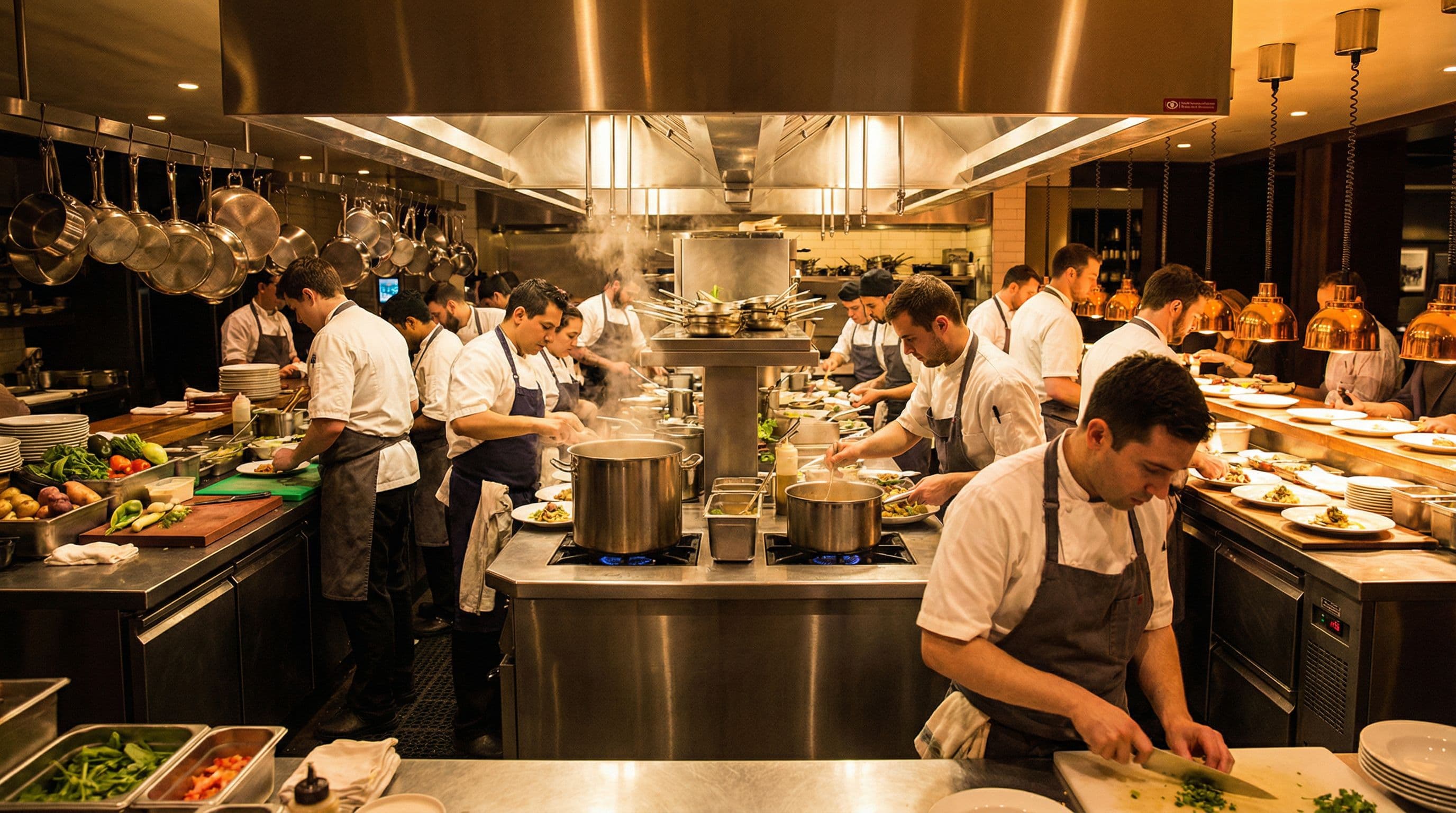
Restaurants need coverage built around food preparation, hot surfaces, delivery or catering, and steady guest traffic through dining rooms, patios, and pickup areas. A quick service shop with counter service faces a different claim pattern than a full service restaurant with table service, alcohol sales, private events, and late closing hours. Bars add a heavier liquor liability review because service practices, security, crowd control, and closing time routines can change the severity of a claim.
Hotels and other lodging businesses bring another layer. You are not only serving guests for a meal or a shift, you are responsible for rooms, common areas, housekeeping operations, laundry, maintenance work, and in many cases event space. A limited service hotel, a boutique property with a restaurant, and a venue that hosts banquets or conferences each need different property values, liability limits, and workers compensation classifications. If your operation includes valet, shuttle activity, spa services, or pool areas, the review has to get more specific about where injuries or property damage could happen.
Many hospitality businesses also operate in more than one mode at the same time. A restaurant may run dine in service, catering, online ordering, and private parties. A hotel may lease space to outside vendors, host alcohol service, and manage seasonal staffing swings. Those mixed operations matter because general liability insurance, liquor liability insurance, commercial property insurance, workers compensation insurance, business owners policy insurance, and commercial umbrella insurance each respond to different parts of the risk.
General liability is the starting point for guest injury and third party property damage claims, but it does not replace liquor liability where alcohol service creates its own exposure. Commercial property insurance needs to match what you actually own and rely on, including furniture, fixtures, kitchen equipment, bar equipment, linens, and stock. Workers compensation insurance follows the physical pace of the work, from cooks and servers to housekeepers, bartenders, dish staff, and maintenance teams. A business owners policy insurance package can make sense for smaller operations with straightforward property and liability needs, while larger or more complex businesses need separate policies and higher limits. Commercial umbrella insurance becomes more important when you have heavy foot traffic, alcohol sales, multiple locations, event business, or landlord and contract requirements that call for added liability capacity.
Before you request quotes, map out every revenue stream, every service area open to guests, and every off premises activity. That gives you a cleaner submission and a better chance of getting terms that fit how your hospitality business actually runs.
Why Hospitality & Restaurant Businesses Need Insurance
Hospitality claims compound because the business is public facing by design. Guests walk wet entryways, eat food prepared at speed, attend crowded events, and interact with staff all night, so a single incident can pull medical costs, legal defense, refunds, lost income, and reputation damage into the same file.
Food service carries a multiplier that most premises risks do not: one contaminated batch, one temperature failure, or one cross contamination slip can affect every table it touched before anyone notices. That is why underwriters look at both front of house and back of house procedures, and why an event or catering job that serves one menu item to two hundred guests deserves more respect than its revenue suggests. Alcohol adds reach: an overservice allegation follows the guest out the door and down the road, which puts training, ID checks, service cutoffs, and security practices at the center of how the account is judged.
For hotels, interruption is the exposure that surprises owners. Water damage in a guest wing does not just cost repairs; it costs room revenue, event commitments, and guest relocation while the floor is closed. For restaurants and bars, the same interruption shows up as spoiled stock, canceled reservations, and payroll pressure during repairs. In both cases the recovery clock matters as much as the repair bill.
The work itself is fast, repetitive, and physical, and the injury list reflects it: knife cuts, burns, kitchen slips, housekeeping strain, lifting injuries, maintenance accidents. Staffing that swings by season, event schedule, or location makes payroll estimates drift, so true them up before renewal. And because landlords, lenders, event clients, and vendors demand proof of coverage before you can open, book, lease, or expand, treat certificate requirements as part of operations, not paperwork.
Key Risks for Hospitality & Restaurant Businesses
Each of these risks can lead to claims that cost thousands, or more. Make sure your policy addresses every one:
- Foodborne illness claims
- Liquor liability incidents
- Guest slip-and-fall injuries
- Kitchen fires and property damage
- Employee injuries
- Theft and vandalism
What Drives Hospitality & Restaurant Insurance Costs
Operation type sets the frame. A small cafe with limited seating and no alcohol prices differently than a late night bar, a full service restaurant with catering, or a hotel with banquet space, and every increment of guest traffic, alcohol exposure, cooking activity, and event volume tightens the underwriting review.
Workers compensation is rated per $100 of payroll by classification, and hospitality runs large teams across very different duties: kitchen staff, bartenders, servers, housekeepers, maintenance, and managers each carry their own injury profile. Seasonal labor, temporary staff, and multiple locations complicate the payroll estimate, and the audit reconciles it against reality at term end.
Property pricing follows what you need to keep operating and how hard it would be to replace: a basic tenant buildout versus a custom kitchen, bar installation, walk in refrigeration, guest room furnishings, laundry equipment, or event space improvements. Building age, fire protection, prior losses, and realistic reopening timelines all enter the equation. Liability and liquor pricing reflect sales mix, hours, security practices, event activity, and whether alcohol is incidental or central; claims history, limits, and deductibles then shape the final number.
Before shopping, gather loss runs, payroll by job duty, estimated sales by operation type, property values, and copies of lease or event insurance requirements.
Hospitality & Restaurant businesses typically carry several separately priced policies. The ranges below are typical figures nationally for each line, except workers compensation, which is rated per $100 of payroll; a quote prices each one against your own operations.
| Coverage | Typical range | What moves your price |
|---|---|---|
| General Liability Insurance | $55 - $220 per month | Industry and risk classification, annual revenue, number of employees |
| Liquor Liability Insurance | $55 - $270 per month | Share of sales that comes from alcohol, type of venue and how late you serve, server training and service procedures |
| Commercial Property Insurance | $75 - $330 per month | Building value and construction type, roof age and condition, fire protection class |
| Workers Compensation Insurance | $0.75 - $2.74 per $100 of payroll | Employee classification codes, total annual payroll, experience modification rate |
| Business Owners Policy Insurance | $120 - $400 per month | Annual revenue and industry class, building and contents values, square footage and building age |
| Commercial Umbrella Insurance | $50 - $180 per month | Umbrella limit requested, limits carried on the underlying policies, loss history on those underlying policies |
Prices shown are general estimates, not guaranteed rates or quotes. Your actual premium will depend on the insurer, coverage selected, business details, location, claims history, and other underwriting factors. Learn about our pricing methodology.
Insurance Tips for Hospitality & Restaurant Business Owners
Separate alcohol related operations from general guest service in your insurance review, because liquor liability and general liability respond to different allegations and often need different limits.
Match commercial property insurance to the equipment and buildout that actually keep service moving, including kitchen lines, refrigeration, bar fixtures, furnishings, and room contents where applicable.
Review workers compensation classifications before binding or renewing, especially if managers also work shifts, house staff crosses departments, or seasonal hiring changes daily job duties.
Ask whether a business owners policy insurance package still fits after you add catering, delivery, private events, or a second location, because growth often changes the account structure.
Use commercial umbrella insurance to review higher liability limits when your business serves alcohol, hosts events, operates long hours, or faces landlord and contract insurance requirements.
Prepare a complete submission that shows sales by operation type, payroll by role, hours of operation, security controls, and prior claims, because underwriters price hospitality accounts on operating detail.
Check that certificates requested by landlords, venues, and clients match the policies you are buying, so you do not discover a limit or coverage gap right before opening or an event.
Get Hospitality & Restaurant Insurance
Enter your ZIP code to compare hospitality & restaurant insurance rates from top carriers.
Business insurance starting at $25/mo
Hospitality & Restaurant Business Types
Find insurance tailored to your specific hospitality & restaurant business. Select your business type for coverage recommendations, pricing, and quotes:

Catering Business Insurance
Get coverage built for off-premise food service, event staffing, and venue contract demands. Request a catering business insurance quote that fits your events and operations.

Food Truck Insurance
Get coverage built for mobile kitchen operations, from vehicle and equipment protection to liability for serving food at festivals, downtown routes, and parking lot service locations. Start a food truck insurance quote request to compare options that fit your business.

Bakery Insurance
Request a bakery insurance quote built for bakeries, pastry shops, and cafe bakeries. It can combine property coverage, liability coverage, and equipment breakdown protection.

Restaurant Insurance
Get a restaurant insurance quote built for food service operations. Compare coverage for kitchens, dining rooms, bars, catering, and multiple locations.

Gym Insurance
Get a gym insurance quote built for fitness facilities, with general liability, commercial property, and professional liability coverage options. Tailor protection to member injuries, equipment failures, and locker room incidents.

Commercial Venue Insurance
Get coverage built for event spaces that host large gatherings, outside vendors, and alcohol service. Request a commercial venue insurance quote tailored to your venue type and operations.

Coffee Shop Insurance
Get coffee shop coverage built for seating areas, counter service, hot drinks, and equipment. Compare options for liability, property, and business interruption.

Bar Insurance
Get a bar insurance quote built for bars, pubs, and nightlife establishments. Compare coverage for liquor liability, property, and legal defense.

Hotel & Motel Insurance
Get hotel and motel insurance built for lodging properties that face guest injury claims, theft, and property damage. Request a tailored hotel and motel insurance quote for your operation.

Brewery Insurance
Get a brewery insurance quote built for taprooms, brewing equipment, and public-facing operations. Coverage can be tailored for property, liability, and more.

Winery Insurance
Get winery insurance built for tasting rooms, vineyards, retail sales, and special events. Compare coverage options that can help with visitor injuries, product issues, and property losses.

Bed & Breakfast Insurance
A bed and breakfast blends a home setting with guest-facing operations, so the right insurance needs to address both residential and commercial exposures. Request a bed and breakfast insurance quote tailored to your rooms, services, and property.

Pizza Shop Insurance
Get a pizza shop insurance quote built for dine-in, takeout, and delivery operations. Coverage can be tailored for pizzeria liability, property, and auto risks.

Ice Cream Shop Insurance
Request an ice cream shop insurance quote built for frozen dessert shops, gelato counters, and seasonal parlors. Compare coverage options for customer injury, spoiled inventory, and equipment breakdown.

Juice Bar Insurance
Get a juice bar insurance quote built for smoothie and juice shops that serve health-focused drinks, handle perishable inventory, and face customer injury claims. Coverage options can include general liability, commercial property, and workers’ compensation.

Nightclub Insurance
Get a nightclub insurance quote built for after-hours risk, from liquor liability to assault and battery exposure. Compare limits, deductibles, and requirements for your venue.

Butcher Shop Insurance
Get a butcher shop insurance quote built for sharp equipment, perishable inventory, and food safety requirements. Compare coverage for liability, property, and refrigeration risks.

Farmers Market Vendor Insurance
Get coverage built for booth-based selling, outdoor markets, and food or beverage vendors. Request a farmers market vendor insurance quote to review options for liability and property protection.

Food Cart Insurance
Get a food cart insurance quote built for mobile food vendor operations, including liability, property, and coverage that can support permits and events. It’s designed for carts, trailers, and street setups with different local rules.

Food Vendor Insurance
Get a food vendor insurance quote for event, market, and venue work. Compare coverage options for liability, property, and ongoing vendor operations.

Personal Chef Insurance
Personal chefs work in client homes, where one kitchen accident or contamination claim can turn into a dispute. Compare coverage options and request a personal chef insurance quote built for private kitchens.

Donut Shop Insurance
Get a donut shop insurance quote built around hot fryers, busy counters, and customer traffic. Coverage can be tailored for liability, property, equipment breakdown, and employee protection.
FAQ
Hospitality & Restaurant Insurance FAQ
General liability, commercial property, and workers compensation form the base, with liquor liability added wherever alcohol is served. Smaller operations can package the core through a business owners policy, and heavy traffic or contract demands justify umbrella limits on top.
Yes. Alcohol related claims are their own category, and general liability does not stand in for liquor liability where bartenders, servers, or event staff pour and serve. The two policies get reviewed together, with limits driven by hours, sales mix, and security practices.
Sometimes, when the property is small and straightforward. Guest rooms, housekeeping, event space, food service, and concentrated property values push most lodging businesses toward a customized structure with separately negotiated limits and terms.
Payroll, job duties, and injury exposure drive it, rated per $100 of payroll by classification. Cooks, servers, dish staff, managers, and cleaners carry different rates, so split roles and seasonal swings should be reflected in the estimate before renewal rather than discovered at audit.
Heavy guest traffic, alcohol service, and contract driven limit requirements are the usual triggers. Review the underlying general liability and liquor liability limits first, then decide whether the gap between those limits and a bad night justifies the umbrella layer.
Yes, because your staff, food, and equipment move into venues you do not control. Off premises service changes liability, property, and contract review, and event clients add certificate requirements, especially where alcohol is served.
The buildout, equipment, furnishings, and stock, weighed against how hard reopening would be after a loss. Kitchens, refrigeration, guest rooms, laundry areas, and event spaces each change the property picture, so the schedule should reflect all of them at current values.
Gather payroll by job role, sales by operation type, property values, prior loss information, and any lease or event insurance requirements. A complete submission lets general liability, liquor liability, property, and workers compensation terms be matched to real operations.