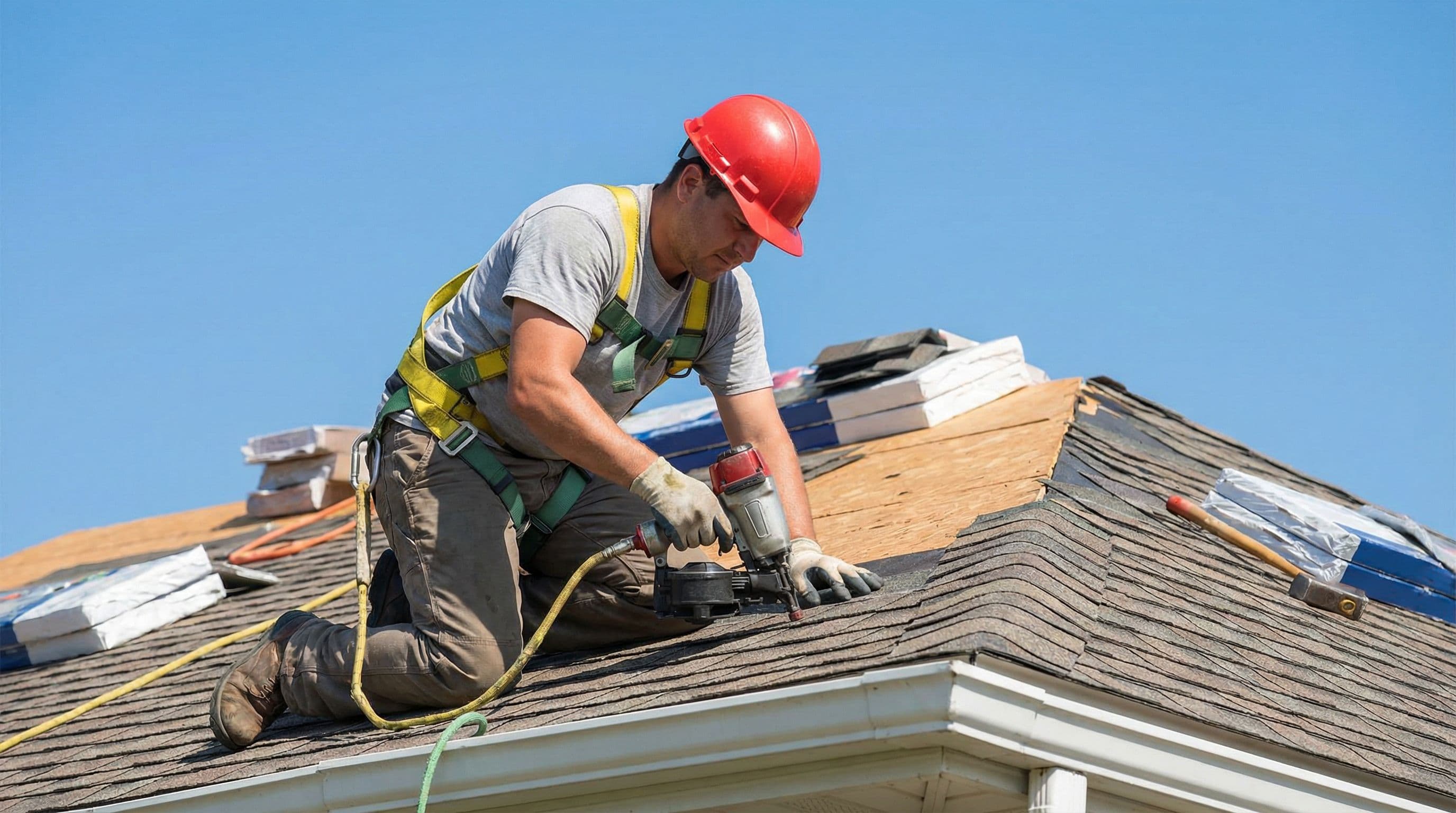

Why Roofing Is a High-Risk Trade for Insurance
Roofing consistently ranks as one of the most dangerous occupations in the United States. The Bureau of Labor Statistics reports that roofers suffer fatal workplace injuries at a rate significantly higher than the national average for all occupations. Falls from heights are the leading cause of death and serious injury in the roofing industry, and these incidents generate some of the largest workers compensation and liability claims in construction.
Beyond workplace injuries, roofers face enormous property damage exposure. A roofing crew has access to the most vulnerable part of any building, and mistakes during installation or repair can lead to water intrusion that damages the entire structure. Improper flashing, missed nail patterns, and poor membrane installation can cause leaks that go undetected for months, resulting in mold growth, structural rot, and extensive interior damage.
Insurance carriers view roofing as a high-hazard classification, which means premiums are significantly higher than for most other trades. However, the cost of insurance is a necessary investment when you consider that a single fall from a roof or a major leak on a commercial building can generate claims in the hundreds of thousands or even millions of dollars.
Required Insurance for Roofers
General liability insurance is the foundation policy for roofing contractors. This policy can help cover claims when your work causes property damage or bodily injury to third parties. If debris from your tear-off damages a neighbor's car, if a storm exposes a flaw in your installation and causes interior water damage, or if a passerby is injured by falling materials, general liability can help pay for the damages and your legal defense. Some states set general liability requirements for roofing licenses, and general contractors and project owners commonly require proof of coverage before work begins.
Workers compensation insurance is legally required for roofing companies with employees in virtually every state. Roofing has one of the highest workers comp classification rates in the construction industry because of the frequency and severity of falls, heat-related illnesses, and injuries from tools and materials. Workers comp pays for medical treatment, lost wages, disability payments, and death benefits for employees injured on the job.
Commercial auto insurance covers the trucks, trailers, and vehicles your roofing crew uses to transport materials, equipment, and workers to job sites. Roofing vehicles often haul heavy loads of shingles, underlayment, and ladders, making proper commercial auto coverage essential. Your personal auto policy typically will not cover these business uses.
Additional Coverage Roofers Should Carry
Completed operations coverage, which is part of your general liability policy, is critically important for roofers. Many roofing defects do not become apparent until months or years after the work is completed, when a heavy rain or wind event exposes installation errors. Completed operations coverage can help pay for property damage claims that arise from your finished work. Make sure your policy includes this coverage and that the limits are adequate.
Inland marine insurance can help protect your tools, equipment, and materials while in transit or at a job site. Roofing equipment including nail guns, compressors, ladders, safety harnesses, and generators represents a significant investment. Standard property insurance typically does not cover these items when they are away from your primary business location.
A commercial umbrella policy is strongly recommended for roofing contractors. Falls from roofs and major water damage incidents can generate lawsuits that exceed standard policy limits. An umbrella policy with additional coverage provides a critical safety net for your business.
Surety bonds are required in many states for roofing contractors. A roofing contractor bond guarantees that you will perform work according to your contract and comply with local building codes. The bond amount varies by state and municipality, typically ranging from $10,000 to $50,000.
Coverage Limits for Roofing Contractors
Roofing contractors should carry higher-than-average liability limits due to the high-risk nature of the work. A minimum of $1,000,000 per occurrence and $2,000,000 aggregate in general liability is standard, but many general contractors and commercial clients require higher per occurrence limits from their roofing subcontractors.
Workers compensation coverage must meet state minimum requirements, but the employers liability portion should be at least $500,000 per accident and $500,000 aggregate. Given the severity of fall-related injuries in roofing, higher employers liability limits provide meaningful additional protection.
Commercial auto coverage should include at least $1,000,000 combined single limit. If you tow trailers or haul materials, make sure your policy adequately covers the cargo. Umbrella coverage is recommended for most roofing contractors, with higher limits for those who take on larger commercial projects.
When setting your limits, consider the value of the properties you work on. If you primarily do residential roofing on homes valued at $300,000 to $500,000, your liability exposure is lower than a contractor who works on commercial buildings valued at several million dollars.
Buying Roofer Insurance
Roofing insurance can be challenging to obtain because many standard carriers avoid the roofing classification due to high claim frequency. Get a quote with CPK Insurance and connect with a licensed insurance professional who can help you compare options from participating providers that actively write roofing contractors. Specialty markets and surplus lines carriers often provide options for roofers.
Your safety record is the single biggest factor in your insurance costs. Carriers evaluate your experience modification rate, which reflects your claims history relative to other businesses of similar size in your industry. A clean claims history results in credits that can significantly reduce your premiums, while a poor claims history can make coverage difficult to obtain at any price.
Implement and document a comprehensive safety program. OSHA requires fall protection for workers at heights of six feet or more in construction, and carriers expect roofers to comply with this standard. Personal fall arrest systems, guardrails, safety nets, and regular safety training are all components of a safety program that will help you obtain better insurance rates.
Consider joining a roofing industry association. Some associations offer group insurance programs that provide more competitive rates and broader coverage terms than individual policies. These programs leverage the collective purchasing power of their members to negotiate favorable terms with carriers.
What Drives Roofer Insurance Costs
Roofing sits at the expensive end of contractor insurance for structural reasons. Workers compensation for roofing carries one of the highest classification rates in construction, charged per $100 of payroll, so the premium grows in step with crew size. General liability is rated for the severity of fall and water intrusion claims rather than their frequency, which is why roofers pay more than trades that file more claims but smaller ones.
The mix of work you take on moves the number as much as your size. Steep-slope residential tear-offs, low-slope commercial membrane, and new construction each carry different rates, so accurate job descriptions keep you out of the wrong rating class. Deductible strategy matters too: carrying a higher deductible on equipment coverage frees premium for the liability limits that actually protect the business.
Set against a trade where one fall or one leaking commercial roof can produce a six or seven figure claim, the premium is the cost of staying in business. Compare quotes through CPK Insurance to see options from participating providers that write this challenging class.
Request a Quote Comparison
Enter your ZIP code to compare insurance rates from top carriers.
Updated July 17, 2026