Updated July 16, 2026

Key Takeaways
- List every towing and transport service you perform before requesting quotes, so loading, unloading, winching, and recovery exposures are reviewed correctly.
- Compare the on-hook limit, deductible, valuation method, and exclusions side by side instead of choosing a policy on premium alone.
- Ask in writing whether your policy addresses the specific vehicles you tow most often, especially specialty, modified, low-clearance, or higher-value units.
- Use pre-tow photos, condition notes, and signed release procedures on every job to reduce disputes and support claims handling.
- Review on-hook coverage together with auto liability and any garagekeepers coverage before renewal to catch gaps between transport and storage.
On-Hook Towing Insurance in Kansas
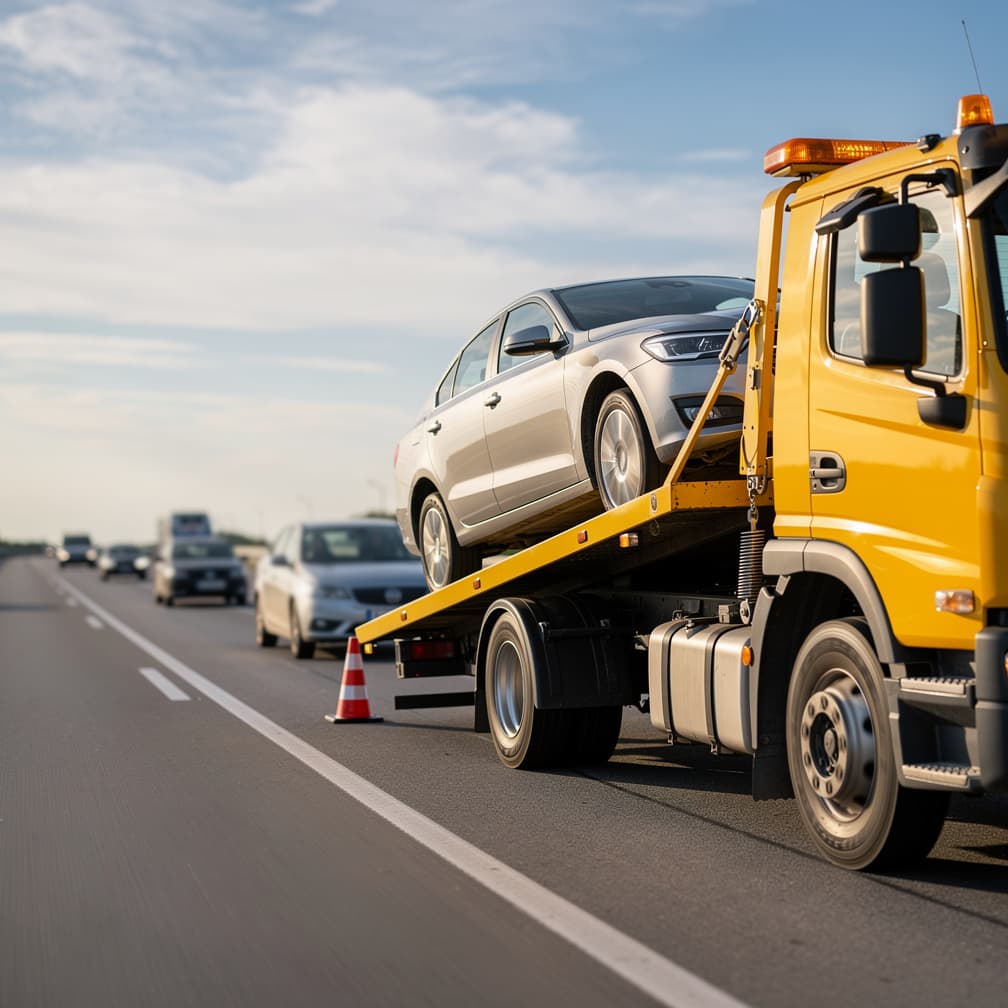
Wind pushes a door against a strap point on an open shoulder. Hail hits a vehicle already loaded on the bed. A recovery call turns messy when weather changes before you clear the scene. If your trucks handle roadside calls, dealer transfers, impounds, and transport across a state where conditions can shift during the same route, those scenarios are worth walking through before you bind. As you compare quotes, focus on the vehicles you move, the loading methods you use, where units are stored between calls, and how your drivers document condition at pickup and delivery.
What On-Hook Towing Insurance Covers
You are looking at whether your policy terms match the way damage can happen during roadside loading, transport on open roads, wheel-lift movement, bed transport, and unloading in changing weather. If your work includes storm-related calls, rural recoveries, or longer transfers between towns, walk through those scenarios one by one with your agent.
The state difference is less about a special form and more about how your operation meets local conditions. Open-road exposure comes into play when a customer vehicle is carried through high wind, blowing debris, or hail, and your policy may cover damage that results. Recovery work creates its own set of risks when a disabled vehicle is pulled from a ditch, shoulder, field entrance, or uneven surface where contact points and shifting weight can lead to a dispute. Storage handoffs become critical when a claim starts during the tow but the customer notices damage only after the vehicle reaches a lot, shop, or destination.
You should also review how your policy handles the kinds of vehicles you actually move. A light-duty roadside unit, a flatbed handling dealer or auction transfers, and a truck that mixes impounds with recovery work can present very different claim patterns. Ask for clear confirmation on vehicle types, service radius, loading methods, and any exclusions tied to unattended units, specialty vehicles, or recovery operations. Schedule-level accuracy is often what separates a smooth claim from a coverage argument. Your schedule is the list of specific trucks, vehicle types, and services your policy covers. If it is wrong, a claim can turn into a dispute over whether the truck or job was covered at all.
Collision on Hook
Covers damage to towed vehicles from collisions during transport.
Comprehensive on Hook
Covers theft, fire, and weather damage to vehicles being towed.
Loading & Unloading
Covers damage during the process of loading and unloading vehicles.
Winching Coverage
Covers damage to vehicles during winching and recovery operations.
Multiple Vehicle
Covers all vehicles on multi-car carriers and rollback flatbeds.
On-Hook Towing Insurance Requirements in Kansas
- Weather can complicate the timeline of a tow loss, so inspection photos and written condition notes should be part of every pickup and delivery.
- If your routes mix city calls with longer rural transport, ask whether your policy wording and service radius accurately reflect that operating pattern.
- Recovery work on shoulders, ditches, field entrances, and uneven surfaces can create different damage allegations than routine scheduled transport, so describe that work clearly.
- A handoff to a repair shop, storage lot, or impound location should include documented acceptance details, because many disputes surface after delivery rather than during the tow.
How Much Does On-Hook Towing Insurance Cost in Kansas?
The price of on-hook coverage usually turns on exposure details, not a simple label on your website. Underwriters want to know what your drivers tow, how often they handle emergency roadside calls, whether you run flatbeds or wheel-lifts, how far units travel, and how often work happens in weather that can change the condition of a customer vehicle before delivery.
Vehicle mix is one of the first cost drivers to review, and the way you secure vehicles also matters. A business with consistent loading procedures, photo documentation, and driver checklists often presents a cleaner risk than one relying on informal habits. Claims history, requested limits, deductibles, and whether you want broader protection for more demanding work all affect pricing as well.
Weather can also influence how an underwriter sees your operation, even without a separate line item. If your trucks regularly work in hail, severe wind, or storm-related roadside conditions, the chance of a disputed damage claim can rise, so your submission needs to show how drivers inspect, photograph, and note condition before movement. It is also smart to compare policy wording carefully before you bind.
Request a Quote Comparison
Enter your ZIP code to compare on-hook towing insurance rates from top carriers.
Business insurance starting at $25/mo
Who Needs On-Hook Towing Insurance?
Any operator who takes possession of another person's vehicle and moves it by tow truck should review this coverage, even if towing is only part of the business. That can include roadside assistance companies, repossession operators, repair shops that run their own tow units, salvage and auction transport operators, and businesses that handle private property impounds or dealer moves.
A business that works both urban calls and longer rural routes may face a wider range of claim situations than a company staying inside one dense service area. One day may involve a simple disabled vehicle pickup in a parking lot. The next may involve a storm-related recovery on a shoulder, a ditch pull, or a transfer across open roads where conditions change the state of the vehicle before drop-off.
This also matters for businesses that do not market themselves primarily as towing companies. If your shop picks up customer vehicles, if your fleet unit moves disabled vehicles between locations, or if your operation handles repossessions and transport under one roof, you still need to ask how damage during the tow itself would be addressed.
On-Hook Towing Insurance by City in Kansas
On-Hook Towing Insurance rates and coverage options can vary across Kansas. Select your city below for localized information:
How to Buy On-Hook Towing Insurance
Build a dispatch-level picture of your operation. List each truck, the towing method it uses, the types of vehicles it handles, and the services attached to that unit. Separate scheduled dealer or shop transfers from roadside calls, impounds, repossessions, and recovery work. If one truck does several kinds of jobs in the same week, say so clearly.
Next, gather the documents that help prove how you control damage risk. That usually includes driver lists, loss runs if available, service area details, photos of equipment, and your inspection process before hookup and after delivery. Because weather can change a claim file quickly, your quote request should explain how drivers document pre-existing damage, note conditions, and photograph the vehicle at each stage. If you use digital dispatch notes or images with timestamps, mention that early.
Then compare quotes on wording, not just price. Ask whether the policy language fits wheel-lift work, flatbed transport, recovery operations, and the vehicle types you actually move. Review deductibles, limits, exclusions, and any restrictions tied to unattended vehicles or specialty units. Before binding, read the schedule line by line and correct anything that oversimplifies your operation. Request a quote through CPK Insurance to compare your options with participating licensed providers.
How to Save on On-Hook Towing Insurance
The most reliable way to lower pressure on your on-hook premium over time is to make claims less likely and easier to defend. Start with condition documentation. Require drivers to photograph each vehicle before hookup, after loading, and at delivery, with close shots of existing damage, wheel position, glass, and low-clearance areas. If weather is part of the call, note it in the dispatch record.
You can also save by tightening how jobs are classified. If scheduled dealer transfers are being quoted the same way as recovery-heavy roadside work, ask for the operation to be described more precisely. Separate trucks by use where possible. Keep service descriptions current. If a unit no longer handles impounds or repossessions, remove that exposure from the submission instead of letting an old application define the account.
Driver controls matter too. Use written securement procedures, refresher training, and a checklist for loading, transport, and unloading. Review near-miss incidents, not just paid losses, because repeated strap, clearance, or handoff problems can signal a future claim. Finally, choose a deductible your business can actually absorb without disrupting cash flow. A low-priced quote can cost more later if exclusions, vague vehicle classes, or weak documentation leave you exposed during a disputed tow loss.
Our Recommendation for Kansas
Review your on-hook coverage the same way you review a difficult dispatch: step by step, with the actual conditions in front of you. Ask for policy wording that matches how your trucks are used, not how the business is summarized on a certificate. If one unit handles dealer transfers and another handles roadside recovery, have those differences reflected in the submission.
Pay special attention to claims involving weather. Conditions can turn a simple tow into a dispute about when damage happened, so your best protection is a repeatable inspection routine with clear driver notes and photos. That matters at pickup, during loading, and again at drop-off. If your drivers are not documenting pre-existing damage consistently, fix that before renewal.
Also review handoffs. Many disagreements start when a vehicle reaches a shop, storage lot, or customer location and damage is noticed later. Make sure your process shows who accepted the vehicle, when it was delivered, and what condition was recorded. If you are comparing quotes, ask each agent to identify any mismatch between your services and the scheduled exposure.
FAQ
Frequently Asked Questions
Kansas tow companies often should. Weather can change quickly, which can make it harder to prove when damage happened. Your policy review should be paired with strong photo documentation, driver notes, and clear pickup and drop-off procedures.
The Kansas Insurance Department serves as the state insurance regulator. It is the right reference point for policy filing questions, complaint channels, and general insurance guidance while you compare on-hook coverage options.
Rural routes can increase claim complexity because recoveries may happen on shoulders, ditches, or uneven approaches, and delivery points may be farther apart. Accurate service descriptions, route details, and condition records become more important during underwriting as a result.
Repair shops that move customer vehicles by their own tow unit should review on-hook exposure carefully. If damage is alleged during loading, transport, or unloading, the fact that towing is secondary to repair work does not remove the risk.
Show each truck's use, the vehicle types moved, service radius, driver list, claims history if available, and the inspection process used before hookup and after delivery. That usually leads to a more accurate quote.
Operators usually should review them separately. A flatbed doing scheduled transfers can present a different damage pattern than a wheel-lift handling roadside calls, impounds, or recovery work. One broad description may miss important underwriting details.
Towing companies can reduce disputes by using photos with timestamps, written securement procedures, weather notes, and signed or otherwise documented delivery handoffs. Those records often matter as much as the policy itself once a customer questions vehicle condition.
On-hook towing insurance may cover damage to a customer vehicle while it is being loaded, attached, carried, winched, or unloaded by your tow truck, depending on the policy terms. Buyers should review collision, fire, theft, weather, and loading-related damage carefully.
Sources
- 1.Kansas Insurance Department(Kansas uses the Kansas Insurance Department as the state insurance regulator, so it is the right reference point for policy filing questions, complaint channels, and general insurance guidance while you compare on-hook coverage options.)
Updated July 16, 2026