







































Updated July 16, 2026

HVAC Technician Insurance in Maine
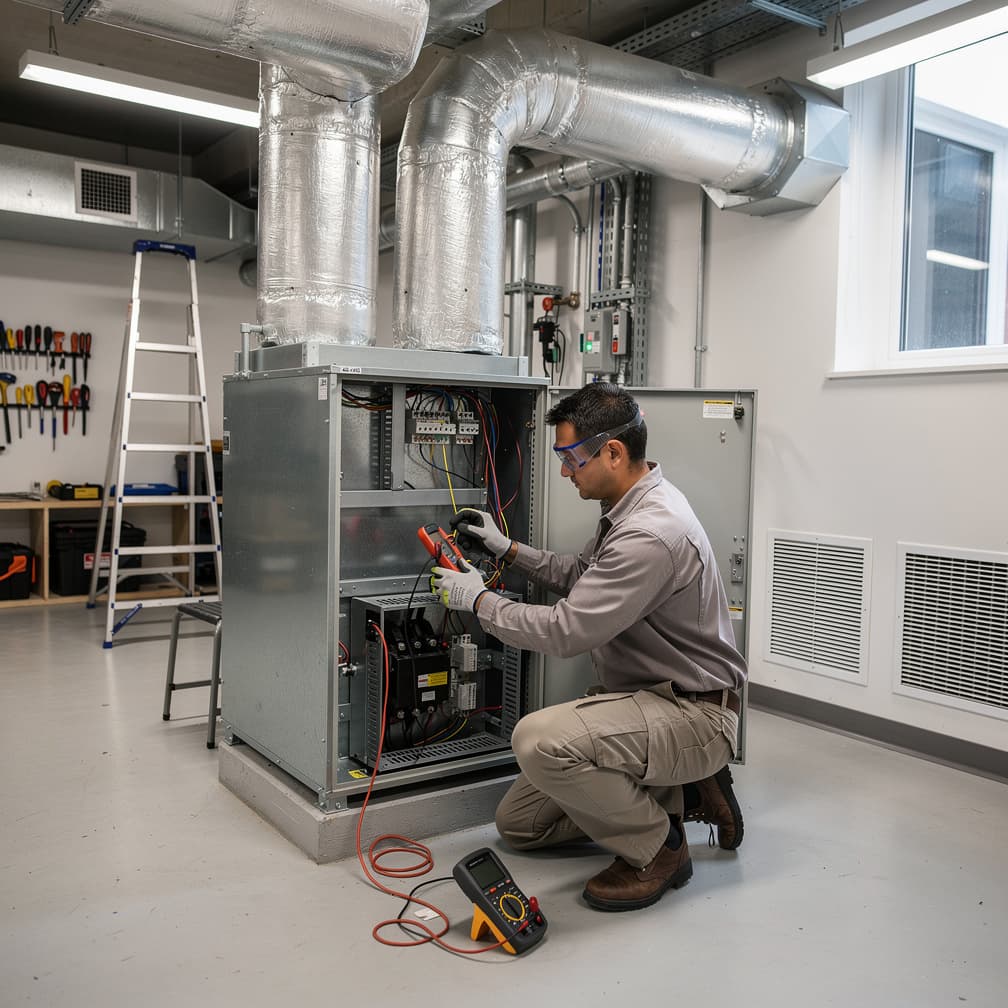
Running an HVAC business in Maine means your daily routine rarely stays simple. You might start with a thermostat complaint or a no-heat call, then find yourself carrying recovery machines, gauges, and replacement parts through narrow entries, around flooring, and beside energized equipment. Your coverage should reflect how that work actually unfolds, including attic crawls, roof access, and basement mechanical rooms, rather than a generic contractor class code.
Maine's workers compensation rules shift the quoting process more than most owners expect. The state generally requires coverage once you have 1 employee, though sole proprietors and partners are exempt. That means your ownership structure and payroll setup affect the quote from the start. Before you request pricing, map out who climbs, what tools stay in each vehicle, and which jobs involve the most customer property exposure.
Climate Risk Profile
Natural Disaster Risk in Maine
Understanding climate-related risks helps determine appropriate insurance coverage levels.
Nor'easter
High
Winter Storm
High
Flooding
Moderate
Coastal Erosion
Moderate
Expected Annual Loss from Natural Hazards
$180M
estimated economic loss per year across Maine
Source: FEMA National Risk Index
How Much Does HVAC Technician Insurance Cost in Maine?
HVAC Technician Insurance is a bundle of separate policies, priced separately. The ranges below are typical figures for Maine for each line, except workers compensation, which is rated per $100 of payroll; a quote prices each one against your own operations.
| Coverage | Typical range | What moves your price |
|---|---|---|
| General Liability Insurance | $80 - $270 per month | Industry and risk classification, annual revenue, number of employees |
| Workers Compensation Insurance | $0.75 - $2.74 per $100 of payroll | Employee classification codes, total annual payroll, experience modification rate |
| Commercial Auto Insurance | $210 - $575 per month | Fleet size and vehicle types, driver records and experience, coverage limits and deductibles |
| Inland Marine Insurance | $20 - $85 per month | Total insured value of the scheduled property, type and age of the equipment, where it is stored and how far it travels |
| Commercial Umbrella Insurance | $60 - $200 per month | Umbrella limit requested, limits carried on the underlying policies, loss history on those underlying policies |
Prices shown are general estimates, not guaranteed rates or quotes. Your actual premium will depend on the insurer, coverage selected, business details, location, claims history, and other underwriting factors. Learn about our pricing methodology.
Common Claims for HVAC Technician Businesses in Maine
A technician carrying tools through a finished home toward an air handler loses control of a heavy piece of equipment in a tight access area. The result is alleged damage to flooring, trim, and nearby customer property.
During a service call, a condensate line or fitting gets disturbed and water escapes into a finished area. The customer then seeks payment for damaged ceilings, walls, or flooring.
Mobile tools left in a work vehicle overnight are stolen before the next morning call. The business has to replace essential gear before the schedule can resume.
Operating a HVAC Technician Business in Maine
- Your service week likely involves multiple short stops, which means constant loading and unloading between vans, homes, and small commercial buildings. A quote built around that rhythm gives you a better fit than one assuming a single fixed location.
- What starts as a simple diagnostic can pull your technician into attics, crawlspaces, rooftops, or boiler rooms. Each of those environments raises the odds of accidental contact with ceilings, flooring, wall finishes, or customer property.
- If you split your time across service, replacement, and light installation, separating those activities in your quote paints a more honest picture than lumping every job into one exposure category.
- Ladders, sheet metal, condensate pumps, and testing equipment all ride between jobs. Your policy should reflect both the customer property exposure and the replacement value of that gear as it moves with the vehicle.
Get Your HVAC Technician Insurance Quote in Maine
Compare rates from multiple carriers. Free quotes, no obligation.
Common Risks for HVAC Technician Businesses
- A completed installation later leads to a water damage claim from a customer or property manager.
- A service call results in slip and fall or customer injury at a home, storefront, or jobsite.
- A repair issue triggers bodily injury concerns tied to carbon monoxide exposure or another third-party claim.
- Tools, gauges, or contractors equipment are damaged or missing while being moved between jobs.
- A service van is involved in a vehicle accident while carrying parts, equipment, or an employee.
- An employee is hurt on the job and the business needs workers compensation support for medical costs and lost wages.
Coverage Considerations in Maine
- General liability insurance deserves close review because your technicians spend time inside occupied homes. A dropped tool or scratched finish can turn a minor mishap into a costly claim.
- Workers compensation insurance should be checked against your actual crew setup. Maine generally requires it when you have one employee, while sole proprietors and partners are exempt.
- Inland marine insurance is worth itemizing carefully when your mobile equipment moves in and out of vehicles all week rather than sitting at a fixed shop.
- Commercial umbrella insurance can make sense when you work in higher value homes or busier commercial settings where one property damage claim may push beyond the primary policy limits you selected.
Preparing for Your HVAC Technician Insurance Quote in Maine
Put together a current list of every vehicle used for HVAC work, including who drives each one and whether it carries tools, refrigerant equipment, ladders, or stocked replacement parts.
Break down your work by service calls, repair, replacement, and installation so the quote reflects your real job mix instead of a broad contractor description.
Gather payroll details and ownership structure before quoting, because Maine workers compensation rules differ for sole proprietors, partners, and businesses with employees.
List your mobile equipment by type and approximate value, especially the tools and instruments that travel between jobs every day.
What Happens Without Proper Coverage?
Think about how an HVAC claim actually develops. A technician carries equipment through a lobby and is later blamed for gouged flooring. A ladder set near a storefront entrance becomes a slip and fall allegation. A repair that seemed complete gets blamed weeks later for water damage after a condensate line backs up. Installations raise the stakes further because more components are removed, connected, tested, and left in service after you drive away.
The decision criteria are practical. If completed work stays in service under your name, ask how post-job claims would be handled before you bind anything. If one van going down would idle a crew, weigh how a vehicle loss ripples into missed calls and delayed installs, not just the repair bill. If a recovery machine or diagnostic setup disappearing from a van would stop tomorrow's schedule, price that replacement risk honestly. And if a landlord, general contractor, or commercial account is asking for higher limits on a certificate, resolve that before you sign the work order, because the job will not start without it.
Crew injuries deserve the same clear-eyed look. Strains from lifting condensers, cuts from sheet metal, ladder falls, and heat stress in attics are routine exposures in this trade, and losing one technician cuts production capacity while booked jobs pile up.
A good next step is to gather your service mix, payroll, vehicle list, and tool schedule, then request a quote built around how your crews actually operate.
Recommended Coverage for HVAC Technician Businesses
Based on the risks and requirements above, hvac technician businesses need these coverage types in Maine:

General Liability
Essential coverage for every business, protect against third-party bodily injury, property damage, and advertising claims.

Workers Compensation
Help cover your employees' medical expenses and lost wages for work-related injuries and illnesses.

Commercial Auto
Protect your business vehicles and drivers with comprehensive commercial auto coverage.

Inland Marine
Protect tools, equipment, and goods in transit or stored at locations away from your primary premises.

Commercial Umbrella
Extend your liability limits beyond your primary policies for extra protection against catastrophic claims.
HVAC Technician Insurance by City in Maine
Insurance needs and pricing for hvac technician businesses can vary across Maine. Find coverage information for your city:
Insurance Tips for HVAC Technician Owners
Separate service, maintenance, and installation work before you request a quote, because each activity changes your liability profile and the way underwriters view completed operations exposure.
Review your largest customer contracts and work orders for insurance language before binding coverage, especially if they require higher liability limits or certificate wording you need to satisfy.
Build a current tool and equipment schedule that includes diagnostic gear, recovery machines, vacuum pumps, meters, and other mobile items, so inland marine limits match realistic replacement needs.
Match workers compensation classifications to actual field duties, because a business with install crews, helpers, and service technicians should not be described as if everyone performs the same work.
List every titled vehicle, regular driver, and storage arrangement, including vans kept at employee homes, so your commercial auto quote reflects how the fleet is really used.
Ask how completed operations is being considered if you perform repairs, replacements, or system modifications, because many HVAC disputes are reported after the technician has already left the property.
Review umbrella limits when you move into multifamily, retail, office, or larger residential jobs, since one serious injury or property damage claim can outgrow a smaller primary liability limit.
FAQ
Frequently Asked Questions About HVAC Technician Insurance in Maine
Maine's workers compensation rules affect the quote more than anything else. The state generally requires coverage once you have an employee, while sole proprietors and partners are exempt. Your quote should match your ownership structure, payroll, and whether anyone besides you is on the crew.
List the mobile equipment that actually travels between jobs rather than relying on one rough total. When you identify items by type and approximate value, the quote becomes more useful because the coverage fits what your crew actually carries.
Umbrella insurance is worth a look when your jobs involve occupied homes, commercial spaces, or higher value property. A single injury or damage claim in those settings could exceed the limits on your general liability or commercial auto coverage.
The equipment that actually travels matters most. Identify your mobile tools by type and value so the coverage fits what your crew really carries, rather than using one rough total.
The Maine Bureau of Insurance is the right starting point for state level questions and requirements. Policy terms still need careful review, but the regulator can point you toward the rules that apply to your business.
The usual review covers general liability, workers compensation, commercial auto, inland marine, and a commercial umbrella. The right mix depends on whether you mainly handle service calls, full system replacements, or a blend of residential and commercial work.
It can, through the completed operations part of the policy, which is the piece to examine for claims that surface after the repair or installation is done. Check how your terms treat post-job allegations tied to your work before you bind.
Often, yes. Gauges, recovery machines, meters, and other equipment move between the shop, vehicle, and job site, and a vehicle policy is not designed to address every tool loss scenario, so the two policies should be compared together.
Sources
- 1.Maine Bureau of Insurance(Maine's insurance regulator is the Maine Bureau of Insurance.; Maine generally requires workers compensation when your business has 1 employee, while sole proprietors and partners are exempt.)
Updated July 16, 2026