







































Updated July 10, 2026

Towing Company Insurance in Maryland
A towing business in Maryland has to manage more than dispatch, recovery, and roadside response. You may be moving disabled cars on crowded streets in Annapolis, working near the Baltimore-Washington corridor, storing vehicles in a yard that can be exposed to flooding, or handling service calls during hurricane season and winter storms. Those conditions make tow truck insurance in Maryland more than a paperwork item, it is part of how you protect trucks, customer vehicles, and day-to-day operations. A towing company insurance quote in Maryland should reflect your fleet size, whether you do roadside assistance, whether you store vehicles, and whether you need on-hook liability coverage or garagekeepers coverage. It should also line up with Maryland’s commercial auto minimums, workers’ compensation rules for businesses with employees, and the proof-of-coverage expectations that can come up in commercial leasing. The goal is to match insurance to how your operation actually works, so you can compare options with fewer surprises and request coverage that fits your routes, equipment, and service area.
Climate Risk Profile
Natural Disaster Risk in Maryland
Understanding climate-related risks helps determine appropriate insurance coverage levels.
Hurricane
High
Flooding
High
Severe Storm
Moderate
Winter Storm
Moderate
Expected Annual Loss from Natural Hazards
$680M
estimated economic loss per year across Maryland
Source: FEMA National Risk Index
Risk Factors for Towing Company Businesses in Maryland
- Maryland towing operators face vehicle accident exposure on busy routes, where tow trucks, customer vehicles, and traffic flow can all increase liability and property damage claims.
- Hurricane and flooding conditions in Maryland can interrupt towing schedules, affect fleet coverage needs, and create cargo damage concerns for vehicles being transported or stored.
- Customer property damage during service calls is a Maryland-specific concern for towing businesses, especially when a tow operator is moving a disabled vehicle or working in tight roadside spaces.
- Severe storm and winter storm conditions in Maryland can raise collision risk for tow trucks and increase the need for comprehensive protection and roadside assistance insurance.
- Maryland operations that store vehicles or handle impounds can face garagekeepers coverage exposure if a customer’s vehicle is damaged while in the business’s care, custody, or control.
How Maryland compares with the national baseline
Uninsured drivers
14.1% vs 11.6% baseline
About 14.1% of Maryland drivers are estimated to be uninsured, above the 11.6% average across states.
Fatal crashes per 100 million miles
1.08 vs 1.33 baseline
Maryland sees about 1.08 fatal crashes per 100 million miles driven, below the national average of 1.33.
Property crime per 100,000 residents
2,280 vs 2,200 baseline
Property crime in Maryland runs above the national average, at 2,280 vs 2,200 incidents per 100,000 residents.
Blue bar: Maryland. Gray line: national baseline.
How Much Does Towing Company Insurance Cost in Maryland?
Towing Company Insurance is a bundle of separate policies, priced separately. The ranges below are typical figures for Maryland for each line, except workers compensation, which is rated per $100 of payroll; a quote prices each one against your own operations.
| Coverage | Typical range | What moves your price |
|---|---|---|
| Commercial Auto Insurance | $1,100 - $3,800 per month | Fleet size and vehicle types, driver records and experience, coverage limits and deductibles |
| Garage Keepers Insurance | Varies | Quoted individually based on your operations and limits |
| On-Hook Towing Insurance | Varies | Quoted individually based on your operations and limits |
| General Liability Insurance | $150 - $500 per month | Industry and risk classification, annual revenue, number of employees |
| Workers Compensation Insurance | $0.75 - $2.74 per $100 of payroll | Employee classification codes, total annual payroll, experience modification rate |
Prices shown are general estimates, not guaranteed rates or quotes. Your actual premium will depend on the insurer, coverage selected, business details, location, claims history, and other underwriting factors. Learn about our pricing methodology.
What Maryland Requires for Towing Company Insurance
Non-compliance can result in fines, loss of contracts, and personal liability:
- Maryland commercial auto minimum liability is $30,000/$60,000/$15,000, so towing companies should confirm their tow truck insurance meets or exceeds those limits before quoting.
- Workers' compensation is required in Maryland for businesses with 1+ employees, with exemptions for sole proprietors, partners, and corporate officers, so towing operators should verify their status before binding coverage.
- Maryland businesses are often expected to maintain proof of general liability coverage for most commercial leases, which can matter when a towing company keeps office, yard, or storage space.
- Coverage for on-hook liability coverage in Maryland should be confirmed in writing if the business tows customer vehicles, since that exposure is distinct from standard commercial auto insurance for towing companies.
- Garagekeepers coverage in Maryland should be reviewed if the operation stores, parks, or secures customer vehicles between service calls, impound handling, or repairs.
- The Maryland Insurance Administration regulates the market, so towing company insurance requirements in Maryland should be matched to policy forms, endorsements, and documentation requested by carriers.
| Requirement | What Maryland law says |
|---|---|
| Auto liability minimums | $30,000/$60,000/$15,000 (bodily injury per person / per accident / property damage). These floors apply to personal and business vehicles alike; lenders and contracts often require more. |
| Workers compensation | Generally required once you have your first employee. Some roles are exempt, so confirm current thresholds before you hire. |
| Where to verify | Maryland Insurance Administration publishes current requirements, consumer guides, and license lookups. |
Get Your Towing Company Insurance Quote in Maryland
Compare rates from multiple carriers. Free quotes, no obligation.
Common Claims for Towing Company Businesses in Maryland
A tow truck in Annapolis is struck while responding to a roadside call in wet weather, leading to collision damage, vehicle accident claims, and possible legal defense needs.
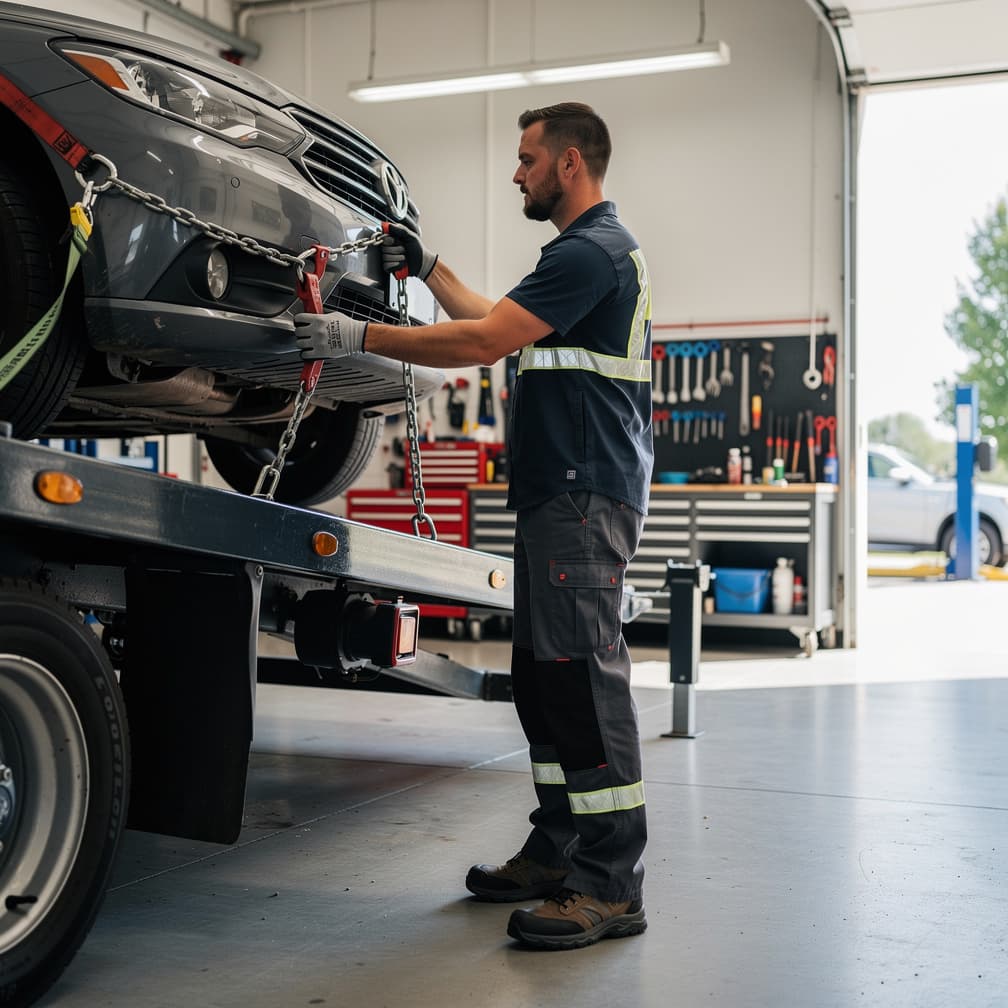
A customer vehicle is damaged while being loaded or unloaded during a tow on a busy Maryland roadway, creating an on-hook liability coverage question and a property damage claim.
A vehicle stored at a Maryland towing yard is damaged during a storm or flooding event, which may trigger garagekeepers coverage or comprehensive considerations depending on the policy.
Preparing for Your Towing Company Insurance Quote in Maryland
Have your vehicle count ready, including whether you run a single tow truck or a fleet, plus how each unit is used for towing or roadside assistance.
Gather your service details, such as whether you handle local towing, long-distance moves, impounds, storage, or roadside assistance insurance needs.
List your current coverage choices, including liability limits, collision, comprehensive, on-hook liability coverage, and garagekeepers coverage if applicable.
Prepare business and location details, including your Maryland service area, yard or storage location, employee count, and any lease or proof-of-coverage requirements.
Coverage Considerations in Maryland
- Commercial auto insurance for towing companies in Maryland should be the starting point because it addresses liability, bodily injury, property damage, collision, and comprehensive needs tied to tow trucks.
- On-hook liability coverage in Maryland should be considered if you tow customer vehicles, because it helps address cargo damage exposure while a vehicle is attached to the truck.
- Garagekeepers coverage in Maryland is worth reviewing if you store, park, or protect customer vehicles at your lot, yard, or repair space.
- General liability insurance can help with third-party claims such as slip and fall incidents, customer injury, and advertising injury, while workers' compensation addresses workplace injury, medical costs, lost wages, rehabilitation, and OSHA-related concerns when you have employees.
What Happens Without Proper Coverage?
Towing creates liability in moments that move fast and leave little room to reconstruct what happened later. A customer may say the vehicle was damaged before your driver arrived, then claim the damage happened during loading. A recovery on a crowded shoulder can involve traffic control, hurried decisions, and limited visibility. Once the vehicle reaches your lot, a separate dispute can start over storage, access, keys, personal property, or condition at release. Insurance is part of how you keep one difficult call from turning into a business-threatening loss.
You may also need towing company insurance because other parties expect proof of coverage before they trust you with work. Motor clubs, repair shops, property managers, lenders, municipalities, and commercial fleets often want certificates and may ask for specific limits or policy types. If you sign service agreements without checking those requirements against your actual policies, you can end up winning the account but carrying a gap where the contract puts responsibility on you.
Documentation is your quiet defense. Condition photos at hookup, signed releases, key logs, and camera coverage in the yard decide many disputes before an adjuster gets involved, and insurers price operations that can prove their process differently than ones that cannot. The coverage mix matters, but so does being able to show what actually happened on the shoulder and in the yard.
Growth can increase the need for a better-structured policy even if your claim history is clean. Adding a second shift, taking police rotation calls, expanding into recoveries, storing more vehicles, or hiring drivers with different experience levels all change the account. So does using personal vehicles for business errands or subcontracting overflow calls during storms and weekends. Those are normal operating decisions, but they should trigger a coverage review before the next renewal.
A useful next step is to line up your current policy with your actual workflow. Note who dispatches, who drives, what each truck does, where vehicles are stored, how long they stay, and what contracts require. Then request quotes built around those details, so you can compare terms based on your real towing operation rather than a generic fleet template.
Recommended Coverage for Towing Company Businesses
Based on the risks and requirements above, towing company businesses need these coverage types in Maryland:

Commercial Auto
Protect your business vehicles and drivers with comprehensive commercial auto coverage.

Garage Keepers
Protect customers' vehicles while they're in your care, custody, or control.

On-Hook Towing
Coverage for vehicles being towed or transported on your tow truck.

General Liability
Essential coverage for every business, protect against third-party bodily injury, property damage, and advertising claims.

Workers Compensation
Help cover your employees' medical expenses and lost wages for work-related injuries and illnesses.
Towing Company Insurance by City in Maryland
Insurance needs and pricing for towing company businesses can vary across Maryland. Find coverage information for your city:
Insurance Tips for Towing Company Owners
Ask for each truck to be scheduled in a way that matches its actual job, because a flatbed used for long hauls is not priced the same way as a wheel-lift unit handling short roadside calls.
Weigh on-hook towing insurance against your loading and securement methods, especially if your drivers perform winching, recovery work, or transport vehicles that already have collision damage.
If you store customer vehicles after a tow, compare garage keepers insurance terms against your lot setup, key control procedures, fencing, lighting, and release documentation practices.
Check whether your general liability insurance aligns with how customers, vendors, and claimants enter your office, yard, or storage area during pickups, inspections, and disputed releases.
Discuss hired auto and non-owned auto exposure if employees ever use personal vehicles for errands, parts runs, bank deposits, or customer contact tied to the towing business.
Match workers compensation insurance to the actual duties of drivers and yard staff, including loading, securing, cleanup, traffic exposure, and after-hours recovery work in poor conditions.
Before renewing, compare your policy terms against every service contract you sign, because motor clubs, property managers, and commercial accounts routinely shift responsibility back to the towing operator.
FAQ
Frequently Asked Questions About Towing Company Insurance in Maryland
Coverage commonly starts with commercial auto insurance for towing companies in Maryland, then may add liability, bodily injury, property damage, collision, comprehensive, on-hook liability coverage, garagekeepers coverage, and workers' compensation if you have employees. The right mix depends on whether you tow vehicles, store them, or provide roadside assistance.
Towing company insurance cost in Maryland varies based on truck count, driving radius, service type, prior claims, storage exposure, and the endorsements you choose. The average premium range in the state is $83 to $333 per month, but your quote can vary by operation size and coverage limits.
If your business tows customer vehicles, on-hook liability coverage in Maryland is worth reviewing because it addresses damage to a vehicle while it is being transported. It is not the same as standard auto liability, so you should confirm whether your towing company insurance coverage in Maryland includes it.
Yes, garagekeepers coverage can be relevant if your towing business stores, parks, or safeguards customer vehicles at a yard, lot, or holding area. It is commonly reviewed alongside tow truck insurance in Maryland when the business has custody of vehicles off the roadway.
Yes. A towing company insurance quote in Maryland can be tailored for a single truck, multiple trucks, or a larger fleet coverage setup. The quote process usually looks at how each truck is used, whether you provide roadside assistance, and whether you need endorsements like on-hook liability coverage or garagekeepers coverage.
Five coverages do the heavy lifting: commercial auto, on-hook towing, garage keepers, general liability, and workers compensation. The right mix depends on whether you only tow, also store vehicles, handle recoveries, or dispatch roadside assistance calls.
Only if on-hook coverage is part of the program. The portion insuring your own truck does not extend to the customer vehicle being loaded, secured, or transported; on-hook towing insurance is the piece written for that exposure. Ask specifically how loading, winching, and recovery work are treated under the terms you are quoted.
Yes, holding cars overnight is precisely when garage keepers coverage earns its place. Your care, custody, or control of the vehicle continues after the tow ends, and even short-term storage can produce disputes over damage, theft, access, keys, or condition at release.
Updated March 31, 2026