







































Updated July 10, 2026

Thrift Store Insurance in Michigan
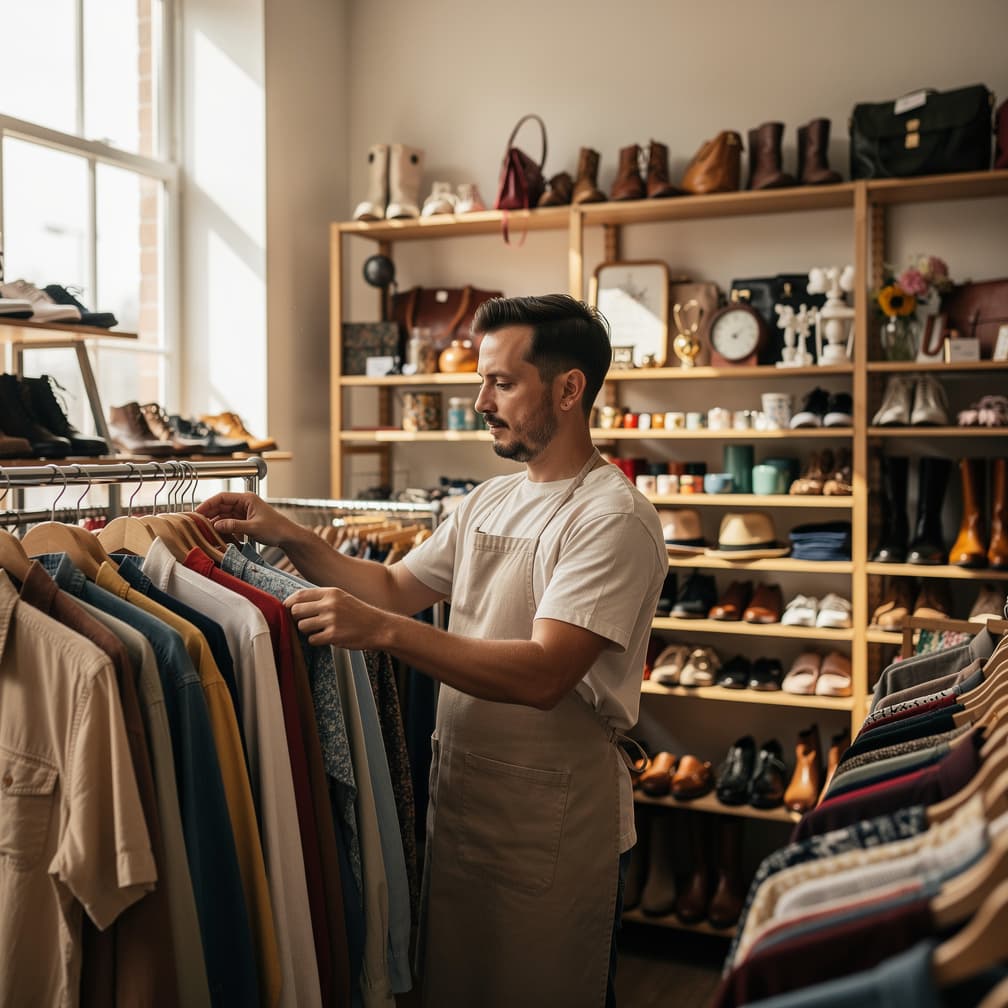
Running a resale shop in Michigan means balancing donated inventory, changing foot traffic, and weather that can interrupt sales fast. A thrift store insurance quote in Michigan should reflect how your space really operates: a downtown retail district may see steady customer traffic and more slip and fall exposure, while a warehouse-style thrift store may need stronger property coverage for inventory, shelving, and equipment. Michigan also brings severe storm and winter storm risk, which can affect storefront damage, closures, and cleanup costs. If your store sits in a strip mall location, shopping center storefront, or mixed-use commercial building, your lease may also ask for proof of general liability coverage. For a secondhand store, the right quote should look beyond the sales floor and account for donated goods, rotating stock, and the possibility of business interruption after a covered loss. The goal is to match coverage to the store layout, the employee count, and the way customers move through the space so the policy fits Michigan retail realities.
Climate Risk Profile
Natural Disaster Risk in Michigan
Understanding climate-related risks helps determine appropriate insurance coverage levels.
Severe Storm
High
Winter Storm
High
Flooding
Moderate
Tornado
Moderate
Expected Annual Loss from Natural Hazards
$1.4B
estimated economic loss per year across Michigan
Source: FEMA National Risk Index
Risk Factors for Thrift Store Businesses in Michigan
- Michigan severe storms can create property damage, building damage, and business interruption exposure for thrift stores with front windows, rooflines, and donated inventory on the sales floor.
- Winter storm conditions in Michigan can lead to slip and fall claims, customer injury, and temporary closures for main street resale shops and shopping center storefronts.
- Flooding in Michigan can affect inventory, equipment, and property coverage needs for mixed-use commercial buildings and warehouse-style thrift stores.
- Tornado risk in Michigan can increase the chance of storm damage, vandalism-like debris losses, and sudden interruptions to retail operations.
- Michigan retail locations with high customer traffic can face third-party claims involving bodily injury, advertising injury, and legal defense costs tied to day-to-day store operations.
- Michigan thrift stores that handle donated goods and rotating inventory may see theft, fire risk, and equipment breakdown concerns that affect replacement planning.
How Michigan compares with the national baseline
Property crime per 100,000 residents
1,870 vs 2,200 baseline
Property crime in Michigan runs below the national average, at 1,870 vs 2,200 incidents per 100,000 residents.
Blue bar: Michigan. Gray line: national baseline.
How Much Does Thrift Store Insurance Cost in Michigan?
Thrift Store Insurance is a bundle of separate policies, priced separately. The ranges below are typical figures for Michigan for each line, except workers compensation, which is rated per $100 of payroll; a quote prices each one against your own operations.
| Coverage | Typical range | What moves your price |
|---|---|---|
| General Liability Insurance | $60 - $170 per month | Industry and risk classification, annual revenue, number of employees |
| Commercial Property Insurance | $65 - $220 per month | Building value and construction type, roof age and condition, fire protection class |
| Business Owners Policy Insurance | $90 - $260 per month | Annual revenue and industry class, building and contents values, square footage and building age |
| Workers Compensation Insurance | $0.75 - $2.74 per $100 of payroll | Employee classification codes, total annual payroll, experience modification rate |
Prices shown are general estimates, not guaranteed rates or quotes. Your actual premium will depend on the insurer, coverage selected, business details, location, claims history, and other underwriting factors. Learn about our pricing methodology.
What Michigan Requires for Thrift Store Insurance
Non-compliance can result in fines, loss of contracts, and personal liability:
- Michigan workers' compensation is required for businesses with 1+ employees, unless a listed exemption applies, so a thrift store should confirm whether the owner structure qualifies before binding coverage.
- Michigan businesses often need proof of general liability coverage for commercial leases, so a quote should be prepared with landlord certificate requirements in mind.
- Michigan commercial auto minimums are $50,000/$100,000/$10,000 if the business uses vehicles, so any delivery or pickup operation should be checked against that standard.
- The Michigan Department of Insurance and Financial Services regulates the market, so policy forms, endorsements, and proof-of-insurance documents should be reviewed for Michigan-specific placement.
- A thrift store quote in Michigan should account for bundled coverage options such as a business owners policy when property coverage and liability coverage are both needed.
- If the store has employees on site, the quote should include workers' compensation details, payroll estimates, and job duties so the carrier can evaluate workplace injury exposure.
| Requirement | What Michigan law says |
|---|---|
| Auto liability minimums | $50,000/$100,000/$10,000 (bodily injury per person / per accident / property damage). These floors apply to personal and business vehicles alike; lenders and contracts often require more. |
| Workers compensation | Generally required once you have your first employee. Some roles are exempt, so confirm current thresholds before you hire. |
| Where to verify | Michigan Department of Insurance and Financial Services publishes current requirements, consumer guides, and license lookups. |
Get Your Thrift Store Insurance Quote in Michigan
Compare rates from multiple carriers. Free quotes, no obligation.
Common Claims for Thrift Store Businesses in Michigan
A customer slips near the entrance during a Michigan winter storm, and the store needs to respond to customer injury, legal defense, and possible settlements under liability coverage.
A severe storm damages a strip mall location roof and soaks donated inventory, leading to building damage, storm damage, inventory loss, and business interruption concerns.
A warehouse-style thrift store in Michigan has a theft incident that affects secondhand store insurance needs for stock replacement and property coverage.
Preparing for Your Thrift Store Insurance Quote in Michigan
Store address and location type, such as downtown retail district, shopping center storefront, strip mall location, or mixed-use commercial building.
Estimated annual revenue, payroll, number of employees, and whether workers' compensation is needed under Michigan rules.
Inventory details for donated goods, resale stock, fixtures, shelving, and equipment so property coverage can be matched to the operation.
Lease requirements, certificate of insurance needs, and any landlord or lender wording that affects liability coverage or bundled coverage.
Coverage Considerations in Michigan
- General liability insurance for bodily injury, property damage, slip and fall, and legal defense tied to customer visits.
- Commercial property insurance for building damage, fire risk, theft, storm damage, inventory, and equipment.
- Business owners policy insurance when bundled coverage is useful for a small business that wants property coverage and liability coverage together.
- Workers compensation insurance for Michigan stores with employees, including workplace injury, medical costs, lost wages, and rehabilitation.
What Happens Without Proper Coverage?
Thrift store claims start with ordinary activity. A customer slips near the entrance on a rainy afternoon, a shelf display shifts when someone pulls an item from the middle, or a donated chair fails when a shopper tests it on the sales floor. Even a small incident can turn into a demand for medical costs, repairs, or legal defense, and secondhand goods raise the odds because condition is never uniform.
Property losses compound quickly in this trade. A fire in the sorting area or storm damage to the roof shuts down intake and sales at the same time, and back room congestion builds fast when processing stops. Valuation is the quiet problem: donated goods with weak intake documentation are hard to prove up after a loss, so record keeping is as much an insurance decision as an operations one.
Outside parties add their own requirements. Landlords often want specific liability limits before signing or renewing, and donation drives, sidewalk sales, or pickup services should be disclosed before binding rather than explained after a claim. The practical next step is to request a quote using your actual intake process, staffing duties, and floor setup so the policy is built around the way your resale business runs.
Recommended Coverage for Thrift Store Businesses
Based on the risks and requirements above, thrift store businesses need these coverage types in Michigan:

General Liability
Essential coverage for every business, protect against third-party bodily injury, property damage, and advertising claims.

Commercial Property
Safeguard your business property, equipment, and inventory against damage and loss.

Business Owners Policy
Bundle property and liability coverage into one convenient, cost-effective policy for small businesses.

Workers Compensation
Help cover your employees' medical expenses and lost wages for work-related injuries and illnesses.
Thrift Store Insurance by City in Michigan
Insurance needs and pricing for thrift store businesses can vary across Michigan. Find coverage information for your city:
Insurance Tips for Thrift Store Owners
Review general liability insurance with your actual customer flow in mind, especially if shoppers carry furniture, test lamps, or move through narrow aisles with fragile merchandise nearby.
Build your commercial property insurance around both sales floor assets and back-room operations, including shelving, tagging stations, point of sale equipment, and stored donations waiting to be processed.
Ask whether a business owners policy fits your store if you want property and liability handled together without losing sight of storage practices and changing inventory.
Describe employee duties in detail for workers compensation insurance, because cashier work, donation sorting, furniture lifting, and pickup assistance do not present the same injury exposure.
Keep intake and inventory records as consistently as possible, since donated goods with weak documentation can be harder to value and explain after a property loss.
Tell the quoting team if you use off-site storage, temporary overflow space, or a warehouse processing area, because those operational details can change how property exposure is reviewed.
Revisit coverage when your store adds donation pickup, expands into larger premises, or increases furniture sales, because each change can alter liability, property, and payroll assumptions.
FAQ
Frequently Asked Questions About Thrift Store Insurance in Michigan
Most Michigan thrift stores start with general liability insurance and commercial property insurance, then add business owners policy insurance if they want bundled coverage. If the store has employees, workers' compensation is required for 1+ employees unless an exemption applies.
Thrift store insurance cost in Michigan varies by store size, location, payroll, inventory value, lease requirements, and coverage choices. The state data provided shows an average premium range of $62 to $257 per month, but actual pricing varies.
Many Michigan commercial leases require proof of general liability coverage. Your landlord may also ask for specific certificate wording, limits, or additional insured wording, so it helps to review lease terms before finalizing a quote request.
Yes. A quote can be tailored for a consignment shop, secondhand store, or used clothing store by adjusting property coverage, liability coverage, and any workers' compensation needs based on the store's layout, staffing, and inventory mix.
Compare coverage limits, deductibles, property coverage for inventory and equipment, general liability terms, workers' compensation details if applicable, and whether the policy supports a commercial lease requirement in Michigan.
The usual starting set is general liability, commercial property, a business owners policy, and workers compensation coverage. Floor layout, storage setup, staffing duties, and how you receive and sell donated goods set the emphasis.
Steady public traffic plus constantly changing merchandise is the reason. Slip and fall claims, customer injury, property damage, and advertising injury allegations all track back to daily store operations, and this is the policy built for them.
It can, subject to policy terms and how values are documented. Because secondhand stock changes constantly, intake records, storage conditions, and valuation method deserve attention before binding, not after a loss.
Updated March 31, 2026