

































Updated July 19, 2026

In Michigan, a manufacturer insures its output twice: the plant that makes it and the liability that ships with it. One rule in Michigan is set by statute, since workers compensation coverage is required from the first employee [1]. Michigan weather adds a second layer, with severe storm exposure showing up in property deductibles and terms before it shows up in premium. The cost drivers below map what actually moves manufacturing quotes in the state.
Recommended Coverage for Manufacturing in Michigan
Manufacturing businesses face unique risks that require specific coverage types. Here are the policies most manufacturing operations need:

General Liability
Essential coverage for every business, protect against third-party bodily injury, property damage, and advertising claims.

Commercial Property
Safeguard your business property, equipment, and inventory against damage and loss.

Workers Compensation
Help cover your employees' medical expenses and lost wages for work-related injuries and illnesses.

Commercial Umbrella
Extend your liability limits beyond your primary policies for extra protection against catastrophic claims.

Inland Marine
Protect tools, equipment, and goods in transit or stored at locations away from your primary premises.

Commercial Auto
Protect your business vehicles and drivers with comprehensive commercial auto coverage.
Manufacturing Insurance Overview in Michigan
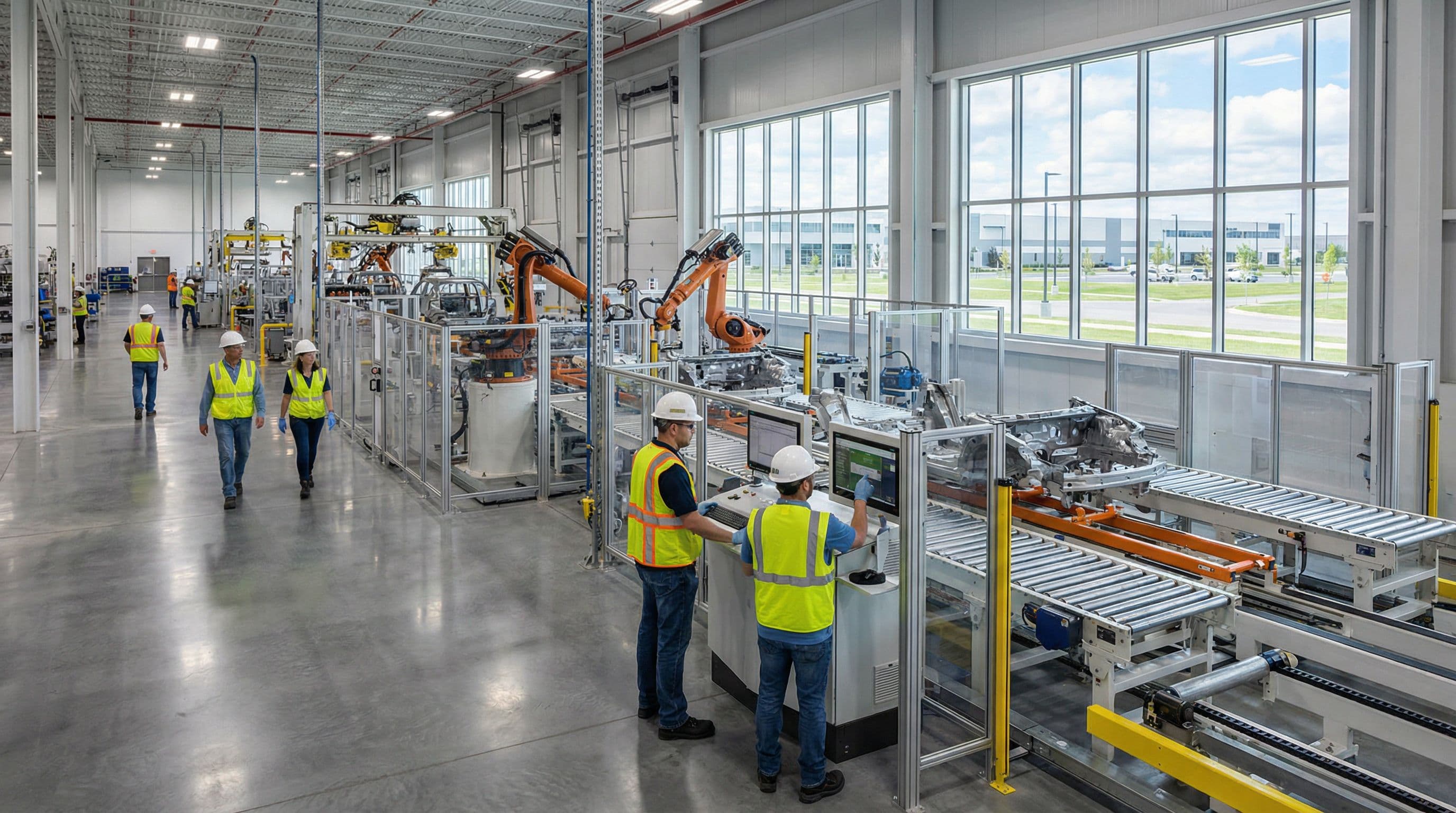
A production line in Michigan can face more than routine wear and tear. A single equipment failure can stop output across the plant, and severe storms can interrupt operations for days. The right policy can help you protect the facilities, machinery, and daily operations that keep your factory running.
The state's industrial base is large, and its premium index of 134 in 2024 reflects a regulatory environment overseen by the Michigan Department of Insurance and Financial Services. A premium index of 134 means coverage in Michigan may cost roughly 34 percent more than the national baseline. If you are reviewing a quote, it helps to know how your building, equipment, payroll, and fleet exposure fit together. Your policy mix will vary by operation, but the goal is always to protect your plant, your people, and your ability to keep producing after a loss.
Why Manufacturing Businesses Need Insurance in Michigan
Michigan manufacturers operate in a state where weather can quickly turn a manageable issue into a shutdown. Severe storms and winter weather are rated as high hazards, with flooding and tornado risk also present. For a plant or fabrication shop, that can mean building damage, equipment breakdown, or business interruption that affects production schedules and customer commitments.
State requirements also matter. Workers compensation is required when a business has at least one employee, with specific exemptions for sole proprietors, partners, corporate officers, and members of LLCs. Commercial auto minimums in Michigan are also set at $50,000/$100,000/$10,000, so any fleet, hired auto, or non-owned auto exposure should be reviewed carefully. A quote should reflect the building, machinery, tools, and the specific production processes in use.
Michigan requires workers' comp for businesses with employees (exemptions may apply: Sole proprietors; Partners). Non-compliance can result in fines and personal liability for owners. Commercial auto minimums are $50,000/$100,000/$10,000.
Key Risks for Manufacturing Businesses
Each of these risks can lead to claims that cost thousands, or more. Make sure your policy addresses every one:
- Product liability and recall costs
- Workplace injuries and safety violations
- Equipment breakdown
- Supply chain disruption
- Environmental contamination
- Property damage from fire or explosion
Cost Factors for Manufacturing Businesses in Michigan
Cost varies based on what you make, the machinery you use, payroll, revenue, building value, claims history, and how hazardous the operation is. Insurers also look at fire protection systems, machine safeguards, environmental controls, fleet size, and whether products move locally or across broader routes.
Michigan's premium index of 134 suggests pricing conditions that can differ from the national baseline, while the state's 242,800 total business establishments create a competitive but varied market. Average manufacturing wages of 50,300 dollars and total industry employment of 473,721 also point to operations that may carry meaningful payroll and staffing considerations. With nearly half a million people working in the sector across the state, even small per-employee rate differences can shift a premium by thousands of dollars annually.
In practical terms, a quote usually depends on the facility's square footage, building materials, equipment values, and whether coverage needs to address equipment breakdown, commercial property, and liability limits for larger loss scenarios. For a more accurate comparison, be ready to share plant location, production type, safety controls, and any fleet or transit exposures. The general liability that most businesses treat as their base policy averages about 170 to 725 dollars per month in Michigan, a bit above the national average. Payroll, revenue, and the exposures specific to your work drive where you land in that range.
Manufacturing businesses typically carry several separately priced policies. The ranges below are typical figures for Michigan for each line, except workers compensation, which is rated per $100 of payroll; a quote prices each one against your own operations.
| Coverage | Typical range | What moves your price |
|---|---|---|
| General Liability Insurance | $170 - $725 per month | Industry and risk classification, annual revenue, number of employees |
| Commercial Property Insurance | $230 - $1,025 per month | Building value and construction type, roof age and condition, fire protection class |
| Workers Compensation Insurance | $0.75 - $2.74 per $100 of payroll | Employee classification codes, total annual payroll, experience modification rate |
| Commercial Umbrella Insurance | $90 - $400 per month | Umbrella limit requested, limits carried on the underlying policies, loss history on those underlying policies |
| Inland Marine Insurance | $45 - $230 per month | Total insured value of the scheduled property, type and age of the equipment, where it is stored and how far it travels |
| Commercial Auto Insurance | $240 - $925 per month | Fleet size and vehicle types, driver records and experience, coverage limits and deductibles |
Prices shown are general estimates, not guaranteed rates or quotes. Your actual premium will depend on the insurer, coverage selected, business details, location, claims history, and other underwriting factors. Learn about our pricing methodology.
State Requirements
Insurance Regulations in Michigan
Key regulatory requirements for businesses operating in MI.
Regulatory Authority
Workers' Compensation InsuranceRequired
Required for employers with 1+ employee.
Exempt categories
- Sole proprietors
- Partners
- Corporate officers
- Members of LLCs
Commercial Auto Minimum Liability
$50,000/$100,000/$10,000 (bodily injury per person / per accident / property damage)
Source: Michigan Department of Insurance, U.S. Department of Labor
What Drives Manufacturing Insurance Costs in Michigan
Product liability and recalls
A defect allegation follows the product wherever it sold. Product liability insurance can help cover injury claims, and recall costs typically need their own endorsement.
The production floor
A single machine failure can idle a line for weeks. Equipment breakdown coverage can help with repair and lost production, and underwriters ask about maintenance programs.
Severe storms
Wind and hail losses set property deductibles here, and carriers may quote storm damage under its own separate deductible. FEMA counts 108 federal disaster declarations for Michigan [2].
Climate Risk Profile
Natural Disaster Risk in Michigan
Understanding climate-related risks helps determine appropriate insurance coverage levels.
Severe Storm
High
Winter Storm
High
Flooding
Moderate
Tornado
Moderate
Expected Annual Loss from Natural Hazards
$1.4B
estimated economic loss per year across Michigan
Source: FEMA National Risk Index
Insurance Tips for Manufacturing Business Owners in Michigan
List every major machine, press, conveyor, CNC unit, and production line so commercial property reflects replacement cost, not just book value.
Review equipment breakdown coverage for motors, compressors, boilers, and control systems that can stop production even when the building itself is intact.
Match workers compensation classifications to each job duty, including machine operators, welders, maintenance staff, forklift drivers, and office employees.
Ask how product liability fits the parts, components, or finished goods you produce, especially if your products are used in other assemblies.
Confirm your policy addresses storm damage, winter storm exposure, and flooding considerations for your specific plant location.
If your operation uses trucks, delivery vans, or vendor pickups, review commercial auto minimums and ask about hired auto and non-owned auto exposure.
Consider commercial umbrella insurance for higher coverage limits if your operation has larger contracts, multiple locations, or exposure to catastrophic claims.
If you move tools, mobile property, or materials between job sites or warehouses, ask whether inland marine insurance fits those items during transit.
Get Manufacturing Insurance in Michigan
Enter your ZIP code to compare manufacturing insurance rates from top carriers.
Business insurance starting at $25/mo
Manufacturing Business Types in Michigan
Find insurance tailored to your specific manufacturing business. Select your business type for coverage recommendations, pricing, and quotes:

Machine Shop Insurance
A machine shop insurance quote helps you compare coverage for CNC work, fabrication, equipment breakdown, and completed-product claims. It’s built for shops that need a fast, tailored path to coverage.

Food Manufacturer Insurance
Get a food manufacturer insurance quote built around contamination events, product recall costs, and production interruptions. Compare coverage for your facility, products, and contracts.

Woodworking Shop Insurance
Get a woodworking shop insurance quote built around fire hazards, heavy equipment, client projects, and shop equipment. Compare coverage for your shop, tools, and customer work.

Printing Company Insurance
Get printing business insurance built for presses, finishing equipment, and client-facing operations. Request a quote to review coverage for equipment failures, premises liability, and job errors.

Textile Manufacturer Insurance
Get a textile manufacturer insurance quote built around looms, dyeing lines, finishing equipment, and the day-to-day risks of fabric and garment production. Coverage can be shaped to your operation, location, and contract needs.

Electronics Manufacturer Insurance
Compare electronics manufacturer insurance options for defect claims, facility risks, and cyber exposures across production and distribution. Request a quote built around how your operation actually runs.

Plastics Manufacturer Insurance
Get a plastics manufacturer insurance quote built around polymer production, chemical exposure, and downstream product claims. Compare coverage options that fit your operation.
Manufacturing Insurance by City in Michigan
Insurance rates and requirements can vary by city. Find manufacturing insurance information for your area in Michigan:
FAQ
Manufacturing Insurance FAQ in Michigan
Coverage varies, but manufacturers commonly review protection for building damage, equipment breakdown, liability, business interruption, tools, mobile property, and third-party claims tied to operations.
Workers compensation is required when a business has at least one employee, with exemptions for sole proprietors, partners, corporate officers, and members of LLCs. Commercial auto minimums are also set at $50,000/$100,000/$10,000.
Cost varies by product type, machinery, payroll, revenue, building value, claims history, safety controls, and fleet exposure. A quote depends on your facility and operations.
Most Michigan manufacturers compare general liability, commercial property insurance, workers compensation, equipment breakdown coverage, and commercial umbrella insurance for their operations.
Share your plant address, production type, building details, machinery list, payroll, annual revenue, fleet information, and any storage or transit exposures so the quote reflects your operation.
Michigan's climate profile shows high severe storm and winter storm risk, so manufacturers should review how their property, equipment, and business interruption coverage responds to those exposures.
Ask whether your limits fit equipment values, building replacement cost, payroll, contracts, and the potential size of legal defense and settlements tied to a major loss.
Start with the pairing that carries most plants: commercial property for the building, machinery, and stock, and general liability for everything that touches the outside world. Workers compensation applies once you have employees, and auto, inland marine, and umbrella coverage enter the program as vehicles, mobile equipment, and larger contracts do.
Sources
- 1.Michigan Department of Insurance and Financial Services(Michigan requires workers compensation coverage from the first employee.)
- 2.FEMA Disaster Declarations(Michigan has 108 federal disaster declarations on record.)
- 3.BLS Quarterly Census of Employment and Wages (2024)(Manufacturing workers in Michigan earn an average of $50,300 a year.)