

































Updated July 16, 2026

Recommended Coverage for Wholesalers & Distributors in Sterling Heights, MI
Wholesalers & Distributors businesses face unique risks that require specific coverage types. Here are the policies most wholesalers & distributors operations need:

General Liability
Essential coverage for every business, protect against third-party bodily injury, property damage, and advertising claims.

Commercial Property
Safeguard your business property, equipment, and inventory against damage and loss.

Commercial Auto
Protect your business vehicles and drivers with comprehensive commercial auto coverage.

Commercial Truck
Comprehensive coverage for trucking operations, from long-haul rigs to local delivery vehicles.

Inland Marine
Protect tools, equipment, and goods in transit or stored at locations away from your primary premises.

Workers Compensation
Help cover your employees' medical expenses and lost wages for work-related injuries and illnesses.
Wholesalers & Distributors Insurance Overview in Sterling Heights, MI
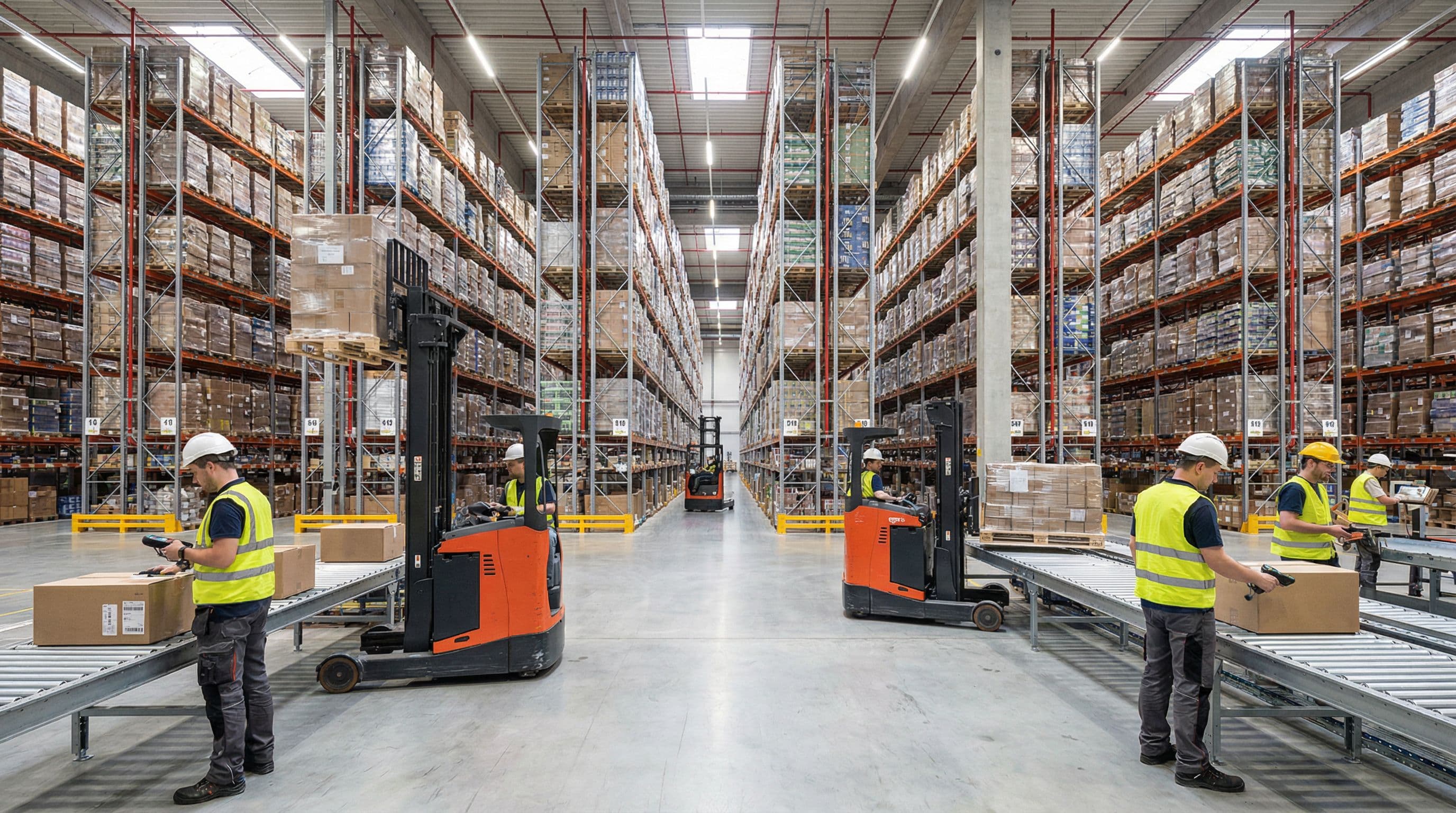
Sterling Heights sits in a busy part of Macomb County where wholesalers and distributors have to keep goods moving through warehouses, delivery routes, and storage yards without losing time to theft, weather, or damage. Manufacturing, healthcare, and retail activity also shape demand for dependable inventory handling and distribution support. That means your coverage should reflect how your operation actually works, whether you manage a warehouse near industrial corridors, run delivery trucks across the metro area, or store inventory that can be exposed to severe weather, property crime, or flooding. The goal is simple: build a quote around the way your stock, fleet, and facility function in Sterling Heights, not a generic template.
Why Wholesalers & Distributors Businesses Need Insurance in Sterling Heights, MI
The city's risk profile includes severe weather, property crime, flooding, and vehicle accidents, and those exposures can affect warehouses, loading areas, delivery trucks, and inventory stored on-site or in transit. With 11% of the city in a flood zone and a crime index of 76, your property premiums may run higher than you expect if your warehouse sits in a vulnerable spot. Sterling Heights also has 4,433 business establishments, which means your delivery schedules likely serve time-sensitive customers who will feel the pinch quickly if a shipment is delayed, stolen, or damaged. The impact can spread from the warehouse to the route and into customer service commitments. Coverage for building damage, theft, storm damage, liability, and business interruption may help keep a disruption from becoming a longer operational setback.
Michigan requires workers' comp for businesses with employees (exemptions may apply: Sole proprietors; Partners). Non-compliance can result in fines and personal liability for owners. Commercial auto minimums are $50,000/$100,000/$10,000.
Key Risks for Wholesalers & Distributors Businesses
Each of these risks can lead to claims that cost thousands, or more. Make sure your policy addresses every one:
- Inventory damage or spoilage
- Cargo theft during transit
- Warehouse fire or natural disaster
- Fleet vehicle accidents
- Product liability claims
What Drives Wholesalers & Distributors Insurance Costs in Sterling Heights, MI
Your premium depends on the size of your warehouse, the value of your inventory, how often goods are in transit, and whether you operate fleet vehicles or delivery trucks. Flood zone exposure at 11% and severe weather risk can also affect pricing for your property and transit coverage. If your operation includes loading docks, multiple drivers, or storage yards, underwriters may also look at liability controls, vehicle use, and loss-prevention practices. A wholesaler with a single location may see a different quote structure than a distributor with several routes, larger stock levels, or equipment moving between sites.
Wholesalers & Distributors businesses typically carry several separately priced policies. The ranges below are typical figures for Sterling Heights for each line, except workers compensation, which is rated per $100 of payroll; a quote prices each one against your own operations.
| Coverage | Typical range | What moves your price |
|---|---|---|
| General Liability Insurance | $100 - $430 per month | Industry and risk classification, annual revenue, number of employees |
| Commercial Property Insurance | $150 - $775 per month | Building value and construction type, roof age and condition, fire protection class |
| Commercial Auto Insurance | $220 - $750 per month | Fleet size and vehicle types, driver records and experience, coverage limits and deductibles |
| Commercial Truck Insurance | $330 - $1,075 per month | Radius of operation, commodities hauled and cargo value, number and value of power units |
| Inland Marine Insurance | $45 - $270 per month | Total insured value of the scheduled property, type and age of the equipment, where it is stored and how far it travels |
| Workers Compensation Insurance | $0.75 - $2.74 per $100 of payroll | Employee classification codes, total annual payroll, experience modification rate |
Prices shown are general estimates, not guaranteed rates or quotes. Your actual premium will depend on the insurer, coverage selected, business details, location, claims history, and other underwriting factors. Learn about our pricing methodology.
State Requirements
Insurance Regulations in Michigan
Key regulatory requirements for businesses operating in MI.
Regulatory Authority
Workers' Compensation InsuranceRequired
Required for employers with 1+ employee.
Exempt categories
- Sole proprietors
- Partners
- Corporate officers
- Members of LLCs
Commercial Auto Minimum Liability
$50,000/$100,000/$10,000 (bodily injury per person / per accident / property damage)
Source: Michigan Department of Insurance, U.S. Department of Labor
Climate Risk Profile
Natural Disaster Risk in Michigan
Understanding climate-related risks helps determine appropriate insurance coverage levels.
Severe Storm
High
Winter Storm
High
Flooding
Moderate
Tornado
Moderate
Expected Annual Loss from Natural Hazards
$1.4B
estimated economic loss per year across Michigan
Source: FEMA National Risk Index
Insurance Tips for Wholesalers & Distributors Business Owners in Sterling Heights, MI
Match your property policy to the value of your warehouse, shelving, stock, and tenant improvements if you operate from a storage or distribution site in Sterling Heights.
Add transit coverage if your goods move between suppliers, warehouses, retail accounts, or job sites across Macomb County and the metro area.
Review your liability coverage if customers, vendors, or delivery personnel visit your facility and there is a chance of slip and fall or customer injury claims.
Use a business auto policy when employees drive company vehicles for pickups, deliveries, or route work in and around Sterling Heights.
Consider truck coverage if you rely on box trucks, straight trucks, or other larger vehicles tied to regular freight movement.
Ask about workers compensation if your operation includes loading, lifting, packing, or equipment handling in a busy distribution environment.
Get Wholesalers & Distributors Insurance in Sterling Heights, MI
Enter your ZIP code to compare wholesalers & distributors insurance rates from top carriers.
Business insurance starting at $25/mo
Wholesalers & Distributors Business Types in Sterling Heights, MI
Find insurance tailored to your specific wholesalers & distributors business. Select your business type for coverage recommendations, pricing, and quotes:

Freight Broker Insurance
Get a freight broker insurance quote built for brokerage and logistics operations that need protection when carrier policies do not fully pay a claim. Coverage can be tailored around contingent cargo, E&O, cyber, and crime needs.

Trucking Company Insurance
Get a trucking company insurance quote built around your routes, vehicles, and cargo. Compare coverage for fleets and owner-operators, including commercial auto, cargo, and liability.

Courier & Delivery Service Insurance
Get coverage built for courier operations that face vehicle accidents, package loss, and commercial auto requirements. Compare options for single vehicles, fleets, and local delivery routes.

Warehouse Insurance
Get a warehouse insurance quote built around inventory value, equipment exposure, and premises risks. Coverage can be tailored for warehouses and fulfillment centers.

Import & Export Business Insurance
Import and export business insurance can help wholesalers and distributors with cargo loss, goods in transit, and liability gaps across the supply chain. Get a quote tailored to your routes, shipment types, and trade operations.
FAQ
Wholesalers & Distributors Insurance FAQ in Sterling Heights, MI
Most operations want a package built around general liability, commercial property, inland marine, and auto coverage, depending on whether they store inventory, move freight, or use warehouse staff and fleet vehicles.
Severe weather, property crime, flooding, and vehicle accidents can all influence the way a quote is built. Insurers may also look at how close your facility is to flood-prone areas, how inventory is stored, and whether your routes involve frequent driving.
Yes. A tailored package can reflect your warehouse storage, inventory movement, fleet vehicles, and cargo in transit so the quote captures the full operation instead of one part of it.
Requirements vary by contract, landlord, lender, and the way your business operates. Many wholesalers and distributors review their liability, property, auto, and workers compensation needs before they finalize coverage.
Inland marine coverage is often used to help address goods moving between facilities, customer sites, or delivery points. It can be paired with property and auto coverage based on how your stock travels.
Six policies cover the standard footprint: general liability, commercial property, commercial auto, commercial truck, inland marine, and workers compensation. Whether you mainly store stock, run deliveries, use heavier vehicles, or move goods through several locations decides which of them carries the load.
Generally not once it leaves the insured location, which is the point of the question. Property forms center on scheduled premises, so goods in transit or temporary storage belong in the inland marine review, especially if drivers move product daily or shipments stage before customer acceptance.
Vehicle size and use decide it. Commercial auto fits lighter delivery units, while commercial truck coverage addresses heavier vehicles, broader hauling exposure, and more demanding route and cargo operations. A mixed fleet can need both, scheduled accurately.