
Updated July 5, 2026

Builders Risk Insurance in Minneapolis
Hennepin County has a large business base, so owners, lenders, and upstream partners often expect a cleaner project file before materials are delivered and work starts. That matters for builders risk insurance in Minneapolis because many jobs here sit inside a dense, schedule-sensitive market where a delayed certificate, missing named insured, or vague statement of completed value can slow permits, financing conversations, or subcontractor coordination. You are often not just insuring a structure under construction, you are documenting a project well enough for other parties to keep moving.
Local expectations also track the property values around the job. With a Minneapolis median home value of $345,600, even smaller residential builds and substantial remodels can involve enough value that owners should review soft costs, temporary protection, theft controls, and how materials are reported once they are staged on site. If your project is in neighborhoods with tighter access, adjacent occupied property, or limited laydown space, ask for a quote built around delivery timing, fencing, and who is responsible for installed versus uninstalled materials before the next draw or mobilization date.
Builders Risk Insurance Risk Factors in Minneapolis
Local site control is the practical issue here. On many urban residential and mixed-use jobs, the exposure is not just the structure itself, but how long materials sit before installation, where they are stored, and how easily crews can secure the site after hours. If your build has limited staging space, alley access, or close neighboring structures, ask the agent to review theft, vandalism, water damage during construction, and debris removal in the context of your actual site plan. Property values raise the stakes on that review. A partial loss on a custom home, infill build, or major renovation can disrupt a meaningful amount of value quickly. That is a good reason to confirm the **completed value basis**, any exclusions tied to vacant or partially occupied property, and whether temporary structures, scaffolding, or materials in transit need to be scheduled differently for this job.
Minnesota has a moderate climate risk rating. Top hazards: Severe Storm (High), Tornado (High), Winter Storm (Very High), Flooding (Moderate). The state's expected annual loss from natural hazards is $1.2B, which influences builders risk insurance premiums and may affect coverage availability in high-risk areas.
What Builders Risk Insurance Covers
A project that receives windows, mechanical equipment, or finish materials early can create a different exposure than one that schedules deliveries close to installation. That is worth addressing up front, because coverage terms often turn on whether property is at the job site, in temporary storage, or already part of the work.
Renovation work deserves extra attention. If you are improving an occupied building, you need to separate existing property from new work, then confirm how the policy treats partially completed areas, temporary enclosures, and materials staged for the next phase. The same applies if the project moves in sections and one area is enclosed while another remains open to the elements.
Weather patterns also affect what you ask the broker to review. If the schedule runs through seasons with wind, hail, heavy rain, or snow exposure, ask how the form handles water intrusion after a temporary opening, damage to stored materials, and cleanup tied to a covered event. Those specifics can shape your coverage more than a generic checklist.
The state regulator is the Minnesota Department of Commerce. Checking a provider's license and complaint history at mn.gov/commerce before you finalize the policy terms helps protect you from unlicensed sellers and gives you a place to turn if a dispute arises.
Coverage Included

Structure Coverage
Covers the building or structure under construction.

Materials on Site
Covers building materials stored at the construction site.

Materials in Transit
Covers materials being transported to the job site.
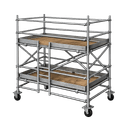
Temporary Structures
Covers scaffolding, fencing, and temporary buildings.

Soft Costs
Covers additional expenses from construction delays due to covered losses.

Equipment Coverage
Covers permanently installed fixtures and equipment.
Industries & Insurance Needs in Minneapolis
Professional, scientific, and technical services account for 16% of establishments in Hennepin County, health care and social assistance 13.1%, and retail trade 9.2%. That mix matters because a large share of local construction work supports tenant improvements, clinic build-outs, office reconfigurations, storefront renovations, and other projects where owners care as much about schedule certainty and documentation as they do about the building envelope itself. If your job touches an occupied commercial space, your builders risk submission should explain phasing, protection of existing property, and when materials become part of the covered project.
In a county with many establishments, project stakeholders are used to formal vendor and insurance review. So if you are bidding commercial work here, prepare a complete file early: contract value, scope, timeline, security measures, and the parties that may need to be shown before access is granted or funds move.
What Makes Minneapolis Different
Documentation discipline is what changes the calculus here. In a dense county business market, projects often involve more parties reviewing the insurance file before a job moves forward, from owners and lenders to property managers and general contractors. That means a builders risk policy is not just a purchase, it is part of the project package that keeps deliveries, access, and draw timing on track.
The local property profile reinforces that point. With median household income at $80,269 in Minneapolis, owners are often making material capital decisions on custom homes, major remodels, and higher-value finish selections. So they tend to notice gaps in completed value, change order handling, and whether fixtures or stored materials are accounted for. The practical takeaway is simple: bring a current budget, construction timeline, and site security plan to the quote request, then compare policy wording against the actual way the job will be built and funded.
Our Recommendation for Minneapolis
Start with the job logistics, not the application form. For a local quote, give the address, project type, completed value, construction start and finish dates, and a short explanation of where materials will be stored before installation. If the job is a remodel or infill build with tight access, note that early so site security and adjacent property concerns can be reviewed in context.
Next, match the policy to the money flow. In a property market with meaningful home values, small errors in reported value or change orders can leave a meaningful gap during construction. Ask specifically how the policy handles budget increases, owner-supplied materials, temporary works, and any period when the structure is partially occupied.
For commercial jobs, build the insurance request the same way you build the submittal package. Include the contract, draw schedule, named parties, and any requirements from the lender or property manager, then request revisions before mobilization instead of after a certificate is rejected.
Get Builders Risk Insurance in Minneapolis
Enter your ZIP code to compare builders risk insurance rates from carriers in Minneapolis, MN.
Business insurance starting at $25/mo
FAQ
Frequently Asked Questions
Minneapolis projects often move through a dense review environment, and owners and upstream parties commonly expect a complete insurance file early. Send value, timeline, site security, and the parties that need to be shown so the job is reviewed the way it will actually move.
Minneapolis has a median home value of $345,600, so even a single-family remodel can involve substantial materials and finish value. That makes it worth reviewing completed value, change orders, owner-furnished items, and when stored materials become part of the covered project.
Hennepin County has a large share of professional services, health care, and retail establishments, at 16%, 13.1%, and 9.2% respectively. That often points to tenant improvements and occupied-space renovations, where phasing, existing property protection, and timing details matter.
Minneapolis quote requests go more smoothly when you send the address, contract value, completed value, start and finish dates, site security plan, and any lender or owner requirements. That gives the underwriter enough detail to review the job as it will actually be built.
Minneapolis has a median household income of $80,269, which can signal owners making larger renovation and finish decisions. For your project, that is a cue to review whether upgraded materials, custom fixtures, and budget changes are reflected before work advances.
The buyer is typically the party the contract makes responsible for insuring the job, often the owner, developer, or general contractor. Start with the insurance clause, then confirm the policy matches the required value, term, and named parties.
Many lenders expect evidence that the project is insured before funds move or construction advances. Review the loan documents and construction contract together, then make sure the policy paperwork reflects the same insured value and project term.
Projects often need closer review of weather-related exposure during framing, dry-in, roofing, and material storage. Ask how the policy addresses damage involving temporary openings, stored property, and delays that change the sequence of work.
Sources
- 1.U.S. Census Bureau, ACS 5-Year Estimates, table B25077(The Minneapolis median home value is $345,600.)
- 2.U.S. Census Bureau, County Business Patterns, Hennepin County(Professional, scientific, and technical services account for 16% of establishments in Hennepin County, health care and social assistance 13.1%, and retail trade 9.2%.)
- 3.U.S. Census Bureau, ACS 5-Year Estimates, table B19013(The Minneapolis median household income is $80,269.)
Updated July 5, 2026