

































Updated July 10, 2026

Wholesalers in Missouri insure goods at rest and goods in motion, and the two need different policies. One rule in Missouri is set by statute, since workers compensation coverage is required once a business reaches 5 employees [1]. On top of that, tornado risk across Missouri shapes the property side of a quote, from deductibles to how carriers treat roofs and stock. Below, the factors that move distribution pricing in Missouri are broken out one by one.
Recommended Coverage for Wholesalers & Distributors in Missouri
Wholesalers & Distributors businesses face unique risks that require specific coverage types. Here are the policies most wholesalers & distributors operations need:

General Liability
Essential coverage for every business, protect against third-party bodily injury, property damage, and advertising claims.

Commercial Property
Safeguard your business property, equipment, and inventory against damage and loss.

Commercial Auto
Protect your business vehicles and drivers with comprehensive commercial auto coverage.

Commercial Truck
Comprehensive coverage for trucking operations, from long-haul rigs to local delivery vehicles.

Inland Marine
Protect tools, equipment, and goods in transit or stored at locations away from your primary premises.

Workers Compensation
Help cover your employees' medical expenses and lost wages for work-related injuries and illnesses.
Wholesalers & Distributors Insurance Overview in Missouri
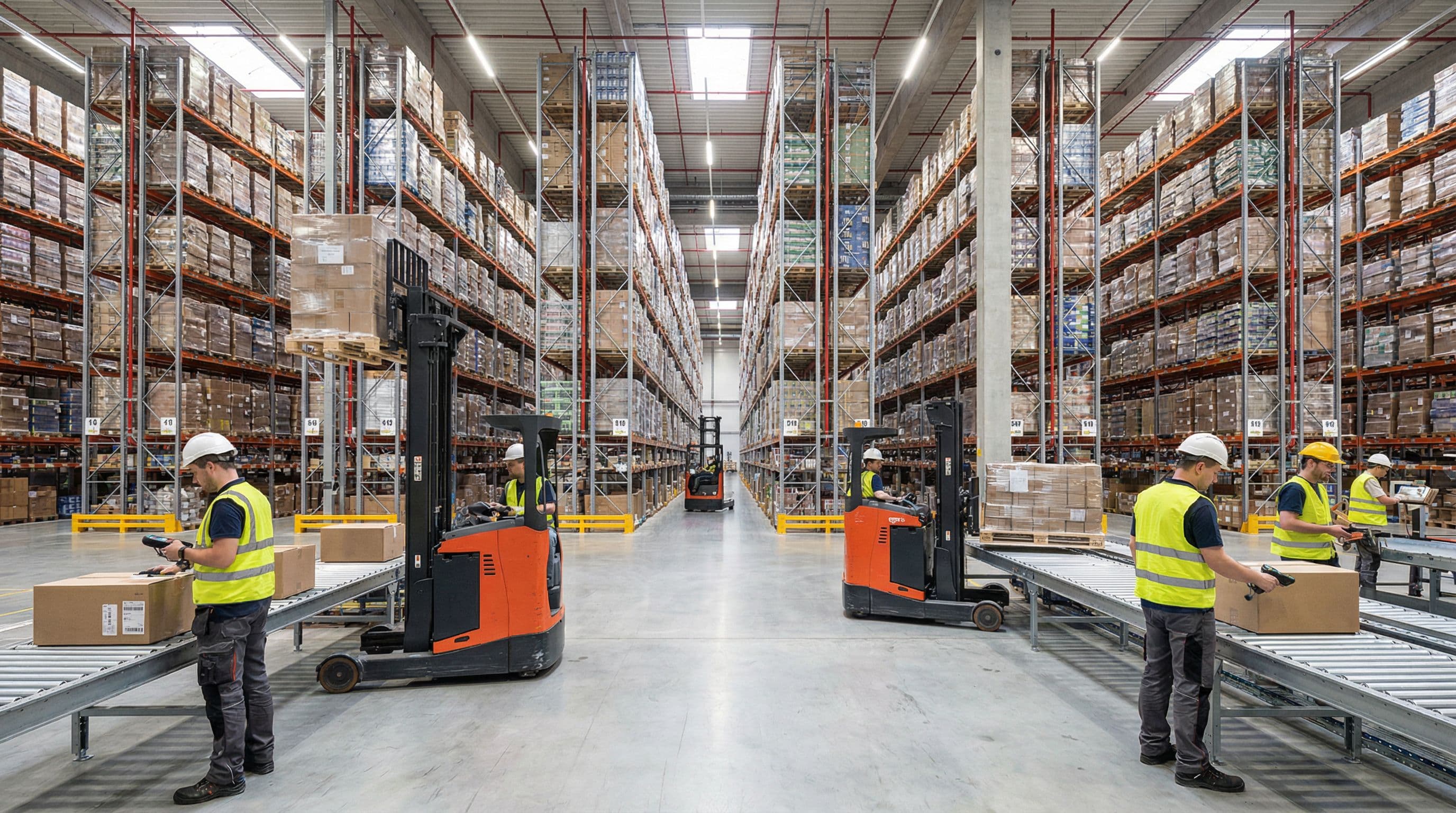
A single pallet, a dock door, or a delivery route can shift your risk profile before lunchtime. Distribution centers across the state juggle storage, transit, fleet, and scheduling pressures in a region where tornadoes and severe storms are a regular threat. Missouri also carries high flooding risk and an overall high climate risk rating, so coverage decisions are rarely one-size-fits-all. Your policy should reflect the specifics of how you store stock, move goods, and manage people on site and on the road.
If your operation runs loading docks, box trucks, tractor-trailers, or forklifts, the right policy mix can help address the property, liability, and downtime exposures that come with moving heavy freight. Missouri also has workers compensation requirements for many employers, and commercial auto minimums that affect vehicle-heavy operations. A strong quote digs into the details that matter: your warehouse footprint, peak inventory, delivery radius, and whether you handle goods that are especially prone to theft, breakage, or spoilage.
Why Wholesalers & Distributors Businesses Need Insurance in Missouri
Running a wholesale or distribution business in Missouri means balancing warehouse, transit, and fleet risks that can shut you down if any one of them goes sideways. A warehouse fire, tornado, severe storm, or flooding event can damage stock, shelving, and equipment, then slow fulfillment while the business rebuilds capacity. Because the state's climate risk profile is high, many operations need to think beyond basic protection and match limits to how much inventory is on hand at peak periods, not just average levels.
The Missouri Department of Commerce and Insurance oversees the state market, and businesses also need to account for state workers compensation rules. Workers compensation is generally required once a business has 5 or more employees, with listed exemptions for sole proprietors, partners, farm workers, and domestic workers. That matters for distribution centers with warehouse staff, dock activity, and frequent material handling. Commercial auto minimums in Missouri are also part of the picture for companies that use delivery vans or other vehicles.
Coverage planning usually comes down to a few core questions: what can go wrong on your property, what happens if someone gets hurt, and how long can you afford to stop operating. If your business stores goods in Kansas City, St. Louis, Springfield, or other Missouri locations, insurance choices should reflect local operations and shipment flow. The potential for cargo theft or inventory loss while goods are stored or in transit is also worth factoring into your decisions.
Missouri requires workers' comp for businesses with 5+ employees (exemptions may apply: Sole proprietors; Partners). Non-compliance can result in fines and personal liability for owners. Commercial auto minimums are $25,000/$50,000/$25,000.
Key Risks for Wholesalers & Distributors Businesses
Each of these risks can lead to claims that cost thousands, or more. Make sure your policy addresses every one:
- Inventory damage or spoilage
- Cargo theft during transit
- Warehouse fire or natural disaster
- Fleet vehicle accidents
- Product liability claims
Cost Factors for Wholesalers & Distributors Businesses in Missouri
Missouri pricing for wholesalers and distributors depends on the scale and shape of the operation. Key drivers include inventory value, warehouse size and construction, delivery radius, fleet size, product type, and claims history. Businesses handling fragile, flammable, temperature-sensitive, or high-theft goods can see different pricing than a standard dry-goods operation because the loss potential is different. The state's premium index is 98 for 2024, which means Missouri rates run close to the national baseline, but your final cost still varies by location, operations, and limits.
Local conditions also play a role. Roughly 5% of Missouri businesses are small operations, with major industry activity in retail trade, manufacturing, and healthcare-related supply chains. That tells you the freight corridors are crowded, so distribution companies often compete for space and serve a wide mix of customers. Kansas City, St. Louis, and Springfield are the top industry employment centers in the state, so warehouse concentration and delivery patterns may affect risk selection. When underwriters price your policy, they want to see how you run the dock, what controls you have in place, and how your vehicles are used day to day.
For a concrete anchor, general liability for small businesses in Missouri runs about $90 to $400 per month, which sits a bit above the national average. Most wholesale operations layer other coverages on top of that baseline. From there, your total climbs or falls based on headcount, revenue, equipment values, and prior claims.
Wholesalers & Distributors businesses typically carry several separately priced policies. The ranges below are typical figures for Missouri for each line, except workers compensation, which is rated per $100 of payroll; a quote prices each one against your own operations.
| Coverage | Typical range | What moves your price |
|---|---|---|
| General Liability Insurance | $90 - $400 per month | Industry and risk classification, annual revenue, number of employees |
| Commercial Property Insurance | $200 - $1,000 per month | Building value and construction type, roof age and condition, fire protection class |
| Commercial Auto Insurance | $180 - $575 per month | Fleet size and vehicle types, driver records and experience, coverage limits and deductibles |
| Commercial Truck Insurance | $280 - $925 per month | Radius of operation, commodities hauled and cargo value, number and value of power units |
| Inland Marine Insurance | $55 - $310 per month | Total insured value of the scheduled property, type and age of the equipment, where it is stored and how far it travels |
| Workers Compensation Insurance | $0.75 - $2.74 per $100 of payroll | Employee classification codes, total annual payroll, experience modification rate |
Prices shown are general estimates, not guaranteed rates or quotes. Your actual premium will depend on the insurer, coverage selected, business details, location, claims history, and other underwriting factors. Learn about our pricing methodology.
State Requirements
Insurance Regulations in Missouri
Key regulatory requirements for businesses operating in MO.
Regulatory Authority
Workers' Compensation InsuranceRequired
Required for employers with 5+ employees.
Exempt categories
- Sole proprietors
- Partners
- Farm workers
- Domestic workers
Commercial Auto Minimum Liability
$25,000/$50,000/$25,000 (bodily injury per person / per accident / property damage)
Source: Missouri Department of Insurance, U.S. Department of Labor
What Drives Wholesalers & Distributors Insurance Costs in Missouri
Goods in the warehouse
Inventory concentration is the number carriers ask about first. Commercial property insurance pricing follows stock values, construction, and protection systems.
Goods and fleets on the road
Cargo theft and vehicle accidents travel together. Commercial auto insurance typically covers the fleet, and inland marine insurance can help cover freight in transit.
Tornado and wind
Storm claims drive commercial property pricing in this market, and wind or hail damage may carry a separate deductible. Roof age, surface condition, and prior claims all feed the rate, so keep documentation of repairs on hand when quotes are compared.
Payroll and workers compensation
Distribution wages in Missouri average $46,000 a year [2], and workers compensation pricing keys directly to payroll. The rate applied to that payroll varies by class code, so how each role is classified matters as much as headcount.
Climate Risk Profile
Natural Disaster Risk in Missouri
Understanding climate-related risks helps determine appropriate insurance coverage levels.
Tornado
Very High
Severe Storm
Very High
Flooding
High
Earthquake
Moderate
Expected Annual Loss from Natural Hazards
$2.2B
estimated economic loss per year across Missouri
Source: FEMA National Risk Index
Insurance Tips for Wholesalers & Distributors Business Owners in Missouri
Match commercial property limits to peak inventory levels, not average stock, so seasonal surges in your Missouri warehouse are not left underinsured.
Use inland marine coverage for inventory in transit when goods move between warehouses, customer sites, or temporary storage locations across Missouri.
Review truck coverage separately from commercial auto if you use both box trucks and smaller delivery vehicles.
Ask how general liability responds to bodily injury, property damage, and third-party claims tied to dock traffic or customer pickups.
If you store goods in Kansas City, St. Louis, or Springfield, confirm your property coverage reflects local storm, tornado, flooding, and vandalism exposure.
Consider equipment breakdown protection for refrigeration, conveyors, or warehouse systems that keep products moving and stored properly.
Check workers compensation requirements if you have 5 or more employees in Missouri, and verify that your payroll and job duties are described accurately.
If you handle cargo transfer frequently, ask whether your package addresses cargo damage, tools, mobile property, and equipment in transit exposures.
Get Wholesalers & Distributors Insurance in Missouri
Enter your ZIP code to compare wholesalers & distributors insurance rates from top carriers.
Business insurance starting at $25/mo
Wholesalers & Distributors Business Types in Missouri
Find insurance tailored to your specific wholesalers & distributors business. Select your business type for coverage recommendations, pricing, and quotes:

Freight Broker Insurance
Get a freight broker insurance quote built for brokerage and logistics operations that need protection when carrier policies do not fully pay a claim. Coverage can be tailored around contingent cargo, E&O, cyber, and crime needs.

Trucking Company Insurance
Get a trucking company insurance quote built around your routes, vehicles, and cargo. Compare coverage for fleets and owner-operators, including commercial auto, cargo, and liability.

Courier & Delivery Service Insurance
Get coverage built for courier operations that face vehicle accidents, package loss, and commercial auto requirements. Compare options for single vehicles, fleets, and local delivery routes.

Warehouse Insurance
Get a warehouse insurance quote built around inventory value, equipment exposure, and premises risks. Coverage can be tailored for warehouses and fulfillment centers.

Import & Export Business Insurance
Import and export business insurance can help wholesalers and distributors with cargo loss, goods in transit, and liability gaps across the supply chain. Get a quote tailored to your routes, shipment types, and trade operations.
Wholesalers & Distributors Insurance by City in Missouri
Insurance rates and requirements can vary by city. Find wholesalers & distributors insurance information for your area in Missouri:
FAQ
Wholesalers & Distributors Insurance FAQ in Missouri
Most operations start with general liability, commercial property, and workers compensation, then add inland marine and auto coverage based on how much inventory moves and how many vehicles are on the road.
Share your warehouse locations, inventory values, delivery radius, vehicle count, employee count, and the types of goods you handle so the quote can reflect your actual operations.
Pricing comes down to how much inventory you hold, how big your warehouse is, what you ship, how many vehicles you run, and what your claims history looks like.
Workers compensation is generally required for employers with 5 or more employees, and Missouri also sets commercial auto minimums of $25,000/$50,000/$25,000.
Inland marine coverage can help protect inventory in transit. It is often paired with commercial auto or commercial truck coverage when the business uses delivery vehicles.
Commercial property insurance can address building damage and stock losses, while business interruption coverage may help if operations pause during repairs.
Many do. Missouri generally requires workers compensation once a business has 5 or more employees, with specific exemptions listed in state guidance.
Six policies cover the standard footprint: general liability, commercial property, commercial auto, commercial truck, inland marine, and workers compensation. Whether you mainly store stock, run deliveries, use heavier vehicles, or move goods through several locations decides which of them carries the load.
Sources
- 1.Missouri Department of Commerce and Insurance(Missouri requires workers compensation coverage once a business reaches 5 employees.)
- 2.BLS Quarterly Census of Employment and Wages (2024)(Distribution workers in Missouri earn an average of $46,000 a year.)