







































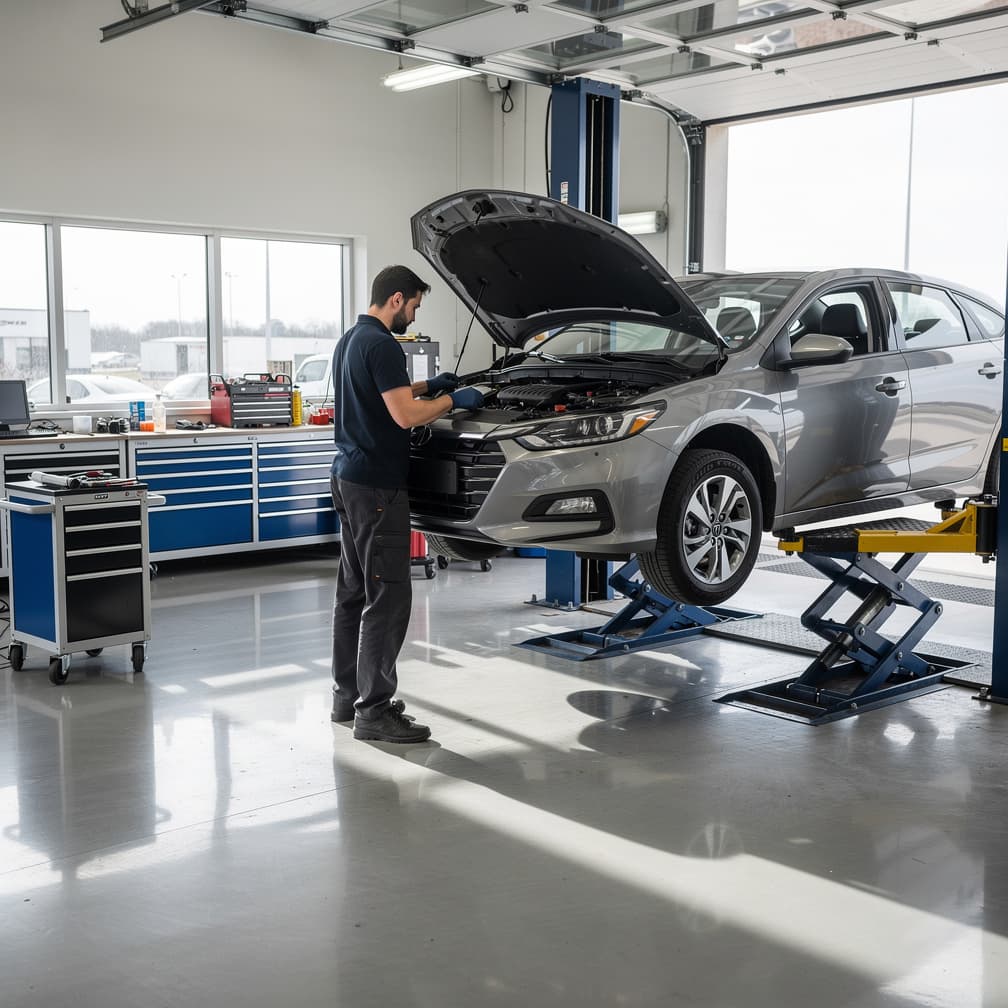

General liability for auto dealerships typically runs between $35 and $130 a month, and where you land inside that band tracks foot traffic, square footage, and claims history. Price is the least interesting part of the decision. Auto dealership insurance in New York really gets rated on how many people touch your property in a day: shoppers on the lot, prospects in the driver's seat, technicians in the lane. Payroll drives one line, inventory value drives another, and the building drives a third. A quote that looks cheap has usually bought a lower limit or a bigger deductible somewhere you did not read closely. Line the limits up side by side first, then look at what each one costs in Kings County.
What Makes New York Different
About 89 auto dealerships operate in Kings County, and a storm does not visit them one at a time. Every lot under the same sky draws on the same adjusters, glass shops, and paint booths. That queue is the real cost of a dense market, and it does not show up in a quote. Ask how a carrier triages a catastrophe week before you ask what it charges in a quiet one. Ask whether inspection happens on site, by photograph, or through a vendor you have never met. Damaged units still have to sit somewhere while they wait, and your lot is already full. Storage, transport, and the order repairs get scheduled in are all decided by somebody else. Buy the claim process, because in a crowded county the process is what you are renting.
Local Risk Factors in New York
Hurricane conditions give a dealership something rare, which is warning. Wind can move a canopy, tear signage off a wall, and push debris across a lot full of units that cannot all be driven inside. Water arriving with that wind is a separate question, since a standard property form typically treats flood as its own purchase. Commercial Property might respond to wind damage to a building in New York, subject to what the policy says about named storms and their deductibles. Read the deductible carefully, because storm deductibles are often written as a percentage rather than a flat figure. Then use the warning: take down what flies, move keys and titles up off the floor, and photograph the rows before the sky changes. Kings County has about 61,500 businesses, and the ones with a written plan move faster.
What Coverage Does an Auto Dealership in New York Need?
General Liability
Landlords and floorplan lenders usually ask about this line first, because it concerns the people who walk your property: a customer crossing the lot, a prospect on the showroom floor, a visitor at the finance desk. It can help cover bodily injury and property damage claims arising from those visits, subject to the limits you bought. Damage to vehicles in your care generally sits elsewhere.
Example: A shopper catches a heel on a cracked curb between two rows and breaks a wrist in New York; general liability could respond to the medical claim and the lawsuit behind it.
Garage Keepers
Your own inventory is not the subject here; somebody else's vehicle is. A car dropped for service, a trade-in on appraisal, a unit waiting for paperwork to clear: this line is generally designed to respond when property in your custody is damaged, stolen, or burned. Where those vehicles park overnight and who holds the keys tend to shape both the price and a carrier's appetite.
Example: A customer's car is left overnight for a brake job and a thief takes it from the side lot; garage keepers might answer for the vehicle you were only holding.
Commercial Property
A fire in a service bay or a storm through the roof stops sales, financing, delivery, and title work at once. This line concerns the building, the office systems inside it, and the equipment you work with, and it can help cover repairs and, where the wording allows, income lost while the doors stay shut. Flood typically sits outside it.
Example: A frozen pipe lets go above the finance office and soaks the desks and the servers below; commercial property could pick up the repairs and the selling days you lose.
Dealer Open Lot
Inventory parked outdoors is the largest thing a dealership owns and the hardest to protect, because it cannot be locked in a room at night. This line is meant for those units against hail, fire, theft, and vandalism. The deductible structure matters as much as the limit, since per vehicle and per event produce very different bills after one storm.
Example: Hail crosses a lot at midnight and dents every roof on the front row; dealer open lot is intended to respond, with the deductible structure deciding what share stays with you.
Workers Compensation
Where the liability lines look outward at customers, this one looks at your own staff: porters, detailers, technicians on a lift, the title clerk at a desk. It could help cover medical costs and lost wages after a work injury, and it is quoted against payroll and job classification. Rules on who must be covered vary by state.
Example: A technician slips on spilled fluid in the service lane at a New York store and misses six weeks; workers compensation is meant to take the medical bills and part of the wages.
How Much Does Auto Dealership Insurance Cost in New York?
Auto Dealership Insurance is a bundle of separate policies, priced separately. The ranges below are typical figures for New York for each line, except workers compensation, which is rated per $100 of payroll; a quote prices each one against your own operations.
| Coverage | Typical range | What moves your price |
|---|---|---|
| General Liability Insurance | $340 - $1,225 per month | Industry and risk classification, annual revenue, number of employees |
| Garage Keepers Insurance | Varies | Quoted individually based on your operations and limits |
| Commercial Property Insurance | $360 - $1,400 per month | Building value and construction type, roof age and condition, fire protection class |
| Dealer Open Lot Insurance | Varies | Quoted individually based on your operations and limits |
| Workers Compensation Insurance | $0.75 - $2.74 per $100 of payroll | Employee classification codes, total annual payroll, experience modification rate |
Prices shown are general estimates, not guaranteed rates or quotes. Your actual premium will depend on the insurer, coverage selected, business details, location, claims history, and other underwriting factors. Learn about our pricing methodology.
What Are the Insurance Requirements for an Auto Dealership in New York?
Workers' comp is generally required once you have your first employee. New York generally requires employers to carry workers' compensation at that point. Common exemptions include sole proprietors of one-person businesses and some ministers and clergy. Confirm current thresholds with your state's workers' compensation agency before you hire.
Flood damage is typically excluded from standard policies. Standard commercial property and builders-risk-type policies typically exclude flood. Given New York's coastal flood exposure, a separate flood policy is worth pricing; FEMA's National Flood Insurance Program is the usual starting point.
Where to verify licensing and coverage rules. The New York State Department of Financial Services publishes consumer guidance and current insurance requirements for New York businesses. When a contract or lease demands specific wording, the New York State Department of Financial Services's guidance is the authoritative place to check.
Get Your Auto Dealership Quote in New York
Compare rates from multiple carriers. Free quotes, no obligation.
Operating in New York
- A service lane at a New York store doubles the ways somebody else's vehicle gets hurt in your care, because a car can be damaged on a lift as easily as in a space.
- Selling paperwork stops when the software does, and an outage that breaks nothing physical can still take a full day of deliveries off the board.
- A dealership in New York that photographs its lot at night once a year has an underwriting file that argues for itself, since lighting and fencing are visible facts.
- An auction agreement can name insurance limits that differ from the ones in your lease, and the strictest clause in the pile is the one setting your real floor.
How to Buy: Advice for New York Owners
Time the buying, because coverage bought late tends to be coverage bought badly. Signing a lease, taking a floorplan line, adding a service lane, and hiring a first technician all change the policy, and each arrives with a deadline attached. Workers Compensation questions start the day you have an employee, not the day payroll first runs. Commercial Property should be revisited whenever a rebuild would cost more than last year's number, which lately is most years. Do that review at a calm moment in New York, ahead of the busy season instead of during it. The New York State Department of Financial Services publishes the current requirements for coverages tied to a dealer license. Renewal is the natural checkpoint, and CPK makes it straightforward to set quotes from participating carriers side by side while you still have time to read them.
FAQ
Auto Dealership Insurance in New York: FAQ
Annual payroll broken out by job type, a current unit count with values, how many customer vehicles you hold, building details and rebuild cost, security measures, and any losses from recent years. A dealership in New York that brings all six gets numbers that mean something back. Estimates get re-rated later, and re-rating rarely moves in your favor. The file takes an afternoon and it changes every quote you receive.
Yes, and by more than most owners expect. Lifts, tools, and technicians add payroll in a higher-rated classification, and they add a second way for a customer's vehicle to be damaged while you are holding it. Adding a lane is a sales decision that quietly edits an insurance file at the next renewal. Describe the store you will run next year, not the one on last year's application.
It depends on why the doors were closed. Support for lost income generally follows physical damage to the property, so a week of ugly weather with an intact building often falls outside it. That distinction catches owners who assume any lost week qualifies. Ask what triggers the income support, how long it runs, and whether a power outage counts. Forms vary, so read the wording written for New York before assuming.
At least at every renewal, and sooner if the floorplan has grown. The figure you reported is the figure a total loss gets settled against, so an optimistic count costs you at exactly the wrong moment. An inflated one simply costs you premium every month. Recount, write the date on the sheet, and send it in before somebody else has to reconstruct it.
It concerns vehicles that belong to somebody else while they sit in your care: a car left for service, a trade-in on appraisal, a unit waiting on paperwork to clear. Garage keepers is generally designed to respond when that property is damaged, stolen, or burned while you hold it. Your own stock is a separate question with a separate form behind it. Ask which vehicles a quote counts and where it assumes they park overnight.
Rarely the way owners expect. A commercial property policy tends to concern the building and what is inside it, while vehicles parked outside are typically handled by a separate open lot form. The distinction bites hardest on the deductible, since a per-vehicle deductible after one hailstorm can multiply across a full row. Ask which structure applies to your New York lot and get that answer in writing before a forecast makes it urgent.
Sources
- 1.U.S. Census Bureau, County Business Patterns (2022), Kings County(Kings County has about 61,500 business establishments.)
- 2.U.S. Census Bureau, County Business Patterns (2023), Kings County(Kings County has about 89 businesses in this trade's category (NAICS group 4411).)
- 3.New York State Department of Financial Services(New York State Department of Financial Services publishes consumer guidance for insurance buyers.)
- 4.FEMA / FloodSmart(Flood coverage is typically purchased separately; FEMA administers the National Flood Insurance Program.)


