







































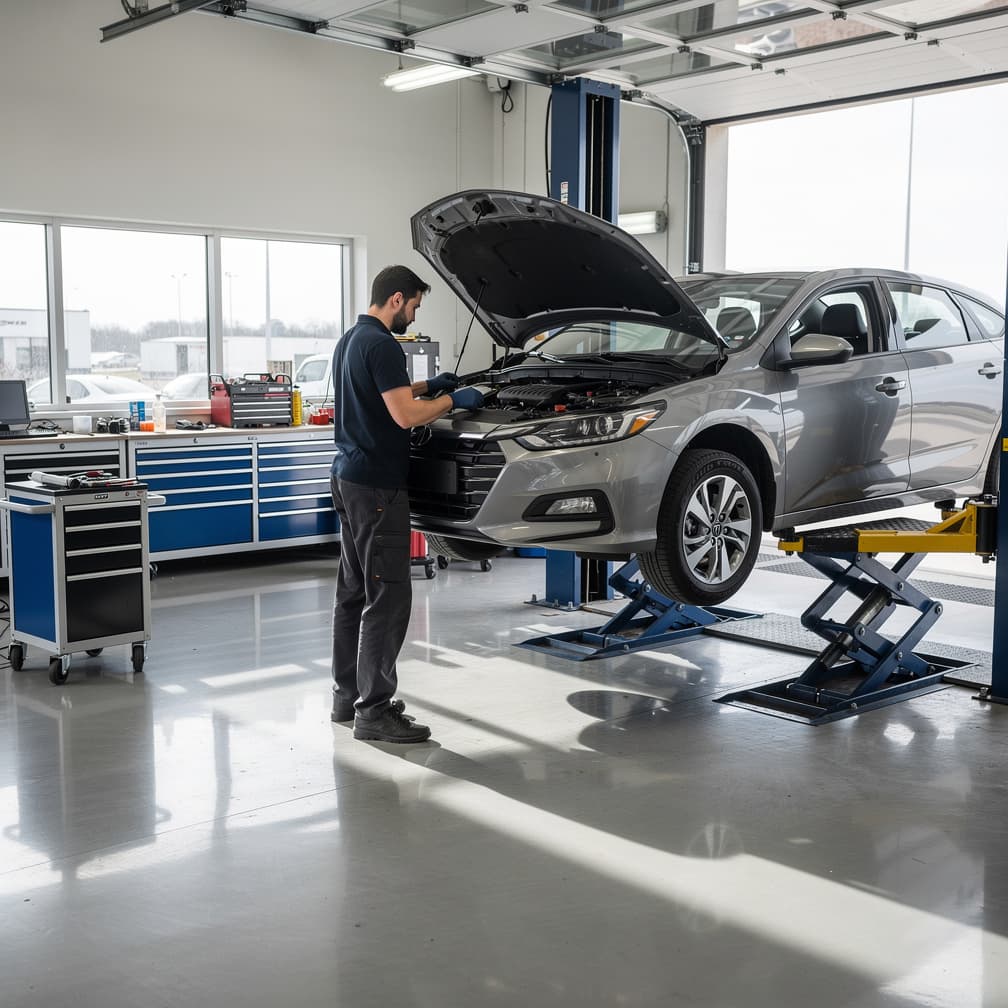

About 184 auto dealerships operate in Mecklenburg County, and one hailstorm puts every one of them in line for the same adjusters, the same glass shops, and the same paint booths. That queue is why the claim handling matters more than the price. Auto dealership insurance in Charlotte should be read for how a carrier deals with a lot full of dented roofs at the same hour as everyone else's lot. Ask whether the deductible applies per unit or per event, because on an open lot that distinction is the whole loss. Ask who inspects, and how soon. Damaged inventory still has to sit somewhere while it waits, so storage is its own question. Cheap is easy to find here; fast is what you need after a bad night.
What Makes Charlotte Different
Certificates of insurance are paperwork until a claim turns them into evidence about what you promised. The certificate itself grants nothing, which surprises people who have been collecting them for years. It describes a policy; the policy decides what happens, and the two can drift apart at renewal. In Mecklenburg County, with about 36,000 businesses, you will send certificates to parties you never meet. Each one files it, and none of them will tell you when their requirement changes. Reissue on a schedule instead of on request, because a request means someone is already waiting. Keep a copy of what you sent and the date, since disputes are usually about timing. Paperwork discipline is unglamorous, and it is the least expensive risk management a dealership can run.
Local Risk Factors in Charlotte
Flood water reaches a dealership from the ground up, and a lot is the lowest place you keep the most valuable thing you own. A few inches across a row can total units by soaking wiring, carpet, and control modules that nobody will certify afterward. The building takes its own damage, and the title cabinet, the finance desk, and the service bays all stop while it dries. The gap worth knowing early: standard commercial property forms typically exclude flood, so rising water is priced and bought as a separate decision in North Carolina. Ask what a quote says about water reaching the vehicles outside as well as the walls, since those are two answers. A dealership in Charlotte that has never taken water is the one most likely to assume it cannot.
What Coverage Does an Auto Dealership in Charlotte Need?
General Liability
Landlords and floorplan lenders usually ask about this line first, because it concerns the people who walk your property: a customer crossing the lot, a prospect on the showroom floor, a visitor at the finance desk. It can help cover bodily injury and property damage claims arising from those visits, subject to the limits you bought. Damage to vehicles in your care generally sits elsewhere.
Example: A shopper catches a heel on a cracked curb between two rows and breaks a wrist in Charlotte; general liability may respond to the medical claim and the lawsuit behind it.
Garage Keepers
Your own inventory is not the subject here; somebody else's vehicle is. A car dropped for service, a trade-in on appraisal, a unit waiting for paperwork to clear: this line is generally designed to respond when property in your custody is damaged, stolen, or burned. Where those vehicles park overnight and who holds the keys tend to shape both the price and a carrier's appetite.
Example: A customer's car is left overnight for a brake job and a thief takes it from the side lot; garage keepers might answer for the vehicle you were only holding.
Commercial Property
A fire in a service bay or a storm through the roof stops sales, financing, delivery, and title work at once. This line concerns the building, the office systems inside it, and the equipment you work with, and it may help cover repairs and, where the wording allows, income lost while the doors stay shut. Flood typically sits outside it.
Example: A frozen pipe lets go above the finance office and soaks the desks and the servers below; commercial property could pick up the repairs and the selling days you lose.
Dealer Open Lot
Inventory parked outdoors is the largest thing a dealership owns and the hardest to protect, because it cannot be locked in a room at night. This line is meant for those units against hail, fire, theft, and vandalism. The deductible structure matters as much as the limit, since per vehicle and per event produce very different bills after one storm.
Example: Hail crosses a lot at midnight and dents every roof on the front row; dealer open lot is intended to respond, with the deductible structure deciding what share stays with you.
Workers Compensation
Where the liability lines look outward at customers, this one looks at your own staff: porters, detailers, technicians on a lift, the title clerk at a desk. It may help cover medical costs and lost wages after a work injury, and it is quoted against payroll and job classification. Rules on who must be covered vary by state.
Example: A technician slips on spilled fluid in the service lane at a Charlotte store and misses six weeks; workers compensation is meant to take the medical bills and part of the wages.
How Much Does Auto Dealership Insurance Cost in Charlotte?
Auto Dealership Insurance is a bundle of separate policies, priced separately. The ranges below are typical figures for Charlotte for each line, except workers compensation, which is rated per $100 of payroll; a quote prices each one against your own operations.
| Coverage | Typical range | What moves your price |
|---|---|---|
| General Liability Insurance | $180 - $675 per month | Industry and risk classification, annual revenue, number of employees |
| Garage Keepers Insurance | Varies | Quoted individually based on your operations and limits |
| Commercial Property Insurance | $190 - $775 per month | Building value and construction type, roof age and condition, fire protection class |
| Dealer Open Lot Insurance | Varies | Quoted individually based on your operations and limits |
| Workers Compensation Insurance | $0.75 - $2.74 per $100 of payroll | Employee classification codes, total annual payroll, experience modification rate |
Prices shown are general estimates, not guaranteed rates or quotes. Your actual premium will depend on the insurer, coverage selected, business details, location, claims history, and other underwriting factors. Learn about our pricing methodology.
What Are the Insurance Requirements for an Auto Dealership in Charlotte?
Workers' comp is generally required once you have 3 or more employees. North Carolina generally requires employers to carry workers' compensation at that point. Common exemptions include sole proprietors, partners, and LLC members. Confirm current thresholds with your state's workers' compensation agency before you hire.
Flood damage is typically excluded from standard policies. Standard commercial property and builders-risk-type policies typically exclude flood damage. Flood exposure varies address by address, so check your premises in FEMA's Flood Map Service Center before deciding; if you sit in a mapped flood zone, a separate policy through the National Flood Insurance Program is the usual starting point.
Where to verify licensing and coverage rules. The North Carolina Department of Insurance publishes consumer guidance and current insurance requirements for North Carolina businesses. When a contract or lease demands specific wording, the North Carolina Department of Insurance's guidance is the authoritative place to check.
Get Your Auto Dealership Quote in Charlotte
Compare rates from multiple carriers. Free quotes, no obligation.
Operating in Charlotte
- An auction agreement can name insurance limits that differ from the ones in your lease, and the strictest clause in the pile is the one setting your real floor.
- Inventory value reported at renewal is the number a total loss settles against, so a count done from memory is really a decision about your own settlement.
- Staff turn over fastest in the jobs that hold keys and cash, and access granted on somebody's first day is rarely revoked on their last one.
- A landlord in Charlotte can demand thirty days notice before cancellation, which only works if the endorsement was actually issued rather than merely requested.
How to Buy: Advice for Charlotte Owners
Custody is the exposure owners forget to price. Every trade-in on appraisal, every car left for service, and every unit waiting on paperwork is somebody else's property parked on your ground. Garage Keepers is the line meant for that situation, and it asks different questions than a policy for your own stock: how many vehicles, where they sit, who holds the keys. Dealer Open Lot handles the units you own, and confusing the two is a common and expensive mistake. Count both populations honestly at the Charlotte store, on a busy afternoon rather than a slow one. The North Carolina Department of Insurance publishes consumer guidance on what to do when a claim gets denied. Once the counts are real, quotes from participating carriers on CPK can be read against the same facts instead of against each other's assumptions.
FAQ
Auto Dealership Insurance in Charlotte: FAQ
It concerns vehicles that belong to somebody else while they sit in your care: a car left for service, a trade-in on appraisal, a unit waiting on paperwork to clear. Garage keepers is generally intended to respond when that property is damaged, stolen, or burned while you hold it. Your own stock is a separate question with a separate form behind it. Ask which vehicles a quote counts and where it assumes they park overnight.
Rarely the way owners expect. A commercial property policy tends to concern the building and what is inside it, while vehicles parked outside are typically handled by a separate open lot form. The distinction bites hardest on the deductible, since a per-vehicle deductible after one hailstorm can multiply across a full row. Ask which structure applies to your Charlotte lot and get that answer in writing before a forecast makes it urgent.
It financed the metal sitting on your lot and wants standing if that metal burns, floods, or disappears overnight. An additional-insured endorsement extends certain protection to that party for something you did or something you own. The certificate by itself grants nothing; the endorsement is the piece that actually changes the policy. Ask for a copy of the endorsement and file it with the agreement that demanded it.
Cost tracks a handful of drivers rather than a headline number: payroll and job classifications, how many units sit outside and what they are worth, the building's rebuild cost, foot traffic through the showroom, and the claims already in your file. Two stores on the same road in Charlotte can price very differently on security alone. Bring real figures to a quote and the answer stops being a guess.
That is a premises injury, and it usually starts with a phone call rather than a lawsuit. General Liability is the line generally meant for bodily injury to a visitor on your property, subject to the limits you bought and the facts of the day. The lot surface, the lighting, and whether anyone reported a problem earlier matter more than most owners expect. Photograph conditions the same day, because memory is not evidence.
Theft of your own inventory is normally an open lot question, and pricing depends on what a thief would have to get past. Fencing, lighting, cameras that actually record, and where the keys sleep all move both the rate and a carrier's appetite. Document all four at the Charlotte lot before you ask for a quote. An underwriter prices what it can see, and a conservative guess costs more than a photograph.
Sources
- 1.U.S. Census Bureau, County Business Patterns (2022), Mecklenburg County(Mecklenburg County has about 36,000 business establishments.)
- 2.U.S. Census Bureau, County Business Patterns (2023), Mecklenburg County(Mecklenburg County has about 184 businesses in this trade's category (NAICS group 4411).)
- 3.North Carolina Department of Insurance(North Carolina Department of Insurance publishes consumer guidance for insurance buyers.)
- 4.FEMA / FloodSmart(Flood coverage is typically purchased separately; FEMA administers the National Flood Insurance Program.)


