







































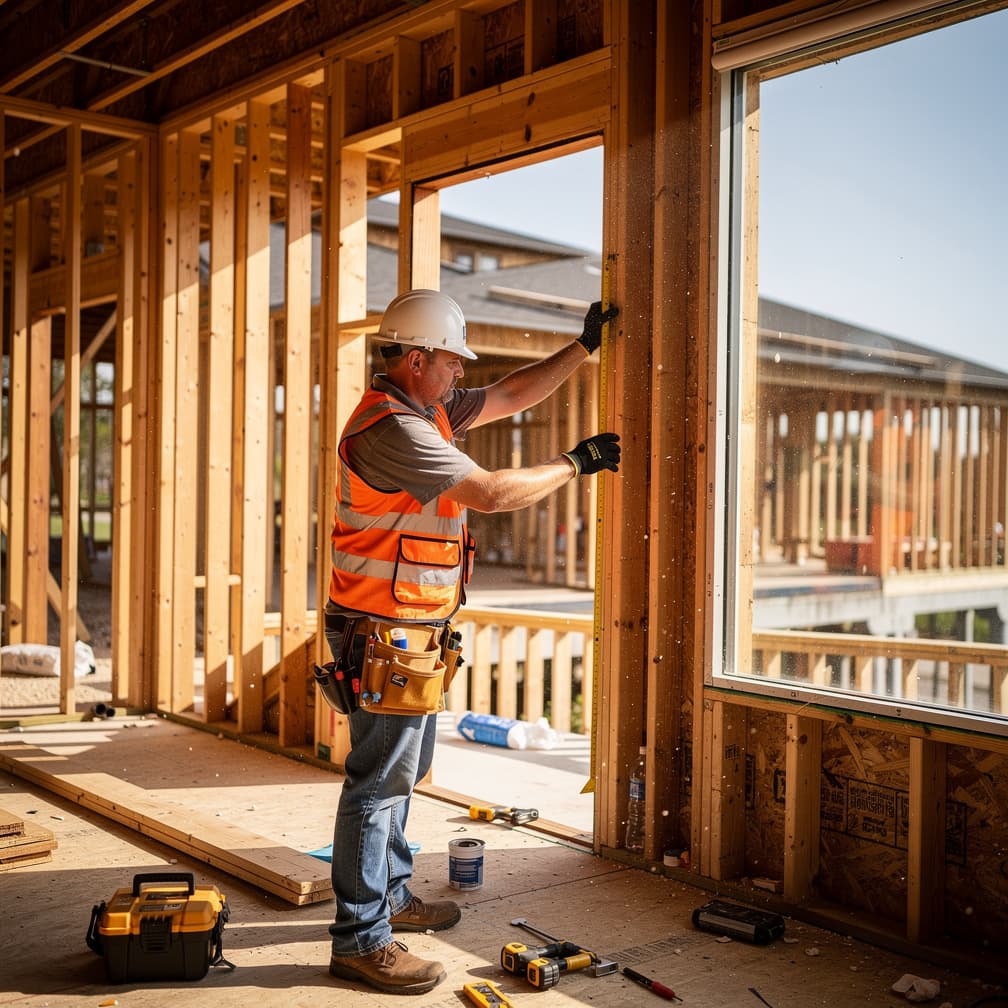

Slab pours, roof loads, and open stairwells put people at risk who never signed a contract with you, including neighbors and curious kids after hours. Home builder insurance in Fayetteville starts there, because a passerby hurt on your site does not care which sub left the trench open. Defect claims work differently. They arrive quietly, months after the last inspection, in a letter from a buyer's attorney. General Liability is where both of those usually land, and the defense bill alone can outrun the repair. Your premium moves on payroll, on what you subcontract, and on how many houses you have open at once. The sections below lay out what the published ranges look like and what changes them, so you can compare quotes without guessing at North Carolina pricing.
What Makes Fayetteville Different
Distance costs money on a residential build long before anyone files a claim about it. Crews drive further, materials arrive on fewer trucks, and a missed delivery idles a whole day of labor. Those miles land in the auto side of your program, and mileage is a rating input like any other. Adjusters and repair vendors are thinner on the ground, so a claim takes longer to close out. A longer claim is a more expensive claim, and that history follows you into every renewal. Houses worth about $172,000 still have to be rebuilt with materials trucked in from wherever they are stocked. Ask what each quote assumes about your radius of operation before you decide it is expensive in Fayetteville. A policy in a thin market is only a bargain when it priced your driving correctly.
Local Risk Factors in Fayetteville
Hurricane season puts a hard stop on residential work in Fayetteville, and an open framed house is the worst possible thing to leave standing in it. Sheathing gets peeled, trusses shift, and material staged for the next phase turns into debris that lands on somebody else's property. Builders Risk is the line usually written for the structure while it goes up, though windstorm terms, deductibles, and named-storm wording vary enough that two quotes can mean very different things. Read the named-storm deductible before the season, since it is often a percentage rather than a flat figure. Ask what a policy expects you to do to secure a North Carolina site once a warning is issued, because failing to do it can change the outcome of the claim.
What Coverage Does a Home Builder in Fayetteville Need?
General Liability
A delivery driver falls on a muddy lot, or an excavator clips the neighbor's fence. Those third-party injury and property damage claims are what General Liability is usually written for, along with the defense cost that arrives attached to them. Owners and developers routinely demand it before work starts. It typically does not reach your own crew's injuries, your own rework, or the tools in your trailer.
Example: A framing sub leaves a stairwell opening unguarded and a buyer's inspector drops through it during a walkthrough; the injury demand and the defense that follows are the kind of claim this line may take on.
Workers Compensation
General contractors, developers, and lenders ask to see it before your crew sets foot on a lot, and your auditor asks about it afterward. Workers Compensation is generally the line for employee injury on a jobsite: medical care and lost wages for the nail gun, the fall, the heat. A sub who cannot prove their own can end up charged to yours at audit.
Example: A carpenter misses a step on a temporary stair and breaks a wrist before the morning coffee break; treatment and the wages lost while it heals are what this coverage is meant to handle.
Builders Risk
Finished homes and permanent buildings are not the point here. The point is the house in progress: Builders Risk is generally written for a structure under construction and the materials feeding it, and construction lenders commonly ask for it by name. Terms end at completion, occupancy, or sale, and flood, earthquake, and faulty workmanship itself are frequently outside the grant.
Example: A wind gust takes the roof sheathing off a house three days from dry-in and soaks the framing underneath; repairing the structure mid-build is the situation this line is intended to address.
Commercial Auto
Where site coverage stops at the property line, Commercial Auto follows the trucks: the pickup hauling trusses, the flatbed carrying the skid steer, the van running a crew between lots. Personal auto policies generally exclude that use. Ask how a quote treats trailers and an employee's own truck, since those are the gaps builders tend to find late.
Example: A loaded trailer comes off the hitch on the way to a Fayetteville lot and puts a car into a ditch; the injury and property claim that follows is what this coverage may answer.
Commercial Umbrella
Limits are the whole argument here. Commercial Umbrella sits above your liability and auto lines and lifts the ceiling when a demand runs past what they carry, which is why a subdivision contract asking for high limits is often what triggers the purchase. It generally follows the terms underneath it, so a gap below stays a gap above.
Example: A homeowner's defect suit settles for more than a base liability limit can absorb after two years of defense; the layer sitting above is where the remainder could land.
How Much Does Home Builder Insurance Cost in Fayetteville?
Home Builder Insurance is a bundle of separate policies, priced separately. The ranges below are typical figures for Fayetteville for each line, except workers compensation, which is rated per $100 of payroll; a quote prices each one against your own operations.
| Coverage | Typical range | What moves your price |
|---|---|---|
| General Liability Insurance | $330 - $1,175 per month | Industry and risk classification, annual revenue, number of employees |
| Workers Compensation Insurance | $0.75 - $2.74 per $100 of payroll | Employee classification codes, total annual payroll, experience modification rate |
| Builders Risk Insurance | Varies | Quoted individually based on your operations and limits |
| Commercial Auto Insurance | $230 - $650 per month | Fleet size and vehicle types, driver records and experience, coverage limits and deductibles |
| Commercial Umbrella Insurance | $110 - $440 per month | Umbrella limit requested, limits carried on the underlying policies, loss history on those underlying policies |
Prices shown are general estimates, not guaranteed rates or quotes. Your actual premium will depend on the insurer, coverage selected, business details, location, claims history, and other underwriting factors. Learn about our pricing methodology.
What Are the Insurance Requirements for a Home Builder in Fayetteville?
Workers' comp is generally required once you have 3 or more employees. North Carolina generally requires employers to carry workers' compensation at that point. Common exemptions include sole proprietors, partners, and LLC members. Confirm current thresholds with your state's workers' compensation agency before you hire.
State auto liability minimums apply to business vehicles. North Carolina's minimum auto liability limits are $50,000/$100,000/$50,000 (bodily injury per person / per accident / property damage). Contracts and lenders often require more than the state floor.
Flood damage is typically excluded from standard policies. Standard commercial property and builders-risk-type policies typically exclude flood damage. Flood exposure varies address by address, so check your premises in FEMA's Flood Map Service Center before deciding; if you sit in a mapped flood zone, a separate policy through the National Flood Insurance Program is the usual starting point.
Where to verify licensing and coverage rules. The North Carolina Department of Insurance publishes consumer guidance and current insurance requirements for North Carolina businesses. When a contract or lease demands specific wording, the North Carolina Department of Insurance's guidance is the authoritative place to check.
Get Your Home Builder Quote in Fayetteville
Compare rates from multiple carriers. Free quotes, no obligation.
Operating in Fayetteville
- Your superintendent spends part of every week chasing certificates from subs who are already on the next job across Cumberland County, and that unglamorous errand decides your audit twelve months later.
- A homeowner in Fayetteville can walk an unfinished house on a weekend without telling anyone, and a fall on an open stair becomes your claim regardless of the trespass.
- Concrete gets poured on a schedule nobody can move, so the truck shows up at a Fayetteville lot whether the site is safe, dry, or ready for it.
- About 122 home builders work in Cumberland County, so the framing crew you take when your first choice is booked is a decision your insurance file will remember.
How to Buy: Advice for Fayetteville Owners
Start with the contract before you start with the quote. The indemnity clause and the limits a developer or lender demands decide most of what you buy, and they are already written. Pull the agreements you signed this year and mark the limit each one requires. Then price General Liability and Commercial Umbrella against the highest of them rather than against the average. Builders Risk gets its own conversation, because the term has to match how long the house will actually take. Ask about extensions in the same call, since schedules slip for reasons nobody controls. Requirements differ from state to state, and the North Carolina Department of Insurance publishes the current requirements for construction trades. Once the contract side is clear, compare quotes from participating carriers on the same limits, deductibles, and class codes, so the numbers mean something when you line them up in Fayetteville.
FAQ
Home Builder Insurance in Fayetteville: FAQ
Construction defect allegations commonly surface long after the final walkthrough, and the letter arrives with an attorney's name on it. Completed operations is the part of a liability program aimed at finished work, and defense cost typically starts the day the claim is made, whether or not the allegation holds up. Ask whether defense sits inside your limit, since inside means the argument itself eats what would have paid for the repair.
It extends certain rights under your policy to another party, so their claim can be handled under your coverage rather than only under theirs. Developers, lot owners, and lenders ask for it because it puts your insurer in front of theirs when something goes wrong on your site. A certificate merely reports that the endorsement exists. Ask for the endorsement itself, since its wording decides whether it reaches finished work too.
More open lots means more people, more material, and more parties with a plausible claim against the name on the permit board. Underwriters weigh that alongside payroll and revenue, and it tends to push both the price and the limits you ought to carry. It is also why builders running several sites at once often price an umbrella: one incident can exhaust an underlying limit while the other lots keep running.
That depends on the form and on where the property is sitting. Coverage written for a structure going up often reaches materials intended for that build while they are on site, though staging at a yard or on a second lot can fall outside the definition. Tools you own are usually a separate question from lumber destined for the house. Get both answers in writing before a load arrives ahead of schedule.
Personal auto policies generally exclude vehicles used in business, and hauling trusses or dropping a crew at a lot is business use. Commercial Auto is the line usually written for that work, and it also has answers for trailers and for employees driving their own pickups. Ask each quote how it treats a truck the company does not own, because that is the gap builders find at the worst possible moment.
Payroll broken out by trade class, annual revenue, a vehicle and trailer list with drivers, your loss runs for the past few years, and what you spent on subcontractors who could not prove their own coverage. Copies of the contracts that set your required limits help as well. Submit the same package to every carrier, or the quotes coming back are describing different businesses in North Carolina.
Sources
- 1.U.S. Census Bureau, County Business Patterns (2022), Cumberland County(Cumberland County has about 122 businesses in this trade's category (NAICS group 2361).)
- 2.U.S. Census Bureau, ACS 5-Year Estimates (2023), table B25077(The median home value in Fayetteville is about $172,000.)
- 3.North Carolina Department of Insurance(North Carolina Department of Insurance publishes consumer guidance for insurance buyers.)
- 4.FEMA / FloodSmart(Flood coverage is typically purchased separately; FEMA administers the National Flood Insurance Program.)


