Updated July 6, 2026

Key Takeaways
- Review your construction contract before requesting a quote, so the named insureds and insurance responsibility match the job documents.
- Prepare the project budget, timeline, address, and scope summary before applying, so the quote reflects the work actually being built.
- Check whether the policy addresses on-site materials, transit, temporary structures, and soft costs before the first delivery arrives.
- Compare the policy term against your realistic completion schedule, then ask about extension options before the original term gets close to expiring.
- Map builders risk against your liability, installation, and equipment policies, so you avoid both coverage gaps and overlapping property insurance.
What Builders Risk Insurance Covers
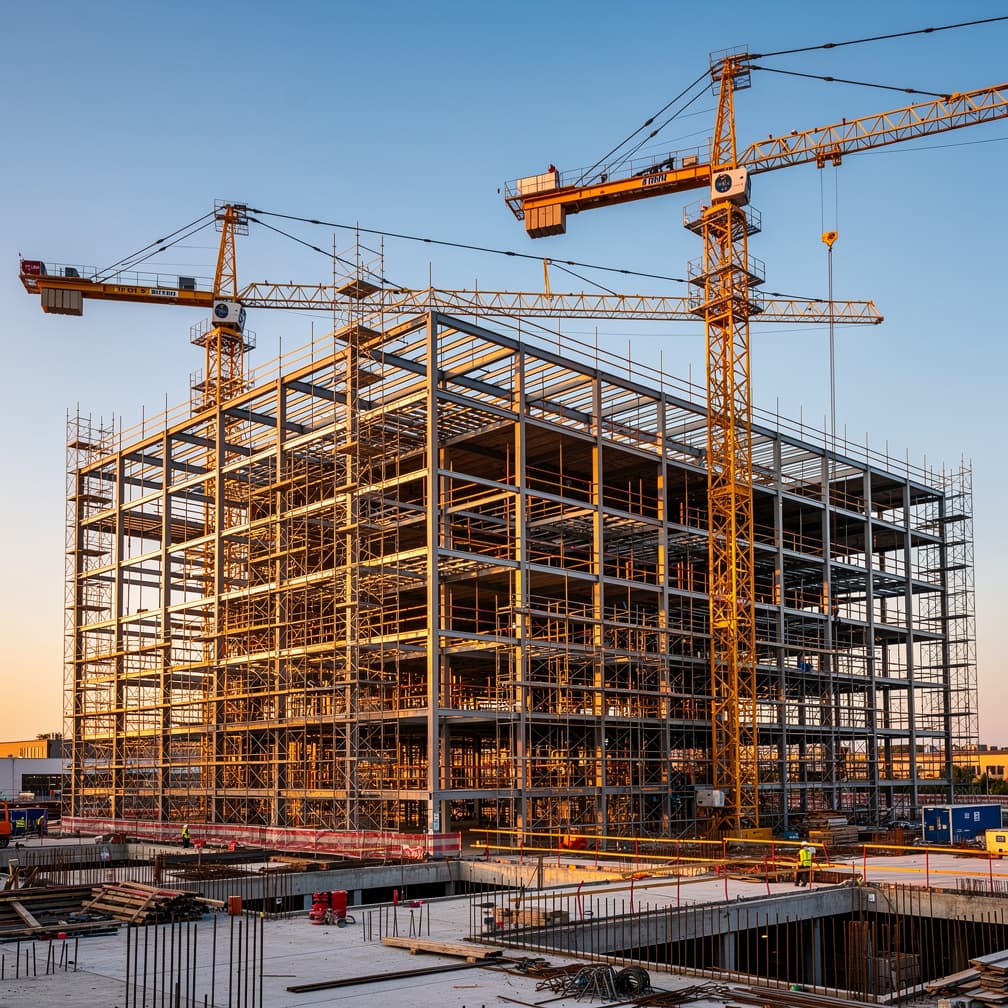
Builders risk insurance is built around the property you are putting in place during construction. At the center is the structure under construction itself, whether that is a new building, an addition, or a substantial renovation. If a covered cause of loss damages the partially completed structure, the policy can help pay to repair or replace that work, subject to the policy terms, limits, and exclusions.
Coverage often extends beyond the frame and shell. You may also insure building materials on site, which matters when high-value items are delivered before installation and sit in a staging area, locked unit, or fenced laydown yard. Materials in transit can also be reviewed, especially if your project depends on scheduled deliveries of windows, mechanical equipment, millwork, or other components that are costly to replace and hard to source quickly.
Many projects also need temporary structures included. That can mean forms, scaffolding, construction trailers, fencing, or other temporary works that support the build. Fixtures and installed equipment are another key category, because once items are attached or being integrated into the project, a loss can affect both property value and schedule.
Soft costs and delay coverage deserve a separate look. If a covered property loss pushes back completion, the financial damage may go beyond the physical repair bill. Depending on the policy, you may be able to review coverage for added interest expense, architect or engineering fees, permit costs, leasing delays, or other time-sensitive project expenses.
The important step is to read the covered property language line by line. Ask whether the policy addresses off-site storage, transit, testing, theft, water damage, wind, collapse, and ordinance-related rebuilding issues. Then compare those answers to your budget, schedule, and contract obligations before work starts.

Structure Coverage
Covers the building or structure under construction.
Materials on Site
Covers building materials stored at the construction site.

Materials in Transit
Covers materials being transported to the job site.
Temporary Structures
Covers scaffolding, fencing, and temporary buildings.

Soft Costs
Covers additional expenses from construction delays due to covered losses.
Equipment Coverage
Covers permanently installed fixtures and equipment.
How Much Does Builders Risk Insurance Cost?
Builders risk insurance cost depends on the project, not on a one-size-fits-all monthly price. Because this coverage is usually written for a specific job and policy term, the quote is shaped by the total completed value, the construction type, the project duration, and the scope of work. A ground-up commercial build, a custom home, and an interior renovation can price very differently even when the contract values look similar on paper.
Insurers usually start with the property exposure. They look at what is being built, how vulnerable the site is to theft, fire, water intrusion, wind, vandalism, and weather-related damage, and how much value will be on site at different phases of the job. A project with expensive materials delivered early may need a different limit approach than one where materials arrive just before installation.
Schedule also affects cost. A longer build means a longer period during which a covered loss can interrupt the job. If your timeline is tight, review whether the policy term leaves room for inspections, punch work, and realistic closeout delays. Mid-project extensions can be available, but they are easier to manage when you plan for them before the original term expires.
The policy structure matters too. Deductibles, covered causes of loss, transit coverage, off-site storage, temporary structures, and soft cost options all change the quote. So does the named insured setup. If the owner, developer, and general contractor all need to be reflected, the application should match the contract documents.
To get a usable quote, prepare the construction budget, project address, plans or scope summary, start and completion dates, security details, and any lender insurance requirements. Then review the quote for valuation method, exclusions, and extension options, not just the premium.
Request a Quote Comparison
Enter your ZIP code to compare builders risk insurance rates from top carriers.
Business insurance starting at $25/mo
Who Needs Builders Risk Insurance?
Builders risk insurance is usually worth reviewing for anyone with a financial stake in a construction project. Property owners often buy it because they own the site and stand to lose the most if a covered loss damages the work in progress. Developers also commonly carry it, especially when they are coordinating financing, draw schedules, and multiple parties with an interest in the completed project.
General contractors frequently need to be involved even when they are not the party purchasing the policy. The construction contract may assign responsibility for insuring the project to the owner, the contractor, or a specific project entity. If you are the contractor, you need to confirm who is buying the policy, who is named on it, and whether the covered property description actually matches the work you are performing.
Home builders and remodelers should review builders risk on both new construction and major renovation jobs. Renovation work can create a complicated exposure because existing structures, partially completed work, and newly delivered materials may all be present at the same time. If the project remains occupied during construction, that should be discussed early so the policy structure fits the real job conditions.
Trade contractors may also need to pay attention even if they do not purchase the policy themselves. If you are installing cabinets, electrical gear, plumbing systems, roofing materials, or specialty equipment, a loss can trigger disputes over whether the owner policy, the general contractor policy, or your own inland marine or installation coverage should respond.
Lenders, landlords, and project owners often expect proof of coverage before funds are released or work begins. The practical question is not only who needs builders risk insurance, but who would absorb the loss if the project burns, floods, is vandalized, or suffers a theft before completion. If that answer is unclear, review the contract and insurance requirements before the first delivery hits the site.
How to Buy Builders Risk Insurance
The fastest way to buy builders risk insurance correctly is to start with the contract, not the application. Your construction agreement usually tells you who is responsible for insuring the project, which parties need to be named, and whether the requirement applies to the full completed value, a specific phase, or certain categories of property. If you skip that step, you can end up with a policy that looks complete but does not line up with the job documents.
Next, define the project clearly. Underwriters usually need the job address, project type, scope of work, construction budget or completed value, start date, expected completion date, and details on whether the work is new construction, renovation, or tenant improvement. They may also ask about site security, fire protection, prior losses, vacant status, and whether materials will be stored off site or shipped in stages.
Then decide who should be included. Depending on the project, that may be the property owner, developer, general contractor, lender, or a project-specific entity. The named insured and additional interest structure should mirror the contract as closely as possible. If there are multiple phases or separate buildings, make sure the schedule and locations are described accurately.
Before binding, read the quote for substance. Check the covered property wording, causes of loss, deductible, valuation method, policy term, extension options, and any sublimits for transit, temporary structures, or soft costs. Ask direct questions about theft, water damage, wind, testing, existing structures, and delay-related expenses if those exposures matter on your job.
Finally, line up proof of coverage before mobilization. Have the certificate, policy form, and any lender or owner evidence requirements ready before materials are delivered, because coverage questions are much harder to fix after a loss or after the project is already underway.
How to Save on Builders Risk Insurance
The most reliable way to save on builders risk insurance is to make the project easier to underwrite and less likely to produce a claim. Start with accurate values. If the completed value is overstated, you may pay for limit you do not need. If it is understated, a loss can create a much bigger problem than the premium you saved. Use the current construction budget, include major materials and installed equipment, and update the policy if change orders materially alter the job.
Tight project administration also helps. A clear scope summary, realistic completion date, and organized draw schedule make it easier to place coverage that fits the term of the job. If the project is likely to run long, discuss extension options early instead of waiting until the policy is close to expiring. Last-minute changes can narrow your options.
Security and site controls can also affect pricing and availability. Document fencing, lighting, locked storage, camera systems, water shutoff procedures, hot work controls, and how you protect building materials after hours. Theft and water losses are common pain points on many projects, so practical loss prevention steps can matter as much as shopping the quote.
You can also save by coordinating policies instead of buying overlapping coverage. Review where builders risk ends and where installation floaters, contractor equipment, general liability, and commercial property begin. If multiple parties insure the same property interest without a plan, you may pay twice and still argue over claim responsibility later.
Finally, compare quotes on terms, not just price. A lower premium can cost more if it comes with a short policy term, narrow covered property wording, or exclusions that do not fit your project. Ask for side-by-side comparisons, then choose the option that matches the build schedule, contract obligations, and material flow.
FAQ
Frequently Asked Questions
Builders risk insurance may cover, subject to policy terms, the structure under construction, materials on site, materials in transit, temporary structures, and fixtures or equipment being installed. Depending on the policy, you can also review soft costs and delay-related coverage tied to a covered property loss.
Builders risk insurance is commonly reviewed by property owners, developers, general contractors, and home builders. The right buyer depends on the construction contract, lender requirements, and which party would absorb the loss if the project is damaged before completion.
Builders risk insurance can apply to renovation work, not just ground-up construction. Renovations need careful review because existing structures, new materials, and partially completed work may all be exposed at the same time, especially if the building stays occupied during the project.
Builders risk insurance may cover theft of building materials, but the answer depends on the policy wording, site conditions, and where the materials are located. Ask specifically about on-site storage, off-site storage, and transit so the quote matches your material flow.
Builders risk insurance is usually written for the expected construction term of a specific project. Before binding, compare the policy period to your actual schedule, including inspections and closeout, and ask how extensions are handled if the job runs longer than planned.
Builders risk insurance is not the same as general liability insurance. Builders risk focuses on covered property loss to the project and related materials, while general liability addresses third-party property damage claims arising from your operations.
Builders risk insurance is often required by lenders before funds are released on a construction project. If financing is involved, confirm the lender's evidence of insurance requirements early so the named insureds, limits, and project description are ready before closing or mobilization.
Updated July 6, 2026