







































Updated July 10, 2026

Garage Door Installer Insurance in Ohio
If you need a garage door installer insurance quote in Ohio, the main difference is how quickly a routine service call can turn into a third-party claim. A spring replacement in Columbus, a track adjustment in Cleveland, or an opener install in Cincinnati can involve customer property, ladders, tools, and a work van all at once. Ohio’s severe storm and tornado exposure also means your equipment, mobile property, and vehicles may be moving between jobs in changing conditions. For many garage door contractors, the right quote starts with general liability for bodily injury and property damage, commercial auto for service travel, workers’ compensation if you have employees, and inland marine for tools and contractors equipment. If you also handle repairs, installations, or parts replacement, your quote should reflect the exact mix of garage door installation insurance, garage door repair insurance, and garage door contractor insurance you need. The goal is to match coverage to the way you work in Ohio, from suburban driveways to commercial bays and storage facilities.
Climate Risk Profile
Natural Disaster Risk in Ohio
Understanding climate-related risks helps determine appropriate insurance coverage levels.
Severe Storm
High
Tornado
High
Flooding
Moderate
Winter Storm
Moderate
Expected Annual Loss from Natural Hazards
$1.4B
estimated economic loss per year across Ohio
Source: FEMA National Risk Index
Risk Factors for Garage Door Installer Businesses in Ohio
- Ohio severe storm exposure can lead to property damage to doors, openers, and customer structures during service calls.
- Ohio tornado conditions can create sudden third-party claims if equipment or installed parts are damaged while on-site.
- Ohio winter storm conditions can increase slip and fall risk at garages, driveways, and loading areas during installs and repairs.
- Customer property damage during garage door service in Ohio can trigger liability, legal defense, and settlement costs.
- Equipment in transit across Ohio job sites can be exposed to damage before tools and mobile property are unloaded.
How Ohio compares with the national baseline
Uninsured drivers
12.4% vs 11.6% baseline
About 12.4% of Ohio drivers are estimated to be uninsured, above the 11.6% average across states.
Fatal crashes per 100 million miles
1.18 vs 1.33 baseline
Ohio sees about 1.18 fatal crashes per 100 million miles driven, below the national average of 1.33.
Property crime per 100,000 residents
2,110 vs 2,200 baseline
Property crime in Ohio runs below the national average, at 2,110 vs 2,200 incidents per 100,000 residents.
Blue bar: Ohio. Gray line: national baseline.
How Much Does Garage Door Installer Insurance Cost in Ohio?
Garage Door Installer Insurance is a bundle of separate policies, priced separately. The ranges below are typical figures for Ohio for each line, except workers compensation, which is set by the state fund; a quote prices each one against your own operations.
| Coverage | Typical range | What moves your price |
|---|---|---|
| General Liability Insurance | $110 - $310 per month | Industry and risk classification, annual revenue, number of employees |
| Commercial Auto Insurance | $230 - $600 per month | Fleet size and vehicle types, driver records and experience, coverage limits and deductibles |
| Workers Compensation Insurance | Set by the state fund | Employee classification codes, total annual payroll, experience modification rate |
| Inland Marine Insurance | $25 - $100 per month | Total insured value of the scheduled property, type and age of the equipment, where it is stored and how far it travels |
Prices shown are general estimates, not guaranteed rates or quotes. Your actual premium will depend on the insurer, coverage selected, business details, location, claims history, and other underwriting factors. Learn about our pricing methodology.
What Ohio Requires for Garage Door Installer Insurance
Non-compliance can result in fines, loss of contracts, and personal liability:
- Workers' compensation is required in Ohio for businesses with 1+ employees, with exemptions for sole proprietors, partners, LLC members, and family farm corporate officers.
- Commercial auto liability minimums in Ohio are $25,000/$50,000/$25,000 for vehicles used in the business.
- Most commercial leases in Ohio require proof of general liability coverage, which can affect how you document coverage when renting shop or storage space.
- The Ohio Department of Insurance regulates business insurance placement in the state, so quote requests should match your business structure and operations.
- If you use vehicles for service calls, ask for commercial auto and hired auto or non-owned auto options so the quote reflects how the business actually operates.
| Requirement | What Ohio law says |
|---|---|
| Auto liability minimums | $25,000/$50,000/$25,000 (bodily injury per person / per accident / property damage). These floors apply to personal and business vehicles alike; lenders and contracts often require more. |
| Workers compensation | Purchased from the Ohio Bureau of Workers' Compensation (BWC), the state fund, rather than from private carriers. The rest of your business policies can still be shopped normally. |
| Where to verify | Ohio Department of Insurance publishes current requirements, consumer guides, and license lookups. |
Get Your Garage Door Installer Insurance Quote in Ohio
Compare rates from multiple carriers. Free quotes, no obligation.
Common Claims for Garage Door Installer Businesses in Ohio
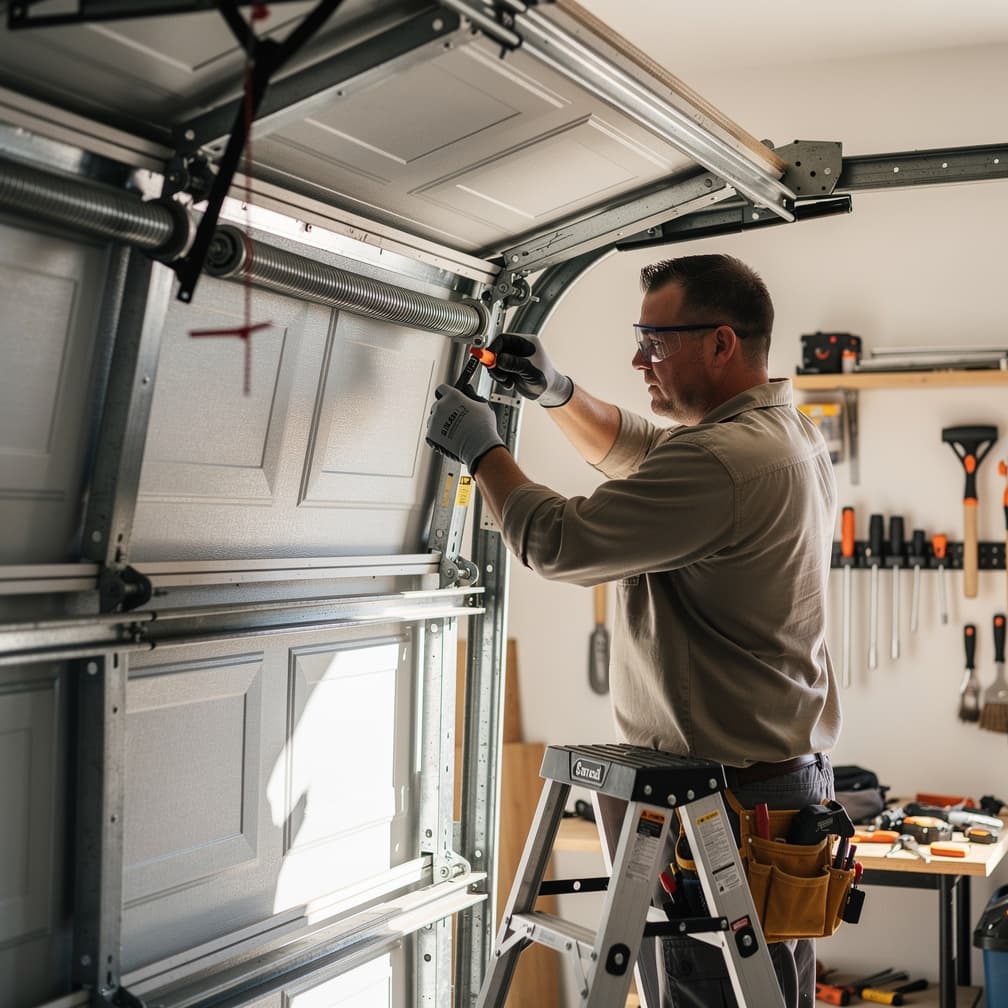
A technician in Dayton is replacing a garage door spring when a customer’s parked vehicle is scratched by a falling tool, creating a property damage claim and possible legal defense costs.
A crew in Toledo is installing a new door after an ice event, and a customer slips on a wet driveway near the garage entrance, leading to a bodily injury claim.
A service van in Akron carries ladders, tracks, and opener parts between jobs, and a collision damages tools and mobile property before the crew reaches the site.
Preparing for Your Garage Door Installer Insurance Quote in Ohio
Your business structure, locations served, and whether you focus on installation, repair, or both.
Payroll, number of employees, and whether you need workers' compensation because you have 1+ employees.
Vehicle details for any service vans, plus whether you need commercial auto, hired auto, or non-owned auto coverage.
A list of tools, mobile property, and contractors equipment you carry so inland marine limits can be matched to your operations.
What Happens Without Proper Coverage?
Garage door businesses operate with a narrow margin for error because the work happens on customer property, around moving parts, and often under time pressure. A claim does not need to be dramatic to be expensive. A technician can crack a window maneuvering a door section, gouge a parked vehicle with a track component, or leave a walkway cluttered during a rushed repair call, and the customer will point to your crew whether or not the facts are settled.
Springs raise the stakes beyond ordinary trade work. A torsion assembly stores enough energy to injure whoever is standing nearby when it lets go, and homeowners wander into garages mid-job more often than any technician would like. One bystander injury near tensioned hardware can outweigh years of routine property claims, which is why liability limits deserve more thought than the minimum a certificate requires.
The road connects every job. A crew might finish a scheduled install and get routed across town for a same-day spring failure, with ladders, openers, and inventory riding along. An accident on that drive damages the van, delays every remaining appointment, and creates injury liability all at once. And because those vans double as rolling warehouses, a single overnight break-in can strip the tools and opener stock a full week of jobs depends on.
Customers force the timing too. Builders, property managers, and commercial clients want certificates before you touch their doors, and even homeowners hesitate over an uninsured crew working inside the house. Before quoting a large project or signing a service agreement, check your limits, vehicle schedule, payroll classifications, and subcontractor paperwork against the jobs you are trying to win.
Recommended Coverage for Garage Door Installer Businesses
Based on the risks and requirements above, garage door installer businesses need these coverage types in Ohio:

General Liability
Essential coverage for every business, protect against third-party bodily injury, property damage, and advertising claims.

Commercial Auto
Protect your business vehicles and drivers with comprehensive commercial auto coverage.

Workers Compensation
Help cover your employees' medical expenses and lost wages for work-related injuries and illnesses.

Inland Marine
Protect tools, equipment, and goods in transit or stored at locations away from your primary premises.
Garage Door Installer Insurance by City in Ohio
Insurance needs and pricing for garage door installer businesses can vary across Ohio. Find coverage information for your city:
Insurance Tips for Garage Door Installer Owners
Ask for your quote to separate residential installation, repair calls, maintenance work, and any commercial overhead door jobs, because each operation creates different injury and property damage scenarios.
Size general liability limits against the value of the homes, garages, vehicles, and commercial buildings your crews work around, not just the minimum needed to get a certificate issued.
Go over every business use vehicle, including vans taken home by technicians, because garaging, driver assignments, and daily travel patterns can affect how commercial auto coverage should be structured.
Break out payroll by field installers, helpers, and office staff so workers compensation insurance reflects who actually handles ladders, heavy door sections, and tensioned spring work.
List the tools, opener inventory, hardware kits, and replacement parts that travel in vehicles or sit temporarily at job sites, then match inland marine coverage to those mobile exposures.
If you use subcontractors for overflow installs or specialty door work, check how certificates are collected and how those crews are described during quoting before a claim tests the arrangement.
Bring sample contracts from builders, property managers, or commercial clients so you can compare requested limits and insurance wording before you agree to terms you have not reviewed.
FAQ
Frequently Asked Questions About Garage Door Installer Insurance in Ohio
Most Ohio garage door businesses start with general liability, commercial auto, workers' compensation if they have employees, and inland marine for tools and equipment in transit. If you handle both installs and repairs, the quote should reflect that mix of garage door installation insurance and garage door repair insurance.
The average premium range in Ohio is listed as $81 to $322 per month, but actual garage door installer insurance cost in Ohio varies by payroll, vehicles, job mix, tools, coverage limits, and whether you need commercial auto or workers' compensation.
Ohio requires workers' compensation for businesses with 1 or more employees, with certain ownership exemptions. Ohio also has commercial auto minimum liability limits of $25,000/$50,000/$25,000, and many commercial leases ask for proof of general liability coverage.
A quote can be built to address bodily injury and property damage exposures tied to spring work, but coverage depends on the policy terms and limits you choose. It is important to describe spring replacement, repair, and installation work accurately when requesting a quote.
Start with the size of your jobs, the value of customer property you work around, the number of vehicles you use, and the tools you carry. Many Ohio garage door businesses compare general liability, commercial auto, and inland marine limits together so the quote matches real operating risk.
Four policies do most of the work: general liability, commercial auto, workers compensation, and inland marine. How you weight them depends on whether your revenue leans toward new installs, repair calls, maintenance contracts, or commercial overhead doors.
Yes, treat them as separate exposures within one quote. Repair work happens in occupied garages on short notice, while installation involves debris removal, staged sections, and longer hours on site, and each pattern produces different claims.
That is one of the scenarios the policy is built around, though the outcome turns on the policy terms and how the claim is investigated. Walk through a vehicle-damage example during the quote process so you know how it would be handled.
Updated March 31, 2026