Updated July 16, 2026

On-Hook Towing Insurance in Tulsa
Professional, scientific, and technical services make up 12.4% of Tulsa County establishments, with retail trade close behind at 12.2% and health care at 11.5%. In practical terms, roughly one in three local businesses falls into these categories. Expect frequent calls to office parks, storefronts, and clinics rather than only roadside recoveries. What matters at claim time is not just whether you tow, but what kinds of vehicles you take into your care, where handoffs happen, and how often your drivers work around busy commercial properties. Local operators frequently serve fleets, vendors, patients, and property managers who expect clean documentation after any incident involving a vehicle in tow. As you review quotes, ask how the policy can help with damage during loading, transport, and unloading, and whether your limits still make sense if a loss involves a newer work vehicle or a customer car tied to a business interruption complaint.
On-Hook Towing Insurance Risk Factors in Tulsa
Here, weather is part of the operating picture, but the more useful local review point is how quickly conditions can change while a vehicle is already in your care. If your company handles post-storm relocations, parking lot clears, or disabled vehicles moved off commercial sites, ask for a quote review that matches those assignments instead of treating every tow like a routine hook-and-haul. You should also look closely at where losses are most likely to happen for your operation: during hookup in tight retail lanes, while maneuvering through medical office access points, or at drop-off when a vehicle owner is stressed and inspecting for fresh damage. That is where **on-hook disputes** often start. A practical next step is to separate your common tow types by vehicle class, pickup environment, and after-hours volume before you request terms, so the coverage discussion stays tied to real exposures.
Oklahoma has a very high climate risk rating. Top hazards: Tornado (Very High), Hailstorm (Very High), Severe Storm (Very High), Earthquake (Moderate). The state's expected annual loss from natural hazards is $2.4B, which influences on-hook towing insurance premiums and may affect coverage availability in high-risk areas.
What On-Hook Towing Insurance Covers
On-hook coverage can help pay for damage to a customer vehicle that happens while it is being handled by your truck during a tow. A wheel-lift call on a narrow shoulder, a flatbed load during heavy rain, a recovery after high wind, or a late-night impound from a crowded lot can all create different damage scenarios and different arguments about handling. Your policy terms and deductible selections shape how those damage claims are evaluated and what you pay out of pocket.
For many towing businesses in the state, the important coverage discussion starts with service mix. Your quote should separate those realities clearly enough that an underwriter can see what each truck is doing.
You should also review whether your contracts create stricter expectations than your policy language. Police rotation agreements, impound contracts, motor club work, and dealer relationships often require prompt certificates and clear evidence of the right coverage parts. If a customer vehicle is damaged and the paperwork around dispatch, photos, condition notes, or release forms is weak, the claim can become harder to defend. Ask for specimen forms and compare them against how your drivers document each pickup and drop-off.
Coverage Included
Collision on Hook
Covers damage to towed vehicles from collisions during transport.
Comprehensive on Hook
Covers theft, fire, and weather damage to vehicles being towed.
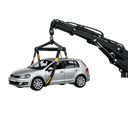
Loading & Unloading
Covers damage during the process of loading and unloading vehicles.
Winching Coverage
Covers damage to vehicles during winching and recovery operations.

Multiple Vehicle
Covers all vehicles on multi-car carriers and rollback flatbeds.
What Makes Tulsa Different
Commercial density is the difference here. Tulsa County has 19,392 business establishments, which means your drivers are rarely alone on a call because most assignments start or end on property where the vehicle owner, property manager, employer, and site operator may all have a view on what happened during the tow. An on-hook claim can turn into a documentation problem as much as a repair problem in that environment. Drivers removing vehicles from office lots, retail centers, clinics, or contractor yards may benefit from checking whether their limits fit the vehicles they actually move. Tighter access lanes and higher incident-reporting expectations at professional offices, stores, and health care sites mean your intake photos, condition notes, and release procedures can help protect you when multiple parties scrutinize what happened.
Our Recommendation for Tulsa
Start with your dispatch log, not a generic application. If most of your work comes from commercial properties, build your quote request around where vehicles are picked up, who authorizes the tow, and whether your drivers regularly handle locked vehicles, damaged vehicles, or units with specialty equipment attached. If you serve medical offices or retail locations, review how your policy responds when a claim is reported after delivery rather than at the scene. Tulsa median household income is $58,407, meaning a typical household earns well below the national median of about $75,000. You may want to ask for clear explanations of valuation, deductibles, and any limits that apply per vehicle. Before binding, compare your on-hook limit against the most expensive vehicle types you actually tow in a normal month, not just your average call.
Get On-Hook Towing Insurance in Tulsa
Enter your ZIP code to compare on-hook towing insurance rates from carriers in Tulsa, OK.
Business insurance starting at $25/mo
FAQ
Frequently Asked Questions
Local towing companies often work around dense commercial properties and service businesses. When a loss happens on private property, the vehicle owner, property manager, and site operator may all want answers. Your policy terms and your condition documentation can help establish what happened and when, especially if questions arise later.
Pickups and drop-offs in tighter lots mean more witnesses and more urgency at the scene. The county's business mix leans heavily toward professional services and retail, which translates to more calls in tight parking environments where minor contact with other vehicles or property is a real possibility.
Health care and social assistance accounts for 11.5% of county establishments. That signals enough clinic and medical-office traffic to warrant comparing your on-hook limit against the vehicle types and access conditions you encounter at those sites.
Claims often involve more than the vehicle owner when a tow starts on business property. Photos, intake notes, and signed releases can help show vehicle condition before loading and after delivery, especially when several parties may question what happened.
Tulsa median household income is $58,407, meaning a typical household earns well below the national median of about $75,000. That income gap can make even modest repair bills feel significant to a customer, which is worth keeping in mind as you review your deductibles, claim handling details, and evidence process before you buy.
If your drivers take physical custody of customer vehicles for towing or transport, on-hook coverage is the part of your policy that can help pay for damage to those vehicles while they are in your care. Without it, a damage claim during a tow may fall on your garagekeepers or general liability, which may not respond the same way.
Oklahoma operators should review storm-related dispatches carefully because severe weather can change loading conditions, visibility, and recovery difficulty. Ask how your policy terms, deductibles, and exclusions apply to the kinds of bad-weather calls your drivers actually accept.
Oklahoma submissions work better when they separate roadside towing, recovery, impounds, repossessions, and dealer transport instead of blending everything together. A clearer service description helps the underwriter match terms to your real dispatch pattern and may reduce avoidable coverage disputes.
Sources
- 1.U.S. Census Bureau, County Business Patterns, Tulsa County(Professional, scientific, and technical services hold the largest establishment share in Tulsa County at 12.4%, with retail trade close behind at 12.2% and health care and social assistance at 11.5%.; Tulsa County has 19,392 business establishments.)
- 2.U.S. Census Bureau, ACS 5-Year Estimates, table B19013(Tulsa median household income is $58,407.)
Updated July 16, 2026