Updated July 16, 2026

Dealer Open Lot Insurance in Pittsburgh
Space cost is the first local pressure point you feel. Pittsburgh's median household income sits at $64,137, and a used vehicle priced for the local buyer often falls into a narrow affordability band. When your inventory skews toward those price points, a single theft or hailstorm can wipe out a larger share of your affordable stock than you might expect. Your lot plan usually works better when limits match real peak inventory values and deductibles match what your cash flow can absorb after a weather or theft loss. How tightly you manage value concentration on a small urban footprint is what separates a solid plan from a gap you discover after a loss. This is especially true if you rotate units between a main frontage lot and cheaper overflow storage nearby.
A quote review should test whether your reporting method keeps up with fast inventory turns. It should also check whether high-value units cluster too closely, and whether your deductible would force you to delay replacing salable vehicles after a claim. If your mix changes month to month, ask for a limit discussion tied to peak seasonal inventory, not just an average count from a quieter week.
Dealer Open Lot Insurance Risk Factors in Pittsburgh
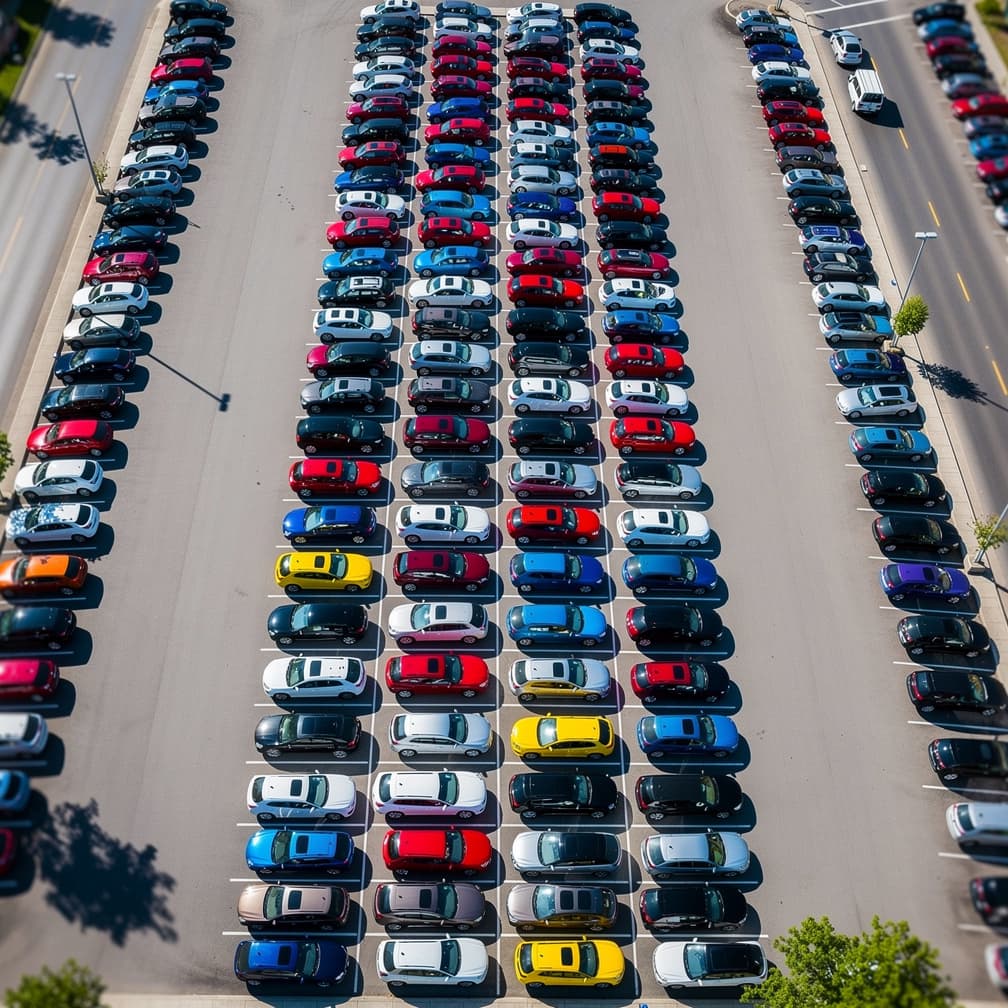
Pittsburgh changes the physical risk conversation because many dealers work with constrained sites, sloped parcels, older fencing, and inventory parked close together. That makes **concentration risk** more important than a simple unit count. If one section of the lot takes the hit, several vehicles can be involved at once, so you should review spacing, key control, lighting, camera retention, and how quickly staff can move units when severe weather is forecast. State-level hazard patterns matter here only to the extent they affect your exact storage layout and drainage, not as a generic talking point. A practical review focuses on where water collects, whether overflow storage sits on the same grade issues as the sales lot, and whether your photos and inventory records are current enough to support values immediately after a loss.
Pennsylvania has a moderate climate risk rating. Top hazards: Flooding (High), Winter Storm (High), Severe Storm (Moderate), Tornado (Low). The state's expected annual loss from natural hazards is $1.6B, which influences dealer open lot insurance premiums and may affect coverage availability in high-risk areas.
What Dealer Open Lot Insurance Covers
The real question is not whether your lot is protected but where your inventory actually sits during a normal week. Many dealers split units between the main sales lot, a service-adjacent holding area, overflow storage, and temporary locations tied to auctions, reconditioning, or seasonal volume. Your policy should follow the actual path each vehicle takes before sale, not just the address on your license.
You should ask how the form treats vehicles at every scheduled location, and whether newly acquired units are picked up automatically for a limited period while you update records. If you keep some inventory behind another business, at a secondary parcel, or in a shared storage arrangement, make sure those addresses are disclosed and reviewed up front. A claim gets harder fast when the damaged unit was stored somewhere the underwriter never evaluated.
Pennsylvania weather also makes location details more important. If your lot has low spots, older drainage, tree exposure, or tightly packed rows that make emergency movement difficult, ask how those conditions affect deductibles, valuation, and any protective safeguards the carrier expects. The same goes for theft prevention. Key storage, after-hours access, camera retention, and documented lot checks can all matter when a loss is investigated.
If you are comparing forms, endorsements, or claim handling language, keep your policy documents organized and review any state-specific notices before you bind.
Coverage Included

Weather Damage
Covers hail, wind, flood, and storm damage to lot inventory.
Theft Protection
Covers vehicles stolen from your lot.
Fire Damage
Covers fire and explosion damage to inventory vehicles.

Vandalism
Covers intentional damage to vehicles on your lot.
Test Drive Coverage
Covers vehicles during customer and employee test drives.
Transit Coverage
Covers vehicles being moved between lot locations.
Industries & Insurance Needs in Pittsburgh
Allegheny County's business mix is the local demand signal that can change how a dealer buys inventory and structures storage. The county has 33,827 business establishments, and its largest establishment shares are health care and social assistance at 14.2%, professional, scientific, and technical services at 12.1%, and retail trade at 11.8%, so many dealers here are selling into commuter, service-worker, and small-business transportation needs rather than a purely tourist or heavy industrial market. That usually means a faster-moving mix of practical units, trade-ins, and price-sensitive inventory. For insurance, the consequence is operational: if your stock turns quickly and values shift week to week, ask your agent to review peak-value swings, temporary overflow locations, and whether your limit still fits the mix you actually carry now, not the mix you carried last quarter.
What Makes Pittsburgh Different
Constrained urban lot layout is the main thing that changes the calculus here. In a market where many dealers operate on compact parcels, the question is not only how many vehicles you own but how much value is stacked into one address and how easily that value can be documented, secured, and moved. That affects limit selection, deductible tolerance, and the need to schedule every storage location accurately.
A suburban-style assumption can miss the real exposure if your frontage lot is tight. The same applies if your overflow space is a few streets away, or your highest-value units end up grouped together because space is limited. The practical move is to map every place vehicles sit overnight, identify the maximum value at each location, and compare that against your current lot limit before renewal. Operations that have grown informally over time tend to find underinsurance problems right here.
Our Recommendation for Pittsburgh
Start with a current inventory export and sort it by location, highest unit value, and total value per address. That tells you whether one storm, theft event, or localized loss could hit more value than your present limit assumes. Next, review your deductible against actual operating cash, not just what looks attractive on paper. A higher deductible can make sense for a lot that moves metal quickly and keeps healthy reserves on hand, but it becomes a trap if a single hailstorm forces you to choose between restocking and making payroll.
You should also ask whether any overflow, service-area parking, or off-site reconditioning address needs to be disclosed. Informal storage habits are where claim disputes often begin. If you want a sharper quote, send recent lot photos, fencing and lighting details, and a note on how keys are controlled. Underwriters price your risk more accurately when they can see your security setup and storage layout, not just a vehicle count.
Get Dealer Open Lot Insurance in Pittsburgh
Enter your ZIP code to compare dealer open lot insurance rates from carriers in Pittsburgh, PA.
Business insurance starting at $25/mo
FAQ
Frequently Asked Questions
You usually get better results by setting limits around peak total inventory value at each address, not a rough average vehicle count. On a tighter lot, value concentration matters quickly if several units can be damaged in one event.
Allegheny County has 33,827 business establishments, and that volume keeps local dealers busy serving a broad commuter and small-business customer base. Faster inventory turnover is the result, and your reported values can fall out of sync with what is actually on the lot within weeks.
You should usually disclose every place vehicles sit overnight, including overflow and reconditioning locations. Separate addresses can change how value is concentrated, how security is evaluated, and how smoothly a claim is documented after a loss.
Choose a deductible your business can actually absorb without delaying replacement inventory. The right number depends on cash reserves, unit values, and how quickly you need salable vehicles back on the lot after a loss.
Pittsburgh's median household income is $64,137, and dealers who stock vehicles aimed at practical monthly affordability tend to carry more total units to meet that demand. If your inventory mix shifts toward lower or mid-priced units, you may be carrying more total units than your limit assumes during busy periods.
Request a quote through CPK Insurance and we will match you with participating licensed providers who can review your policy.
Start by organizing a current inventory schedule, all storage addresses, and photos of lot conditions. The more complete your submission, the fewer revisions you face later.
Your policy may help cover vehicles at multiple storage locations, but only if each address and its controls are disclosed clearly during underwriting. If you use overflow parking or offsite storage, ask for those locations to be addressed specifically in the quote.
Sources
- 1.U.S. Census Bureau, ACS 5-Year Estimates, table B19013(Pittsburgh median household income is $64,137, so a used vehicle priced for the local buyer often sits in a narrower affordability band.)
- 2.U.S. Census Bureau, County Business Patterns, Allegheny County(Allegheny County has 33,827 business establishments, and its largest establishment shares are health care and social assistance at 14.2%, professional, scientific, and technical services at 12.1%, and retail trade at 11.8%.)
Updated July 16, 2026