Updated July 16, 2026

On-Hook Towing Insurance in Columbia
When you add another truck, sign yard space near downtown, or start taking more rotation calls across the metro, the practical question is where damage can happen between hookup and drop-off. Local towing work often means short hauls with frequent handoffs in tight commercial settings where a small scrape can turn into a disputed claim fast. A lot of your work can involve commercial lots, employee parking areas, vendor vehicles, and time-sensitive pickups where proof of coverage may matter before an account is assigned. Many private-pay customers also watch vehicle condition and repair delays closely after a tow. Before you ask for quotes, it is worth reviewing how your policy handles damage allegations, vehicle type, and the difference between routine transport and higher-friction recovery work.
On-Hook Towing Insurance Risk Factors in Columbia
Columbia's top risk factors include Flooding, Hurricane damage, Coastal storm surge, and Wind damage.
South Carolina has a high climate risk rating. Top hazards: Hurricane (Very High), Flooding (High), Severe Storm (High), Tornado (Moderate). The state's expected annual loss from natural hazards is $1.4B, which influences on-hook towing insurance premiums and may affect coverage availability in high-risk areas.
What On-Hook Towing Insurance Covers
Coverage disputes usually start at the handoff points, so the most useful review begins there. You want the policy language and quote assumptions checked against how your drivers document a vehicle before hookup, how they note pre-existing damage, when they use wheel-lift versus flatbed equipment, and whether they regularly handle disabled vehicles after heavy rain or wind events.
If your routes include coastal counties, inland flood-prone roads, or storm cleanup calls, ask whether your policy can help cover vehicles exposed during loading delays, roadside positioning, or transport after a weather event. The goal is to understand where your policy terms, exclusions, deductibles, and limits may leave you carrying part of the loss yourself.
You should also review whether your operation creates different exposures by job type. Private property impounds, accident recovery, dealer transport, and municipal rotation work can each produce different documentation needs and different customer expectations about vehicle condition. If one truck handles routine tows and another takes more difficult recoveries, separate that in the submission.
Coverage Included

Collision on Hook
Covers damage to towed vehicles from collisions during transport.

Comprehensive on Hook
Covers theft, fire, and weather damage to vehicles being towed.
Loading & Unloading
Covers damage during the process of loading and unloading vehicles.
Winching Coverage
Covers damage to vehicles during winching and recovery operations.
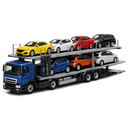
Multiple Vehicle
Covers all vehicles on multi-car carriers and rollback flatbeds.
Industries & Insurance Needs in Columbia
Richland County's business mix changes the kind of towing relationships you may be asked to support. Professional, scientific, and technical services and retail trade each account for 13.1% of county establishments, and health care and social assistance makes up 11.9%. That mix points to office parks, shopping areas, clinics, and care facilities where vehicle movement happens in busy lots, structured parking, and customer-facing environments. For an on-hook quote, that matters because the exposure is not just highway mileage. It is also repeated loading, backing, turning, and releasing in places where curbs, bollards, low clearances, and bystander complaints can complicate a small incident. If your book includes property-management contracts, hospital-area calls, or dealer transfers, ask for terms that match those assignments instead of assuming a quote built for mostly roadside breakdowns will fit the work you actually accept.
What Makes Columbia Different
The local issue is the steady volume of tows that begin or end in commercial, medical, residential, and mixed-use properties where maneuvering space is tighter and the handoff is more visible to owners, managers, and security staff. A low curb on exit, a tight turn in a garage, or a complaint about suspension or bumper damage after a short relocation can all trigger a dispute. In a market with many business accounts and private-pay customers, you should review whether your quote is built around the kinds of vehicles and property conditions you actually handle, not just the number of trucks you run.
Our Recommendation for Columbia
Start your quote request with your job mix, not just your truck list. Break out how much of your work comes from managed properties, police calls, dealer moves, and private breakdowns, because each setting changes how an underwriter views on-hook exposure. If you use wheel-lift and flatbed units for different assignments, note that clearly and identify the vehicle types you move most often. It also helps to describe where disputes usually arise, such as tight lot exits or after-hours impounds, so the policy review stays grounded in real operations. If you are bidding for commercial accounts, ask what proof of coverage you can provide quickly and whether any contract language should be reviewed before you sign. If a requirement or filing question comes up, confirm it against the South Carolina Department of Insurance guidance rather than relying on account-side assumptions.
Get On-Hook Towing Insurance in Columbia
Enter your ZIP code to compare on-hook towing insurance rates from carriers in Columbia, SC.
Business insurance starting at $25/mo
FAQ
Frequently Asked Questions
Commercial-property work often means tighter lots, more backing, and more visible handoffs. Many towing accounts can involve managed properties, so compare quotes based on where you load and unload vehicles, not just how far you tow.
Private-pay customers may watch repair timing and vehicle condition closely. It is smart to review how a policy responds to damage allegations and delays after a short local tow.
Richland County's establishment mix, 13.1% professional services, 13.1% retail, and 11.9% health care and social assistance, points to office, shopping, and medical properties. In other words, expect more lot work, tighter turns, and more opportunities for low-speed damage disputes.
Describe those locations if they are routine. Short, dense assignments can create different on-hook exposure than open-road breakdown work, especially where physical hazards and property-management rules shape how a vehicle is loaded and released.
Local towing can still create on-hook exposure if a customer's vehicle is damaged while attached, loaded, carried, or unloaded by your truck. Even short routes may be quoted around your actual vehicle types, towing methods, and documentation process.
Coastal towing can change the risk profile because weather and road conditions may complicate loading, transport, and unloading. When you request quotes, describe storm response work, wet-condition calls, and any higher-value vehicles you accept near the coast.
Insurance oversight runs through the South Carolina Department of Insurance, which oversees policy forms, consumer complaints, and licensing. If you are comparing forms, notices, or complaint procedures, keep copies of quotes and policy wording so you can review the exact terms before binding.
You should compare quotes using the same truck list, service mix, territory, requested limit, and deductible. That keeps the comparison honest and helps you spot whether a lower premium comes from narrower assumptions rather than better value.
Sources
- 1.U.S. Census Bureau, County Business Patterns, Richland County(Richland County has 9,402 business establishments, so a lot of your work can involve commercial lots, employee parking areas, vendor vehicles, and time-sensitive pickups where proof of coverage may matter before an account is assigned.; Professional, scientific, and technical services and retail trade each account for 13.1% of county establishments, and health care and social assistance makes up 11.9%.)
- 2.U.S. Census Bureau, ACS 5-Year Estimates, table B19013(The city's median household income is $55,653, so many private-pay customers are sensitive to vehicle condition and repair delays after a tow.)
- 3.South Carolina Department of Insurance(If a requirement or filing question comes up, confirm it against the South Carolina Department of Insurance guidance rather than relying on account-side assumptions.)
Updated July 16, 2026