Updated July 16, 2026

On-Hook Towing Insurance in Nashville
Traffic density is the sharpest difference for towing operators in Nashville. A routine job can turn into a longer in-custody move through crowded arterials, event traffic, and tight commercial access points instead of a short handoff. That reality changes how you should review on-hook towing insurance in this market. Your concern is not only whether a vehicle is attached correctly but how often your drivers load, secure, reposition, and unload in busy retail corridors, hotel zones, restaurant districts, parking decks, and mixed-use properties where space is limited and bystanders are close.
On-Hook Towing Insurance Risk Factors in Nashville
Urban handling is the local risk issue worth focusing on. Here, a claim is not always about a long-distance tow. It can start during the first few minutes, backing into position in a narrow alley, loading from a garage entrance, clearing a vehicle from a hotel drive, or turning out of a crowded lot with limited swing room. Those conditions increase the importance of matching your **on-hook limit** and claims review to the kinds of vehicles and pickup environments your operators see most often. The county's leading sectors are retail trade at 12.4%, accommodation and food services at 11.3%, and professional, scientific, and technical services at 11%, so a lot of towing activity can center on customer-facing properties with steady turnover and tighter access. That matters because frequent short tows and private-property removals can create repeated loading and unloading exposure, even when mileage is low. If your book includes apartments, hotels, restaurants, office garages, or event-adjacent lots, review whether each truck's limit fits the vehicles typically moved from those sites.
Tennessee has a high climate risk rating. Top hazards: Tornado (Very High), Flooding (High), Severe Storm (High), Earthquake (Moderate). The state's expected annual loss from natural hazards is $1.8B, which influences on-hook towing insurance premiums and may affect coverage availability in high-risk areas.
What On-Hook Towing Insurance Covers
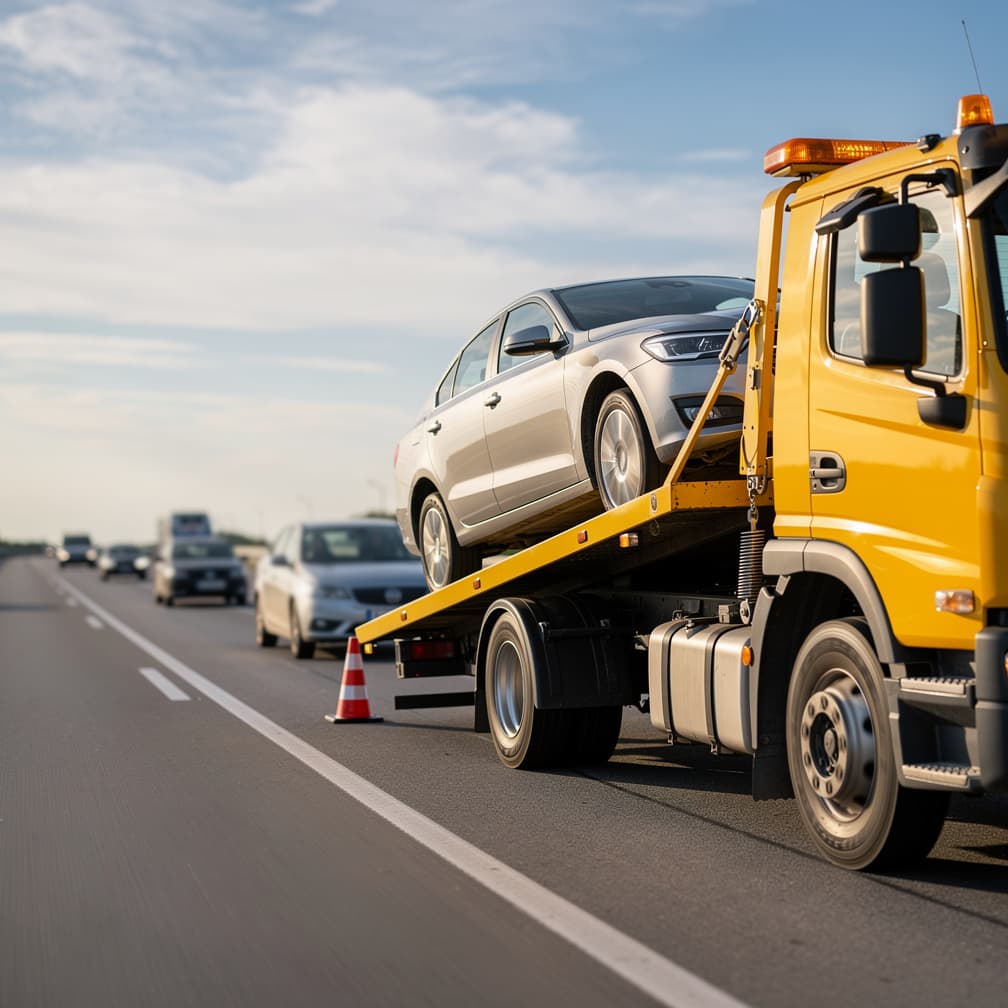
For a towing operation, the key question is not the basic definition of on-hook coverage. The real issue is where damage is most likely to happen in your day-to-day work and whether the policy language you examine matches those moments. A claim can start during a shoulder hookup in heavy traffic, while a vehicle is being stabilized on an incline, during a rain-soaked recovery after a storm, or while unloading at a repair shop with limited space. If those are normal parts of your week, read the covered causes of loss and exclusions with those scenes in mind.
You should also weigh coverage terms against the kinds of calls your dispatch board actually sends out. A company focused on routine roadside tows may need a different approach than an operator taking accident recoveries, impounds, and after-hours calls where vehicle condition is already disputed before loading begins. Terrain and weather can change the handling risk from one county to the next, and a policy that looks acceptable at first glance may leave too much room for argument after a loss.
Ask for a quote that ties coverage back to your equipment and procedures, including how you secure vehicles, whether you use flatbeds, wheel-lifts, or both, how drivers document pre-existing damage, and how claims would be handled if a customer alleges new damage after transport. If your operation crosses urban interstates, rural roads, and steep grades in the same service area, the policy should address those mixed conditions directly rather than leaving you to assume you are protected.
Coverage Included
Collision on Hook
Covers damage to towed vehicles from collisions during transport.
Comprehensive on Hook
Covers theft, fire, and weather damage to vehicles being towed.
Loading & Unloading
Covers damage during the process of loading and unloading vehicles.
Winching Coverage
Covers damage to vehicles during winching and recovery operations.
Multiple Vehicle
Covers all vehicles on multi-car carriers and rollback flatbeds.
What Makes Nashville Different
In many parts of the state, the main question is how a vehicle behaves over distance or terrain, but in Nashville the bigger issue is how often your crew takes custody in confined, high-traffic settings where a small mistake can damage a customer vehicle before the tow is even fully underway. The volume of commercial properties here means more service entrances, employee garages, and customer parking areas feeding towing demand throughout the day. Rather than buying one flat setup just because it worked elsewhere in Tennessee, sort your exposures by truck use, typical vehicle values, and where pickups happen most often. A unit handling apartment enforcement and downtown garage calls may need a different limit discussion than a truck focused on roadside recoveries outside the core.
Our Recommendation for Nashville
Start with your dispatch records from the last few months and sort jobs by location type, not just by truck. Private-property impounds from apartments, hotel calls, garage extractions, dealer moves, and roadside recoveries do not create the same handling exposure. That kind of review helps you decide whether one limit still makes sense across the fleet or whether certain units deserve a higher limit because they routinely tow newer or higher-value vehicles in tighter spaces. Next, look at contract requirements. With a local median household income of $75,197, you may be moving vehicles whose repair costs, sensors, finishes, and wheel packages make even low-speed damage more expensive than older fleet assumptions suggest. A single scratched bumper or scuffed wheel can run into thousands of dollars, which is why a quote built on outdated vehicle values can leave you short. If you also answer for apartments, restaurants, or office properties, bring those agreements to the quote review so your limits and documentation process line up with the work you are being asked to perform.
Get On-Hook Towing Insurance in Nashville
Enter your ZIP code to compare on-hook towing insurance rates from carriers in Nashville, TN.
Business insurance starting at $25/mo
FAQ
Frequently Asked Questions
Nashville towing operations often split between private-property work, garage pulls, and roadside calls, so each truck may handle a different mix of vehicles and loading conditions. Review limits by unit use, typical vehicle values, and where custody usually begins.
Nashville sits in Davidson County, where retail trade, accommodation and food services, and professional services lead establishment share, meaning your crews are likely working tight lots and garages far more often than open roadside scenes. That mix points to more lots, garages, and customer-facing properties, so loading and unloading exposure can matter as much as tow distance.
Davidson County has roughly 21,694 business establishments. That volume translates into more parking disputes and contract tows, so a generic fleet limit may fall short when a high-value vehicle is damaged during a routine impound.
Nashville households report a median income of $75,197, which can point to newer personal vehicles with costlier finishes and technology. A minor loading error on a late-model pickup or sedan can trigger a repair bill that exceeds your current per-vehicle limit.
Tennessee Department of Commerce and Insurance handles insurance oversight statewide, so Nashville buyers work within the same regulatory framework as operators in other parts of the state. The more useful question for your bottom line is whether your quote captures the dispatch conditions, property types, and vehicle mix you actually encounter.
Towing companies often should. Mountain grades, wet shoulders, and fast interstate hookups create different loading and securement risks, so your quote should match the roads your trucks actually work instead of using a generic towing description.
Tennessee regulates insurance through the Department of Commerce and Insurance. If you are reviewing on-hook policies, keep your questions tied to actual policy wording, filings, and state oversight.
Tow companies sometimes can, but it is not always the safest approach. If one unit handles higher-value vehicles or more difficult recoveries, check whether separate limits or a different structure better matches that truck's exposure.
Sources
- 1.U.S. Census Bureau, County Business Patterns, Davidson County(Davidson County reports 21,694 business establishments, so local towing work often intersects with delivery traffic, employee parking lots, customer vehicles, and vendor access rules that can complicate a simple recovery.; The county's leading sectors are retail trade at 12.4%, accommodation and food services at 11.3%, and professional, scientific, and technical services at 11%, so a lot of towing activity can center on customer-facing properties with steady turnover and tighter access.)
- 2.U.S. Census Bureau, ACS 5-Year Estimates, table B19013(With a local median household income of $75,197, you may be moving vehicles whose repair costs, sensors, finishes, and wheel packages make even low-speed damage more expensive than older fleet assumptions suggest.)
- 3.Tennessee Department of Commerce and Insurance(Nashville buyers still deal with statewide insurance oversight through the Tennessee Department of Commerce and Insurance.)
Updated July 16, 2026