Updated July 16, 2026

Dealer Open Lot Insurance in Burlington
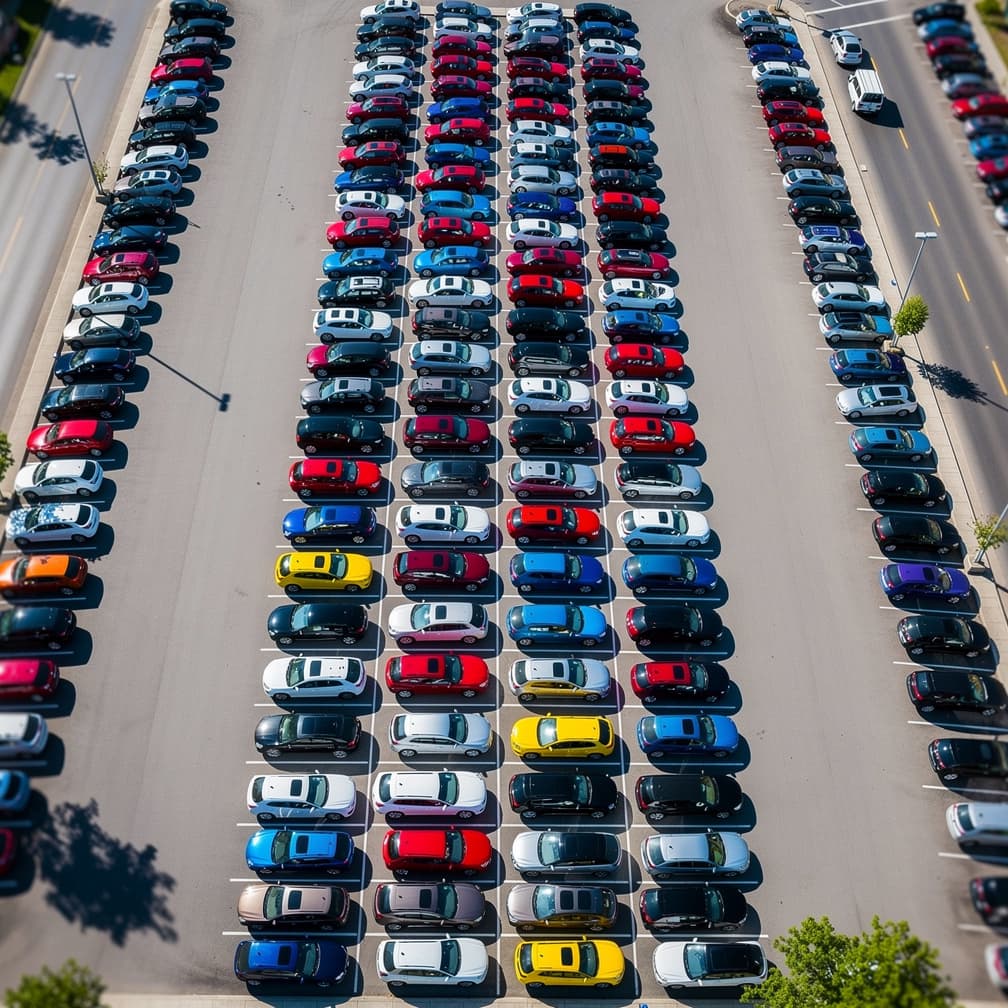
A Burlington lot review often starts when you are about to sign a downtown lease, add overflow parking near a busier corridor, or bring in fresh inventory before the seasonal sales pace changes. What sets the local market apart is how little room most dealers have to work with. A smaller footprint can push you to split inventory between the main lot and secondary parking, rotate units more often, or keep higher value vehicles in the most visible spaces for walk-in traffic. Burlington households report a median income of $68,854, which means buyers may shop a mix of practical used units and newer financed vehicles, and your inventory values can vary sharply across the same lot. If your operation uses more than one parking area, stores units offsite, or changes display patterns during the year, ask for the quote to reflect each location and how vehicles are secured overnight.
Dealer Open Lot Insurance Risk Factors in Burlington
Local lot exposure here is shaped by how inventory fits into a compact urban setting. Burlington dealers often work with tighter parcels, shared access points, and more visible frontage, which can change how underwriters look at fencing, lighting, key control, and the distance between your sales office and any overflow storage. If part of your inventory sits away from the main office, the practical question is not just where the cars are parked, but how consistently that location is supervised and documented. Vermont's broader weather pattern is already part of the state conversation, but the city-specific issue is operational: where you place units when space is limited and conditions change quickly. Review whether your **highest value vehicles**, newly arrived units, and any floorplanned inventory are concentrated in the same section of the lot. If they are, ask your agent to review layout, overnight procedures, and any secondary storage addresses before binding coverage.
Vermont has a moderate climate risk rating. Top hazards: Winter Storm (High), Flooding (High), Nor'easter (Moderate), Landslide (Low). The state's expected annual loss from natural hazards is $120M, which influences dealer open lot insurance premiums and may affect coverage availability in high-risk areas.
What Dealer Open Lot Insurance Covers
A small independent dealer with a single fenced lot presents one kind of exposure. A dealer that rotates units between a roadside lot, a recon area, and an overflow storage site presents another. That difference affects how you should review location schedules, reporting requirements, and any limits that apply by premises rather than across the whole operation.
You should also look closely at how the policy treats vehicles during ordinary dealership handling. That includes units being parked tightly for display, moved for snow clearing, repositioned for plowing access, or transferred between owned and leased storage areas. In Vermont, weather-driven movement can be part of normal operations. It is worth asking whether your policy language and declarations match the way your staff actually handles inventory during storms and cleanup.
If you store vehicles outdoors for long stretches, ask your agent to walk through claim scenarios tied to water, falling objects, theft, and vandalism. If you use temporary overflow space, confirm that address is scheduled correctly before a loss happens. If your inventory includes higher-value trucks, specialty vehicles, or seasonal units, review whether concentration at one location creates a limit problem.
Vermont is regulated by the Vermont Department of Financial Regulation, which means that agency oversees policy forms, endorsements, and consumer complaints. For you as a dealer, that matters because it determines what policy language is allowed in your state and where you would turn if a dispute over a claim or endorsement goes unresolved. As you compare options, ask for a plain-language explanation of what is covered at each lot and what documentation you would need after a loss.
Coverage Included

Weather Damage
Covers hail, wind, flood, and storm damage to lot inventory.
Theft Protection
Covers vehicles stolen from your lot.
Fire Damage
Covers fire and explosion damage to inventory vehicles.

Vandalism
Covers intentional damage to vehicles on your lot.
Test Drive Coverage
Covers vehicles during customer and employee test drives.
Transit Coverage
Covers vehicles being moved between lot locations.
Industries & Insurance Needs in Burlington
Chittenden County has 5,676 business establishments, with professional, scientific, and technical services at 13.7%, retail trade at 12.9%, and health care and social assistance at 11.4% of establishments. That mix matters for a local dealer because it points to a customer base with varied commuting patterns, budget ranges, and financing expectations rather than one dominant fleet-driven buyer profile. In practice, your lot may need to carry a broader spread of vehicle types and values to match local demand. A broader spread can complicate your insurance review if older trade-ins, newer financed units, and specialty inventory all sit together under one limit. Instead of asking only for a vehicle count based quote, ask for a limit review tied to your peak inventory value, your turnover pattern, and any separate storage area you use when the lot gets tight.
What Makes Burlington Different
In Burlington, the underwriting conversation often changes because a dealer may not have the kind of large, single-purpose lot that makes inventory control simple. A compact site can mean vehicles are packed more tightly, displayed across more than one parking area, or shifted around more often to match traffic, snow management, deliveries, and nearby property rules. That changes the calculus for your coverage because the exposure is not just the number of units on hand but how clearly each location is identified, how values are distributed across the property, and whether your controls still work when inventory spills into overflow space. If your operation uses a main lot plus side parking, seasonal overflow, or a separate reconditioning or holding area, treat that as an underwriting issue from the start. A specific schedule of locations, security measures, and maximum values at each site gives underwriters what they actually need to price your risk.
Our Recommendation for Burlington
Start with a location map, not just an inventory list. If you show vehicles at one address and store extras nearby, note each parking area, who has access, how keys are controlled, and where the highest value units sit overnight. Next, review your peak inventory value instead of relying on an average month. Local demand can shift the mix between lower priced used vehicles and newer financed units, and a limit that works in a slower period may come up short when inventory builds. Finally, ask whether your quote assumptions match your actual operations, including dealer plates, test-drive routines, transport between addresses, and any temporary holding area during busy periods. If something changes after binding, update the policy rather than assuming the original application still fits.
Get Dealer Open Lot Insurance in Burlington
Enter your ZIP code to compare dealer open lot insurance rates from carriers in Burlington, VT.
Business insurance starting at $25/mo
FAQ
Frequently Asked Questions
Burlington dealers should usually disclose any second parking area or overflow storage used for inventory. If vehicles sit away from the main lot, ask for that address and its security details to be reviewed so the quote matches how your inventory is actually stored.
Burlington inventory often spans practical used units and newer financed vehicles. With local median household income at $68,854, your mix can shift by season, so review peak total inventory value, not just unit count, before you set a limit.
Chittenden County has 5,676 business establishments, meaning local demand comes from many employers and customer types rather than one narrow buyer base. That variety can mean faster turnover on some price tiers, so check whether your lot limit keeps pace with how quickly units move.
Burlington operations that split inventory between display, storage, and reconditioning should map each location for the quote. The key issue is where vehicles sit overnight, how often they move, and whether each address is accounted for in the policy review.
Chittenden County's leading sectors are professional services at 13.7%, retail at 12.9%, and health care and social assistance at 11.4%. That varied customer base can push a dealer to stock a wider range of vehicles, which means a single flat limit may leave gaps when your highest value units cluster during peak season.
In Vermont, landlords, floorplan lenders, and some auction or storage partners may ask for proof before they finalize access, financing, or unit release. Have your locations, inventory values, and contract requirements ready so the certificate reflects the actual operation.
Vermont dealers should assume every regular storage address needs to be reviewed. If inventory sits on a main lot, overflow lot, or separate service-area parcel, ask whether each location is scheduled correctly before binding coverage.
Vermont conditions can change how often vehicles are moved, clustered, or stored offsite, which affects underwriting and claims preparation. Review where units sit during storms, snow clearing, and overflow periods so the policy matches actual handling.
Sources
- 1.U.S. Census Bureau, ACS 5-Year Estimates, table B19013(Burlington households report a median income of $68,854)
- 2.U.S. Census Bureau, County Business Patterns, Chittenden County(Chittenden County has 5,676 business establishments; Chittenden County's leading sectors are professional, scientific, and technical services 13.7%, retail trade 12.9%, and health care and social assistance 11.4%)
Updated July 16, 2026